
Medical Disclaimer: This article does not give a veterinary diagnosis or replace professional advice. Always talk to your veterinarian for specific care.
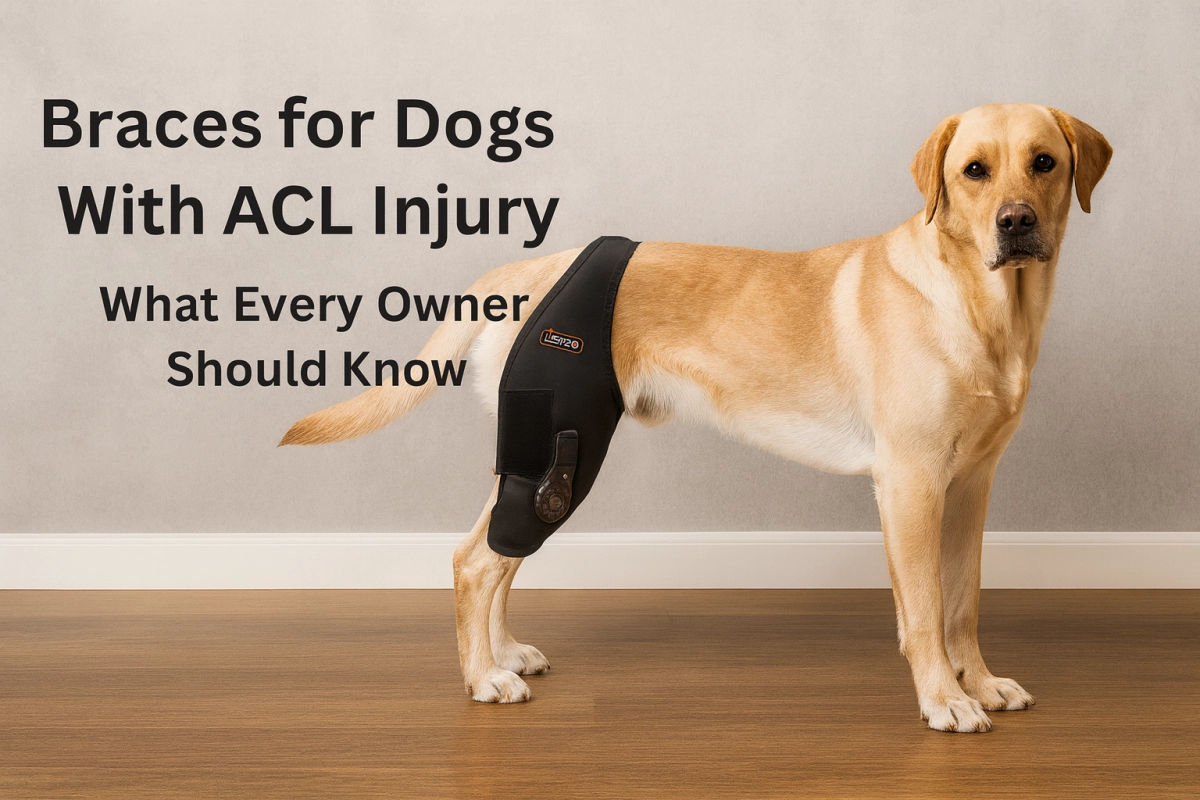
You want your dog to feel better after an ACL injury. Braces for dogs with acl injury can help support the knee and make your dog more comfortable. You should have realistic expectations. These braces give stifle support and may help your dog move more easily. Remember, braces do not always take the place of surgery, especially if your dog has a bad tear.
Here is a quick look at the common benefits and limitations:
|
Benefits |
Limitations |
|---|---|
|
Non-invasive and surgery-free |
Need to fit well and be checked often |
|
Adjustable for a range of injuries |
Not always a full replacement for surgery |
|
Useful for rehab and prevention |
Dogs need time to get used to them |
|
Often more affordable than surgery |
You have many choices to think about. Always ask your veterinarian for help. Pick the right size, let your dog get used to the brace slowly, and watch for any pain or problems.
Key Takeaways
-
Braces help dogs with ACL injuries feel better. They make it easier for dogs to walk and lessen pain. Always talk to your veterinarian before you use a brace. Your veterinarian will know what is best for your dog. Start using the brace for short times at first. Slowly let your dog wear it longer as they get used to it. Watch your dog for any pain or skin problems when they wear the brace. Change how the brace fits if your dog seems uncomfortable. Use the brace along with rehab exercises and keeping your dog at a healthy weight. This helps your dog recover better.
ACL Injury in Dogs: Signs & Impact
What Is a CCL/ACL Injury
Your vet might say "ACL" or "CCL" about your dog's knee. ACL means "anterior cruciate ligament." CCL stands for "cranial cruciate ligament." Both words talk about the same ligament in your dog's stifle. The stifle is the knee joint between the thigh and lower leg. This ligament keeps your dog's knee steady when moving. If it tears or stretches, the stifle loses support. Walking and running get hard for your dog.
Symptoms Owners Notice
You can see signs of an ACL injury by watching your dog. Most owners first notice their dog limping. Other symptoms can show up too. Watch for these signs:
-
Limping or using one leg less
-
Not wanting to jump, run, or climb stairs
-
Stiffness after lying down or resting
-
Swelling or warmth near the knee
-
Clicking or popping sounds from the joint
-
Trouble getting up from sitting or lying down
-
Holding the leg up or not putting weight on it
-
Muscles shrinking in the sore leg over time
If you see these changes, your dog might have a stifle injury. Dogs often hide pain, so even small changes matter.
How Mobility Is Affected
An ACL injury changes how your dog moves and stands. The knee can get wobbly, so your dog shifts weight off the sore leg. You may see shorter steps or a slower walk. Some dogs skip when they walk. Over time, the sore leg loses muscle. Your dog may have trouble with daily things.
|
Mobility Change |
What You May Notice |
|---|---|
|
More knee movement |
Wobbly or shaky walking |
|
Shorter stance phase |
Less time standing on the leg |
|
Loss of range of motion |
Stiffness and trouble bending |
|
Muscle atrophy |
Smaller muscles in the leg |
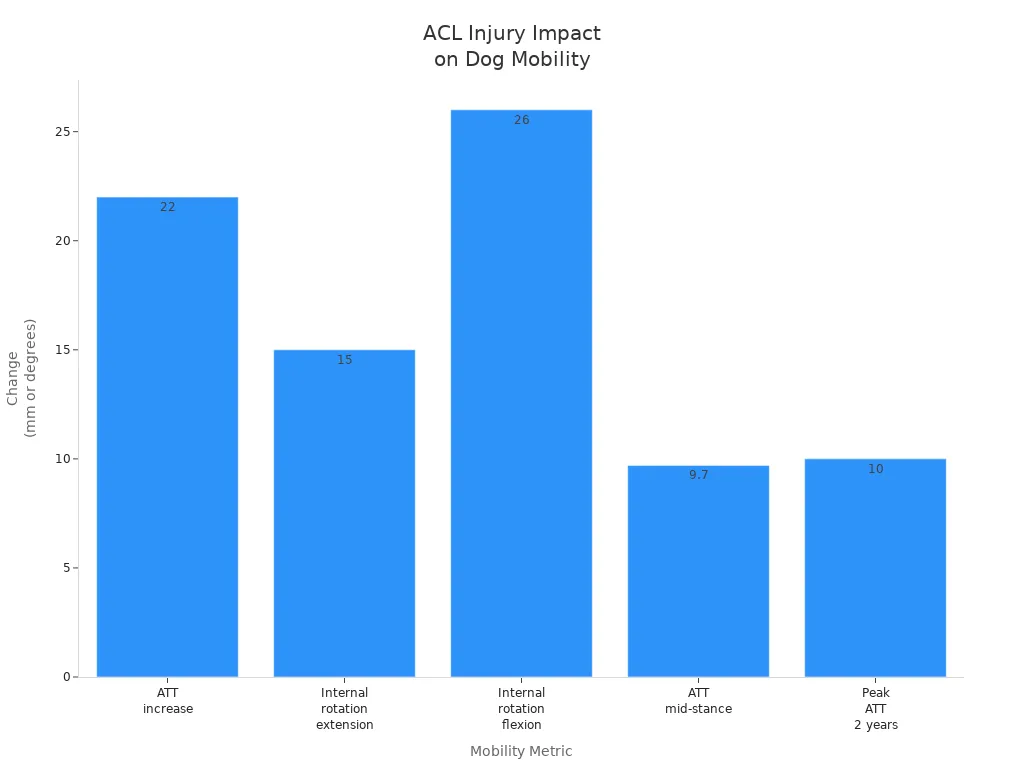
Small dogs that rest and do rehab can sometimes do okay. Bigger, active dogs often need more help to feel good. Surgery can help your dog walk better and move more. Braces and careful care also help your dog stay active.
Causes of ACL Injuries
Degenerative vs Traumatic
You might ask why your dog’s ACL or CCL can tear. There are two main reasons. Degenerative injuries happen slowly over time. The ligament gets weaker as your dog ages. Genetics and how your dog lives also play a part. Traumatic injuries happen all at once. Your dog may twist, jump, or run quickly. This can make the knee bend or turn too much. Dogs that are very active have a bigger chance of traumatic tears. This is common when they play or do sports.
Tip: Dogs with weak muscles or poor knee control can get ligament problems even if they do not have a big accident.
Risk Factors (Breed, Age, Weight)
Some dogs are more likely to get ACL injuries. You can see if your dog is in these groups:
-
Large breeds like Labrador Retrievers often get ACL problems when they are young.
-
Dogs with loose joints or fast collagen turnover have more risk.
-
Being overweight makes ligament tears more likely. Overweight dogs have up to 3.8 times higher risk.
-
Middle-aged dogs, around 4 years old, get more cases. Older dogs do not get as many new injuries.
|
Risk Factor |
Details |
|---|---|
|
Breed |
Large breeds, Labradors |
|
Age |
Peak risk at 4 years |
|
Weight |
Obesity raises risk |
|
Joint Laxity |
Loose joints, fast collagen turnover |
Why Both Knees Can Be at Risk
If your dog hurts one knee, the other knee can also be in danger. Dogs often put more weight on the healthy leg. This puts extra stress on that side. Both knees can get weaker over time. Watch for limping or stiffness in either leg. Keeping your dog at a healthy weight, building muscle, and careful activity can help protect both knees.
Note: Many dogs with one ACL injury get problems in the other knee later. Early support and prevention are important.
Treatment Options for ACL Injuries
Surgery Overview
Your veterinarian might say surgery is the main way to treat ACL injuries. Surgery helps your dog use the knee again. Most dogs can walk, run, and play after surgery. Over 90% of dogs do not limp or feel pain when healed. TPLO surgery is a common choice. It makes the knee stable and helps it heal.
Here are some facts about surgery:
-
Most dogs get better and do what they love again.
-
About 20% of dogs have problems after TPLO or TTA surgery.
-
Medium and large dogs have a higher chance of problems.
-
Pain and limping usually stop after surgery.
Surgery is not the only way to help your dog. But it works best for many dogs, especially if they are big or active. Your veterinarian will help you choose if surgery is right for your dog.
Conservative Management
Some dogs do well without surgery. Conservative management means rest, weight control, and rehab from the vet. This works best for small or calm dogs, or those with only a partial tear. You might use a dog acl brace to help support the knee.
Keep these things in mind:
-
It may take longer for your dog to feel better.
-
Studies show mixed results, so more research is needed.
-
A dog acl brace can help keep the knee steady and lower pain.
-
Rehab and physical therapy from the vet are important.
You should talk to your veterinarian before picking this treatment. Not all dogs can use non-surgical care.
Rehab & Weight Control
Rehab and weight control are important for every dog. Vet rehab and physical therapy help your dog get strong and move better. You should follow your vet’s advice for exercise and activity. A dog acl brace can help your dog move safely during rehab.
Here are some tips for good treatment:
|
Rehab & Weight Control Tips |
Why It Matters |
|---|---|
|
Use a leash for all walks |
Stops sudden moves and new injuries |
|
Avoid too much activity too soon |
Lowers the chance of problems |
|
Do not skip vet check-ups |
Checks healing and changes treatment if needed |
|
Start a weight loss plan if needed |
Less weight means less stress on the knee |
|
Use veterinary rehabilitation |
Makes muscles stronger and joints more stable |
|
Try physical therapy exercises |
Helps your dog move better and feel good |
|
Monitor your dog’s progress |
Lets you find problems early |
Being overweight makes ACL injuries more likely and slows healing. Every extra pound puts more stress on the knee. Losing weight can help some dogs avoid surgery. Vet rehab and physical therapy give your dog the best chance to get strong again. A dog acl brace can be part of your plan and help your dog stay safe and active.
Braces for Dogs With ACL Injury: Role & Limits
How Dog Knee Braces Work
You want your dog to feel safe after an ACL injury. Braces for dogs with acl injury give extra support to the knee. These help your dog walk with less pain. Your dog may stand straighter and use the sore leg more.
Dog knee braces help in different ways. The brace keeps the knee steady. It stops strange movement and cranial tibial thrust. This is most helpful during slow walks or gentle play. Your dog feels the brace and knows where the leg is. This helps your dog use the leg better and limp less. The brace also limits small movements at the injury spot. Less movement means less swelling and pain.
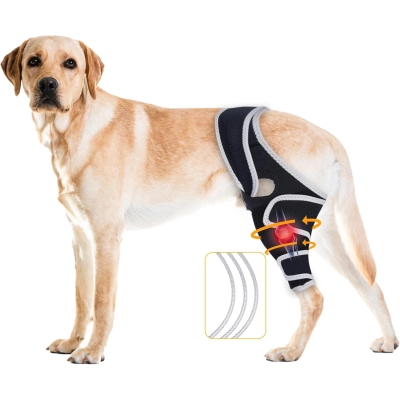
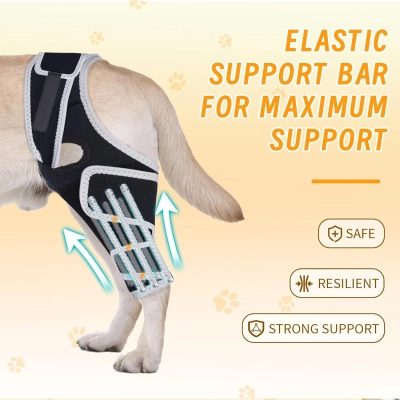
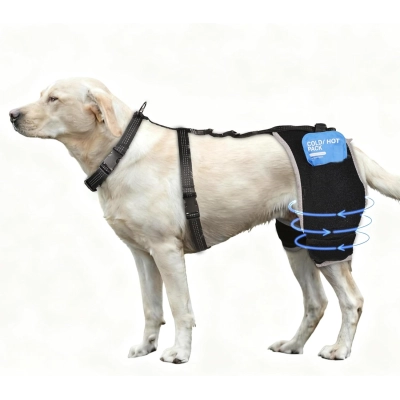
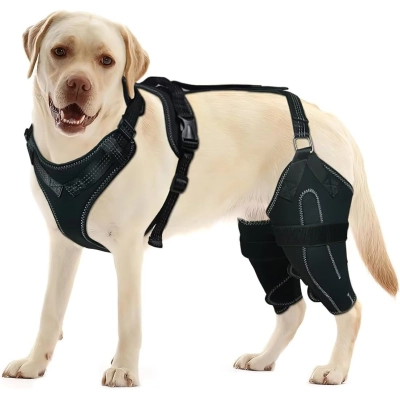
Most dog knee braces have straps you can adjust. You can make them tighter or looser for comfort. Some braces have hinges so your dog can move naturally. You should check the brace often for slipping or rubbing. A good dog acl brace helps your dog move and feel safe.
Tip: Start with short times wearing the brace. Let your dog get used to it slowly. Watch for any signs of discomfort or skin problems.
When to Consider a Dog ACL Brace
You may wonder if braces for dogs with acl injury are right for your dog. Vets suggest a dog acl brace in some cases:
-
Your dog has a mild ACL tear.
-
Your dog is older or has health issues that make surgery risky.
-
You want to help your dog heal without surgery.
-
Your dog cannot have anesthesia or recover from surgery.
A dog acl support brace gives outside support. It stops too much movement and helps the ligament heal. This works best for dogs who cannot have surgery or have only a small tear. Always talk to your vet before using a knee brace for dogs. Not every dog will get better with a brace. Some dogs need surgery to heal fully.
Braces for dogs with acl injury are non-invasive and save money. Many owners pick this to avoid long recovery and high costs. You can use a dog knee brace with weight control, gentle activity, and rehab exercises for best results.
Note: Your vet will help you decide if a dog acl brace is right. Always follow their advice for size, fit, and daily use.
Post-Surgery Bracing
Some dogs need more support after ACL surgery. Braces for dogs with acl injury can help during healing, but only if your vet says it is okay. Post-surgery bracing gives support and helps your dog get strong again.
Here is what post-surgery bracing can do:
|
Benefit |
Description |
|---|---|
|
Recovery Success Rate |
88% of dogs feel less pain and move better after surgery with a dog knee brace. |
|
Owner-Reported Lameness |
88% of owners say their dogs have mild or no lameness while wearing a brace. |
|
Improved Knee Biomechanics |
Braces help joint movement and healing after ACL injury. |
Vets say a good-fitting dog knee brace is important for healing. You should check the fit often and adjust straps for comfort. Studies show most dogs return to normal with the right brace. For example, a Golden Retriever named Max walked without pain two weeks after using a dog acl brace after surgery.
Wait for your vet to approve post-surgery bracing. Not every dog needs a brace after surgery. Some dogs heal well without extra help. Always follow your vet’s instructions for using a dog knee brace.
-
Key points for post-surgery bracing:
-
Use only if your vet says it is okay.
-
Watch for swelling, pain, or skin problems.
-
Adjust the brace for comfort and fit.
-
Use rehab exercises for best results.
-
Callout: Braces for dogs with acl injury make your dog feel stable and comfortable. They do not replace surgery for bad tears. You should have realistic expectations and work with your vet.
Dog acl brace choices help your dog stay active and comfortable. You can pick hinged stabilization for natural movement or adjustable fit for custom support. Always check the size and let your dog get used to the brace slowly. Braces for dogs with acl injury help healing, but they work best with a full care plan.
Brace vs Surgery vs Rehab
Pros & Cons
Picking a treatment for your dog's ACL injury can be hard. Each choice—brace, surgery, or rehab—has good and bad sides. You want your dog to move safely and feel better. Knowing the pros and cons helps you choose what is best.
Dr. Lisa Freeman, a veterinary orthopedic specialist, says:
"Braces can help with knee pain in dogs. They work well with physical therapy and weight control. Not every dog needs surgery."
Braces, surgery, and rehab help in different ways. Some dogs do well with a brace and rehab. Others need surgery for the best results. Your dog's age, health, and how active they are matter.
Here is a quick look:
|
Treatment Option |
Pros |
Cons |
|---|---|---|
|
ACL Surgery |
Higher success rate, faster recovery |
Invasive procedure, higher cost |
|
ACL Brace |
Non-invasive, cost-effective, conservative approach |
Limited effectiveness, longer recovery |
|
Rehab |
Builds strength, improves mobility, non-invasive |
May not fully stabilize severe injuries |
A rehab expert shares:
“I think surgery is best most of the time. But some dogs should not have surgery. Older dogs or those with heart problems may do better with braces and rehab.”
A study in 2023 showed dogs with knee braces for moderate CCL injuries moved better by 65% in 8 weeks. Braces work best with weight control and physical therapy.
Decision Guide for Owners
You want to pick the safest and best way for your dog. Think about these things before you decide:
-
Dog Size & Weight
Big dogs put more stress on their knees. Surgery may help them more. Braces can help if surgery is not possible. -
Activity Level
Dogs who run and play a lot may need surgery. Calm or older dogs may do well with a brace and rehab. -
Injury Severity
Mild tears often get better with braces and rehab. Bad tears usually need surgery. -
Age & Health
Older dogs or those with health problems may not be good for surgery. Braces and rehab are safer for them. -
Pre-Op, Post-Op, or No Surgery
Some dogs use a brace before surgery. Others use it after surgery for support. Dogs who cannot have surgery use braces and rehab for comfort. -
Arthritis
Dogs with arthritis need extra help. Braces can lower pain and help movement. Weight control and gentle rehab protect joints.
Here is a table to compare:
|
Consideration |
Knee Brace |
Surgery |
|---|---|---|
|
Severity of Injury |
Mild to Moderate |
Severe ligament rupture |
|
Dog’s Age & Health |
Good for seniors or sick dogs |
Young, healthy dogs |
|
Budget |
$200 - $700 (per brace) |
$3,000 - $7,000+ per knee |
|
Recovery Time |
Days to weeks (brace) |
2-4 months of limited activity |
|
Outcome |
Pain relief, stability, mobility |
Mechanical correction, long-term result |
Dr. Dycus reminds owners:
"Think about this risk. If your pet uses the brace a lot, it may wear out and need to be replaced."
Quick Tips for Choosing:
-
Young, big, and active dogs may do best with surgery.
-
Older dogs or those with health problems may do better with a brace, rehab, and weight control.
-
Always talk to your veterinarian before you decide.
Cost & Recovery Comparison
You want to know what you will pay and how long healing takes. Costs and recovery times are different for braces and surgery.
-
Dog Knee Braces:
-
Cost: $200 - $700 each
-
Recovery: Days to weeks to get used to it
-
Most dogs return to gentle walks quickly
-
-
Surgery:
-
Cost: $3,000 - $7,000+ for each knee
-
Recovery: 2-4 months of limited activity
-
Full rehab can take 8-16 weeks
-
-
Rehab & Physical Therapy:
-
Cost: Changes by place and number of visits
-
Used with braces or after surgery
-
Helps build strength and stop future injuries
-
|
Treatment Option |
Cost Range |
Recovery Time |
|---|---|---|
|
Dog Knee Brace |
$200 - $700 |
Days to weeks |
|
Surgery |
$3,000 - $7,000+ |
2-4 months |
Most dogs need 8 to 12 weeks of limited activity after ACL surgery. Then they do rehab to get back full movement.
-
Surgery costs more and needs exams, x-rays, anesthesia, and follow-up visits.
-
Braces cost less and do not need anesthesia or hospital stays.
-
Surgery may help dogs return to high activity faster. Braces help dogs get back to gentle walks and comfort sooner.
Recovery times are not the same. Surgery means 8 to 16 weeks of rest and rehab. Dogs with knee braces can get back to normal in days to weeks.
Summary:
You want the best for your dog. Braces, surgery, and rehab all help with ACL injuries. Think about your dog's age, size, activity, and health. Look at your budget and your dog's comfort. Work with your veterinarian to make a plan that fits your dog's needs and your family's goals.
Types of Dog Knee Braces
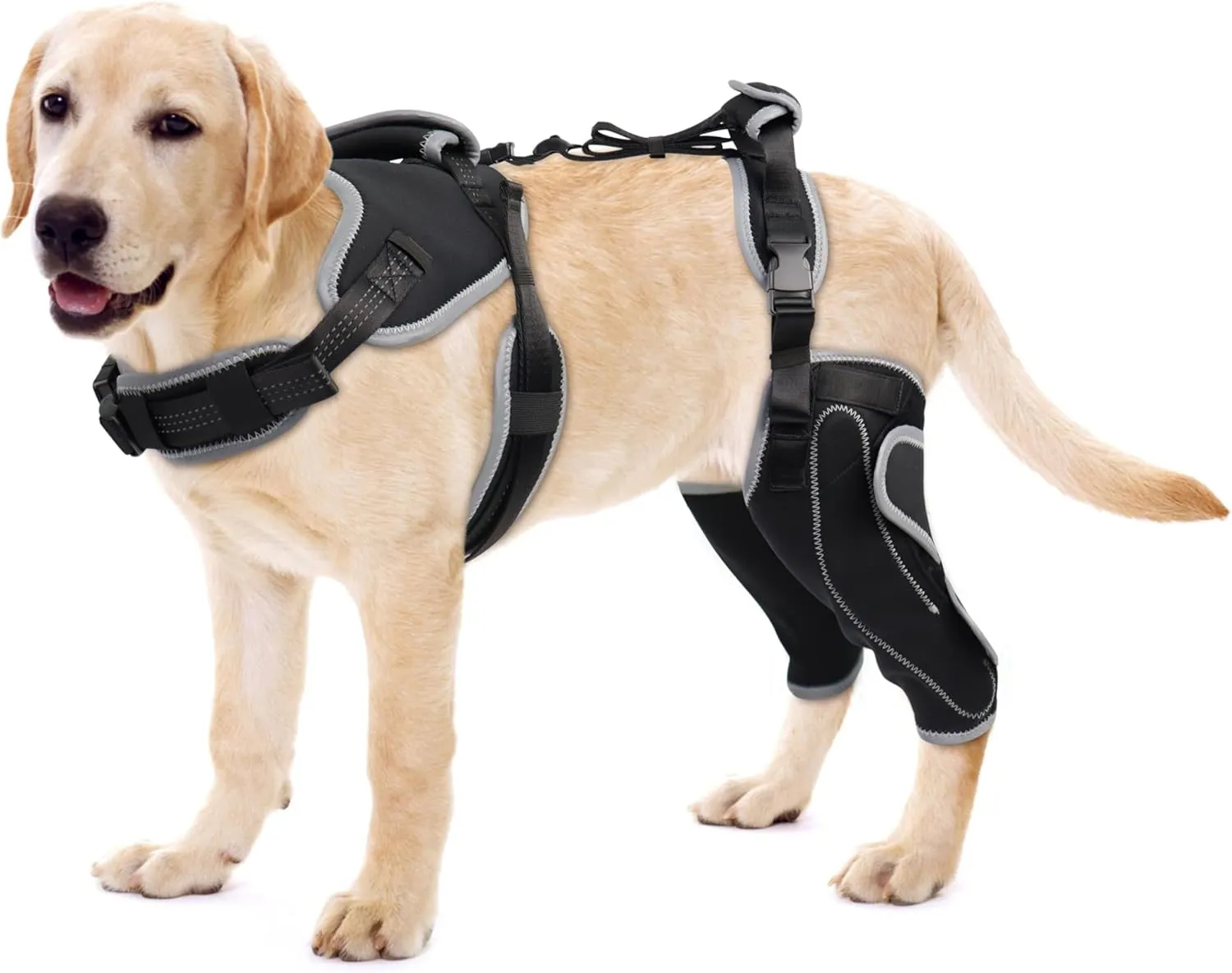
Picking a knee brace for your dog can be tricky. You want your dog to feel good and safe. There are different type of dog knee braces. Each type has special things that make it different.
Custom vs Off-the-Shelf
You can choose a custom brace or an off-the-shelf brace. Custom braces are made just for your dog’s leg. Off-the-shelf braces have straps you can adjust to fit most dogs.
|
Feature |
Custom-Fit Brace |
Off-the-Shelf Brace |
|---|---|---|
|
Support Level |
Very High |
Basic to Moderate |
|
Price Range |
$500–$1,200+ |
Low to Medium |
|
Fit Type |
Tailored to dog's anatomy |
Adjustable |
|
Ideal Use |
Complex or chronic issues |
Mild issues |
|
Mobility Control |
Customizable |
Minimal |
Custom braces are best for dogs with special needs or long-term injuries. Off-the-shelf braces are good for dogs with small injuries or who need help for a short time.
Soft vs Rigid
Dog knee braces can be soft or rigid. Each kind gives a different amount of support and comfort.
|
Type of Brace |
Support Level |
Comfort Level |
|---|---|---|
|
Rigid (Hinged) |
Maximum support for severe injuries |
Less flexible, may be less comfortable |
|
Soft Compression |
Gentle compression for mild issues |
More flexible, generally more comfortable |
Soft braces squeeze the knee gently. They help dogs with small aches or new injuries. Rigid braces have hinges and give strong support. They help dogs with bad injuries or who need extra help to stand.
Features: Hinged Stabilization, Adjustable Fit
When you look for a dog knee brace, check for helpful features:
-
Adjustable straps let you make the brace tighter or looser.
-
Hinged stabilization lets your dog bend the knee but keeps it steady.
-
Hinged braces have side parts and moving joints. These help your dog walk straight and with control.
🐾 Tip: Big, active dogs or dogs with bad injuries often need a rigid, hinged brace. Small dogs or dogs with mild pain may like a soft, bendy brace better.
You can find a brace that fits what your dog needs. Always check if the brace fits well and feels good. Let your dog wear the brace for short times at first so they get used to it.
Choosing a Dog ACL Brace
Sizing & Measurement Tips
Getting the right size for your dog's ACL brace matters. You want the brace to fit snugly but not too tight. Start by gathering what you need: a measuring tape, a helper, and your dog. Use a casting sock to flatten extra hair. Have your dog lie down calmly. Measure in inches for accuracy.
Key measurement steps:
-
Measure from the groin to the top of the knee. This keeps the brace from being too tall.
-
Measure from the top of the knee to the apex of the hock. This sets the brace’s length.
-
Wrap the tape around the widest part of the chest, just behind the front legs.
-
Measure the height from the base of the rear paw to the top of the hip.
-
Measure the thigh halfway between the knee bend and the groin.
Tip: Lispoo offers free sizing help. Use the sizing guidance to make sure you get the best fit for your dog.
Comfort Checklist
Your dog’s comfort comes first. Watch for these common fit issues:
-
Skin irritation or redness
-
Slipping or shifting of the brace
-
Rubbing or pinching at the straps
-
Signs your dog rejects the brace, like chewing or limping
Check the brace daily. Adjust straps for a secure but gentle fit. Let your dog wear the brace for short periods at first. Gradually increase the time as your dog adapts.
|
Comfort Issue |
What to Watch For |
What to Do |
|---|---|---|
|
Skin irritation |
Redness, sores |
Loosen straps, add padding |
|
Slipping |
Brace moves out of place |
Recheck measurements |
|
Rubbing |
Hair loss, discomfort |
Adjust fit, monitor daily |
Lispoo braces are designed for senior medium/large dogs needing mobility support. Talk to our team for fit help.
Vet Guidance
Always consult your veterinarian before choosing a brace. Your vet can diagnose the injury and recommend the right support. They help you pick the best brace and check the fit. Your vet will monitor your dog’s progress and adjust the plan if needed.
-
Ask your vet about custom or off-the-shelf options.
-
Share your measurements for feedback.
-
Schedule follow-ups to track comfort and healing.
Explore knee brace options with confidence. Use your vet’s advice and Lispoo’s support for the best results.
Wearing Plan & Rehab Support
Introducing the Brace
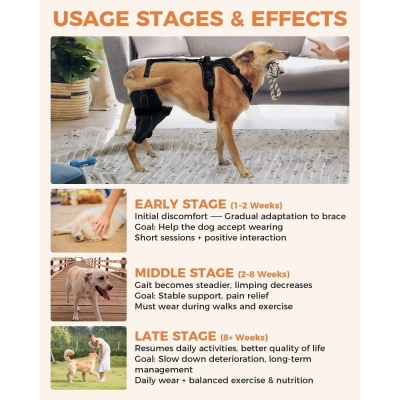
You want your dog to feel comfortable and safe with a new knee brace. Start slow. The first two weeks are the break-in period. On day one, let your dog wear the brace for 30 minutes. Each day, add 30 more minutes. This helps your dog's skin adjust and builds trust with the brace.
|
Day |
Duration (minutes) |
|---|---|
|
1 |
30 |
|
2 |
60 |
|
3 |
90 |
|
4 |
120 |
|
5 |
150 |
|
6 |
180 |
|
7 |
210 |
|
8 |
240 |
|
9 |
270 |
|
10 |
300 |
|
11 |
330 |
|
12 |
360 |
|
13 |
390 |
|
14 |
420 |
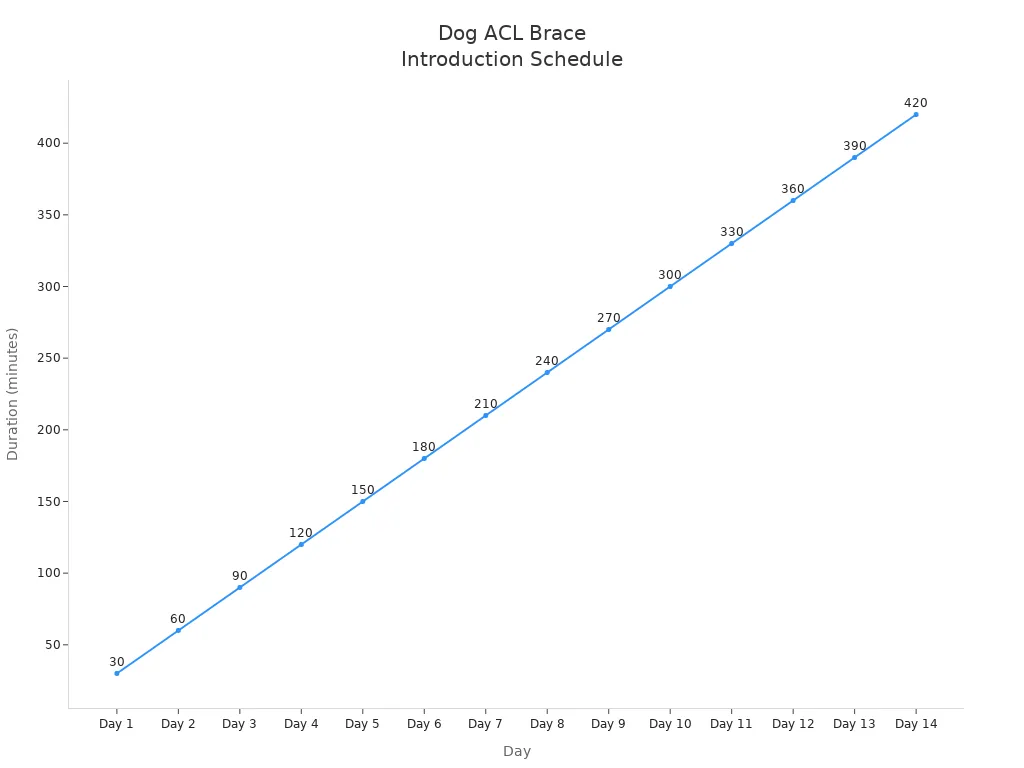
🐾 Tip: Always check your dog's skin after each use. Look for redness, hair loss, or sores. Remove the brace at night so the skin can breathe and the brace can dry.
Daily Schedule
You can help your dog by following a steady daily routine. Put the brace on during the day, especially for walks or play. Take it off at night. Give your dog breaks every few hours. After each break, check the skin and adjust the fit if needed. If you see swelling, pain, or your dog stops using the leg, stop using the brace and call your vet.
Sample Daily Plan:
-
Morning: Put on the brace after breakfast.
-
Midday: Remove for 15 minutes, check skin, let your dog rest.
-
Afternoon: Put the brace back on for gentle activity or rehab.
-
Evening: Remove the brace, check skin, and let your dog relax.
Rehab Exercises
Rehabilitation is key for your dog's recovery. Focus on safe, low-impact rehab activities. Controlled leash walks help build strength. Try short walks on flat ground first. As your dog gets stronger, add gentle hill walks or a few steps on stairs. These rehab exercises support muscle growth and joint stability.
-
Gait training: Slow leash walks, hill walks, and gentle stair climbing.
-
Agility training: Simple balance and coordination drills.
-
Home modifications: Use rugs to prevent slipping. Block off stairs if needed.
-
Weight management: Keep your dog at a healthy weight to reduce knee stress.
Track your dog's progress. Watch for changes in mood, appetite, or swelling. If you notice pain or limping, pause rehab and talk to your vet. With patience and the right rehab plan, you give your dog the best chance for comfort and mobility.
Protecting the Other Knee
If your dog hurts one knee, the other knee works harder. This can make the healthy knee get sore later. You can help keep your dog’s good knee safe and help your dog walk well for a long time.
Prevention Tips
You can stop a second knee injury by changing daily habits and your dog’s space. Try these easy ways to help:
-
Strengthen the Muscles Around the Knee
Build muscle with slow leash walks and sit-to-stand moves. Gentle balance games help too. Swimming and water therapy are good and do not hurt the joints. -
Maintain a Healthy Weight
Losing even a little weight helps both knees. Use a cup to measure food and give fewer treats. -
Avoid High-Impact Activities
Do not play fetch or Frisbee with fast stops or jumps. Pick calm games and slow walks instead. -
Provide Joint Supplements
Ask your vet about glucosamine, chondroitin, or omega-3s. These can help keep cartilage strong and make joints feel better. -
Improve Your Home Environment
Put rugs on slippery floors. Use ramps for stairs. Block places where your dog could jump. -
Schedule Routine Checkups
Go to the vet often and do physical therapy. This helps you find problems early and change your care plan.
🐾 Tip: A good rehab plan after the first injury helps your dog move and balance better.
Activity & Weight Control
Daily movement and weight control help keep knees healthy. You can help your dog by:
-
Picking gentle exercises like leash walks or swimming.
-
Not letting your dog play rough or move too fast.
-
Checking your dog’s weight often.
-
Feeding healthy food and measuring each meal.
-
Doing muscle drills to help joint control.
|
Prevention Focus |
How It Helps Your Dog |
|---|---|
|
Muscle Strength |
Makes knees strong and steady |
|
Weight Control |
Takes stress off the joints |
|
Low-Impact Activity |
Builds muscle safely |
|
Supplements |
Keeps joints healthy |
|
Home Adjustments |
Stops slips and injuries |
These changes help your dog stay active and protect both knees for the future.
For Senior Medium/Large Dogs
Special Needs
Older medium and large dogs need extra help with ACL injuries. Their joints are worn out. Their bodies heal slower than young dogs. You want your dog to feel good and stay active. You do not want to make things worse.
-
Keep your dog’s weight healthy. Extra weight makes sore joints hurt more.
-
Take your dog to the vet often. The vet checks weight, muscles, and joints.
-
Pick gentle activities like slow walks or swimming. These keep your dog moving but protect the joints.
-
Begin with short exercise times. Make them longer as your dog gets stronger.
-
Give your dog lots of breaks between activities. Rest helps joints heal and stops new injuries.
-
Do exercises that build muscle near the knee. Strong muscles help the joint and lower pain.
🐾 Tip: Doing the same things every day and being gentle helps your older dog feel safe and brave while getting better.
Comfort & Safety
You want your dog to feel safe and cared for each day. Comfort and safety are very important for older dogs with ACL injuries. A knee brace that fits well gives stifle support. It helps your dog walk with less pain.
|
Comfort & Safety Checklist |
Why It Matters |
|---|---|
|
Adjustable fit |
Stops slipping and rubbing |
|
Soft padding |
Keeps skin safe from harm |
|
Hinged stabilization |
Lets your dog move naturally |
|
Regular skin checks |
Finds skin problems early |
|
Gradual adaptation to brace |
Makes your dog calm and confident |
-
Use a brace with straps you can change and soft inside for comfort.
-
Look at your dog’s skin every day for red spots or sores.
-
Let your dog rest a lot and keep away from slippery floors.
-
Ask your vet about food and supplements for healthy joints.
You can help your older dog enjoy life with good support, easy exercise, and regular care.
Complications & Risks
When you help your dog recover from an ACL injury, you want to watch for possible complications. Knowing what to look for helps you keep your dog safe and comfortable.
Meniscal Injury Signs
The meniscus is a cushion inside your dog's knee. It can get hurt along with the ACL. If your dog suddenly limps more or cries out when moving, you may suspect a meniscal injury. You might hear a clicking sound from the knee. Your dog may avoid putting weight on the leg or seem stiff after resting. These signs mean you should contact your veterinarian.
🐾 Tip: If your dog’s limp gets worse or you hear new noises from the knee, take note and call your vet.
Swelling & Pain
Swelling and pain can happen during recovery. You may see the knee look bigger or feel warm. Your dog might lick the area or act restless. Pain can show up as whining, panting, or not wanting to walk. If you notice these changes, remove the brace and let your dog rest.
Common complications include:
|
Complication Type |
Description |
|---|---|
|
Skin complications |
Abrasions, loss of hair, and sores |
|
Mechanical device problems |
Issues related to the functionality of the brace |
|
Patient non-acceptance |
Difficulty in the dog accepting the device |
Check your dog’s skin every day. Look for redness, hair loss, or sores under the brace. Make sure the brace fits well and does not slip.
When to Call the Vet
You should call your veterinarian if you see any of these signs:
-
Sudden or severe limping
-
Swelling that does not go away
-
Signs of pain like whining or avoiding movement
-
Open sores or skin wounds under the brace
-
Your dog refuses to walk or use the leg
-
The brace does not stay in place or causes discomfort
Note: Quick action helps prevent bigger problems. Your vet can guide you on next steps and adjust your dog’s care plan.
Watching for complications and acting early helps your dog stay comfortable and safe during recovery.
Owner Tracking Dashboard
Keeping track of your dog's progress helps you spot changes early and support recovery. Use this dashboard to record daily notes and share updates with your veterinarian. You can use a notebook, a phone app, or the table below.
Pain & Lameness Notes
Write down how your dog moves each day. Notice if your dog limps, avoids using the leg, or seems stiff after resting. Look for changes in walking, running, or standing. Use simple words like "mild limp," "no limp," or "not using leg." This helps you see patterns and share clear updates with your vet.
-
Watch for:
-
Limping or skipping steps
-
Trouble getting up
-
Less interest in walks
-
Tolerance Time
Track how long your dog wears the brace comfortably. Start with short periods and slowly increase the time. Note if your dog seems happy, restless, or tries to remove the brace. If your dog tolerates the brace longer each day, this shows progress.
🕒 Tip: Write down the total minutes your dog wears the brace each day.
Swelling, Appetite, Mood
Check your dog's knee for swelling or warmth. Feel for any changes in size or temperature. Watch your dog's appetite and mood. A happy dog eats well and enjoys gentle activity. If your dog seems tired, loses interest in food, or acts differently, make a note.
|
Day |
Pain/Limp |
Brace Time (min) |
Swelling |
Appetite |
Mood |
|---|---|---|---|---|---|
|
1 |
Mild limp |
30 |
None |
Normal |
Cheerful |
|
2 |
No limp |
60 |
Slight |
Good |
Calm |
|
3 |
Limp |
90 |
More |
Less |
Quiet |
Vet Follow-Up Triggers
Call your veterinarian if you see:
-
Sudden or severe limping
-
Swelling that does not go away
-
Open sores or skin wounds
-
Refusal to walk or use the leg
-
Loss of appetite for more than a day
🐾 Note: Early action keeps your dog safe and comfortable. Share your dashboard notes with your vet at each visit.
7-Day Recovery Support Plan
You want your dog to feel safe and supported during recovery. This plan helps you guide your dog through each step. You can use this plan for senior medium–large dogs or any dog needing extra care.
Day 1: Fitting & Rest
You start recovery by fitting the brace. Make sure the brace sits snug but not tight. Let your dog rest after fitting. Watch for skin changes. Give praise and gentle pets. Your dog begins to trust the brace.
Day 2: Short Walks
You introduce short walks. Keep walks slow and steady. Use a leash for control. You help your dog build confidence. Recovery moves forward with gentle movement.
Day 3: Gentle Rehab
You add gentle rehab exercises. Try sit-to-stand drills or slow step-ups. You support muscle strength. Recovery depends on small, safe movements.
Day 4: Activity Increase
You increase activity time. Add a few more minutes to walks. Let your dog explore the yard. You watch for signs of fatigue. Recovery continues with careful progress.
Day 5: Monitor Issues
You check for swelling, limping, or skin problems. You note changes in appetite or mood. You adjust the brace if needed. Recovery means staying alert to your dog’s comfort.
Day 6: Adjust Plan
You review your notes. You change walk length or rehab exercises if needed. You talk to your vet if you see problems. Recovery improves when you adapt to your dog’s needs.
Day 7: Review & Next Steps
You look back at the week. You celebrate small wins. You plan the next week of recovery. You keep tracking progress. Recovery is a journey. You give your dog patience and support.
|
Day |
Focus |
Recovery Action |
|---|---|---|
|
1 |
Fitting & Rest |
Brace fitting, rest |
|
2 |
Short Walks |
Gentle leash walks |
|
3 |
Gentle Rehab |
Easy exercises |
|
4 |
Activity Increase |
Longer walks, explore |
|
5 |
Monitor Issues |
Check for problems |
|
6 |
Adjust Plan |
Change as needed |
|
7 |
Review & Next Steps |
Track, plan, support |
🐾 Recovery takes time. You help your dog every day. You build trust and comfort with each step.
Printable Owner Checklist
Use this checklist every day to help your dog stay comfortable and safe with a knee brace. Print it out or save it on your phone for quick reference.
Fit & Comfort
Check your dog’s brace fit each morning and evening. Look for these signs:
-
Rubbing Hotspots:
-
Redness or hair loss around the knee, hock, or straps
-
Sore spots behind the knee or at the top of the brace
-
-
Slipping Signs:
-
Brace moves out of place during walks
-
Straps loosen or twist
-
-
Gait Changes:
-
Limping gets worse
-
Dog avoids using the leg
-
Shorter steps or skipping
-
🐾 Tip: If you see any of these signs, adjust the brace or call your veterinarian for advice.
Daily Care
Keep your dog’s brace clean and your dog comfortable:
-
Wipe the brace with a damp cloth after walks
-
Dry the brace fully before putting it back on
-
Check your dog’s skin for redness or sores
-
Remove the brace at night to let the skin breathe
-
Give your dog gentle praise and treats for wearing the brace
Progress Tracking
Track your dog’s comfort and healing with this simple table:
|
Day |
Limping |
Brace Time (min) |
Swelling |
Appetite |
Mood |
|---|---|---|---|---|---|
|
1 |
Mild |
30 |
None |
Normal |
Happy |
|
2 |
None |
60 |
Slight |
Good |
Calm |
|
3 |
Mild |
90 |
None |
Normal |
Playful |
Write down changes each day. Share this with your vet at checkups.
Vet Contact Info
Keep your veterinarian’s contact details handy:
-
Clinic Name: __________________________
-
Vet Name: _____________________________
-
Phone Number: _________________________
-
Emergency Number: _____________________
📞 Call your vet if you see swelling, sores, severe limping, or if your dog refuses to walk.
Medical Disclaimer: This article does not replace veterinary advice. Always speak with your veterinarian before making decisions about your dog's care.
You want your dog to feel better after an ACL injury. Dog knee braces can help your dog walk and feel less pain. Braces give support for a short time. They work best for small or calm dogs. Bigger or active dogs may need surgery instead. Always ask your veterinarian for help with fitting and check-ups.
-
Watch for problems and use your tracking dashboard every day.
-
Talk to your vet about all treatment choices.
-
Use your checklist to keep your dog safe and happy.
If you have a senior medium–large dog, Lispoo has support gear for comfort and movement. You can ask for help with sizing or picking the right product.
FAQ
How do I know if my dog needs a knee brace?
You should look for signs like limping, trouble standing, or avoiding walks. If your dog shows these signs, talk to your veterinarian. A brace may help with comfort and support during recovery.
Can my dog wear a knee brace all day?
You should let your dog wear the brace during active times, like walks or play. Remove it at night or during rest. Always check your dog’s skin for redness or sores after use.
Will a brace cure my dog’s ACL injury?
A brace supports your dog’s knee and helps with comfort. It does not cure the injury. Some dogs need surgery for full recovery. Always follow your veterinarian’s advice for the best results.
How do I clean my dog’s knee brace?
Wipe the brace with a damp cloth after each use. Let it dry completely before putting it back on your dog. Clean straps and padding regularly to keep your dog comfortable.
What should I do if the brace slips or causes discomfort?
If the brace slips or rubs, check the fit and adjust the straps. Make sure you measured your dog correctly. If problems continue, stop using the brace and contact your veterinarian for help.
0 Comments