

A four wheel dog wheelchair helps your dog move. It supports both the front and back legs. You should think about this if your dog cannot move its legs. It also helps if your dog is very weak. Many dogs using these carts walk better. They also seem happier. About 62% of owners say their dogs enjoy life more with these carts. Groups like Handicapped Pets Foundation and Joey’s P.A.W can help you. They give support and money for wheelchairs. Getting the right size is important for comfort and safety. Always talk to your veterinarian before you start.
|
Organization Name |
Description |
|---|---|
|
Handicapped Pets Foundation |
Gives wheelchairs to pet owners who need help paying. You can apply online. |
|
Joey’s P.A.W |
Pays part or all of the cost for dogs needing prosthetics or wheelchairs. |
|
Hailey’s Wheels for Life |
Helps pay for wheelchairs for rescue groups and owners. This can stop pets from being put down. |
|
Gunnar’s Wheels |
Lets people borrow carts for as long as they need them. |
|
Rescued Rollers |
Gives free or cheap wheelchairs to rescues and people who cannot pay. |
|
Guinness Dunn Foundation |
Helps with vet bills and supplies, including mobility carts. |
|
Tyson Program |
Loans wheelchairs to pets who need them. |
|
Wishbone Foundation |
Gives short-term money and equipment for pets with special needs. |
Key Takeaways
-
A four wheel dog wheelchair lets dogs with all-limb paralysis move again. It helps them walk, look around, and have fun.
-
Talk to your veterinarian before you get a wheelchair. This makes sure it is right for your dog's needs and health.
-
Pick a wheelchair that you can adjust and is comfy. Look for soft padding and strong wheels to keep your dog safe on different ground.
-
Check the wheelchair often to make sure it fits well and is in good shape. This stops your dog from feeling pain and keeps them safe.
-
Let your dog get used to the wheelchair slowly. Use treats and praise to help your dog feel happy and safe with their new way to move.
What Is a Four Wheel Dog Wheelchair
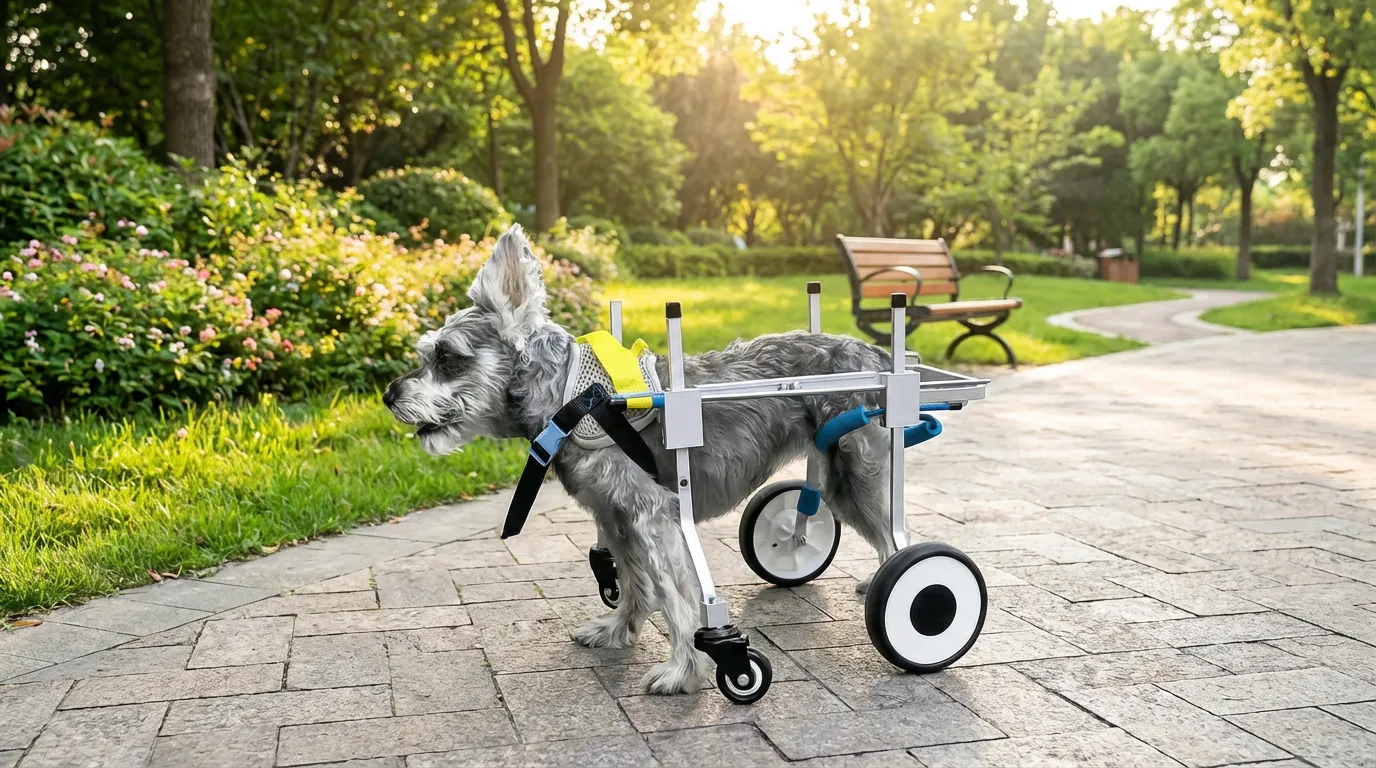
Full-Support Design Explained
A 4 wheel dog wheelchair gives your dog support for both the front and back legs. You might picture a cart with four wheels, but it’s much more than that. This type of wheelchair uses a strong, lightweight frame and a special harness system. The design helps your dog stay balanced and comfortable, even if all four legs are weak.
Here’s a quick look at the main parts you’ll find on most models:
|
Component |
Description |
|---|---|
|
Frame Material |
PVC, lightweight and durable, supports your dog’s weight and keeps the cart steady. |
|
Wheel Configuration |
Four wheels—two swivel wheels in front for turning, two fixed wheels in back for stability. |
|
Harness Design |
Two-piece harness system spreads weight evenly and keeps your dog secure and comfy. |
|
Functionality |
Lets your dog move, explore, and enjoy life, even with front-leg or all-limb weakness. |
You can adjust the height, length, and width of many carts. This means you can get a snug fit as your dog’s needs change. Most frames use PVC pipes, which are light and easy to clean. Some models even have quick-release wheels, so you can take the cart apart for travel or storage.
Tip: Always check the harness and padding before each use. This helps prevent rubbing or pressure spots.
Who Needs a Quad Wheelchair for Dog
Not every dog needs a four wheel dog wheelchair. You want to choose this type if your dog has trouble using both the front and back legs. Here’s how you can tell if a quad wheelchair is the right choice:
-
Your dog cannot move its front and back legs well.
-
Your dog has a condition that makes all four legs weak, like a spinal injury or nerve disease.
-
Your vet says your dog needs full-body support, not just help for the back legs.
-
Your dog struggles to stand or walk, even with help.
A four wheel dog wheelchair gives balanced support. It helps your dog stay upright and move safely. Two-wheel carts only help the back legs, so they won’t work if your dog’s front legs are weak too. If you’re not sure, ask your vet for advice. They can help you pick the best option for your dog’s needs.
Benefits of Four Wheel Dog Wheelchair
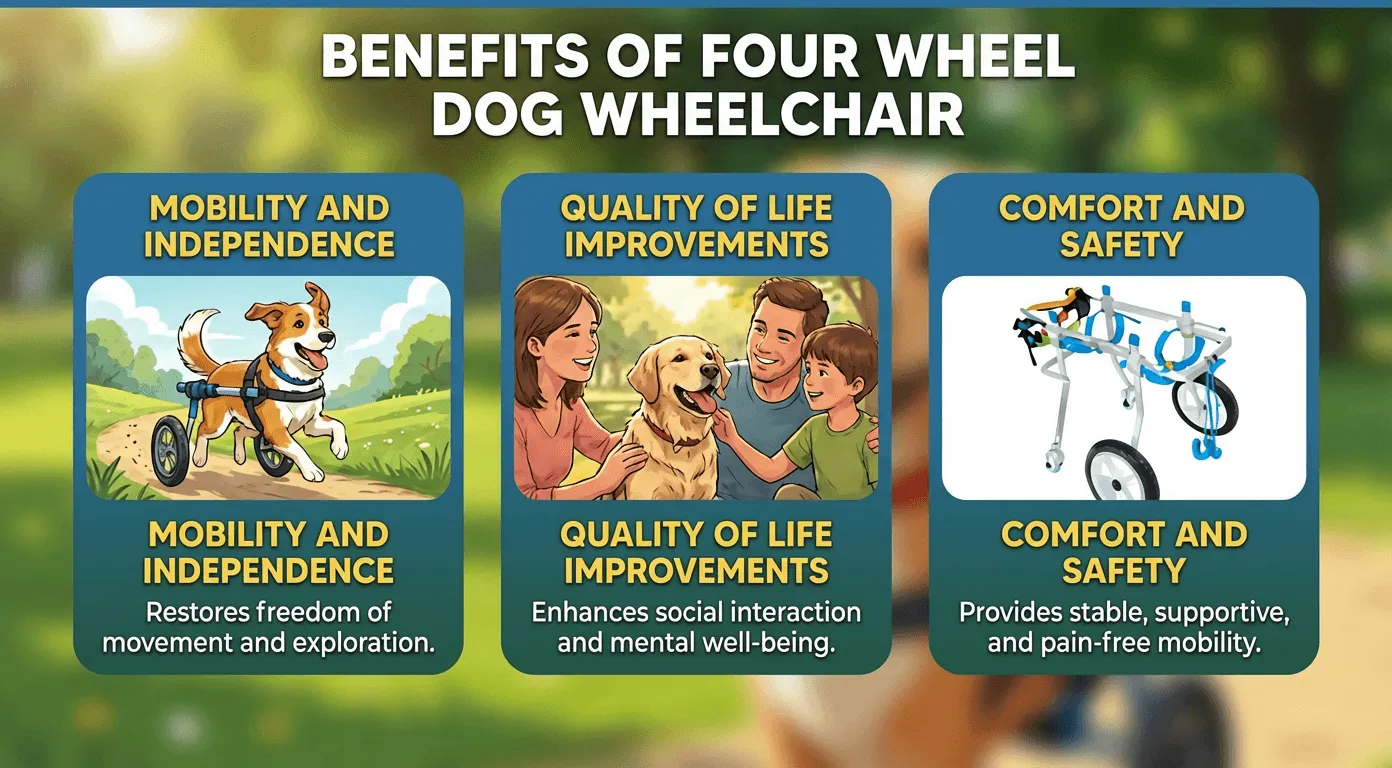
Mobility and Independence
You want your dog to move on its own. A dog 4 wheel wheelchair lets your dog walk, climb, sniff, and sit. The design helps your dog move in a normal way. Studies show dogs in these wheelchairs move almost like healthy dogs. The difference is only about 2%. Your dog can go outside, join walks, and have fun adventures.
Dogs with a four wheel dog wheelchair can move by themselves again. You might see your dog get happy to go outside or meet people.
These wheelchairs help your dog feel more free in many ways:
-
More activity without help
-
Better mood and interest in things
-
Fewer trips or falls
-
Muscles stay strong or get stronger
-
Less pain from not moving
Your dog can do more without you carrying them everywhere. This makes life easier for you and your dog.
Quality of Life Improvements
When your dog can move, their world gets bigger. You may see your dog act like themselves again. Dogs with a four wheel dog wheelchair often look happier and have more energy. They can play, explore, and be with family. This change can make your dog feel better and more included.
|
Benefit |
Description |
|---|---|
|
Regain Mobility |
Dogs can move by themselves, which helps them feel better. |
|
Improved Emotional Well-being |
Walking, running, and playing again makes dogs happier. |
|
Rehabilitation Support |
Wheelchairs help dogs heal faster after injuries or surgery. |
You might see your dog wag their tail more or bark with joy. They may want to play with toys again. These signs show your dog feels good and enjoys life.
Caregiver Relief
Taking care of a paralyzed dog can be hard. You may spend a lot of time lifting or helping your dog move. A four wheel dog wheelchair makes things easier for you. You can help your dog move without hurting your back or worrying about dropping them.
Many owners feel less stress after their dog gets a wheelchair. You get more time to relax and enjoy your pet.
Here are ways the wheelchair helps you as a caregiver:
-
Less lifting or carrying
-
Easier daily tasks, like going outside
-
More time for fun and bonding
-
You feel better knowing your dog is safe
You can enjoy time with your dog instead of worrying all the time.
Comfort and Safety
Your dog’s comfort and safety are very important. A four wheel dog wheelchair has special parts to keep your dog safe and comfy. The frame is light but strong, so it holds your dog without being heavy. Pneumatic wheels help your dog roll over grass, carpet, or pavement. Stirrups let your dog rest or move their legs gently.
|
Safety Feature |
Description |
|---|---|
|
Light Weight Frame |
Strong enough for big dogs, keeps them safe and steady. |
|
Pneumatic Wheels |
Air tires make rides smooth and safe on many surfaces. |
|
Stirrups |
Let pets rest or move their legs, stopping pain or strain. |
|
"Walking" Axle |
Helps dogs go over bumps, making things safer. |
|
Front Harness |
Keeps the cart straight and your dog comfy. |
|
Weight Adjustment |
Spreads weight so front legs do not get too tired. |
|
Adaptable Design |
Can change as your dog’s needs change, keeping them safe. |
You can change the wheelchair as your dog grows or needs more help. The harness keeps your dog in place, so they do not fall or slip. These features stop injuries and help your dog feel good every time they use the cart.
Tip: Always check the fit and padding before each use. This keeps your dog safe and comfy.
A four wheel dog wheelchair lets your dog move, play, and enjoy life again. You can feel calm, knowing your pet is safe and happy.
Choosing the Right Four Wheel Dog Wheelchair
Assessing Your Dog’s Needs
You want your dog to feel comfortable and safe. Before you pick a four wheel dog wheelchair, look at your dog’s health and daily life. Ask yourself these questions:
-
Does your dog have trouble moving all four legs?
-
Has your veterinarian recommended a quad wheelchair?
-
Will your dog use the wheelchair indoors, outdoors, or both?
-
Is your dog growing or losing weight?
-
Does your dog have sensitive skin or need extra padding?
Think about your dog’s size, strength, and personality. Some dogs need more support than others. Always talk to your vet before you buy a wheelchair. Your vet can help you decide what features matter most.
Here’s a quick checklist to guide you:
-
Wheel Type: Pick wheels that match your dog’s favorite places to walk.
-
Adjustability: Make sure the frame can change as your dog’s body changes.
-
Comfort: Look for harnesses with soft padding.
-
Stirrups: These help if your dog’s back legs drag or need support.
-
Ease of Use: Choose a wheelchair that is easy for you and your dog to use.
-
Durability: Select a sturdy cart that lasts.
-
Veterinary Consultation: Always get advice from your vet.
Tip: Write down your dog’s needs and share them with your vet or wheelchair supplier. This helps you get the best fit.
Key Features to Consider
When you shop for a four wheel dog wheelchair, you’ll see many options. Some features make a big difference in comfort and safety. Let’s look at what matters most:
|
Feature Type |
Pros |
Cons |
|---|---|---|
|
Adjustable Wheelchairs |
Fits many sizes and breeds, good for growing dogs |
May not fit perfectly for every dog |
|
Affordable, easy to adjust for different terrains |
Some designs may be less durable |
|
|
Custom Carts |
Perfect fit, durable, best for complex needs |
Higher cost, longer wait time |
|
Supports dogs with special needs |
Less flexible if your dog’s condition changes |
You want a wheelchair that fits your dog now and can change as your dog’s needs change. Adjustable frames let you tweak height, length, and width. Custom carts give a snug fit for dogs with unique body shapes or spinal issues.
Here are some features to look for:
-
Size: Pick a wheelchair that matches your dog’s measurements.
-
Adjustability: Find a cart that lets you change the frame as needed.
-
Versatility: Choose wheels and harnesses that work for different surfaces and activities.
A good wheelchair helps your dog stay active, keeps muscles strong, and lets them enjoy walks and bathroom breaks. You want your dog to feel free and happy.
Note: Soft harnesses and shock-absorbing tires add comfort, especially for dogs with sensitive skin or joint pain.
Measuring for Proper Fit
Getting the right fit is key. If the wheelchair is too big or too small, your dog may feel uncomfortable or unsafe. Here’s how you can measure your dog:
-
Floor to groin: Measure from the pelvic floor to the ground.
-
Widths: Measure across the widest points at the shoulders, ribs, and rump.
-
Rear leg height: Measure from the crease where the thigh meets the body to the toe pads. Do this while your dog stands naturally.
-
Length: For small dogs, measure from the back of the front leg to the end of the body.
-
Confirm fit: Use online sizing guides to check your measurements.
-
Use a metal tape measure for accuracy.
-
Measure on a non-slip floor so your dog stands naturally.
-
Write down each measurement to the nearest ¼ inch.
Tip: Double-check your numbers before you order. A good fit means more comfort and less risk of rubbing or pressure sores.
Customization Options
You can make your dog’s wheelchair unique. Many four wheel dog wheelchairs offer adjustable length, height, and width. This means you can change the fit as your dog grows or loses weight. All-terrain wheels help your dog move on grass, gravel, or carpet. Durable harnesses keep your dog safe and comfy.
Custom carts are great for dogs with special needs. If your dog has a curved spine or unique body shape, a custom wheelchair can help prevent pressure points and support proper alignment. This makes movement easier and more comfortable.
Some brands let you pick colors, wheel types, and extra padding. You can add stirrups for leg support or choose shock-absorbing tires for a smoother ride. These options help your dog feel good and enjoy life.
The price for a four wheel dog wheelchair usually starts around $277. Higher-priced models use lightweight aluminum and offer more comfort features. You might pay more for custom designs, but they last longer and fit better.
Note: Custom wheelchairs take longer to build, but they give your dog the best support. Adjustable models work well for most dogs and cost less.
When to Consult Your Veterinarian
Medical Conditions Requiring Caution
You want your dog to stay safe and comfortable. Some health problems mean you should talk to your veterinarian before using a four wheel dog wheelchair. Your vet knows what is best for your dog’s body and recovery. Here are times when you need expert advice:
-
Your dog feels pain or shows signs of discomfort, like whining or limping.
-
Your dog has open wounds, sores, or skin infections.
-
Your dog is recovering from surgery, especially on the spine or legs.
-
Your vet says your dog needs strict crate rest after an injury.
-
Your dog has breathing trouble or cannot tolerate harnesses.
-
Your dog is very heavy and needs special support.
-
Your dog has fractures or unstable bones.
If your dog just had surgery, your vet may want you to wait before using a wheelchair. Some dogs need complete rest to heal. Pain or untreated injuries can get worse if you use a cart too soon. Always ask your vet before you start.
Tip: If you notice new pain or swelling, stop using the wheelchair and call your vet right away.
Safety and Supervision
You want your dog to enjoy moving, but safety comes first. Never leave your dog alone in a wheelchair. Dogs can get stuck or tip over if you are not watching. You should always supervise your dog during mobility sessions.
Here are some safety steps you can follow:
-
Stay close while your dog uses the wheelchair.
-
Check the harness and padding before each use.
-
Make sure the wheels roll smoothly on the ground.
-
Watch for signs of fatigue or stress.
-
Use the “towel test” to see if your dog can move with support before trying the cart.
Wheelchairs help your dog move, but they do not replace medical care. You still need to manage your dog’s skin, bladder, and overall health. Your vet can help you create a care plan that keeps your dog safe and happy.
Remember, a four wheel dog wheelchair is a tool for supervised mobility. Your dog needs rest, hygiene care, and regular checkups to stay healthy.
Integrating Wheelchair Use Into Daily Life
Supervised Mobility Sessions
You want your dog to feel safe and happy in their wheelchair. Start slow. Let your dog wear the harness for a few minutes each day. Give treats and praise to make it a fun experience. Try short walks in a familiar room. Stay close and watch for signs of stress or tiredness.
Tip: Clear the play area of obstacles. This helps your dog move freely and keeps them safe.
Here’s how supervised sessions help your dog:
|
Benefit |
How It Helps Your Dog |
|---|---|
|
Controlled Movement |
Keeps walks gentle and safe |
|
Strength Building |
Helps muscles stay strong and prevents stiffness |
|
Confidence Boost |
Lets your dog explore and enjoy new things |
Preventing Pressure Sores
Pressure sores can happen if your dog stays in one position too long. You can help prevent them with a few simple steps:
-
Change your dog’s position every two to three hours.
-
Use soft, supportive bedding like memory foam.
-
Add foam wedges or blocks under bony spots.
-
Check your dog’s skin for redness or sores every day.
-
Keep your dog’s skin clean and dry.
-
Feed a healthy diet with enough protein.
Note: Frequent checks and good bedding make a big difference for your dog’s comfort.
Hygiene and Skin Care
Clean skin keeps your dog healthy. Brush your dog daily to spread natural oils and stop mats. Bathe your dog with a gentle shampoo, but not too often. Always check where the harness touches the skin. Look for redness or irritation. Watch for signs of infection, especially near the belly or legs.
-
Give your dog a balanced diet with vitamins and healthy fats.
-
Keep the wheelchair clean and dry after each use.
Physical Therapy and Rehab
Physical therapy helps your dog get stronger. Start with short sessions—just 5 to 10 minutes. Walk on smooth, straight paths before trying turns. As your dog gets used to the wheelchair, you can add more time. Play with favorite toys to make therapy fun.
Your vet or rehab therapist can show you simple exercises to do at home. These sessions help your dog build muscle and confidence.
Tips for Successful Adaptation
Introducing the Wheelchair
You want your dog to feel comfortable with their new wheelchair. Start by letting your dog see and sniff the wheelchair in a safe space. Give treats and praise when your dog shows interest. Most dogs need time to realize they can move again. Some may feel cautious, especially if they are older or have a shy personality. The sounds of the wheelchair might surprise your dog at first. Patience and reassurance help your dog adjust.
Here are some ways to make the introduction easier:
-
Place the wheelchair in a secure area for your dog to explore.
-
Use positive reinforcement, like treats and gentle words.
-
Allow your dog to get used to the harness before taking a walk.
-
Encourage short sessions so your dog does not get tired.
A wheelchair helps your dog stand in a natural position, go to the bathroom cleanly, and enjoy daily walks. Early introduction supports exercise and helps your dog regain strength.
Training and Supervision
Training your dog to use a four wheel wheelchair takes time. You can make it fun with treats and praise. Start in a wide, open space to prevent accidents. Hold treats at nose level to encourage movement. Make sure the harness fits well for comfort. Short training sessions with rest breaks work best. Always supervise your dog during practice.
Try these steps:
-
Let your dog explore the wheelchair.
-
Reward calm behavior with treats.
-
Begin training once your dog feels comfortable.
-
Use healthy treats to encourage walking.
-
Train in a safe, quiet area.
Modern wheelchairs are easy to adjust at home. Simple changes to straps and harnesses can improve comfort and help your dog adapt faster.
Maintenance and Care
Keeping the wheelchair in good shape keeps your dog safe and happy. Schedule tune-ups once or twice a year. Check the frame for flexibility and make sure the wheels move easily. Inspect tires for wear and replace them if needed. Look at bolts and harnesses for looseness or stretching. Tighten leg dial caps and check that struts are secure. Make sure the Leg Ring tubing is shaped and locked in place.
Regular care helps your dog stay active and comfortable. A well-maintained wheelchair supports your dog’s freedom and health every day.
A four wheel dog wheelchair can give your dog a new chance to move and enjoy life. You might see your dog walk on their own again, just like a Border Collie who regained independence after two months of rehab. Other dogs have started moving their legs in just weeks. When you choose the right fit, your dog stays safe and comfortable. Soft padding and adjustable straps help your dog feel good and want to use the wheelchair. Always check with your vet for the best plan. You can help your dog stay happy, active, and loved every day.
FAQ
How do I know if my dog needs a four wheel dog wheelchair?
You should look for signs like weakness in all four legs or trouble standing. If your vet recommends full-body support, a quad wheelchair may help your dog move safely.
Can my dog use the wheelchair indoors and outdoors?
Yes! Most four wheel dog wheelchairs work on many surfaces. You can use them inside your home or outside on grass, pavement, or carpet. Just check the wheels for grip.
How long can my dog stay in the wheelchair each day?
Start with short sessions, about 10–20 minutes. Watch your dog for signs of tiredness. You can slowly increase time as your dog gets stronger. Always supervise your dog.
What should I do if my dog gets a sore or redness from the wheelchair?
Remove the wheelchair right away. Clean the area gently. Call your vet for advice. You may need to adjust the fit or add padding before your dog uses the cart again.

0 Comments