
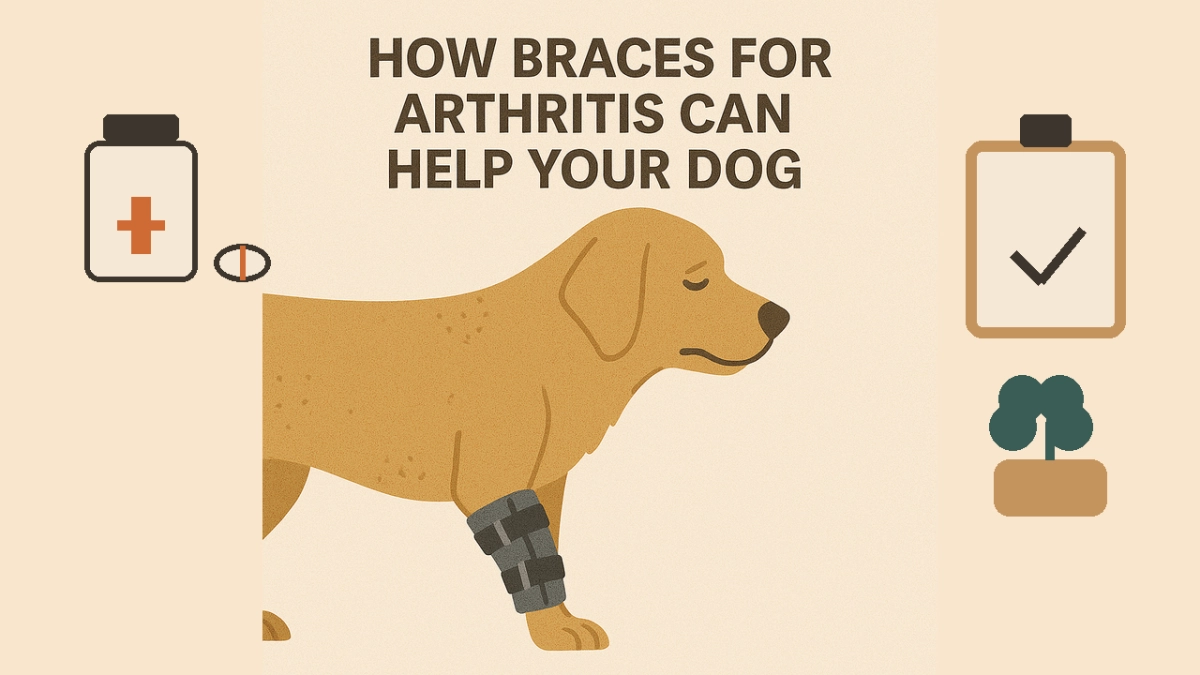
How Braces for Arthritis Can Help Your Dog?
Arthritis is one of the most common causes of chronic pain in dogs, especially as they age. While medications, weight control, and rehab form the backbone of treatment, many dogs also benefit from joint braces—simple, non-invasive tools that support sore joints and make moving around easier. Here’s how they work, which dogs they help most, and how to get started safely.
What exactly is a dog brace?
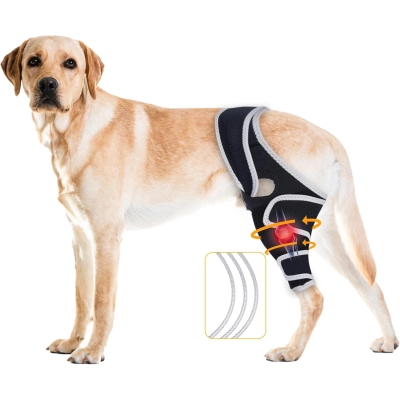
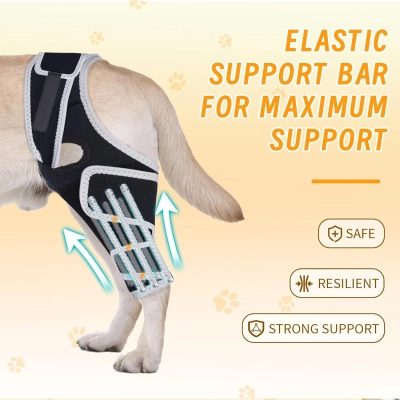
A dog brace (sometimes called an orthosis) is a supportive device worn on a limb or joint to limit painful motion, improve stability, and reduce strain on inflamed tissues. Braces are typically made from neoprene or breathable fabrics with rigid or semi-rigid stays, straps, and padding. They come off-the-shelf (adjustable sizes) or fully custom (built to your dog’s measurements or a leg mold).
Common arthritis targets:
-
Carpal (wrist) braces for front-leg instability
-
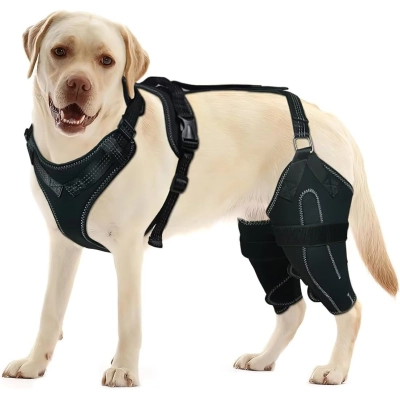
Hock (ankle) braces for hind-leg support
-
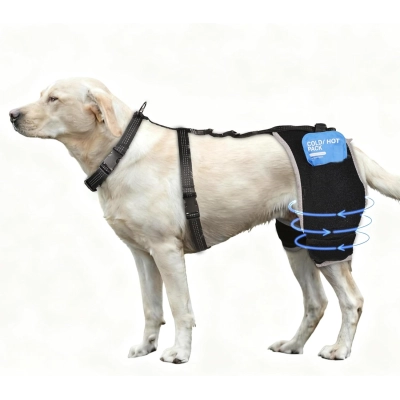
Stifle (knee) braces for arthritis, especially with old CCL injuries
-
Elbow braces for medial compartment disease/arthritis
-
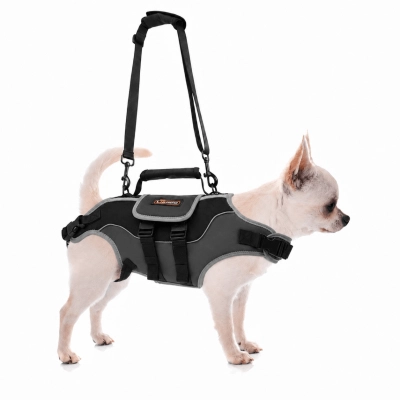
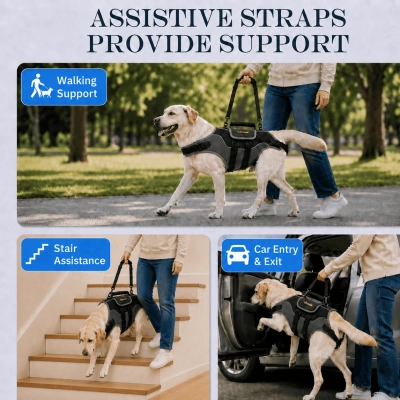
Hip support harnesses (technically not braces) to aid lifting and stability
How braces help arthritic dogs?
-
Stability & motion control: By limiting abnormal or excessive joint movement, braces reduce micro-trauma and “wobble” that aggravate arthritic pain.
-
Load redistribution: Rigid or hinged elements shift some force away from damaged areas, helping your dog bear weight more comfortably.
-
Proprioceptive feedback: Gentle compression and contact improve body awareness, which can tidy up gait and reduce slips.
-
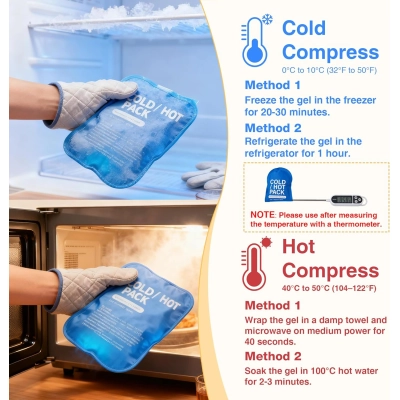
Warmth & compression: Neoprene-style sleeves provide soothing heat and light compression that can ease stiffness.
-
Confidence boost: Many dogs move more willingly with support—more movement means better joint lubrication and preserved muscle.
Who is a good candidate?
Braces can be helpful if your dog has:
-
Mild-to-moderate arthritis with joint laxity or “giving way”
-
Post-injury or post-surgical arthritis that flares with activity
-
instability on slick floors or during turns
-
Pain that improves with gentle manual support
They’re less helpful when:
-
The joint is severely deformed or the limb is very weak
-
There are open wounds, active skin infections, or pressure sores
-
Your dog won’t tolerate wearing the device (even after a gradual intro)
-
You need whole-limb strength rather than localized support (in which case a lift harness and rehab may be better)
Always loop in your veterinarian or canine rehab therapist to confirm the joint involved and choose the right level of support.
Custom vs off-the-shelf
-
Off-the-shelf: More affordable, fast to try, adjustable. Best for mild support or as a trial to see if bracing helps.
-
Custom: Made from detailed measurements or a cast of your dog’s leg for precise fit and stronger stabilization—often ideal for stifle, elbow, or complex cases.
Look for breathable materials, smooth interior seams, secure but easy-to-operate straps, and clear cleaning instructions. A good company will offer fitting guidance, size exchanges, and after-sale support.
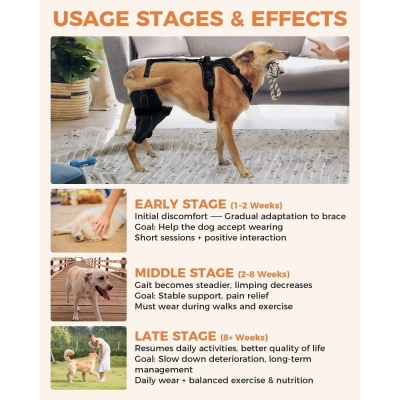
How to introduce a brace (7-day plan)
-
Day 1–2: Wear 10–15 minutes, 2–3 times/day indoors. Reward calm standing and a few steps. Remove and check skin.
-
Day 3–4: Increase to 20–30 minutes, add short, slow walks. Watch for rubbing; adjust straps so the brace doesn’t slide.
-
Day 5–7: Up to 45–60 minutes during active periods or walks. Most dogs won’t need to wear a brace at rest.
-
Thereafter: Use for walks, play, stairs, car transfers, or on slick floors. Remove at night unless your vet says otherwise.
Skin checks are non-negotiable. After each session, inspect for redness, hair loss, dampness, or swelling. Any hotspot that lasts more than 30–60 minutes after removal = pause use and contact your vet/brace provider.
Realistic expectations
-
Some dogs show immediate steadier steps; others take 1–3 weeks to build comfort and muscle memory.
-
Braces work best as part of a multimodal plan:
-
Weight control and measured exercise
-
Vet-approved pain control (e.g., NSAIDs as appropriate)
-
Joint-friendly supplements (e.g., omega-3s) as advised by your vet
-
Rehab therapy: strength, balance, range-of-motion work
-
Home tweaks: non-slip rugs, ramps, raised bowls
-
-
A brace should enable movement, not replace it. Pair support with gentle, regular activity to avoid deconditioning.
Care & maintenance
-
Wipe down after use; hand-wash liners weekly (or as instructed).
-
Keep fur trimmed under straps; dry the limb before donning.
-
Replace worn Velcro or stretched straps promptly—fit matters.
-
Recheck fit after weight changes or coat changes.
0 Comments