
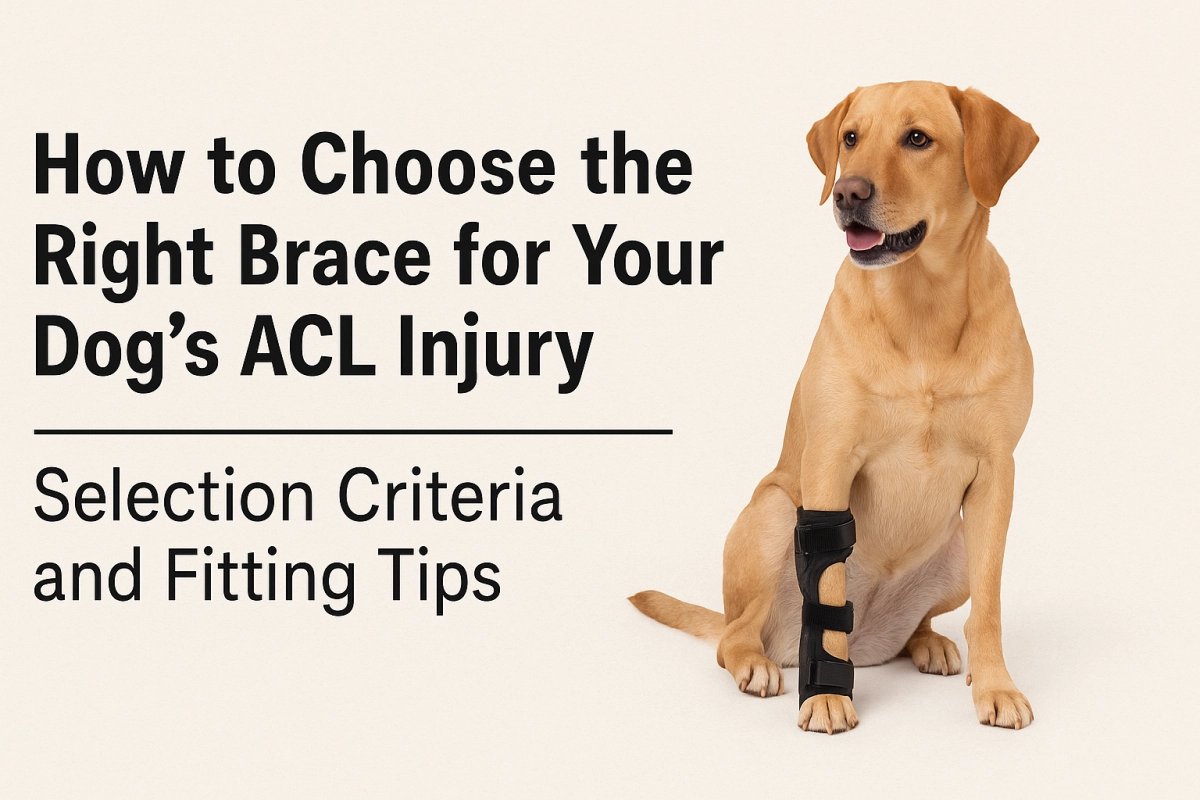
When a dog is diagnosed with an ACL injury—also commonly referred to as a CCL (cranial cruciate ligament) injury—many owners feel overwhelmed. Questions like “Does my dog need surgery?”, ”Are braces effective?”, and “How do I choose the right one?” are very common.
A well-chosen dog ACL brace can play a critical role in non-surgical management, post-surgical recovery, or long-term joint support, especially for dogs with mild to moderate injuries. This article explains how to choose the right brace and how to ensure proper fit, so your dog gets the maximum benefit safely and comfortably.
Understanding ACL Injuries in Dogs
The ACL is a key ligament in your dog’s knee joint that stabilizes the hind leg during movement. When it becomes partially or fully torn, dogs may experience:
-
Limping or favoring one hind leg
-
Difficulty standing up, running, or climbing stairs
-
Swelling or pain around the knee
-
Reduced activity or reluctance to exercise
ACL injuries may occur suddenly due to trauma or develop gradually from joint degeneration. Depending on the severity, age, size, and lifestyle of your dog, a brace may be recommended as part of the treatment plan.
Key Criteria for Choosing the Right ACL Brace
1. Designed Specifically for Knee (Stifle) Support
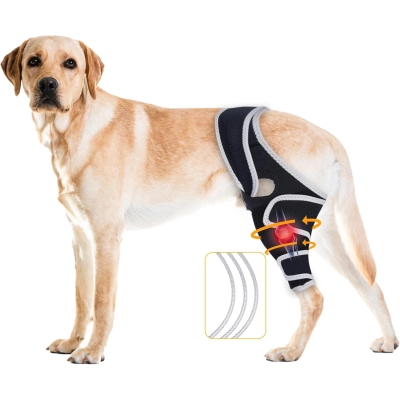
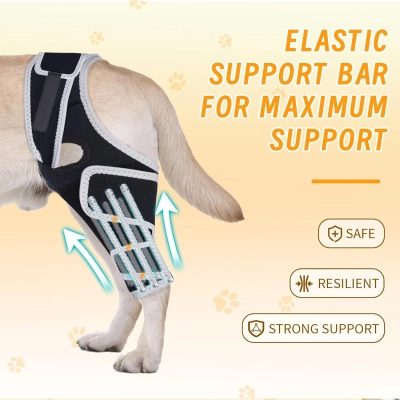
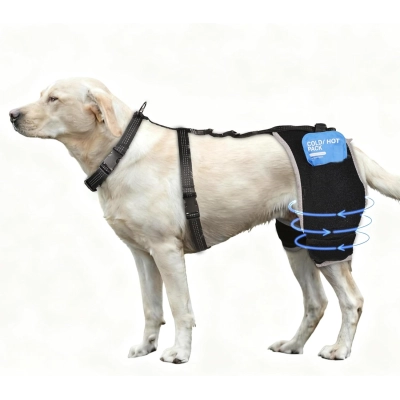
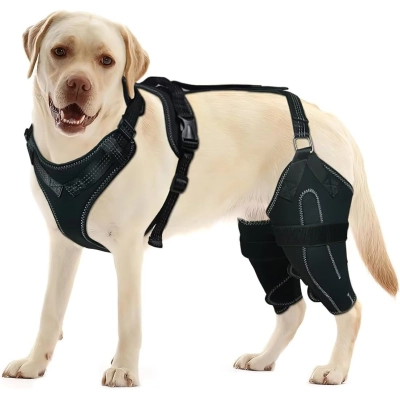
Not all dog braces are created equal. A proper ACL brace should be specifically designed for the stifle (knee) joint, not just a general leg wrap. Look for features that:
-
Stabilize the knee from front-to-back movement
-
Limit excessive rotation
-
Provide consistent compression without restricting circulation
Avoid generic elastic sleeves that lack structural support.
2. Appropriate Support Level for Your Dog’s Condition
Different dogs need different levels of support:
-
Mild or partial tears: Moderate-support braces may be sufficient
-
Post-surgical recovery: Structured braces that protect healing tissue
-
Chronic or non-surgical cases: Rigid or semi-rigid braces for long-term stability
Always consult your veterinarian to determine whether a brace is appropriate and what support level is needed.
3. Correct Size and Adjustability
A brace that doesn’t fit properly can do more harm than good. When choosing a brace:
-
Measure your dog’s thigh, knee circumference, and leg length as instructed
-
Choose adjustable straps for fine-tuning the fit
-
Ensure the brace stays in place without slipping
A well-fitting brace should feel snug but never tight or restrictive.
4. Comfort and Breathability
Dogs may need to wear their brace for several hours a day, so comfort is essential. High-quality braces often feature:
-
Breathable, moisture-wicking materials
-
Soft inner linings to prevent chafing
-
Lightweight but durable construction
If a brace causes rubbing, hair loss, or skin irritation, discontinue use and reassess fit.
5. Ease of Use and Daily Wear
Pet owners should be able to put the brace on and take it off easily. Consider:
-
Clear left/right leg orientation
-
Simple strap systems
-
Easy cleaning and maintenance
A brace that’s too complicated may lead to inconsistent use, reducing its effectiveness.
Fitting Tips for Best Results
✔ Introduce the Brace Gradually
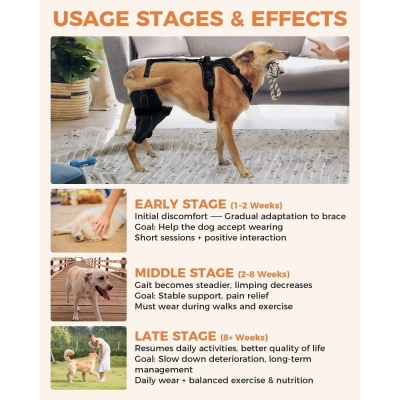
Start with short wear periods (15–30 minutes) and increase gradually as your dog adjusts.
✔ Check the Fit Regularly
Your dog’s muscle mass and swelling may change over time. Recheck strap tightness daily.
✔ Monitor Skin and Behavior
Look for redness, sores, or signs of discomfort. A comfortable dog should move more confidently, not less.
✔ Remove During Rest (Unless Advised Otherwise)
Most dogs don’t need to wear a brace while sleeping unless specifically directed by a veterinarian.
When a Brace Works Best (and When It Doesn’t)
ACL braces work best when used as part of a comprehensive care plan, which may include:
-
Weight management
-
Controlled exercise
-
Physical therapy
-
Joint supplements
However, severe complete tears in large, active dogs may still require surgery. A brace should never replace professional veterinary advice.
0 Comments