
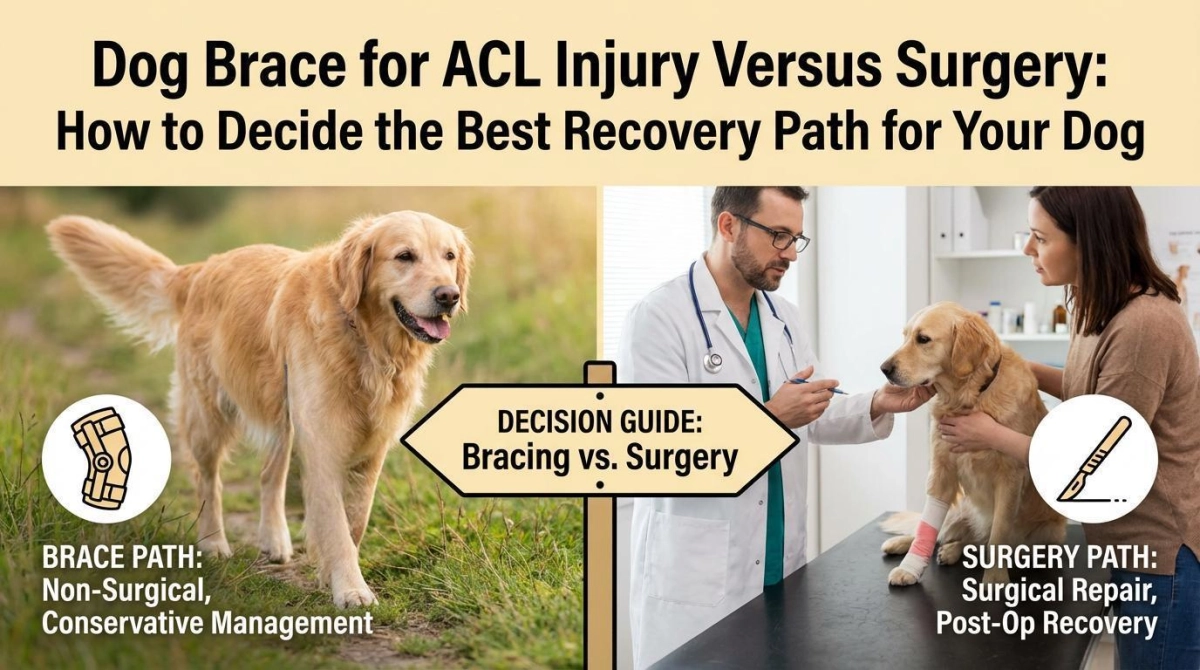
Should you pick a dog brace for ACL injury or choose surgery? This choice can be hard. Many dog owners have some problems, like:
-
Worrying if a brace will work
-
Worrying about how much surgery costs
-
Feeling nervous about their dog's recovery
-
Getting upset when their pet cannot move much
-
Feeling confused about what to do
Every dog is different. You need to set goals that make sense. Think about these important things:
|
Factor |
Description |
|---|---|
|
Age |
Younger dogs usually heal better after surgery. |
|
Size |
Bigger dogs may need different care than small dogs. |
|
Lifestyle |
Dogs that play a lot may need special help. |
|
Weight Management |
Keeping your dog at a good weight helps the knee. |
|
Nutrition |
Eating healthy food helps your dog heal. |
|
Exercise Routines |
Safe exercise stops more injuries from happening. |
|
Post-Treatment Care |
Taking good care after treatment helps your dog heal and stay safe. |
Take time to think about your dog's age, how active they are, and their health. Your choice should fit your dog's needs and what you can do to help them get better.
Key Takeaways
-
Think about your dog's age, size, and how active they are when you pick between a brace or surgery for ACL injuries.
-
A dog brace can help support your dog and ease pain. It works well for small injuries or for older dogs. It can help your dog move again faster.
-
Surgery is usually best for bad injuries. It gives strong support for a long time and helps active dogs do better.
-
You need to visit your veterinarian often to check how your dog is healing. The veterinarian can change the treatment if needed.
-
You should also think about how much money you can spend and how much care you can give. Braces cost less but may need more care over time.
Understanding CCL Injury in Dogs
What Is a CCL Tear?
You may hear your veterinarian mention an "ACL" injury, but in dogs, the correct term is cranial cruciate ligament (CCL). The CCL sits inside your dog's knee and keeps the joint stable. It prevents the tibia from sliding forward and stops the knee from twisting too much. When a ccl tear happens, the ligament gets damaged or breaks. Your dog may limp, struggle to stand, or avoid putting weight on the leg. You might notice swelling, stiffness, or your dog licking the knee. A ccl injury can cause pain and make walking difficult. Over time, the knee may become unstable, leading to arthritis and more discomfort.
Common Risk Factors
Certain dogs have a higher chance of developing a ccl tear. Look at the table below to see which factors matter most:
|
Risk Factor |
Description |
|---|---|
|
Body Weight |
Heavier dogs face a greater risk of ccl injury and ccl tear. |
|
Spay/Neuter Status |
Spayed females, especially large breeds, show increased risk. |
|
Physical Activity |
Some activities can raise or lower the chance of a ccl tear. |
|
Glucocorticoids |
These medications link to higher risk of ccl injury. |
|
Fluoroquinolones |
May increase risk, but not proven in all studies. |
Dogs that are overweight, very active, or have certain medical histories may develop a ccl injury more easily. You should watch for signs if your dog fits these categories.
Why Treatment Choice Matters
Choosing how to treat a ccl tear affects your dog's future mobility and comfort. You want your pet to walk, play, and enjoy life. Surgical options like TPLO or TTA help stabilize the knee and reduce pain. Rehabilitation after surgery helps rebuild strength and prevents further ccl injury. Non-surgical care, such as using a dog brace for ACL injury, may help some dogs, but long-term results can vary. If you ignore a ccl tear, your dog may develop severe arthritis and chronic pain. Proper treatment and follow-up give your dog the best chance for a good recovery.
Tip: Early action and regular check-ups with your veterinarian help you manage a ccl injury and protect your dog's quality of life.
How a Dog Brace for ACL Injury Works
Types of Dog Braces
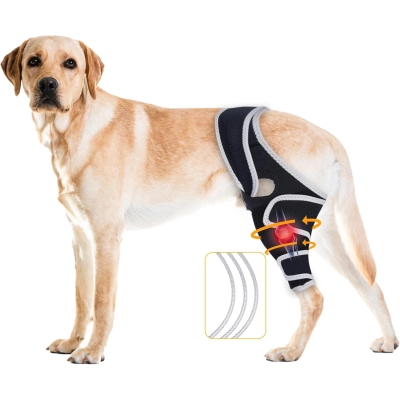
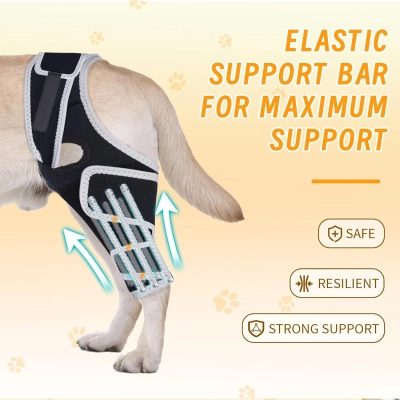
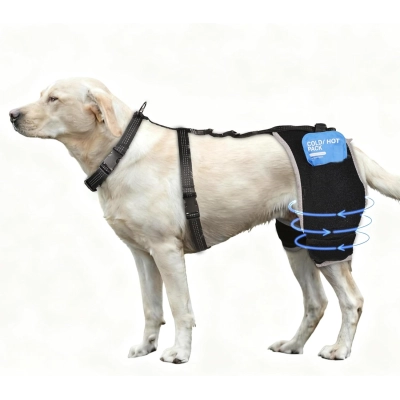
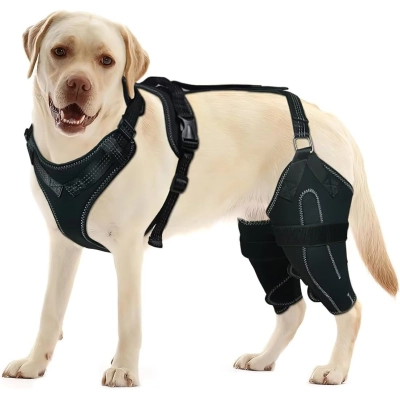
There are different kinds of dog braces for ACL injury. Each one helps your dog's knee in its own way. Compression sleeves are soft and give gentle support. They also help your dog feel where their leg is. Hinged stifle orthoses have hard parts and hinges you can adjust. These braces stop the knee from bending or straightening too much. This helps control how the knee moves and lowers pain. Custom-molded orthoses are made to fit your dog's leg perfectly. A custom dog knee brace uses a mold or scan of your dog's leg. This kind of brace fits best and is good for long-term use. It also works for dogs with special needs. Custom knee braces help dogs with legs that look different or need more support. There are also hock and knee braces for dogs with weak ankles or knee problems. The best dog brace for ACL injury depends on your dog's size, how active they are, and their injury.
How a Dog Leg Brace Supports Recovery
A dog brace for ACL injury helps your dog heal in many ways. The brace keeps the knee steady and stops painful moves. This lets your dog walk better and helps stop new injuries. The main good things about a dog leg brace are better weight balance, less limping, and more confidence when walking. Many owners see their dogs move better and feel less pain. Braces for ccl recovery focus on keeping the knee stable and comfy. New braces use better materials and custom fits to help more.
|
Mechanism |
Description |
|---|---|
|
Enhanced Support |
Keeps the dog’s knee in place but does not stop all movement. |
|
Pain Relief |
Stops too much movement, which helps lower pain from ACL injuries. |
|
Promotes Healing |
Makes the knee stable so it can heal and helps your dog walk again faster. |
Studies show a dog brace for ACL injury can help dogs stand and walk better. Most owners say their dogs move more easily.
New materials, better fitting, and research make today’s dog knee braces work better than before.
Fitting and Acclimation Tips
A dog brace for ACL injury must fit right to work well. First, measure your dog's chest, thigh, and leg height while your dog stands. Use a soft tape and make sure you can put one finger under the tape. This makes sure the brace is not too tight. After you put the brace on, check for gaps or rubbing. If you see these, change how the brace fits.
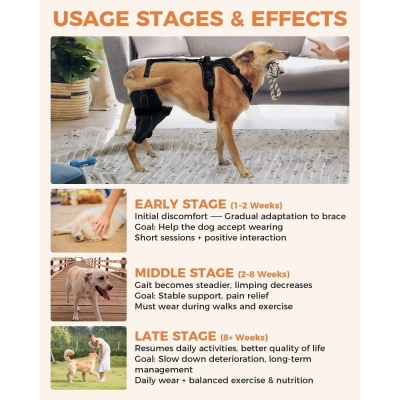
Follow this easy schedule to help your dog get used to the brace:
-
Days 1–2: Let your dog wear the brace for 15–30 minutes, two or three times a day inside.
-
Days 3–7: Let your dog wear it for 1–2 hours with short walks on a leash.
-
After week 1: Use the brace when your dog is active and take it off when your dog rests or sleeps.
A custom dog knee brace might take longer for your dog to get used to. Watch your dog and check the skin for red spots or sores. Always ask your veterinarian if you are not sure about the fit or comfort.
Surgery for CCL Injury: What to Expect
Common Surgical Options
Your veterinarian might talk about different surgeries for CCL injuries. Each surgery helps your dog's knee in its own way. Here is a table that shows the most common choices:
|
Procedure Type |
Description |
Suitability |
|---|---|---|
|
Arthroscopy |
Least invasive; uses small incisions to look inside the knee. |
Best for partial tears. |
|
Lateral Suture (Extracapsular) |
Uses strong sutures outside the joint to hold the knee stable. |
Good for dogs under 50 pounds. |
|
TTA (Tibial Tuberosity Advancement) |
Moves the tibia forward and secures it with a plate. |
Works for many dog sizes. |
|
TPLO (Tibial Plateau Leveling Osteotomy) |
Levels the tibial plateau with a plate and screws. |
Best for larger breeds. |
Surgery can cost between $3,000 and $6,000 or more. The price depends on your dog's size, where you live, and what care your dog needs after surgery.
Recovery and Rehabilitation
After surgery, your dog will need time and help to heal. You will follow a recovery plan with different steps:
-
Weeks 1–2: Keep your dog resting. Only let them go outside for bathroom breaks with help. Watch the cut for swelling or redness.
-
Weeks 3–8: Start short walks on a leash. Add gentle therapy, like stretching and weight-shifting.
-
Months 2–3: Make walks longer and add sit-to-stand or hill walking. Use underwater treadmill therapy if you can.
-
3–6 Months: Slowly let your dog do normal things again. Keep up with exercise and watch their weight.
Physical therapy helps your dog get stronger and walk better. Your veterinarian may tell you to use ice, give pain medicine, and come in for check-ups.
When Surgery Is Preferred
Veterinarians often say surgery is best if your dog has a full tear, limps a lot, or has a loose joint. Surgery gives a steady recovery and helps your dog move normally faster than other treatments.
Dogs with clear pain, swelling, or a wobbly knee usually do best with surgery. Your veterinarian will help you choose if surgery or a dog acl brace is right for your dog.
Dog Brace vs. Surgery: Choosing the Best Path
Key Decision Factors
Picking between a dog brace for ACL injury and surgery for ccl injuries can be tough. You want your dog to feel better, but every dog is different. You need to think about a few things before you choose. Here are some points to help you decide:
-
Think about if your dog feels okay wearing a standard dog knee brace. Some dogs do not like braces.
-
How bad is the ccl tear? If it is mild or moderate, a good brace might help. If it is very bad, surgery is often needed.
-
Your dog's age and health matter. Older dogs or sick dogs may do better with gentle care.
-
Osteoarthritis risk is important. Both braces and surgery try to help the joint, but they work in different ways.
-
Meniscal injury can make things harder. It can change how your dog heals.
-
Your budget and how much you can help at home matter.
-
How active your dog is and what they do every day. Active dogs may need more help or surgery.
"Braces can help dogs with knee pain, especially with physical therapy and weight control. Not every dog needs surgery."
Veterinarians say braces work well for older dogs, sick dogs, or when surgery is not possible. Studies show custom stifle orthoses can help the knee and help dogs move better if they cannot have surgery. In 2023, a study found dogs with moderate ccl injuries using braces got 65% better at moving in eight weeks, especially if treated early.
Brand-Neutral Comparison Table
|
Feature |
Dog Brace for ACL Injury |
Surgery for CCL Injury |
Best For |
Trade-Offs / Considerations |
|---|---|---|---|---|
|
Pain/Joint Stability |
Provides support, reduces pain |
Mechanical correction, strong stability |
Mild/moderate ccl tears, seniors, medical issues |
May not stop progression of instability |
|
Time to Function |
Days to weeks (adapting to brace) |
8–16 weeks (restricted activity) |
Dogs needing quick mobility |
Longer recovery for surgery |
|
Long-Term Joint Health |
May slow arthritis, effect varies |
Often better long-term joint health |
Dogs with mild arthritis |
Arthritis can still develop |
|
Cost Range |
$200–$700 per brace |
$3,000–$7,000+ per knee |
Budget-conscious owners |
Surgery is a higher one-time cost |
|
Activity Level Suitability |
Low to moderate activity |
High activity, working dogs |
Less active pets |
Braces may not suit very active dogs |
|
Risks/Complications |
Skin irritation, persistent instability, meniscal injury |
Incisional pain, infection, bone cancer risk |
Dogs with lower risk tolerance |
Surgery has higher complication risk |
|
Caregiver Effort |
Daily fitting, monitoring, rehabilitation therapy |
Post-op care, restricted activity, rehabilitation therapy |
Owners able to manage at-home care |
Both require commitment |
Cost, Risks, and Owner Preferences
You should think about money, risks, and what you want when picking a treatment for ccl injuries. Surgery costs more at first, but it often fixes the problem for good. Braces cost less at first, but you might need more than one or extra help if your dog's knee does not get better.
|
Option |
Initial Cost |
Long-term Expenses |
Notes |
|---|---|---|---|
|
Dog Braces |
Generally lower |
Potentially higher if surgery is needed |
Can manage pain and improve mobility but may not be a permanent solution. |
|
CCL Surgery |
Higher |
One-time cost, minimizes future expenses |
Provides a permanent solution, improving long-term health and quality of life. |
Both choices have risks. Surgery can cause pain, swelling, infection, and a higher chance of bone cancer, especially after TPLO. Some dogs still have joint problems or get more meniscal injuries. Braces do not always stop ccl injuries from getting worse, and they cannot replace surgery for big, active dogs with full tears.
|
Complication Type |
Description |
|---|---|
|
Incisional pain |
Pain at the surgical site post-operation. |
|
Wound infections |
Infections that can occur at the site of surgery. |
|
Persistent joint instability |
Ongoing instability in the knee joint, which can last up to 2 years. |
|
Further meniscal injuries |
Additional injuries to the meniscus that may occur after surgery. |
|
Patellar desmopathy |
Affects a significant percentage of dogs post-surgery, leading to pain and dysfunction. |
|
Delayed or incomplete healing |
Healing that does not progress as expected, potentially leading to further complications. |
|
Decreased range of motion |
Reduced mobility in the stifle joint following surgery. |
|
Osteosarcoma risk |
Increased likelihood of developing bone cancer post-surgery, significantly higher in TPLO cases. |
What you want matters. You might pick a dog brace for torn ACL injury if you do not want surgery, have an older dog, or need to save money. Some owners like gentle care because they can help their dog at home. Others want a lasting fix and pick surgery for their dog's knee.
Recovery times are different. Surgery needs 8 to 16 weeks of rest and therapy. Braces let your dog move more and heal in days to weeks. Over 90% of dogs get full knee use after ccl surgery, while 60–75% get better with bracing.
Consulting Your Veterinarian
You should always talk to your veterinarian before you choose. Your vet will help you know how bad the ccl tear is, your dog's health, and which treatment is best. Use this checklist to help you decide:
Owner Decision Checklist:
-
Get a clear answer about the ccl injury from your veterinarian.
-
Ask about the grade of the tear (partial or complete).
-
Think about your dog's size, age, and how active they are.
-
Think about how you can help every day, fit a standard dog knee brace, and do therapy.
-
Look at your budget and how long recovery will take.
-
Plan regular check-ups to see how your dog is doing and change the plan if needed.
-
Talk about the risks of meniscal injury, arthritis, and joint health.
-
Ask your vet about how well both choices work and what to expect for your dog's knee.
Tip: Be realistic. Braces help with comfort and movement, but they do not fix the ligament. Surgery helps the knee stay steady and work well for a long time, but it does not always cure everything.
You want your dog to feel good. Your veterinarian will help you make the best choice. Both options need care and time. The right choice depends on your dog's needs, your life, and how you can help your dog get better.
Picking between a dog brace for ACL injury and surgery depends on your dog's size, how much they move, and their health. Surgery usually works very well and helps dogs limp less, especially if your dog is big or likes to play a lot. Braces can help with pain and make the knee steady for mild injuries or for older dogs.
|
Treatment Type |
Excellent Outcomes |
Common Owner-Reported Benefits |
|---|---|---|
|
TPLO Surgery |
98% |
Long-term stability |
|
Braces |
86% |
Pain relief, improved mobility |
You should always talk to your veterinarian. They will help you pick the best way for your dog to get better. Making smart choices and caring for your dog every day helps them stay happy and active. 🐾
FAQ
What Is a CCL Injury in Dogs?
A CCL injury means your dog’s knee ligament tears or stretches. This causes pain and makes walking hard. You may see limping, swelling, or your dog licking the knee.
How Does a Dog Brace for ACL Injury Help?
A dog brace for ACL injury supports your dog’s knee. It keeps the joint steady and helps reduce pain. Your dog can walk better and feel more confident during recovery.
When Should You Choose Surgery Over a Brace?
You should choose surgery if your dog has a complete tear, severe limping, or is very active. Surgery gives strong stability and helps most dogs return to normal movement.
Can Small Dogs Recover with a Brace Alone?
Many small dogs with mild CCL injuries do well with a brace, rest, and rehab. Your veterinarian will help you decide if a dog brace for ACL injury is enough for your pet.
How Long Does Recovery Take with a Brace?
Most dogs start to feel better in days to weeks. Full recovery may take several months. You need to follow your veterinarian’s plan and help your dog with gentle exercise.
What Are the Risks of Using a Dog Brace?
Risks include skin irritation, slipping, or discomfort. You should check the fit daily and watch for red spots. Remove the brace at rest and ask your veterinarian about any problems.
How Do You Measure and Fit a Dog Brace?
Use a soft tape to measure your dog’s thigh, leg, and knee while standing. Make sure the brace is snug but not tight. You should be able to fit one finger under the straps.
Should You Combine a Brace with Other Treatments?
Yes. Weight control, physical therapy, and pain medicine help your dog heal. A dog brace for ACL injury works best with a full recovery plan from your veterinarian.
0 Comments