
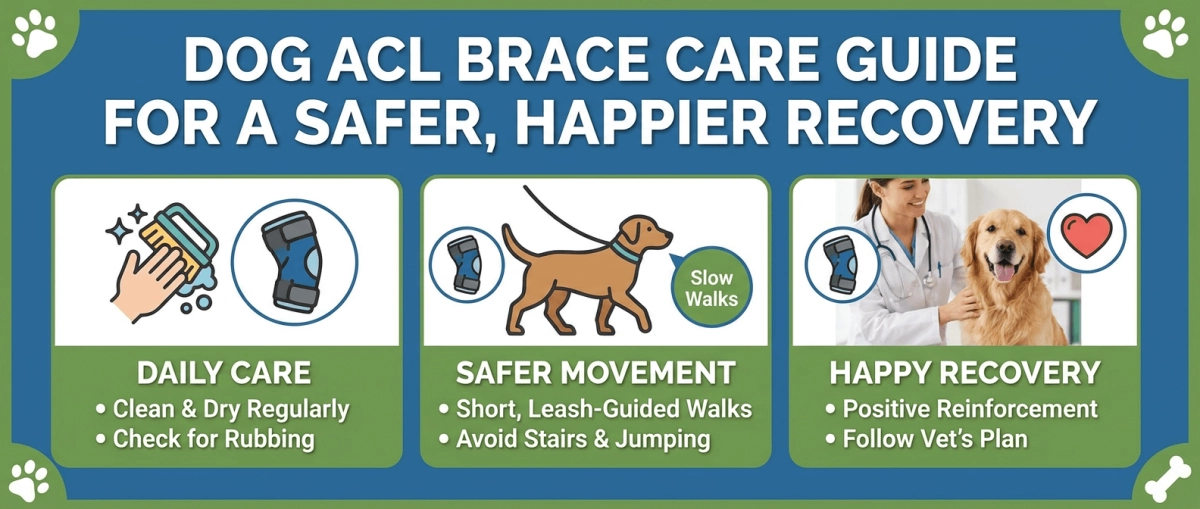
Caring for your dog with a dog acl brace may feel overwhelming at first, but you can handle it with some simple steps. Many dogs face ACL (CrCL) injuries each year, with rates ranging from 0.56% to 2.6%. You might notice challenges like knee pain, muscle loss, or even instability in your dog’s leg. Your attention to activity control, skin protection, and rehab support makes all the difference. Stay consistent, check the brace daily, and keep your dog comfortable. Your care helps your dog recover and feel happier at home.
Key Takeaways
-
Look at your dog's ACL brace every day to make sure it fits well and feels good. A brace that fits right helps your dog heal and stops more injuries.
-
Watch your dog's skin for any sore spots or red areas under the brace. Checking every day helps you find problems early and keeps your dog happy.
-
Keep your dog from running or jumping while healing. Use a plan for leash walks to help your dog heal safely and not get hurt again.
-
Help your dog stay at a good weight. Eating healthy food takes pressure off the hurt knee and helps your dog get better.
-
Talk to your veterinarian often. Regular visits make sure the brace fits and your dog is getting better.
Understanding Dog ACL (CrCL) Injuries
What Is a Dog ACL Tear
You might hear your vet talk about a dog acl injury, but what does that really mean? In dogs, the acl is actually called the cranial cruciate ligament, or CrCL. This ligament sits inside your dog’s knee and helps keep the joint stable. When the acl tears, your dog can start limping, feel pain, or even stop using the leg.
-
CrCL injuries are the most common orthopedic problem seen in dogs.
-
Rupture of the acl is a leading cause of hind limb lameness and pain in dogs.
Most acl tears in dogs happen because of slow wear and tear. The unique shape of a dog’s knee puts extra stress on the ligament. Over time, this stress can cause the acl to weaken and finally tear. Sometimes, younger dogs under four years old can tear their acl suddenly while running or jumping. Older dogs, especially those between five and seven years old, often get acl injuries because the ligament gets weaker as they age.
Why Bracing Is Used
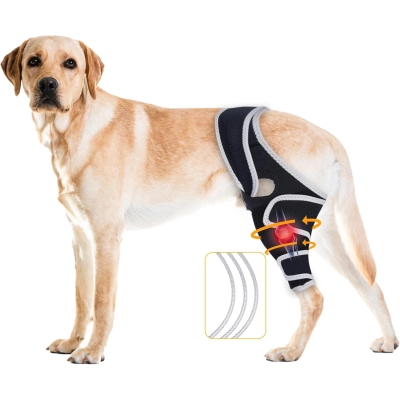
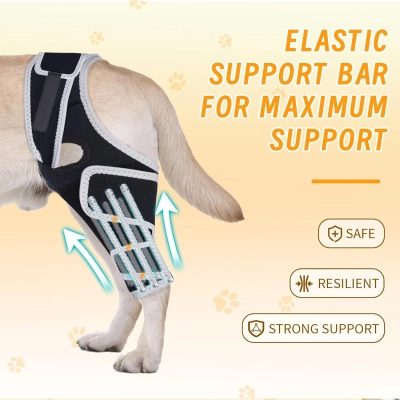
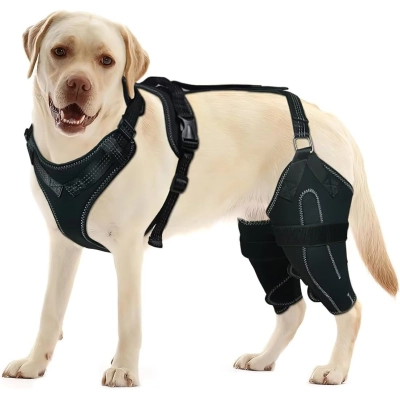
When your dog has an acl injury, you want to help them feel better and move safely. A dog acl ccl brace supports the knee and helps your dog walk with less pain. The brace does not heal the ligament, but it keeps the knee stable so your dog can recover more comfortably.
You might use a dog acl brace in several situations:
-
Conservative management if your dog is not having surgery
-
Support before surgery to reduce pain and help keep muscles strong
-
Extra help after surgery, if your vet recommends it
-
Long-term support for dogs with chronic knee problems
Recent studies show that dogs using a brace can put more weight on the injured leg and walk more evenly. Bracing can help your dog avoid putting too much pressure on the other leg, which lowers the risk of new injuries. Many owners find that a dog acl brace gives their pet a better chance at a safe and happy recovery.
Dog ACL Brace Fit and Skin Care
How to Fit a Dog Knee Brace
Getting the right fit for your dog knee brace is the first step to a safer recovery. You want your dog to feel comfortable and supported, not squeezed or pinched. Here’s a simple way to make sure you fit the brace correctly:
-
Start with a vet check. Your vet will confirm the acl injury and help you choose the best dog knee brace for your dog.
-
Measure your dog’s leg. Use a soft tape to measure around the knee and thigh. Accurate measurements help you pick the right size brace.
-
Watch a tutorial video. Many brands offer videos that show you how to put on the dog knee brace step by step.
-
Align the joint. Place the brace so it lines up with your dog’s knee. Make sure the brace covers the area where the acl needs support.
-
Secure the straps. Fasten each strap snugly, but not too tight. You should be able to slide a finger under each strap.
-
Check the fit. Look for gaps or bunching. The brace should stay in place when your dog walks, without slipping or twisting.
-
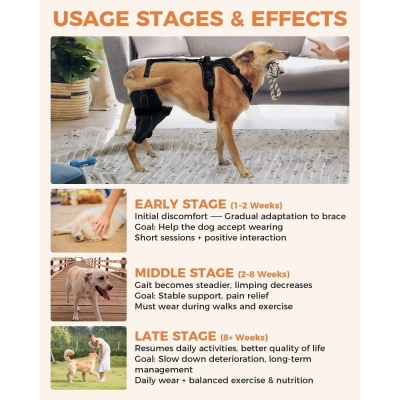
Break-in period. Let your dog wear the brace for short periods at first. Gradually increase the time as your dog gets used to it.
-
Use the brace during activity. Your dog should wear the dog knee brace when walking or moving, not all day and night.
Tip: If your dog seems uncomfortable or tries to chew the brace, take a break and try again later. Patience helps your dog adjust.
Preventing Rubbing and Irritation
Skin protection is just as important as joint support. Many dogs experience rubbing or irritation from a dog knee brace, especially in the first few weeks. Studies show that about 46% of dogs can develop skin problems while wearing a brace, and 32% may need medical attention. You want to catch these issues early.
-
Check for redness, hair loss, or pressure marks under the brace and straps.
-
Keep the area clean and dry. Moisture can cause friction and hot spots.
-
Use a gradual break-in schedule. Start with 30 minutes to an hour, then slowly increase wear time.
-
If you see swelling, open sores, or your dog limps more, remove the brace and call your vet.
Note: Dogs with sensitive skin may need extra padding or shorter wear times. Ask your vet for advice if you notice any irritation.
Daily Skin Checks
Daily skin checks help you spot problems before they get worse. Make this part of your routine every time you put on or take off the dog knee brace.
-
Look behind the knee, inside the thigh, and under each strap.
-
Feel for warmth, swelling, or pain. Your dog may flinch if something hurts.
-
If you notice any changes, pause brace use and let the skin recover.
You should also reassess the fit of the brace as your dog’s swelling changes. In the first week, swelling can go down quickly. Monitor the fit every 2-3 hours at first, then every 4-6 hours as your dog gets used to the brace. Give your dog breaks from the brace for 15-20 minutes every few hours. Lightly massage the leg from the foot up to help with fluid movement.
Tip: Write down any skin changes or fit issues in a notebook. Share this with your vet during checkups.
A well-fitted dog knee brace helps your dog move safely and recover faster. Your attention to fit and skin care keeps your dog comfortable and happy throughout the acl recovery process.
Activity Management for Dog ACL Surgery Recovery
Helping your dog recover from an acl injury takes patience and a good plan. You want to keep your dog safe, comfortable, and on track for a strong recovery. Managing activity is one of the most important parts of dog acl surgery recovery. Let’s break down what you need to know.
Leash Walks and Restrictions
After an acl injury or surgery, your dog needs strict rest. For the first 6–8 weeks, you must avoid activities that can cause re-injury or slow down healing. Running, jumping, rough play, and using stairs are off-limits. Even a quick dash across the room can put too much strain on the knee. Keep your dog away from dog parks, free play, and swimming in open water for at least three months.
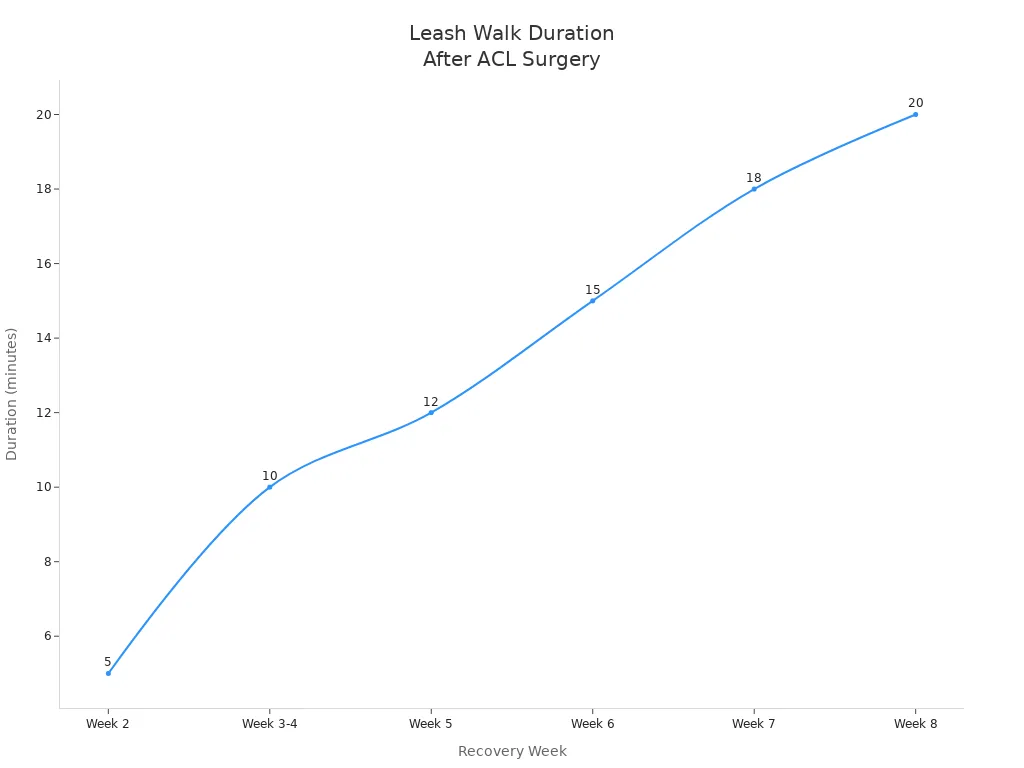
You should only take your dog outside for short, controlled leash walks. These walks are mainly for bathroom breaks at first. As your dog acl surgery recovery progresses, you can slowly increase the number and length of walks. Here’s a simple guide to follow:
|
Week |
Frequency |
Duration |
|---|---|---|
|
2 |
1 walk/day |
5 minutes |
|
3-4 |
3 walks/day |
10 minutes |
|
5 |
3-4 walks/day |
12 minutes |
|
6 |
3-5 walks/day |
15 minutes |
|
7 |
3-5 walks/day |
18 minutes |
|
8 |
3-5 walks/day |
20 minutes |
Start with short, slow walks. Let your dog sniff and move at a gentle pace. Always use a leash, even in your yard. Gradually increase the time as your vet suggests. This slow approach helps your dog acl surgery recovery go smoothly and keeps the knee safe.
Tip: If your dog seems tired or starts limping, cut the walk short and let them rest. Every dog heals at a different pace.
Home Setup for Safe Movement
Your home plays a big role in your dog’s recovery. You want to create a safe space that helps your dog avoid slips, falls, or sudden movements. Simple changes can make a big difference in dog acl surgery recovery.
Here are some easy home treatment ideas:
-
Cover floors with non-slip rugs, yoga mats, or rubber-backed runners.
-
Remove loose throw rugs, sharp corners, and clutter.
-
Block off stairs and furniture with baby gates or closed doors.
-
Make sure mats lie flat to prevent tripping.
-
Keep electrical cords out of reach.
-
Set up a calm, quiet area for your dog to rest.
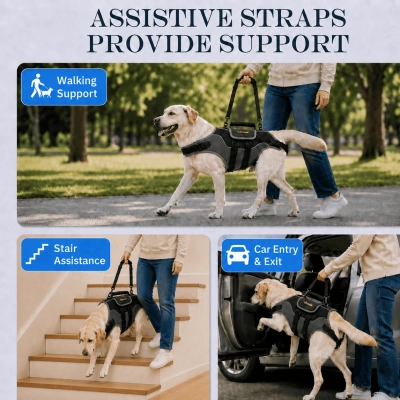
A crate or small room works well for rest time. This keeps your dog from running or jumping when you’re not watching. You can also use an orthopedic dog bed to reduce joint stress and help your dog feel cozy.
|
Modification |
Purpose |
|---|---|
|
Use non-slip rugs or carpets |
Prevents slipping on hardwood floors. |
|
Install pet ramps |
Helps dogs get onto furniture or in the car without jumping. |
|
Elevate food & water bowls |
Reduces awkward joint positions. |
|
Provide an orthopedic dog bed |
Reduces joint stress during sleep. |
Note: A safe home setup is a key part of home treatment and helps your dog rear acl brace work better.
Weight and Joint Support
Keeping your dog at a healthy weight is one of the best things you can do for joint recovery. Extra pounds add stress to the injured knee and can slow down dog acl surgery recovery. A balanced diet and portion control help your dog stay fit.
|
Benefit |
Description |
|---|---|
|
Reduces strain |
Lessens the load on the stifle joint and surrounding tissues. |
|
Lowers inflammation |
Decreases inflammation linked to obesity-related joint issues. |
|
Improves prognosis |
Enhances recovery outcomes post-surgery (TPLO or TTA). |
-
Excess body weight increases stress on joints for dogs of all ages and breeds.
-
A healthy weight and gentle exercise support healing.
-
Talk to your vet about the best diet for your dog during recovery.
You can also help your dog’s joints by following a structured rehab plan. Start with strict rest, then add light leash walks and simple exercises as your vet recommends. Sit-to-stand movements, balance training, and hydrotherapy can all help build strength. Always avoid high-impact activities like running or jumping until your vet gives the okay.
Callout: Your attention to activity, home treatment, and weight control gives your dog the best chance for a safe and happy dog acl surgery recovery. Stay patient and celebrate small wins along the way!
Rehabilitation and Recovery Support
Gentle Exercises and Rehab
You want your dog to get stronger after an acl injury. Gentle rehab exercises help your dog build muscle and move better. These exercises also help the joint heal. Always ask your veterinarian before you start new activities. Here are some easy exercises you can try with your dog acl brace:
|
Exercise Name |
Objectives |
Instructions |
Frequency |
|---|---|---|---|
|
Weight Shifting |
Encourage weight bearing on the injured leg |
Stand your dog squarely, gently push their hip to shift weight, hold briefly |
10 reps, 2-3 times/day |
|
Three Point Stand |
Build strength and balance |
Lift the opposite front leg, let the injured leg bear weight |
10 reps, 2-3 times/day |
|
Hip Flexor Stretch |
Strengthen core and rear legs |
Lure your dog to place front paws on a step, hold for 10-15 seconds |
5 reps, 2-3 times/day |
|
Sit to Stand |
Improve joint range of motion |
Ask your dog to sit, then stand, keeping back paws on the ground |
10 reps, 2-3 times/day |
|
Cavalletti (Trot Poles) |
Increase knee joint movement |
Guide your dog through elevated poles, one leg per section |
10 reps, 2 times/day |
Hydrotherapy is another good choice. Swimming or walking in water helps your dog move without hurting the knee. Water makes it easier for your dog to exercise. Studies show water can lower pain and muscle strain. Hydrotherapy also helps the joint move better, which helps healing.
Monitoring Progress
Watching your dog’s recovery helps you notice problems early. You can keep a journal with daily notes about your dog’s pain and walking time. Take photos of the incision or brace area for the first two weeks. Look for these signs of progress:
|
Indicator |
Description |
|---|---|
|
Weight-bearing ability |
Your dog puts more weight on the injured leg |
|
Pain management |
Less discomfort and easier movement |
|
Exercise introduction |
Your dog tries new rehab activities |
|
Walking duration |
Longer walks each week |
|
Weight management |
Healthy body weight supports joint healing |
Recovery with a brace can take weeks or months. Your dog may need time to get used to the dog acl brace. If you see steady progress, you are doing things right.
When to Call the Vet
You want to keep your dog safe during acl recovery. Some warning signs mean you should call your veterinarian right away:
|
Warning Sign |
Description |
|---|---|
|
Popping Sound |
Loud pop from the knee |
|
Intense Pain |
Sharp discomfort or yelping |
|
Rapid Swelling |
Sudden swelling around the knee |
|
Difficulty Bearing Weight |
Trouble standing or walking |
|
Knee Instability |
Knee feels wobbly or gives out |
If you see any of these signs, stop using the brace and call your veterinarian. Regular check-ins help you make sure the dog acl brace fits well. Your veterinarian can help you with each step and answer your questions.
Tip: Be patient and tell your veterinarian how your dog is doing. Your care helps your dog recover and feel better.
Common Mistakes with Dog ACL Braces
When you help your dog recover from an acl injury, you want to avoid common mistakes that can slow down healing. Paying attention to how you use the brace makes a big difference. Let’s look at the top errors and how you can prevent them.
Overuse or Poor Fit
You might think that more time in the brace means faster healing, but that’s not true. If your dog wears the brace too long without breaks, it can cause discomfort and even slow recovery. Always give your dog time out of the brace each day. Check the fit often, especially in the first few weeks. A brace that slips, twists, or feels too tight can strain your dog’s knee and make walking harder.
Here are some mistakes to watch for:
-
Using the wrong size or type of brace for your dog
-
Skipping the break-in period and putting the brace on for long stretches right away
-
Not checking for proper alignment with your dog’s knee
-
Treating the brace as a replacement for a vet visit
You want the brace to support your dog, not cause new problems. Make sure you follow the fitting instructions and adjust as your dog’s swelling changes.
Ignoring Skin Issues
Skin problems are one of the most common reasons for brace trouble. If you ignore redness, rubbing, or sores, your dog can end up with painful injuries.
Braces aren’t benign: skin abrasions, rubs, and fit-related injuries are common, and improper fit worsens outcomes. A clinical review of orthosis use documented skin complications and other device-related problems that owners rarely expect.
Check your dog’s skin every day, especially under the straps and behind the knee. If you see any irritation, take off the brace and let the skin heal before using it again.
Skipping Vet Guidance
Your veterinarian is your best partner during your dog’s acl recovery. Regular check-ins help you catch problems early and make sure the brace is working as it should.
-
Schedule follow-up visits as your vet recommends.
-
Ask your vet to check the brace fit and make adjustments if needed.
-
Remember, each dog heals differently, so your vet may change the plan as your dog recovers.
Don’t try to manage your dog’s acl injury alone. Your vet’s advice helps you avoid mistakes and gives your dog the best chance for a strong recovery.
You want your dog to heal and feel comfortable at home. Focus on three main things: control your dog’s activity, check the skin and brace every day, and support rehab with gentle exercises. When you stay consistent, your dog gets better results. Veterinary experts say a well-fitted brace helps your dog walk more normally and reduces pain. This support can stop more knee damage and improve your dog’s life. Regular vet check-ins make a big difference:
-
Dogs who get physical therapy after surgery have stronger legs than those who only rest.
-
Dogs in rehab reach normal walking force within six months.
-
Therapy helps your dog move like before.
Stay observant and proactive. Your care helps your dog recover safely and happily.
FAQ
How long should my dog wear the ACL brace each day?
Start with short sessions, like 30 minutes. Gradually increase wear time as your dog gets comfortable. Most dogs wear the brace during walks and active periods. Always give your dog breaks to rest and check the skin.
Can my dog sleep with the ACL brace on?
No, your dog should not sleep with the brace on. Remove the brace at night or during long rest periods. This helps prevent skin irritation and lets your dog relax comfortably.
What should I do if the brace slips or twists?
Check the straps and alignment. Make sure the brace fits snugly but not too tight. If slipping continues, contact your veterinarian for advice. A proper fit keeps your dog safe and supports healing.
How do I clean my dog’s ACL brace?
Wipe the brace with a damp cloth after each use. Let it air dry before putting it back on your dog. Avoid harsh cleaners. Clean straps and padding regularly to keep everything fresh and comfortable.
0 Comments