
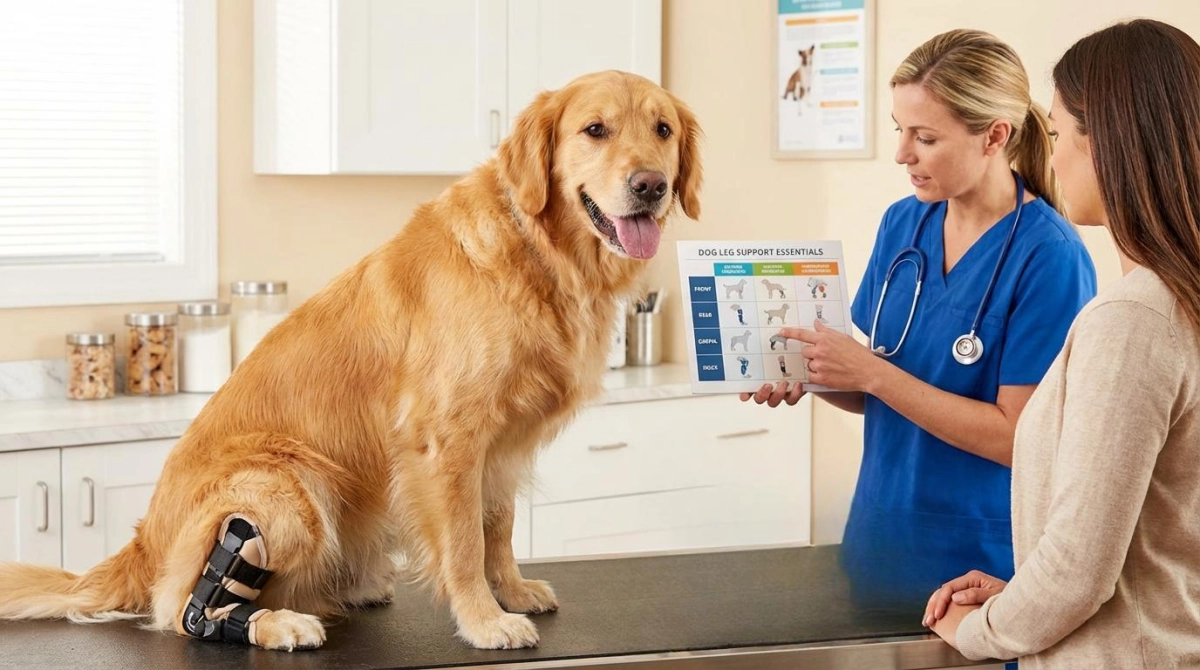
If your dog limps or has joint pain, you want to help. Dog leg support devices like braces and splints can help a lot.
-
About 63% of dogs treated without surgery got better.
-
85% of owners saw their dogs walk better after using supports.
|
Study |
Findings |
|---|---|
|
2020 Veterinary Surgery |
Hinged braces helped dogs with CCL injuries move better. Many dogs did not need surgery. |
|
UT Clinical Trial (2018) |
Double braces lowered injury rates and helped dogs be more active. |
|
2021 Meta-Analysis |
Bracing with weight control and therapy eased pain. This worked best for small and medium dogs. |
You should always get a vet’s diagnosis and follow a plan made for your dog.
Key Takeaways
-
Dog leg supports such as braces and splints can help your dog move better. They can make walking, running, and playing less painful for your dog. These supports can also help your dog feel more comfortable.
-
You should talk to your veterinarian before using any leg support device. Your veterinarian can give your dog the right diagnosis and care plan. This helps make sure your dog gets the best results.
-
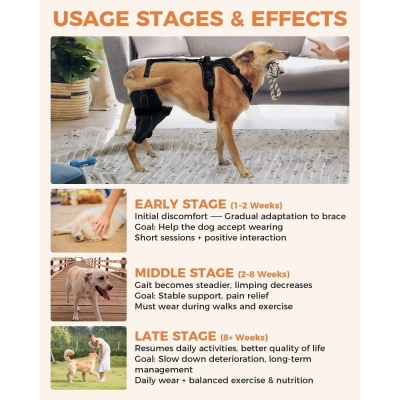
Begin with short times when your dog wears braces. Slowly let your dog wear them longer as they get used to it. Watch your dog's skin for any redness or signs of discomfort.
Benefits of Dog Leg Support
Pain Relief and Improved Mobility
You want your dog to feel better and move with ease. Dog leg support can help your dog walk, run, and play with less pain. Many owners notice their dogs become more active and comfortable after using dog leg braces or other support options. These devices help by giving extra stability to weak joints and sore muscles.
Here’s what research shows about how these supports help dogs:
|
Evidence Description |
Statistical Significance |
|---|---|
|
Positive QOL impact on pets reported by owners |
p-value = 0.01 |
|
Higher likelihood to recommend orthosis when pet QOL is positive |
p-value = 0.02 |
|
Compliance with device usage reported by owners |
83.6% compliance |
|
Device acceptance by patients |
92.3% acceptance |
|
Longer wear time for tolerated devices |
p-value = 0.02 |
Most dogs accept these devices well. You can expect your dog to get used to wearing a brace or wrap if you follow the right steps. Owners report that their dogs walk better and seem happier after using dog leg braces.
Tip: Start with short wear times and check your dog’s skin often. This helps your dog adjust and keeps them comfortable.
Dog leg support does not fix a torn ligament, but it can make daily life easier. You may see your dog stand up faster, climb stairs, or play with less pain. These are some of the top benefits of dog leg braces for dogs with arthritis or mild injuries.
Functional Stability for Injuries
When your dog has an injury, you want to keep them safe and help them heal. Dog leg braces, wraps, and splints give your dog’s leg the support it needs to stay steady. These support options help prevent further injury and let your dog use the leg more normally.
Here’s how these devices work for injuries:
-
Specialized wraps and orthotics provide external support for mild to moderate ligament sprains.
-
They keep the joint stable and help stop extra movement that could make the injury worse.
-
Dog ACL wraps support and stabilize the knee joint, which helps relieve pain and lets your dog move naturally.
-
Braces redistribute forces and reduce stress on the injured ligament.
Dogs using custom braces often show better weight-bearing and balance. In one study, dogs increased weight-bearing on the injured leg by 5.1% after 90 days. Most dogs returned to nearly normal activity levels after using a brace. Owners saw their dogs walk, run, and play more confidently.
Note: Braces and splints help with comfort and function, but they do not cure ligament tears. You should set realistic goals and talk with your vet about what to expect.
Dog leg support works best when you use it as part of a full care plan. You can combine braces with rest, gentle exercise, and regular checkups. This gives your dog the best chance to heal and stay active.
Types of Dog Leg Braces and Supports
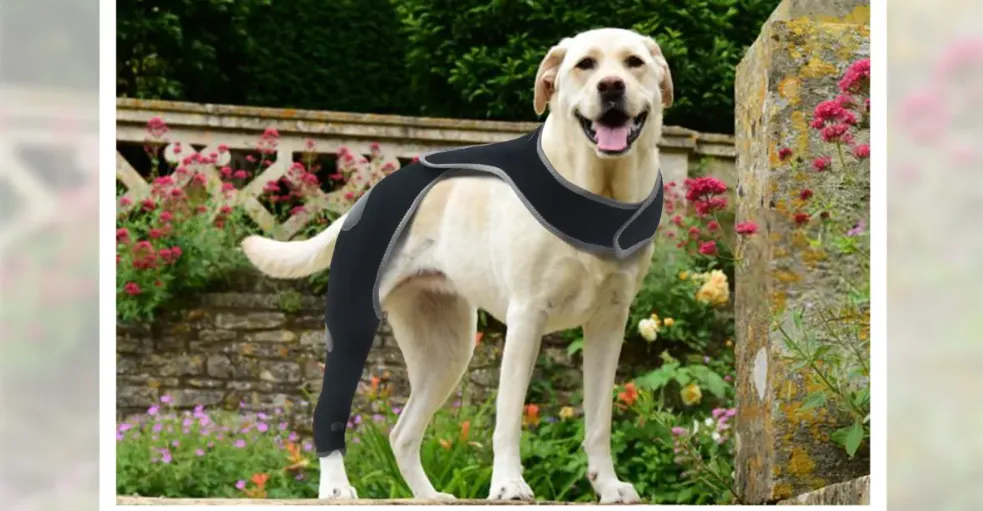
When you start looking at different types of dog braces, you might feel overwhelmed. Let’s break it down so you know what each support does and when your dog might need it.
|
Type of Brace |
Purpose/Condition Addressed |
|---|---|
|
Front leg braces |
Support carpal and elbow issues |
|
Hind leg braces |
Target hock and knee problems |
|
Hip and back braces |
Provide support for hip dysplasia and spinal issues |
Knee Braces for CCL/ACL Injuries
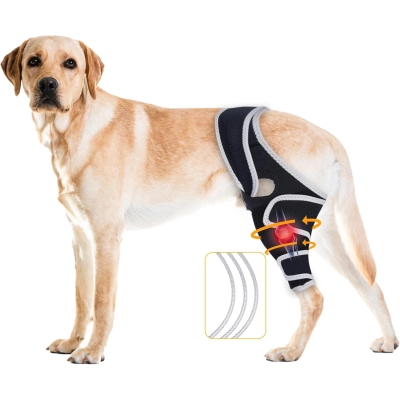
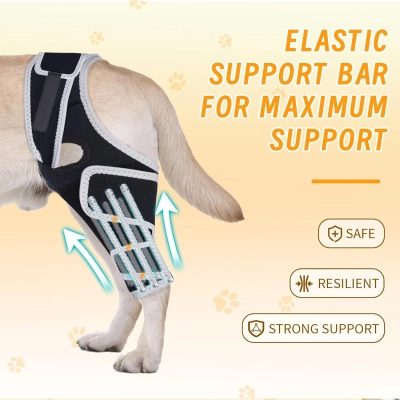
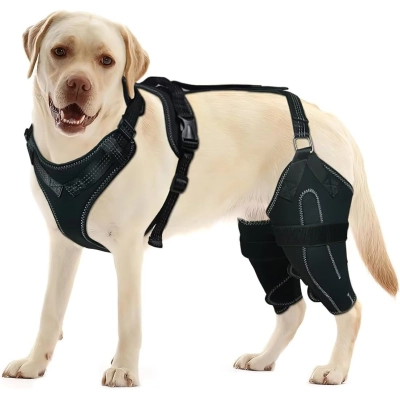
Knee braces help dogs with ligament injuries like CCL or ACL tears. These braces give stability to the knee joint and help your dog walk with less pain. You might use a knee brace if your dog has arthritis, a sprain, or needs support after surgery. Some owners choose knee braces as an alternative to surgery, especially for older dogs or those with other health problems. If you are buying a dog leg brace, make sure it fits well and matches your dog’s needs.
Carpal and Tarsal Orthoses
Carpal orthoses support the wrist, while tarsal orthoses help the hock joint. These devices work well for sprains, hyperextension, and mild deformities. You can use them after an injury or surgery to keep your dog’s leg steady. Carpal splints and hock splints stabilize the lower leg and help prevent further damage. Dogs with moderate-to-severe injuries or long-term joint problems often benefit from these supports.
Wraps, Sleeves, and Splints
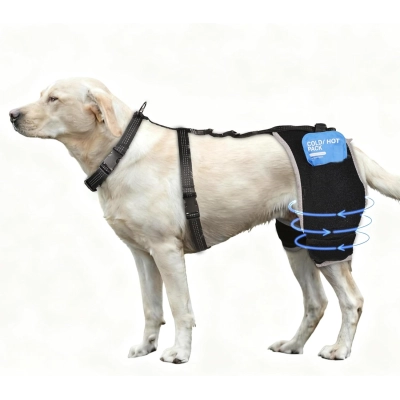
Wraps and sleeves offer gentle compression and warmth. They help with minor strains and arthritis. Dog splints provide rigid support and keep the leg from moving too much. You might use dog splints for acute injuries, pressure sores, or during recovery. Wraps and braces can also help with skin issues and deformities. If your dog needs extra protection, dog splints are a good choice for short-term use.
Tip: Always check with your vet before choosing a support. The right device depends on your dog’s injury, size, and activity level.
When to Use Dog Leg Support
Injury, Arthritis, and Post-Op Care
You might not know when your dog needs leg support. Most vets say to use braces or splints if your dog has trouble walking. Some signs are limping, stiff legs, or not wanting to step on a sore leg. Here are some reasons to use a dog leg support:
-
Your dog has a CCL injury and needs help with pain or weak joints.
-
Your dog has arthritis and finds it hard to move every day.
-
Your dog is healing from surgery and needs extra help to stay safe.
-
Your vet wants to stop more injuries during rehab.
Braces work best when you use them with a rehab plan. You might do easy exercises, short walks, or other things your vet says to do. This helps your dog get better and stronger.
Non-Surgical Candidates and Activity Level
Not all dogs can have surgery. Some dogs are older, have health problems, or are too small for some surgeries. In these cases, using leg supports can help a lot. Look at this table to see which dogs do well with braces and splints:
|
Criteria |
Description |
|---|---|
|
Ideal Candidates |
Small dogs (<25 lbs), older dogs with health issues, dogs with partial tears |
|
Activity Level |
Low-activity or sedentary lifestyles are preferred |
|
Importance of Weight Management |
Maintaining a healthy weight is crucial for success in conservative management |
If your dog is big or very active, talk to your vet about the best plan. Keeping your dog at a good weight also helps a lot. Always ask your vet before you start new supports or exercise.
Fitting and Using Dog Leg Braces
Professional Measurement and Fit
Getting the right fit for your dog’s leg brace makes a big difference. You want the brace to support your dog’s joint without causing discomfort. Start by measuring your dog’s leg while they stand or sit calmly. Use a soft tape to check the thigh, knee, and lower leg. Repeat each measurement twice to make sure you get it right. If you’re ordering a custom brace, take photos or a short video to show the leg’s shape. Some braces work best for certain breeds, so note your dog’s weight and breed before you order.
Steps for Measuring a Dog’s Leg:
-
Measure the thigh, just below the hip.
-
Wrap the tape around the knee’s center.
-
Check the length from knee to hock.
-
Measure halfway between hock and paw.
-
Write down your dog’s weight and breed.
Tip: If you feel unsure, reach out to the brace provider for help with fitting.
Break-In and Wear Schedule
Your dog needs time to get used to wearing a brace. Start with short sessions and slowly increase the time. Here’s a simple schedule to follow:
|
Day |
Wear Time (mins) |
Frequency |
|---|---|---|
|
1 |
30 |
2-3 times |
|
2 |
60 |
2-3 times |
|
3 |
120 |
2-3 times |
|
4 |
180 |
2-3 times |
|
5 |
240 |
2 times |
|
6 |
360 |
1 time |
|
7 |
480 |
1 time |
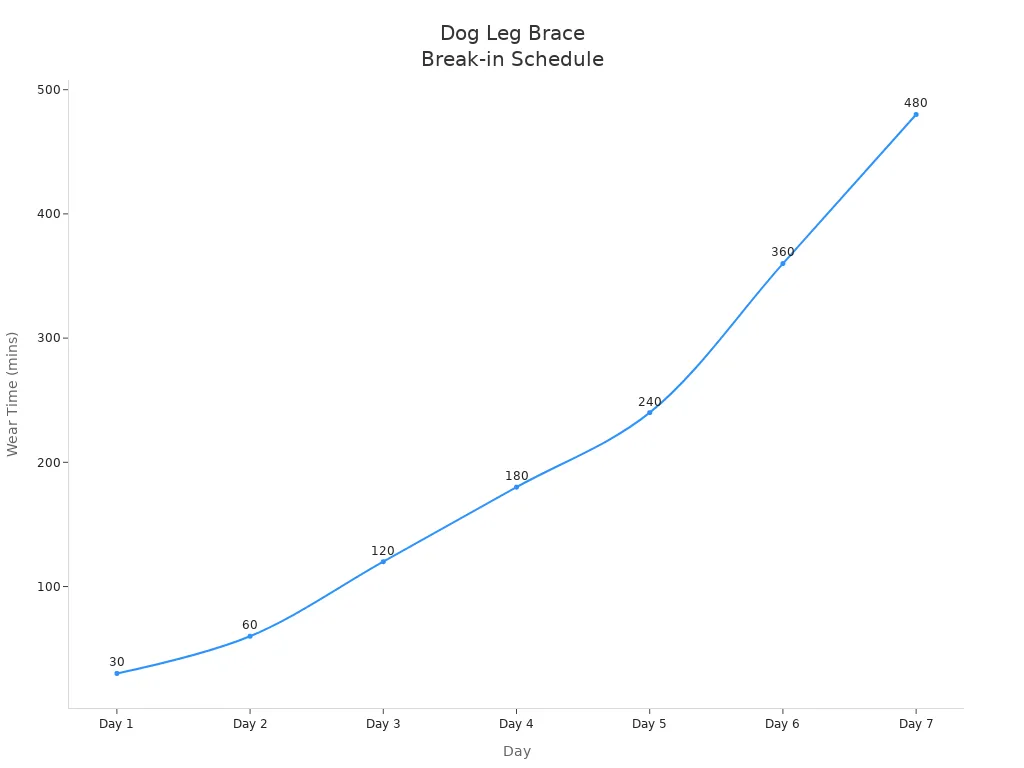
Always take the brace off at night. Watch your dog during the first week. Adjust the straps if you see chewing or discomfort. Use the brace for short walks at first, then add more time as your dog gets comfortable.
Skin Care and Monitoring
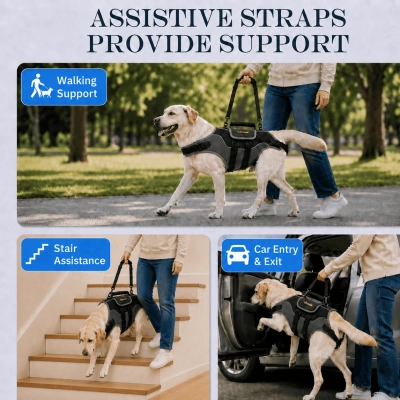
You want your dog’s skin to stay healthy under the brace. Check for redness, swelling, or sores every day. Use a soft liner or sock to reduce friction. Make sure the brace fits snug but not too tight. If you notice any irritation, take a break and let your dog’s skin recover. Schedule regular checkups with your vet, especially during the first few weeks. Most problems show up early, so don’t wait to ask for help if something seems wrong.
|
Best Practice |
Why It Matters |
|---|---|
|
Daily skin checks |
Catch irritation or swelling early |
|
Gradual adaptation |
Helps your dog adjust and stay comfortable |
|
Regular veterinary oversight |
Ensures the brace fits well and prevents complications |
|
Follow-up plan |
Keeps your dog safe and comfortable over time |
Note: If your dog limps, shows pain, or the brace slips, call your vet for a re-evaluation.
Rehabilitation With Dog Leg Support
Acute, Subacute, and Reconditioning Phases
Helping your dog get better takes time and a plan. Most dogs go through three main rehab steps. Each step has its own goals and things to do. You can look at this table to see what happens in each phase:
|
Weeks |
Goals |
Recommended Activities |
Mobility Aids |
|---|---|---|---|
|
0–2 |
Limit movement, control swelling |
Strict crate rest, short leash walks, ice therapy, PROM exercises, gentle standing |
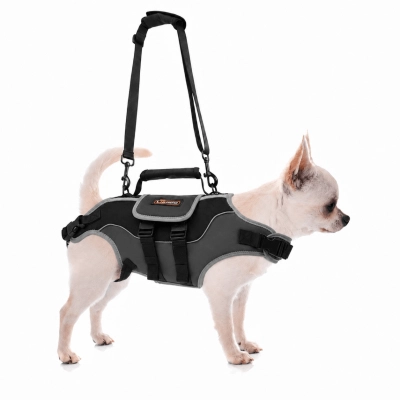
Lifting harness, traction boots |
|
2–6 |
Begin controlled movement, rebuild muscle |
Increase leash walks, sit-to-stand exercises, weight shifting, underwater treadmill |
Rear support harness, temporary dog wheelchair |
|
6–12 |
Improve stamina, increase flexibility |
15–20 minute walks, hill walking, light jogging |
Support harness, wheelchair for longer walks |
|
3–6 Months |
Return to normal activity |
Normal walks, running, advanced balance work |
N/A |
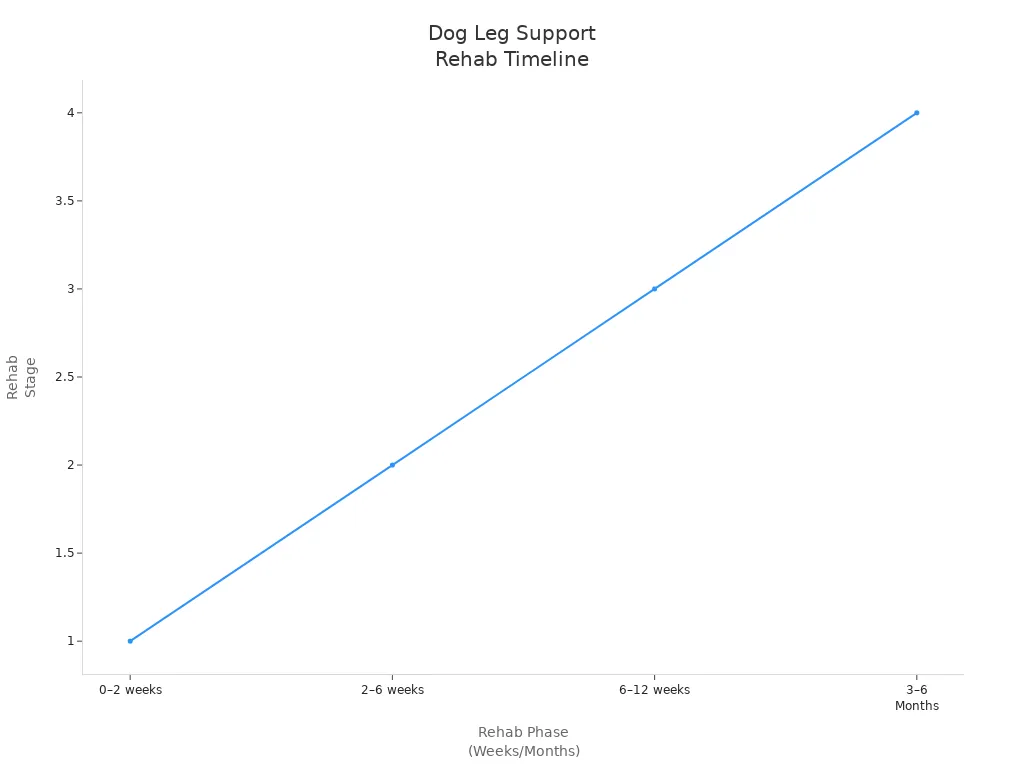
Your dog will start with rest and gentle movement. Later, your dog will walk more and build muscle. Soon, your dog can play like before.
Home Exercise and Activity Guidelines
You are important in your dog’s rehab. Home exercises help your dog get stronger and move better. Try these activities with your dog:
-
Slow leash walking
-
Weight shifting
-
Sit-to-stand
-
Walking on different surfaces
-
Incline or decline standing and walking
-
Cavaletti rails or hurdles
-
Balance discs or yoga ball
Continuous Passive Range of Motion (CPROM) is slow, gentle “bicycling” of your dog’s leg. This keeps joints moving and helps your dog feel their leg again.
Doing these exercises makes muscles stronger and protects joints. You should follow a home plan from your vet. The plan gives you steps and helps you see progress. Check in with your vet often to keep your dog safe. When you follow the plan, you help your dog heal and stay active.
Owner Checklist and Safety Tips
Veterinary Diagnosis and Monitoring
You want your dog to get the best care. Start with a vet diagnosis before using any leg support device. Your vet will help you choose the right brace and set up a monitoring plan. Here’s a quick look at what to expect:
|
Time Period |
What to Do |
|---|---|
|
Day 0 |
Get a diagnosis and leg impression |
|
Weeks 0–2 |
Use splint or cast, recheck weekly |
|
Weeks 3–7 |
Fit brace, check for sores, start rehab |
|
Weeks 8–11 |
Adjust brace, continue rehab |
|
Weeks 12–16 |
Use brace for sports or phase out |
Check your dog’s skin every day. Look for redness, swelling, or sores. If you see any problems, call your vet right away.
Weight Management and Nutrition
Keeping your dog at a healthy weight helps the brace work better. Dogs who stay lean move easier and feel less pain. Did you know that about 60% of dogs are overweight? Losing just 6% of body weight can make a big difference for joint health. Feed your dog a balanced diet and watch portion sizes. Good nutrition keeps muscles strong and supports healing.
-
Keep your dog’s weight in the healthy range.
-
Choose food that builds muscle and supports joints.
-
Ask your vet for a weight loss plan if needed.
Criteria for Escalating Care
Sometimes, you need to do more than just use a brace. Watch for these signs that mean it’s time to talk to your vet about surgery or other treatments:
|
Red Flag |
What It Means |
|---|---|
|
Worsening limp or stiffness |
Conservative care isn’t working |
|
Trouble standing or walking |
Pain isn’t improving |
|
Changes in mood or appetite |
Your dog feels uncomfortable |
Tip: If your dog stops using the leg, gets sores, or seems unhappy, don’t wait. Reach out to your vet for advice.
Check the brace often for wear and tear. Some dogs may not like wearing a brace, so use positive reinforcement and take breaks as needed. Your attention helps your dog stay safe and comfortable.
You want your dog to be comfy and move easily. Dog leg support can lower pain and help your dog walk better. It also lets your dog enjoy life more. If you work with your vet, you get the right brace and good care. Regular vet visits and a special rehab plan help your dog do better.
|
What Owners Notice |
Outcome |
|---|---|
|
Improved walking |
Dogs are happier and more active |
|
Less pain |
Dogs have a better life |
Keep a good attitude and watch your dog closely. The right dog leg support helps your dog stay happy and active for a long time.
FAQ
How long should my dog wear a leg brace each day?
Start with 30–60 minutes, then slowly increase wear time. Your vet will guide you based on your dog’s comfort and progress.
Can my dog go outside with a brace or splint?
Yes, your dog can go for short walks outside. Always check the brace for fit and watch for any signs of discomfort.
What signs mean I should call my vet?
Look for redness, swelling, limping, or sores under the brace. If you see these, contact your vet right away.

0 Comments