
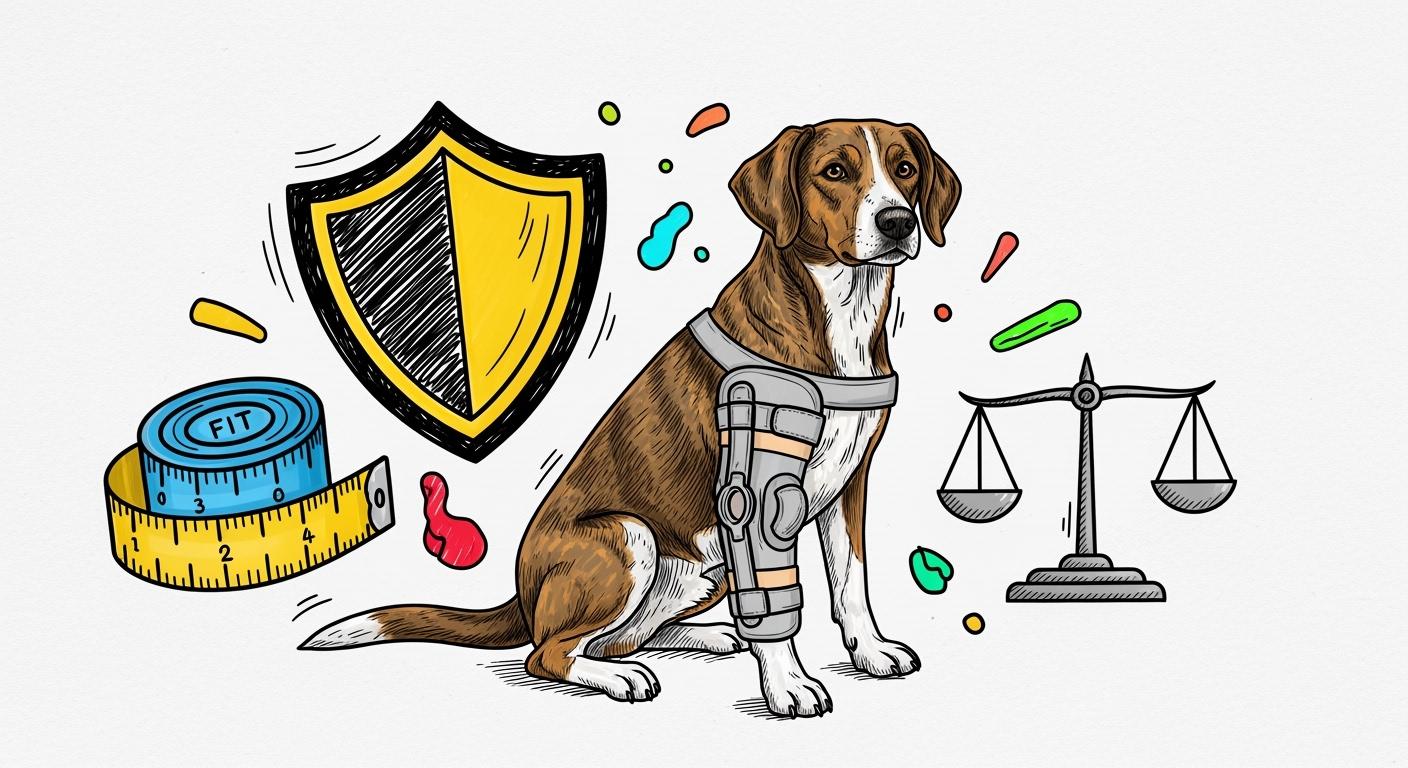
A hinge that does not line up with the knee joint axis does not stabilize the leg. It fights it. Every step the dog takes sends force through a pivot that is half an inch off from where the real joint rotates. The brace becomes a lever against the leg instead of a guide for it. That half-inch error matters more than how tight the straps are pulled, because no amount of tension can correct a misaligned hinge. It can only mask the problem by squeezing harder—until the dog develops a rub mark, or starts limping again, or both.
This is what separates a knee brace that changes how a dog moves from one that just looks supportive on the leg. The right design decisions are physical, not cosmetic. They show up in whether the paw lands flat after 20 minutes of walking, and in whether the straps are still where you placed them.
What Polycentric Hinge Geometry Actually Changes About Force Transfer
A single-pivot hinge rotates around one fixed point. A dog's knee does not. The stifle joint combines rolling and sliding—the femur does not simply swing around a stationary tibia. As the leg extends, the contact point between the two bones shifts. A single-pivot hinge cannot track this. It forces the joint to move around an axis that does not exist in the dog's anatomy.
Polycentric hinges solve this by using multiple pivot points arranged to approximate the knee's actual path. When the hinge centers align with the joint's instantaneous center of rotation, force travels straight along the mechanical axis of the leg. The joint surfaces stay loaded evenly. The cruciate ligament is not pulled sideways during flexion because the brace is not twisting the bones apart. When the hinge centers are off—even by a few millimeters—the brace introduces a shear component. The tibia gets pushed anteriorly relative to the femur during extension, which is exactly the motion a knee brace is supposed to limit.
This alignment difference determines whether the brace stabilizes or merely squeezes. A well-aligned hinge lets the dog load the leg naturally because the brace is not fighting the joint's own motion path. The dog bears weight more evenly. The mechanical support from the brace channels force along the bone rather than across it.
You can spot the difference without instruments. After 20 minutes of walking on a flat surface, watch how the dog places the paw on that leg at a walk. A paw that lands flat and bears weight through the full pad, without twisting outward or dragging the toes, suggests the hinge is tracking with the joint. A paw that lands on its outer edge or scuffs the ground means the brace is rotating the leg into a position the dog's own joint is not choosing.
Most off-the-shelf braces set hinge positions based on averaged breed measurements. That works for dogs whose leg proportions fall near the middle of the bell curve. Dogs with longer tibias relative to their femur length, or with very straight stifles, or with angular limb deformities fall outside that average. In those cases, the hinge may look correctly placed on the leg but be functionally misaligned during motion.
Why Strap Width and Layout Decide Whether a Brace Stays Put
Tightness is not the variable that controls brace migration. Width is. A narrow strap concentrates the same total force onto a smaller patch of skin. Peak pressure under a half-inch strap pulled to two pounds of tension can exceed what a two-inch strap produces at the same tension by a factor of three or four. The skin under the narrow strap gets compressed. Circulation drops. The dog's leg swells slightly in response—and the strap, already at its tension limit, now digs in more. This is how a brace that felt snug at the start of a walk becomes a pressure point by the end of it.
A wide strap spreads the same holding force across more surface area. Peak pressure stays lower. The skin tolerates longer wear. More importantly, wide straps resist rotation because their contact patch spans a larger arc of the leg's circumference. When the dog turns, the strap's leading edge would need to lift a broader swath of tissue to begin sliding—it has more static friction to overcome before it moves.
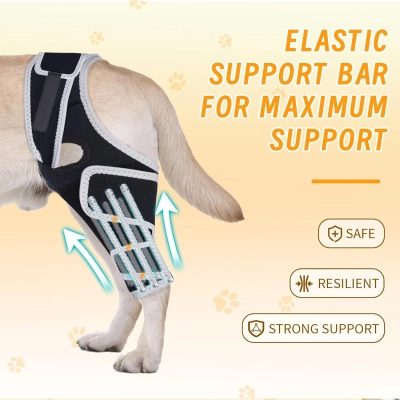
Strap layout matters just as much. Two straps placed close together create a narrow band of fixation. The brace can pivot around that band like a seesaw. Two straps placed far apart—one proximal, one distal—create a longer lever arm for resisting rotation. The brace cannot rock because the straps are anchoring opposite ends of the shell. This is why a knee brace with widely spaced straps tends to hold position better than one with straps clustered near the joint line, even when both feel equally snug during fitting.
Check strap migration after 10 minutes of the dog walking at a normal pace. Mark the strap edge position against the fur with your finger before starting. After 10 minutes, check whether any strap edge has moved more than half an inch from that mark. Movement of less than half an inch is typical as the brace settles. Movement beyond half an inch means the strap configuration is not distributing retention force evenly—tightening further will usually make it worse, not better, because the underlying problem is force concentration, not insufficient total tension.
| Strap Design Feature | What It Changes in Use | Main Limitation |
|---|---|---|
| Wide straps (1.5 in or more) | Lower peak pressure under the strap, longer comfortable wear time | Can bunch in the fold behind the knee on very short-legged dogs |
| Widely spaced proximal and distal straps | Resists brace rotation during turns and direction changes | Requires enough leg length between thigh and hock for placement |
| Elastic strap sections | Absorbs muscle expansion during exercise without loosening | Loses recovery force over months of daily use; needs eventual replacement |
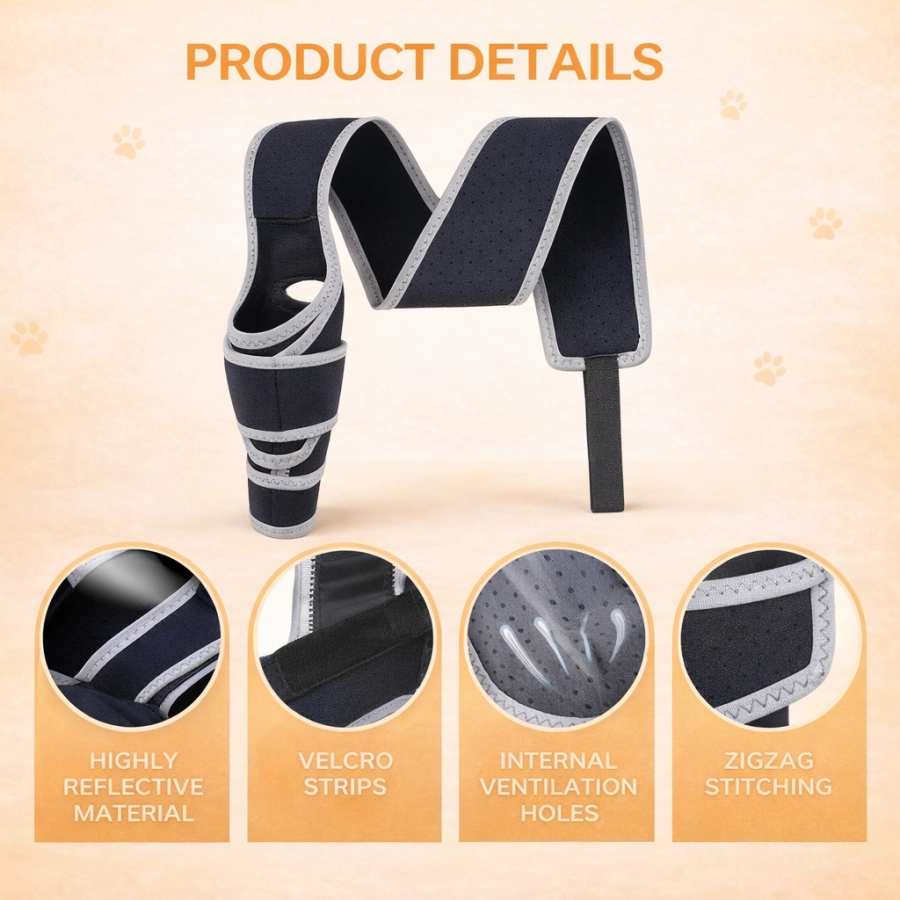
| Velcro with high hook density | Holds through wet conditions and repeated adjustment cycles | Collects fur and debris faster; requires more frequent cleaning to maintain grip |
When a Knee Brace Helps and When It Does Not
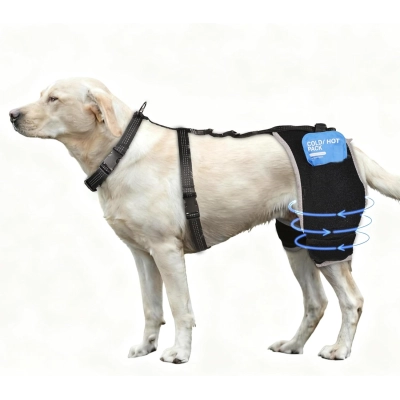
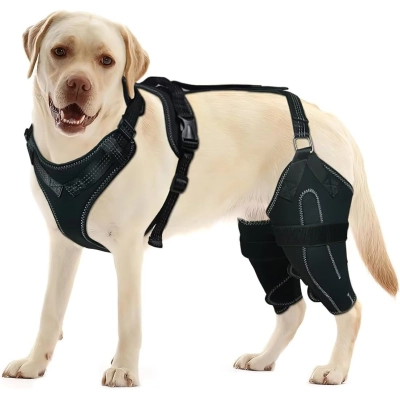
A knee brace is designed to limit two specific motions: cranial tibial thrust during weight-bearing and excessive internal rotation of the tibia. When a dog has partial CCL insufficiency—meaning the ligament is stretched but not fully ruptured—limiting these motions can reduce the instability that causes further degeneration. The brace works because it adds a mechanical constraint outside the joint that the damaged ligament can no longer provide from inside.
This same mechanism makes the brace useful for managing chronic patella instability. A luxating patella support brace uses medial pressure and hinge guidance to keep the kneecap tracking within the trochlear groove. The design logic is the same: add external constraint to compensate for internal laxity.
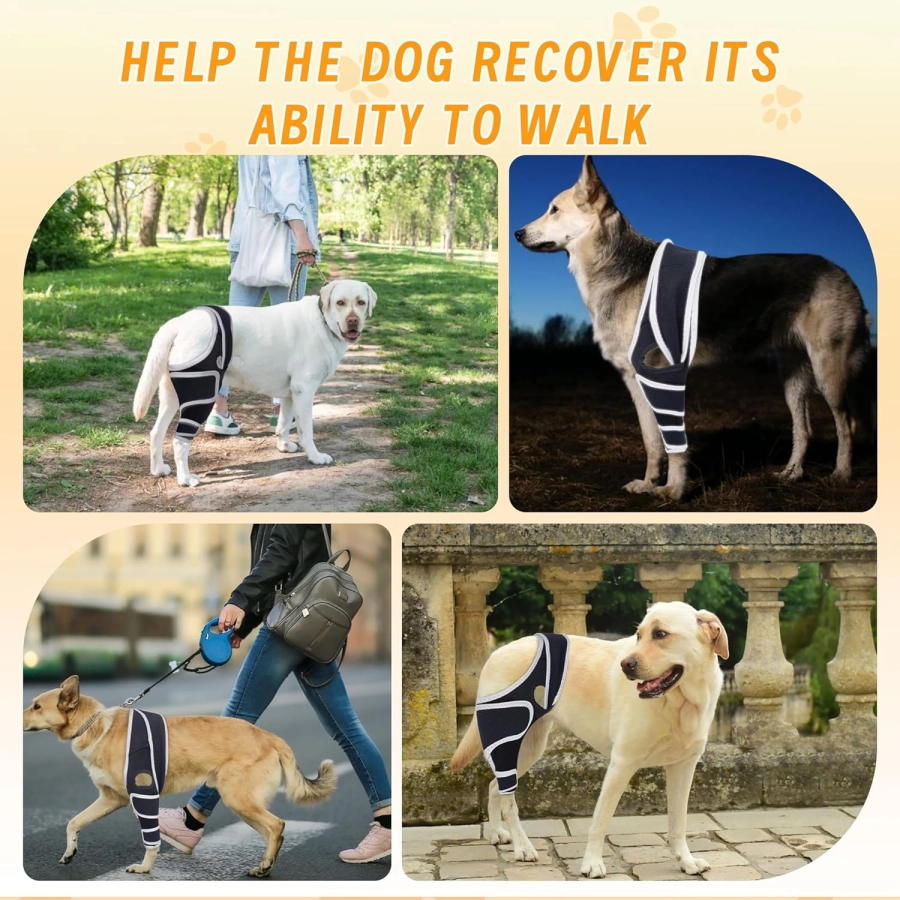
The brace is most effective during controlled, low-impact activity—leashed walks on level ground, supervised indoor movement, structured rehab exercises. In these conditions, the forces on the knee are predictable. The brace can match them.
It is least effective—and sometimes counterproductive—in several situations. On slippery surfaces, the brace shell can become a sliding point against the floor, creating torques the hinge was not designed to manage. During high-speed running or sharp turns, the forces exceed what any external brace can redirect without the shell itself shifting. For dogs that panic or freeze when their leg is wrapped, the stress response elevates muscle tension, which changes joint loading in ways that override the brace's intended effect.
A knee brace is not a substitute for full immobilization when complete rest is required—the hinge permits motion by design. It is not effective when the primary instability is coming from the hip or hock rather than the knee. The brace stabilizes one joint; it cannot correct a gait pattern driven by problems above or below that joint.
Disclaimer: The fit checks described here assume a short-coated dog where strap edges are visible against the skin. Double-coated breeds may show subtler rub marks that require hand-checking—run a finger under each strap edge after wear to feel for dampness or warmth, which precede visible irritation. Dogs with angular limb deformities or very deep chests may have leg proportions that fall outside the range this brace design was patterned for, and the standard fit checks may not catch every pressure point.
Material and Construction Details That Shape Daily Use
The outer shell and the inner liner solve different problems, and a material that works well for one can fail at the other. Rigid shell materials—thermoformed plastics, carbon-filled nylon—provide the structural stiffness needed to resist tibial translation. But they do not breathe. All the heat and moisture management has to come from the liner.
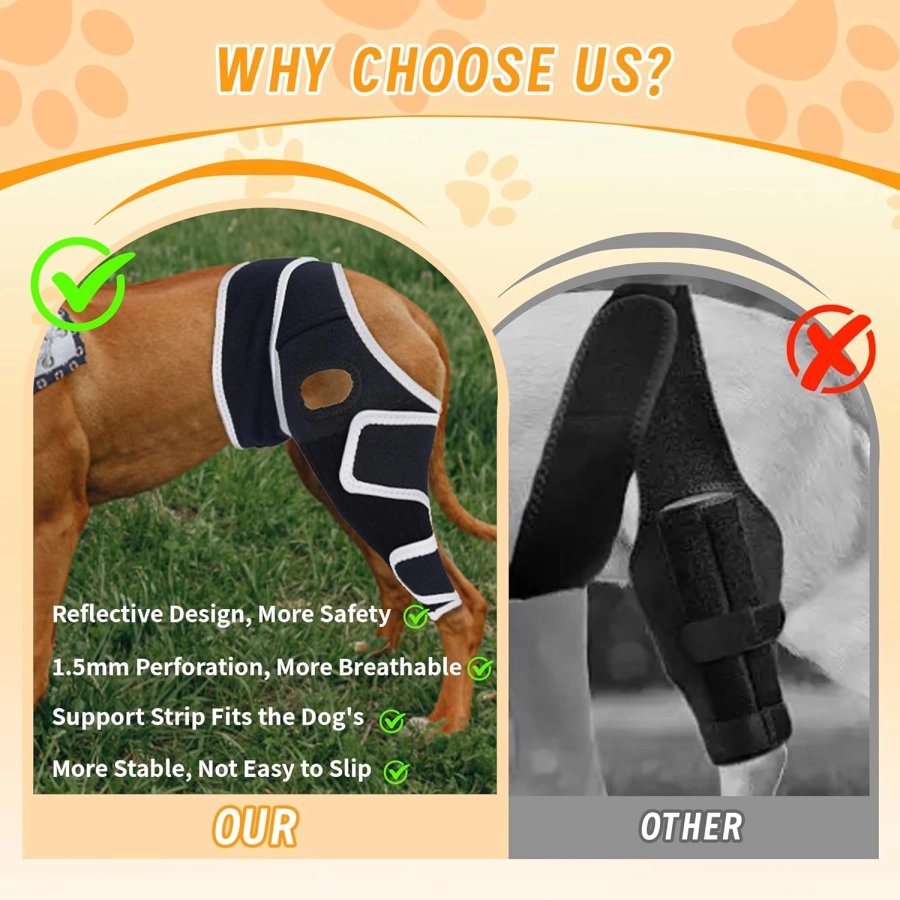
Neoprene liners hold warmth, which increases local blood flow and can make the joint feel less stiff at the start of movement. That same heat retention becomes a drawback during sustained activity in warm weather—the skin under the brace stays damp, and damp skin is more prone to friction damage. Perforated neoprene or mesh-backed neoprene compromises between warmth and ventilation. The holes let moisture escape but also reduce the liner's structural integrity at the perforation points, which is where most neoprene liners eventually tear.
Seam placement is easy to overlook and hard to ignore once a problem develops. A seam running perpendicular to the leg's long axis, placed directly over the tibial crest, concentrates pressure along a line that has almost no soft tissue cushion. Within a few hours of wear, that line become a red stripe. Flat-seam construction or seam placement offset to the lateral side of the leg avoids this. In production, flat seams add a second stitching pass and a different needle setup, which is why they appear on fewer braces than their functional benefit would suggest.
Hook-and-loop (Velcro) quality determines whether the brace can be taken on and off multiple times a day without losing grip. The hook side collects fur, dust, and lint with every cycle. Low-density hook tape stops holding after a few dozen cycles. High-density hook tape maintains grip through hundreds of cycles but requires the loop side to be brushed clean between uses—neglect that, and even the best hook tape clogs and fails. This cleaning step is the most commonly skipped maintenance action and the most common reason a dog ACL brace starts slipping after weeks of trouble-free use.
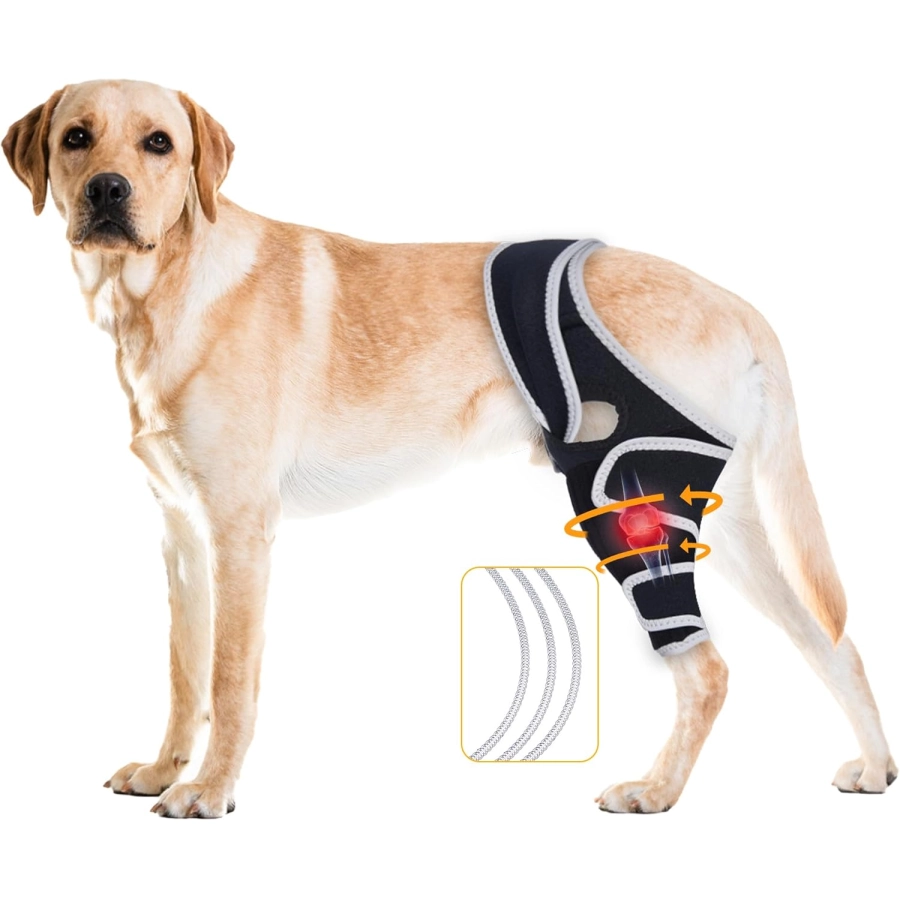
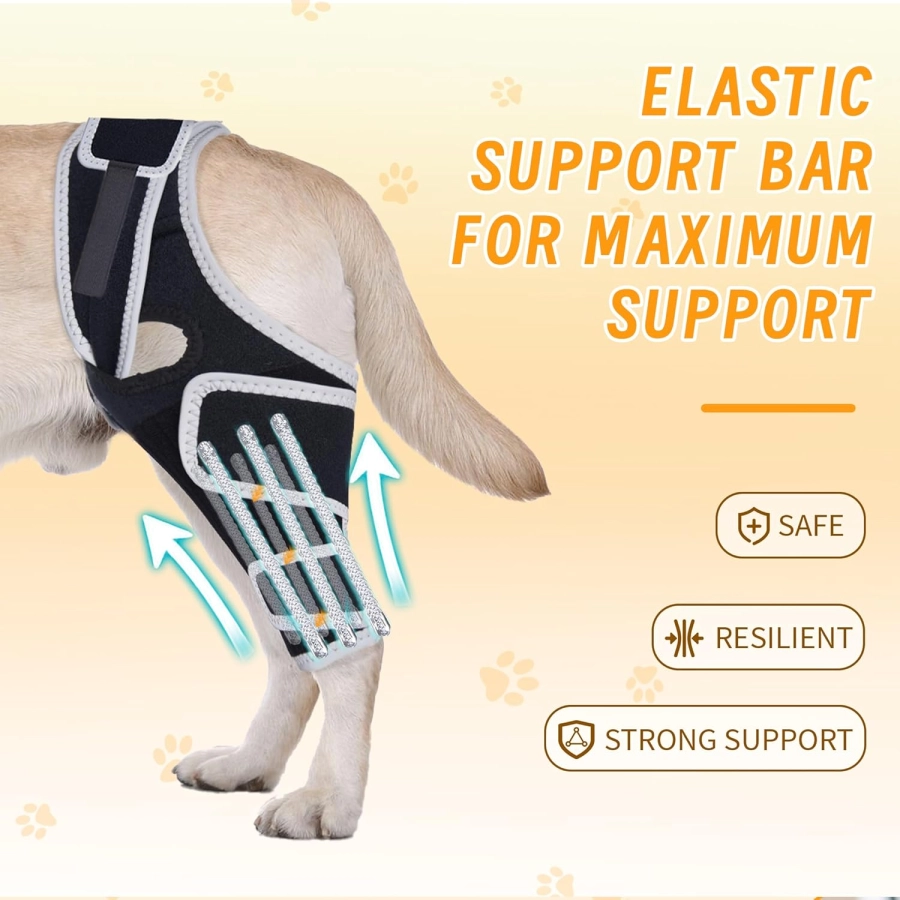
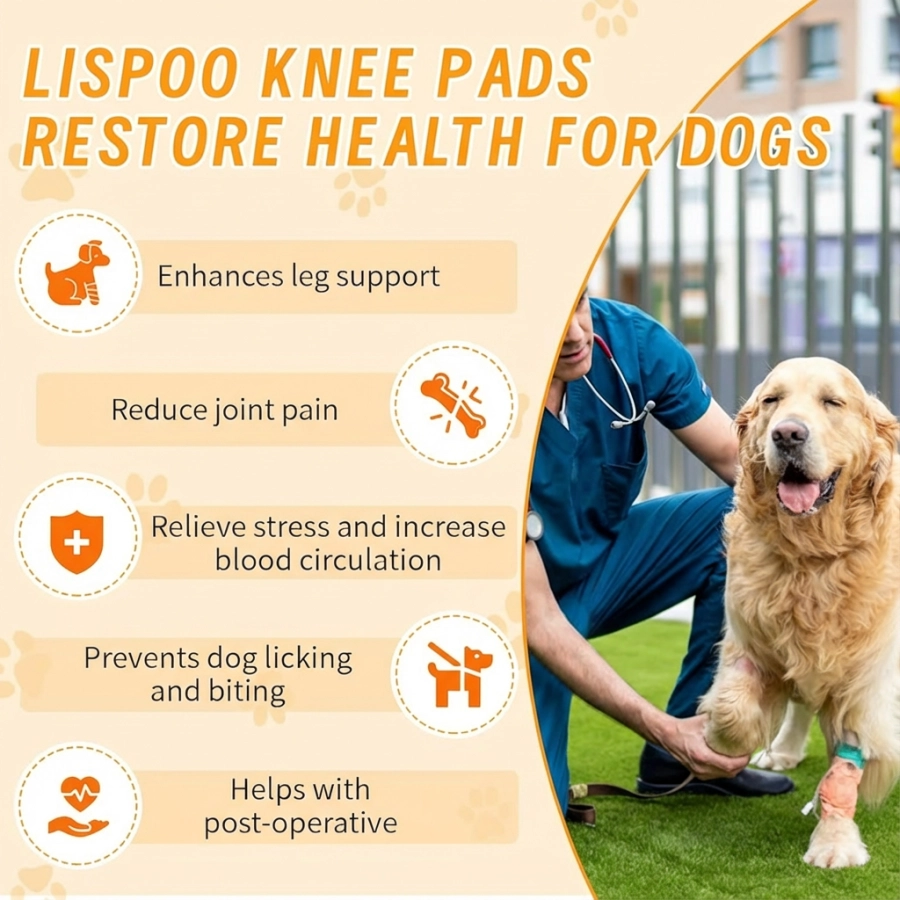
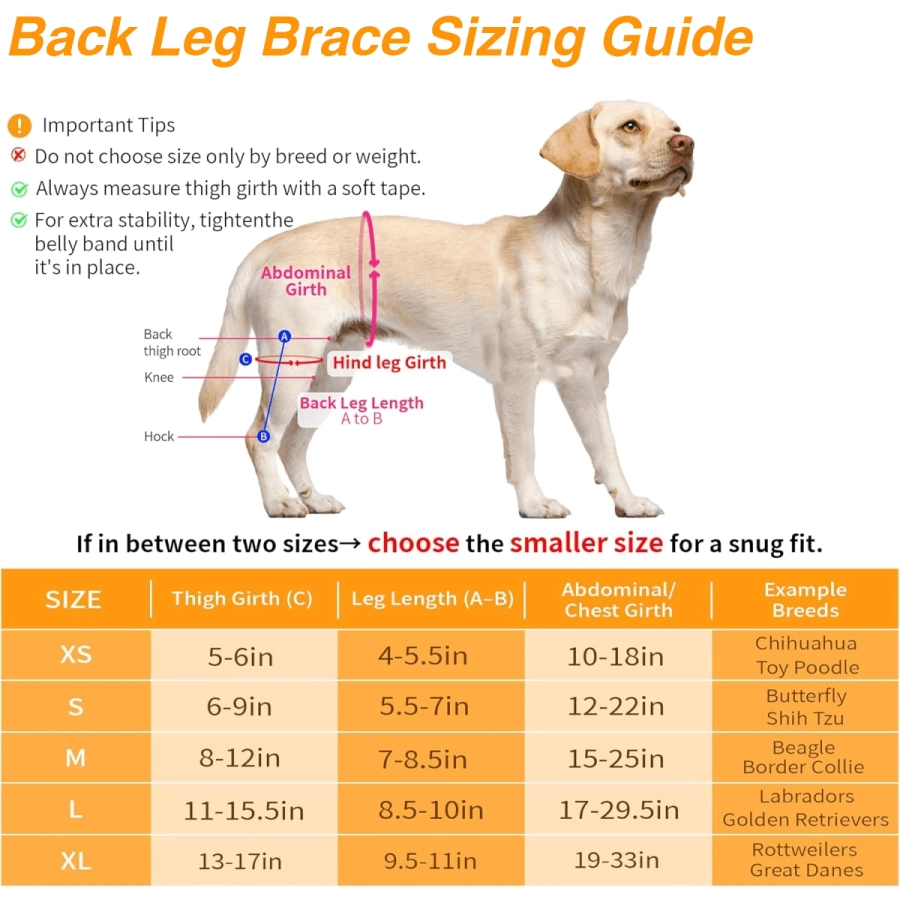
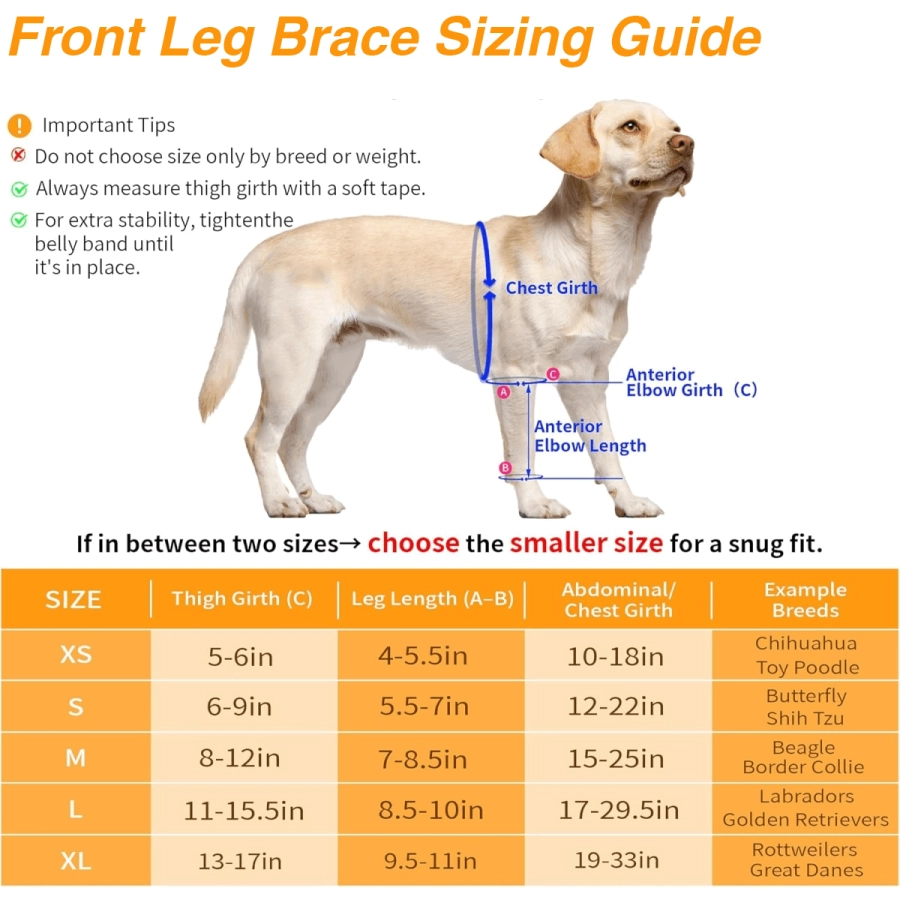
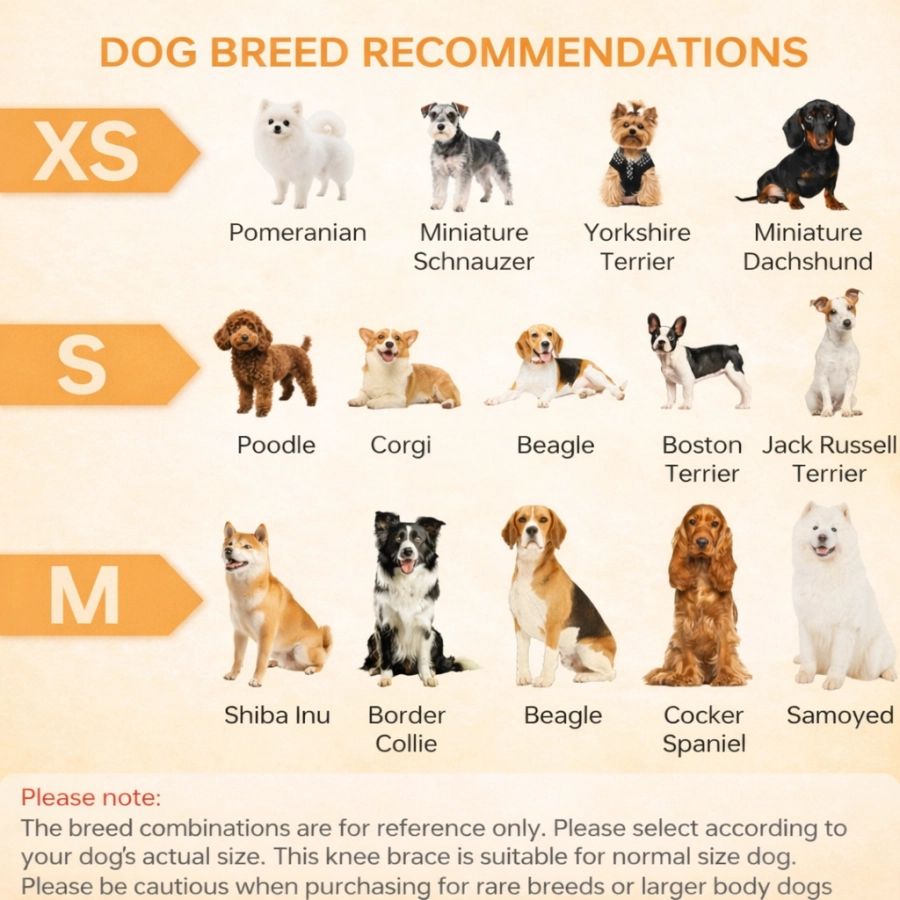
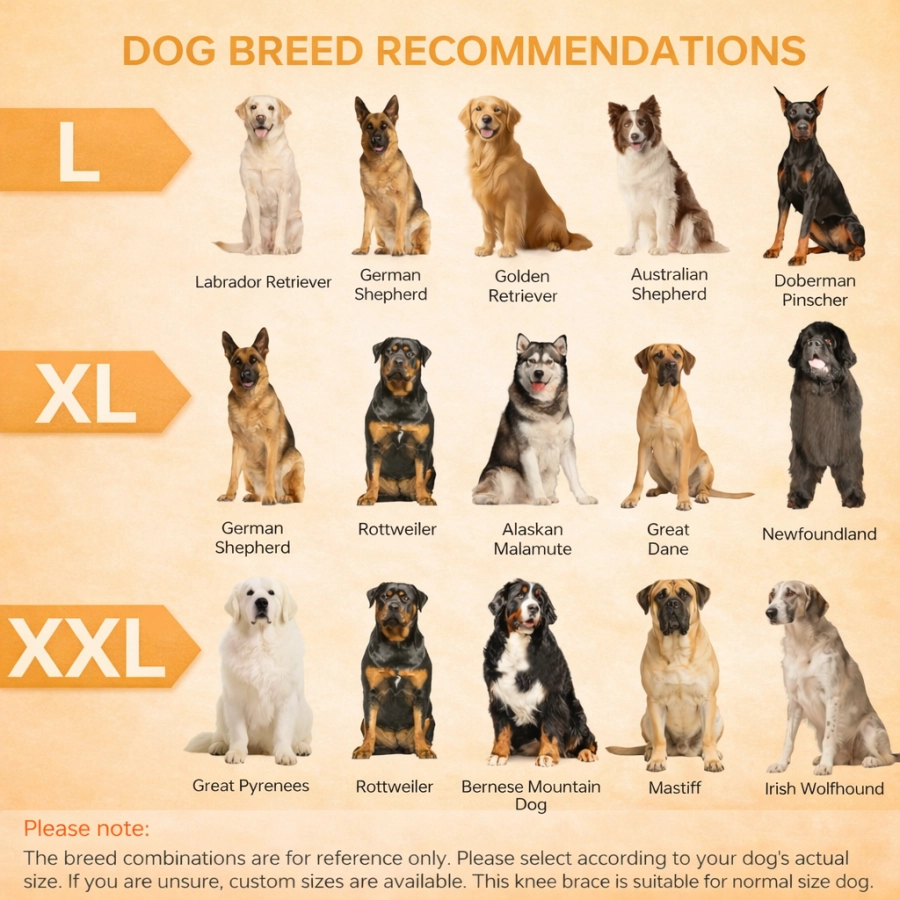
Size coverage is not about how many sizes a brand offers. It is about the increment between sizes at the dimension that matters most—knee circumference. A sizing chart with two-inch gaps between sizes leaves many dogs between sizes. A one-inch gap catches more dogs but doubles the number of SKUs to manufacture and stock. The production economics push toward fewer sizes; the fit reality pushes toward more. This is the structural reason custom-measured braces can achieve a closer fit than off-the-shelf ones—not because the materials are fundamentally different, but because the size increment is effectively zero.
FAQ
How can you tell if the hinge is tracking correctly during movement?
Watch the dog walk on a flat surface after 20 minutes of wear. If the paw lands flat and bears weight through the full pad, the hinge is likely following the joint's natural path. If the paw lands on its outer edge or scuffs, the brace is introducing rotation the joint is not choosing. Palpate the hinge center relative to the bony landmark of the lateral femoral condyle after movement—any shift from the pre-walk position means the brace migrated.
Does strap material change how the brace performs?
Yes, but not in the way most descriptions suggest. Elastic strap sections absorb muscle belly expansion during exercise—the quadriceps can increase in circumference by several percent during sustained activity. A fully inelastic strap cannot accommodate this, so it either constricts or loosens as the muscle size cycles. A strap with a short elastic segment can absorb the change without the hook-and-loop fastener needing to slip. The tradeoff is that elastic degrades with wash cycles and UV exposure faster than the nylon webbing it is attached to.
Can a knee brace be worn during water-based exercise?
Most rigid-shell braces are not designed for submerged use. Water changes the friction coefficient between the liner and the leg, which can cause the brace to float away from the skin. Neoprene absorbs water and becomes heavier. Metal hinge components corrode unless they are stainless steel or coated. If hydrotherapy is part of the dog's rehab plan, check whether the brace's hinge hardware and liner material are rated for intermittent water contact—most are not.
Why does a brace that fits perfectly at rest sometimes slip during a walk?
The leg changes shape during movement. Muscles contract and expand. The stifle joint changes its circumference as it flexes and extends because the femoral condyles are not perfectly round—they are cam-shaped. A brace strapped to a resting leg is strapped to a different shape than the same leg mid-stride. This is why dynamic fit—how the brace tracks during motion—matters more than static fit. If the brace slips consistently in one direction, the strap tension gradient is usually the cause: the proximal and distal straps are not sharing the retention load evenly.
0 Comments