
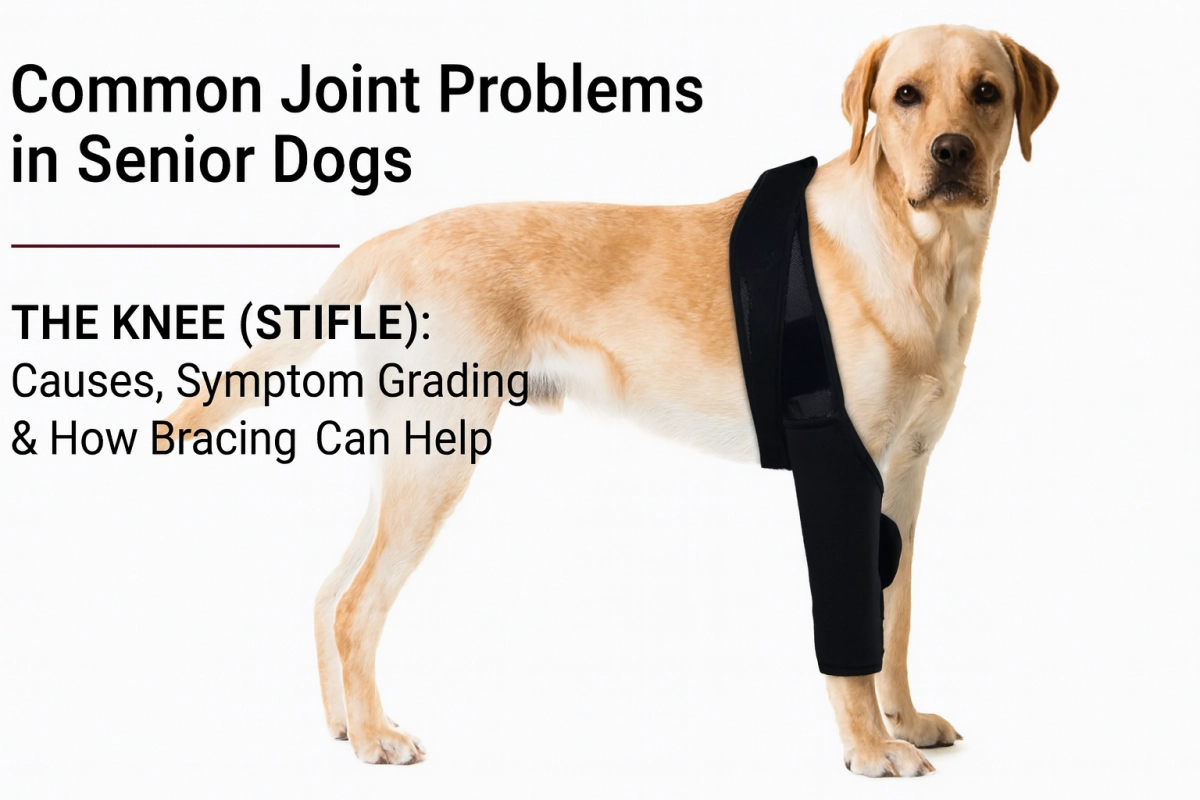
Aging dogs often slow down because of knee (stifle) disease. The stifle is a complex hinge joint formed by the femur, tibia, patella, and crucial soft-tissue stabilizers (cruciate ligaments and menisci). Degeneration of these structures leads to pain, instability, and osteoarthritis (OA). Below is a practical guide to the main causes, how to grade symptoms at home, and where Dog ACL Braces and IVDD Dog Braces fit into care.
Why Senior Dog Knees Fail
1) Cranial Cruciate Ligament (CCL/ACL) Degeneration or Tear
-
Most common reason for chronic hind-limb lameness in older dogs.
-
The ligament weakens over time due to micro-tears and inflammation; a slip or jump finishes the tear.
-
Consequences: tibial thrust (the shinbone slides forward), meniscal damage, and rapid OA progression.
2) Meniscal Injury
-
The medial meniscus often gets crushed by the unstable tibia.
-
Signs include clicking, sudden worsening of lameness, and pain when turning.
3) Patellar Luxation (long-standing)
-
Maltracking kneecap causes cartilage wear and intermittent skipping lameness that evolves into OA with age.
4) Primary/Secondary Osteoarthritis
-
Cartilage thins, synovium inflames, and bone spurs form. OA may follow any of the above or occur primarily with aging.
5) Less Common Contributors
-
Post-traumatic instability, immune/infectious arthritis, or referred pain from spinal disease (see “IVDD Dog Braces” below).
Risk factors: excess weight, sudden spikes in activity, slippery floors, poor hind-limb strength, large/giant breeds, prior knee injury, cold damp weather.
Symptom Grading: How Bad Is the Knee?
Use this simple 0–5 lameness scale to track your dog at home and share with your vet.
-
Grade 0 (Normal): No limp; full activity.
-
Grade 1 (Mild): Intermittent limp—shows at start of walk or after vigorous play; warms out.
-
Grade 2 (Mild–Moderate): Limp visible at a walk; still weight-bearing throughout.
-
Grade 3 (Moderate): Obvious limp; periodically off-loads leg, struggles with stairs or rising.
-
Grade 4 (Severe): Touch-down only; avoids weight most of the time, sits to rest frequently.
-
Grade 5 (Non-weight-bearing): Will not use the leg.
Supporting clues for knee disease
-
“Bunny-hop” at a trot or when accelerating
-
Stiffness after rest (“morning hobble”), better after warming up
-
Knee swelling/heat, discomfort on sitting or turning
-
Muscle loss in the thigh; shortened stride
-
Audible/palpable click (possible meniscal tear)
Where Dog ACL Braces Help
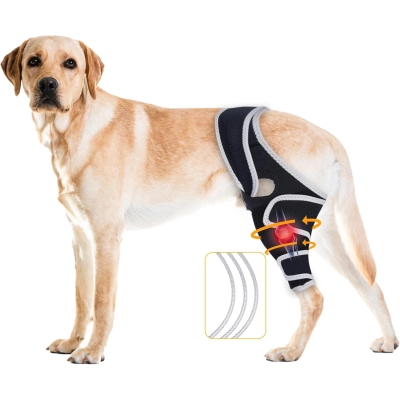
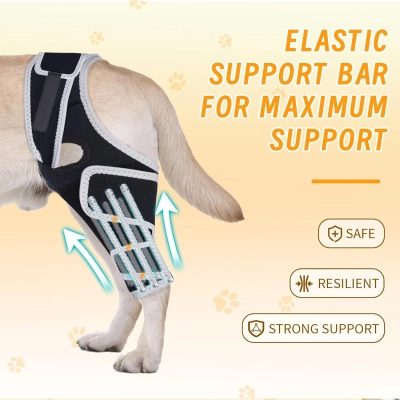
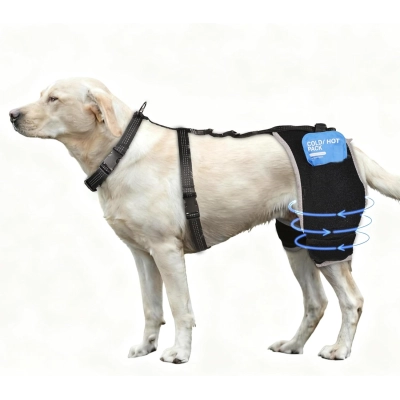
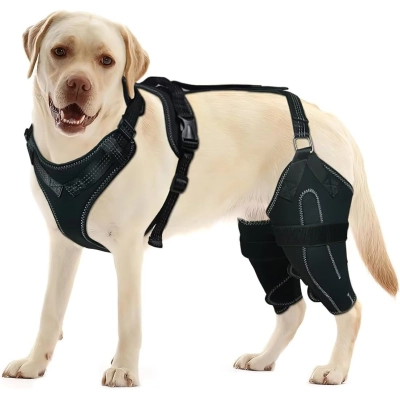
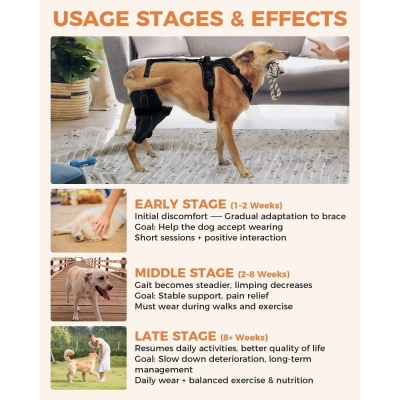
A properly fitted Dog ACL Brace (stifle orthosis) is a conservative or adjunct option, especially for seniors who are poor surgical candidates or during rehab:
-
Stabilizes the joint by resisting forward tibial thrust and excessive rotation.
-
Protects the meniscus while tissues heal or while you decide on surgery.
-
Reduces pain and allows safer controlled exercise to rebuild muscle.
-
Prevents overuse of the opposite knee, which is at high risk after a CCL tear.
Use tips
-
Introduce gradually (30–60 min sessions), checking skin for rubs.
-
Adjust snug—not tight—straps; ensure aligned hinges/pads.
-
Pair with vet-directed pain control, weight management, and strengthening (sit-to-stand, leash walks, hydrotherapy).
Braces don’t “heal” a complete ligament tear but can meaningfully improve comfort and function, especially in partial tears or when surgery isn’t feasible.
Why IVDD Dog Braces Matter in a “Knee Article”
Back problems can mimic or complicate knee lameness in seniors:
-
IVDD (Intervertebral Disc Disease) may cause hind-limb weakness, knuckling, or ataxia that looks like a knee issue.
-
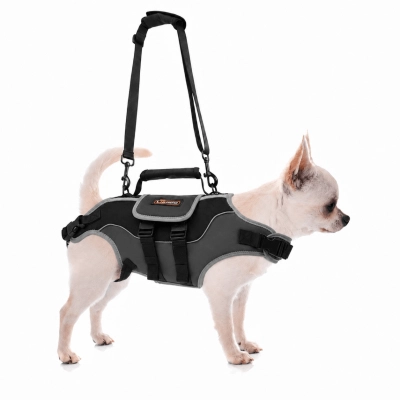
A lumbar or thoracolumbar back brace (an IVDD Dog Brace) can provide proprioceptive feedback and spinal support during conservative management, reducing pain that alters gait and overloads the knees.
-
Dogs with neurologic deficits may benefit from toe-up/anti-knuckling boots, which lift the paw and prevent skin injury while you address the primary spinal problem.
If your dog drags toes, crosses limbs, or shows back pain with incoordination, ask your vet about spinal imaging and whether an IVDD Dog Brace is appropriate alongside rest and rehab.
Putting It All Together: A Senior Knee Care Plan
-
Veterinary Diagnosis First
Gait exam and palpation, knee radiographs, and—when indicated—ultrasound/MRI for cruciate or meniscus assessment; rule out spinal disease. -
Pain & Inflammation Control
NSAIDs and analgesics as prescribed; joint nutraceuticals may be adjunctive. -
Weight Management
Target a lean body condition—this is the single biggest modifiable factor for knee OA. -
Structured Exercise
Short, frequent leash walks on textured surfaces; avoid explosive play. Add sit-to-stands, controlled stairs/ramps, and hydrotherapy. -
Targeted Bracing
-
Dog ACL Brace for CCL instability (partial tears, non-surgical cases, or post-op once cleared).
-
IVDD Dog Brace if spinal disease contributes to hind-limb weakness/knuckling that worsens knee load.
-
-
Home Environment
Traction runners on slick floors, ramps instead of jumps, warm supportive bedding.
0 Comments