
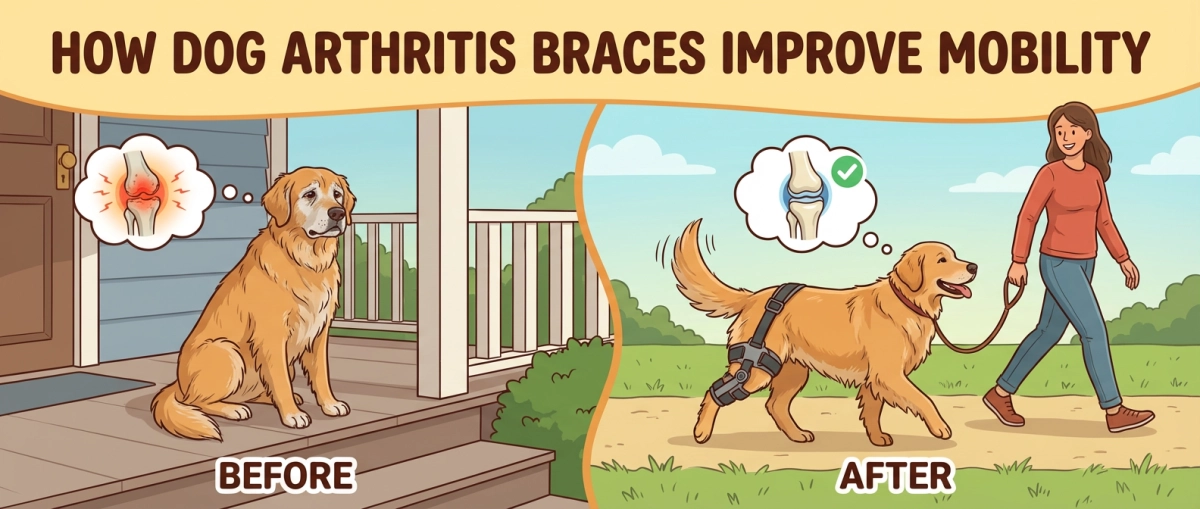
A dog arthritis brace can help your dog walk better. It can make your dog feel less pain. The brace gives extra support to the joint. This helps stop strange movement. It keeps your dog steady when walking. You may see your dog move with more balance. Your dog may do favorite things again. Studies show a dog arthritis brace helps dogs stand and walk. It can help dogs with arthritis move more easily. You can feel happy knowing the brace is safe. It does not need surgery. It helps your dog feel better.
Key Takeaways
-
A dog arthritis brace helps your dog move better. It gives support to joints. This helps your dog walk steadier and with more confidence.
-
Braces work best when they fit your dog well. Custom fitting keeps the brace in place. It gives the right support for your dog.
-
Braces can help lower pain. They spread weight away from sore joints. This lets your dog move with less pain.
-
Using a brace can mean less need for pain medicine. Your dog can feel better without using lots of drugs.
-
Your vet should check the brace often. This makes sure it fits right. The vet also checks how your dog is doing.
How Dog Arthritis Braces Improve Mobility
Joint Stabilization and Support
A dog brace for arthritis gives extra help to your dog’s joint. Using a brace helps your dog walk with more trust. The brace keeps the joint steady and stops strange movement. This makes your dog feel safer and steadier on walks.
Research shows custom fitting makes braces work better. Casting or 3D scanning helps the brace fit just right. A good fit keeps the brace in place and helps the joint. Technology helps your dog move easier.
|
Evidence Type |
Description |
|---|---|
|
Custom Fit |
Casting or 3D scanning makes the brace fit well and keeps your dog steady. |
|
Integration with Rehabilitation |
Using braces with therapy and weight control helps joints and movement. |
|
Use of Technology |
Digital tools and 3D printing make better braces and spread pressure. |
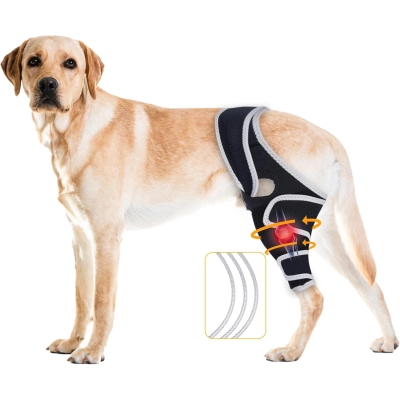
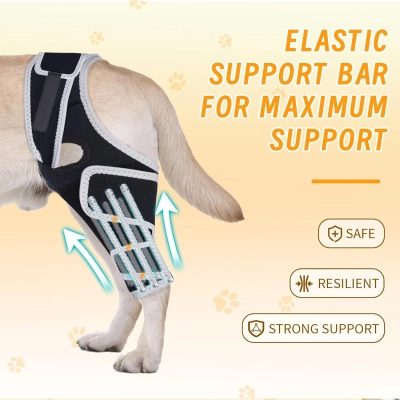
Dog leg braces hold the joint from outside. They stop strange tibial movement and help your dog walk steadier. You may see your dog stand straighter and move with more balance. Some braces, like the Walkabout Elbow Support Brace, help sore joints and let your dog stay active. The Walkabout Double Elbow Support Brace gives more help for dogs with worse arthritis.
-
Custom fitting with casting or 3D scanning
-
Owners need to use the brace every day and check it
-
Therapy and weight control help with braces
-
Vets check and adjust braces as needed
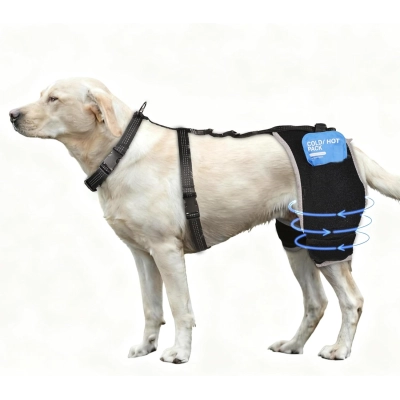
Dog leg braces can help the knee, elbow, or hip. A hip brace for dogs helps keep the hip steady and lets your dog move better. Using a brace with exercise and weight control helps your dog get moving again.
Pain Relief and Load Redistribution
Dog leg braces do more than hold joints. They also help with pain by spreading weight on your dog’s legs. Arthritis makes joints hurt with each step. A brace moves some weight away from the sore spot. This makes walking easier and less painful.
-
Knee braces spread weight on a hurt leg and lower stress on joints.
-
A brace gives outside support like surgery does inside.
-
Braces help the hurt leg and take pressure off the healthy one.
You may see your dog use both legs more evenly. This helps your dog walk farther and play longer. Dog leg braces help your dog enjoy daily life with less pain. If your dog has hip arthritis, a hip brace for dogs can lower pain and help movement. You help your dog stay active and happy.
Range-of-Motion Control and Proprioception
Dog leg braces help control how much the joint moves. Some braces have hinges you can adjust. You set these hinges to stop movement that hurts. This keeps your dog safe and comfy.
Braces also help proprioception. Proprioception means your dog knows where its leg is. With a brace, your dog feels the joint is supported. This stops your dog from guarding the limb. Your dog moves more naturally and breaks the limp-pain cycle. You help your dog put weight on the leg and walk better.
Dog leg braces help your dog move with more control and trust. You may see your dog walk smoother. Using a brace helps your dog get moving and enjoy life again.
-
Hinges can stop painful movement
-
Braces help natural movement and better weight use
-
Better proprioception helps your dog walk with trust
Dog arthritis braces work for many joints. You can use them for the knee, elbow, or hip. When you pick the right brace and listen to your vet, you help your dog move with less pain and more freedom.
Benefits of Dog Arthritis Braces
Improved Mobility and Activity
You want your dog to move easily. A dog arthritis brace helps your dog walk, run, and play better. Many owners see their dogs walk smoother and do more things after using a brace. You may notice less limping and more energy in your dog.
-
84.9% of owners saw their dogs walk better with braces.
-
Many dogs do more activities and look happier.
-
Studies show dogs with stifle orthotics stand and walk better.
"My old dog could barely walk after his injury. After using a knee brace and listening to our vet, he started running in the yard again in two months."
Dogs with arthritis have trouble moving. A brace keeps the joint steady and helps your dog move better. You may see your dog stand straighter and walk with more balance. Dog leg braces help your dog get stronger and feel braver.
Reduced Pain and Discomfort
Pain can keep your dog from having fun. A dog arthritis brace may lower pain by holding the joint and spreading weight away from sore spots. You help your dog feel better with every step.
|
Study Type |
Findings |
Pain Reduction Outcomes |
|---|---|---|
|
Custom Orthotics Study |
Dogs with hinged braces moved better after 12 weeks. |
Dogs had less pain than those without braces. |
|
University of Tennessee Clinical Trial |
Double braces helped balance weight and lowered strain on the other leg. |
Most dogs had less pain and did more activities. |
|
Meta-Analysis on Conservative Management |
Bracing with other treatments made life better for dogs. |
More dogs had less pain, especially small and medium ones. |
Dogs with arthritis often feel less pain and want to move more when wearing a brace. You may see your dog use both legs the same. Less pain means your dog can walk farther and play longer. Braces help with arthritis and let your dog enjoy life.
Less Need for Medication
You may worry about giving your dog too much medicine. A dog arthritis brace can help you use less pain medicine. When your dog hurts less and moves better, you may need fewer drugs for arthritis.
-
Braces help lower pain and swelling, so moving is easier.
-
Some dogs need less medicine when braces help their joints.
-
Bracing with other treatments can help and lower drug use.
You should always talk to your vet before changing medicine. A brace may help you use less medicine and avoid side effects.
Enhanced Quality of Life
You want your dog to be happy and active. A dog arthritis brace can help your dog feel better and enjoy life more. Dogs with arthritis often feel braver and do daily things again. You may see your dog play, walk, and rest with less pain.
-
Braces hold weak or hurt joints and make moving easier.
-
Less pain and more support help dogs feel braver.
-
More activity helps your dog stay healthy and strong.
-
Owners who are happy with braces help their dogs do better.
Dogs with arthritis can move safer and easier with a brace. You help your dog avoid new injuries and enjoy life. Braces give extra help, so daily things are easier. Your dog may feel better and show more happiness.
Tip: Use the brace with gentle exercise and good food for best results. Check with your vet often to see how your dog is doing and change care if needed.
Dog arthritis braces have many good points. You help your dog move better, feel less pain, need less medicine, and have a better life. These changes can help your dog and your family a lot.
When to Use a Dog Arthritis Brace
Signs Your Dog Needs Support
Sometimes your dog may move slower or act strange. Dogs with arthritis often need extra help. Look for these changes in your dog:
-
Limping or stiff legs after resting
-
Not wanting to move, jump, or climb stairs
-
Swollen joints you can see or feel
-
Hurts when touched or while moving
-
Walks in a weird or clumsy way
-
Muscles get smaller, mostly in the back legs
-
Licks or chews sore joints a lot
-
Eats less or sleeps badly
-
Whines or barks more than usual
These signs show your dog might be hurting. A dog brace can help keep the joint steady and lower pain. It helps your dog walk easier and use less energy.
Common Conditions and Indications
Many dogs can use a dog arthritis brace to feel better. Some common problems are:
Bracing is the top non-surgical way to help knee pain from CCL injuries, ACL tears, luxating patella, and other knee problems. Bracing keeps the knee steady, lowers pain, and makes moving safer. It is very important for these issues.
Dogs with osteoarthritis, hip or elbow dysplasia, or those healing from surgery may also get better with a brace. Cranial cruciate ligament injuries happen a lot in both young and old dogs. Using a brace helps your dog stay active and keeps joints healthy.
Veterinary Consultation and Contraindications
Always talk to your vet before starting new treatments. Your vet will check your dog and see if a brace is safe and useful. Some dogs should not use a brace. Reasons include:
-
Bad bone breaks that are not fixed
-
Open cuts or skin trouble under the brace
-
Pain or swelling that is not controlled
-
Nerve problems that change movement
-
Dogs who cannot wear a brace
-
Allergies to the brace material
Your vet will help you pick the best brace and watch your dog’s progress. Regular visits help keep your dog safe and comfy while using the brace.
Choosing and Fitting a Dog Arthritis Brace
Custom vs. Off-the-Shelf Options
When choosing a dog leg brace, you need to decide between custom and off-the-shelf types. Custom braces use a mold or scan of your dog’s leg. This gives a perfect fit and better comfort. Off-the-shelf braces come in standard sizes. They are easy to get and cost less, but may not fit as well.
|
Factor |
Custom Braces |
Off-the-Shelf Braces |
|---|---|---|
|
Fit |
Tailored fit for individual dogs |
Standard sizes may not fit perfectly |
|
Comfort |
Superior comfort due to customization |
May lack comfort for specific needs |
|
Adjustability |
Highly adjustable |
Limited adjustability |
|
Material |
Often made from high-quality materials |
Varies, may not be as durable |
|
Cost |
Higher price tag |
More affordable |
|
Waiting Time |
Longer wait for production |
Immediate availability |
Think about your dog’s needs, the severity of arthritis, and your budget before buying a dog leg brace. Custom dog hip and knee braces work best for unique shapes or severe cases.
Ensuring Proper Fit and Comfort
A good fit is key for comfort and safety. Most problems happen in the first weeks if the brace does not fit right. Always follow these steps:
-
Watch the fitting video or ask your veterinarian for help.
-
Slide your dog’s leg into the brace. Tighten the bottom strap first, then the middle, then the top.
-
Check that you can fit one or two fingers between the brace and your dog’s skin.
-
Make sure the brace allows normal movement.
Your veterinarian should check the fit often. They look for skin irritation, swelling, or slipping. Custom braces use a cast or scan to spread pressure evenly.
Break-In Routine and Safety Tips
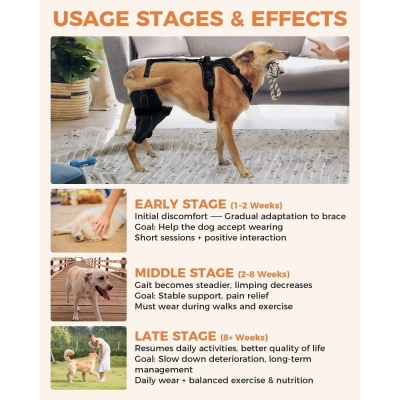
Start slow with a new brace. Use it for 30 minutes on the first day. Add 30 minutes each day if your dog feels good. Always check your dog’s skin after each use for redness or sores.
-
Remove the brace at night to let the skin breathe.
-
Keep fur under the brace clean and trimmed.
-
Clean the brace every day with wipes.
-
Inspect the skin twice daily.
Your veterinarian will guide you through fitting and follow-up. Active involvement and regular checks help your dog get the most from this treatment.
A dog arthritis brace helps your pet walk better. It can make pain less for your dog. Many owners say their dogs move easier. They see less limping and more comfort in their pets.
|
Outcome |
Owner Reports |
|---|---|
|
Improved Mobility |
Dogs walk with less trouble |
|
Reduced Lameness |
Limping is not as bad |
|
Greater Comfort |
Dogs look more relaxed |
You should talk to your vet before picking a brace. Your vet can help you find the best fit. Treating arthritis may also need medicine and healthy habits. With good care, your dog can stay active and have fun.
FAQ
Can a dog arthritis brace replace surgery?
A brace can help manage arthritis and improve mobility. You may use a brace when surgery is not possible or as part of recovery. Your veterinarian will guide you. A brace does not cure arthritis but may reduce pain and support your dog’s joint.
How long does it take for my dog to adapt to a brace?
Most dogs need a few days to a few weeks to get used to a brace. Start with short sessions and increase time slowly. Watch your dog for signs of comfort or irritation. You help your dog adjust by following a break-in routine.
Is a brace suitable for senior or overweight dogs?
Senior and overweight dogs often benefit from extra support. A brace may help your dog move easier and feel less pain. You should check with your veterinarian to make sure the brace fits well and meets your dog’s needs.
How do I clean and maintain my dog’s arthritis brace?
You should clean the brace daily with a damp cloth or pet-safe wipes. Keep fur under the brace trimmed. Inspect straps and liners for wear. Regular cleaning helps prevent skin problems and keeps your dog comfortable.
Can my dog wear a brace on both legs?
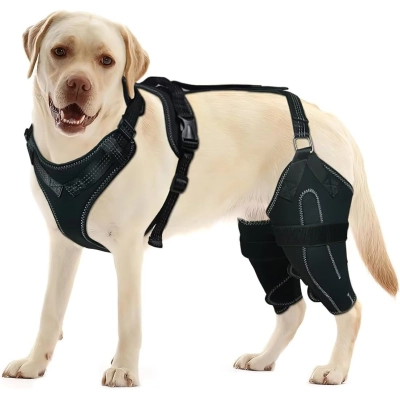
Some dogs need braces on both legs for better support and mobility. Your veterinarian will decide if this is right for your dog. Using braces on both legs may help balance movement and reduce pain in dogs with severe arthritis.

0 Comments