
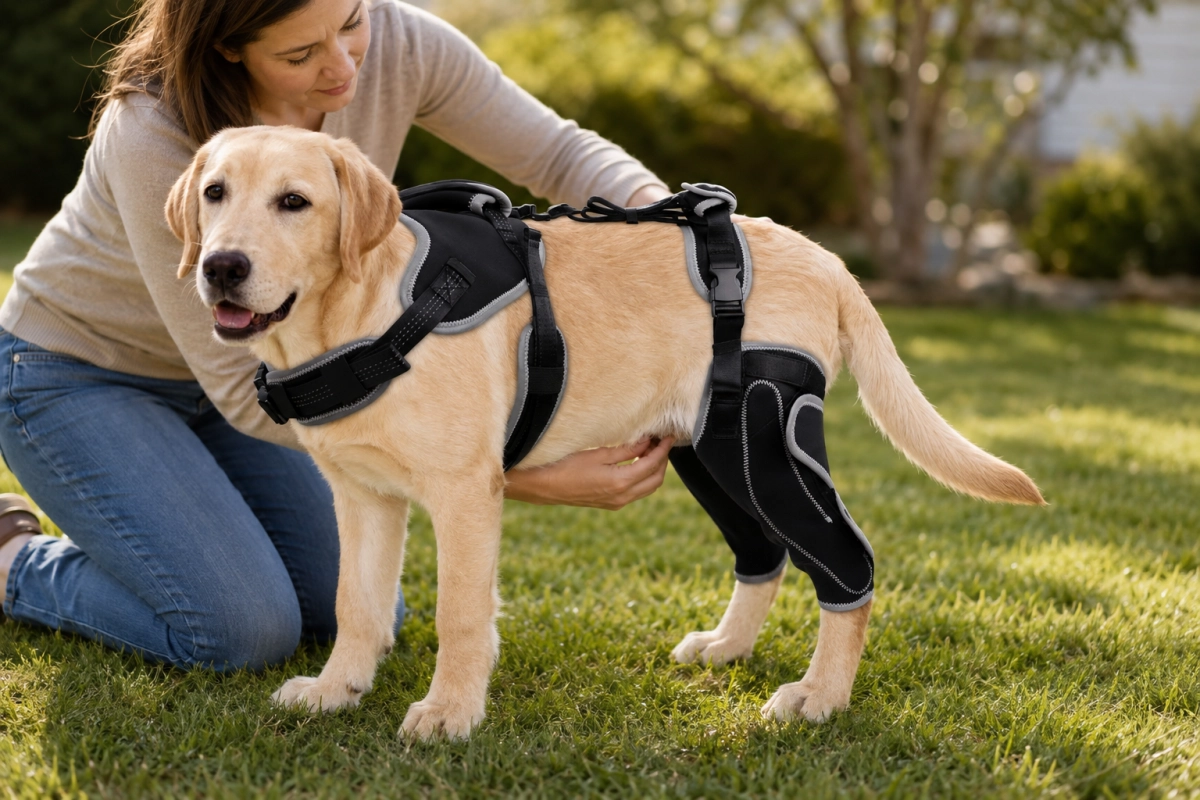
A knee brace for dogs does not have to come off for every bathroom break. Whether a dog can squat or lift a leg while wearing one depends on two design decisions: where the straps route and where they anchor. A strap riding the lower ribs holds its position through a squat. A strap crossing the groin fold drifts into the urine and stool path the moment the dog folds down. Clearance, not tightness, is what keeps the brace clean.
Key Takeaways
- Strap route and anchor point, not overall snugness, decide whether a dog can eliminate cleanly while braced.
- A simple leg sleeve leaves the groin open by default; a body-anchored brace needs a clearance check on every strap that crosses the belly.
- Straps that drift into the groin fold cause soiling and chafing, so check their position after every outdoor trip.
Strap Route and Anchor Placement Decide Bathroom Clearance
Clearance is not luck. It follows from where the straps sit at rest and where they move under load. A strap that anchors on the lower ribs stays put during a squat because the ribcage keeps its circumference while the hips flex. A strap that anchors near the groin rests on soft tissue that shortens and shifts as the dog folds down — the anchor migrates, the strap slides into the fold, and waste lands on fabric instead of the ground.
Male and Female Clearance Paths
Male and female dogs need different clearance paths, so one strap route cannot serve both by accident. For a male dog, the urine path runs further along the belly wall, and a strap crossing the lower abdomen sits directly in it. For a female dog, the vulva sits further back between the rear legs, which means the rear opening has to stay fully exposed. The route has to be checked against the individual dog, not assumed from the size chart.
Stand the dog on level ground and run a finger along the underside. The strap edge should ride the lower ribs or waist. If it presses into the groin fold, the anchor is too low for that dog's build.
Simple Leg Sleeve vs Body-Anchored Knee Brace
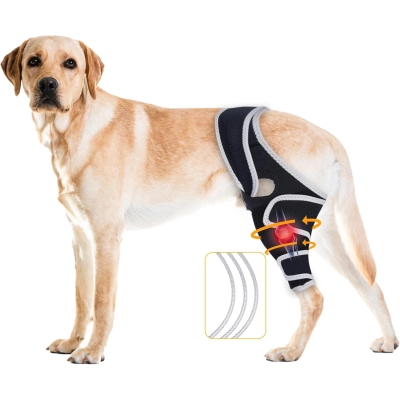
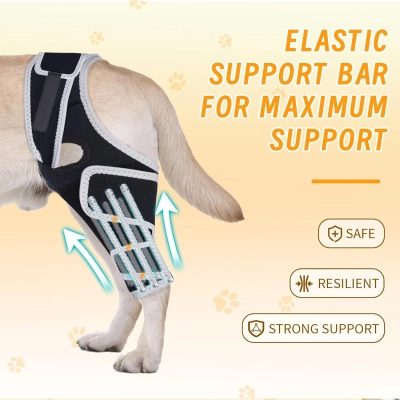
Two anchor designs handle bathroom clearance differently. A simple dog knee brace wraps the stifle joint only, using minimal strapping near the inner thigh. That leaves the lower abdomen open by default, so a dog can pee and poop without the fabric in the way. The trade-off is hold. A sleeve with no upper anchor can slide down the leg during active movement.
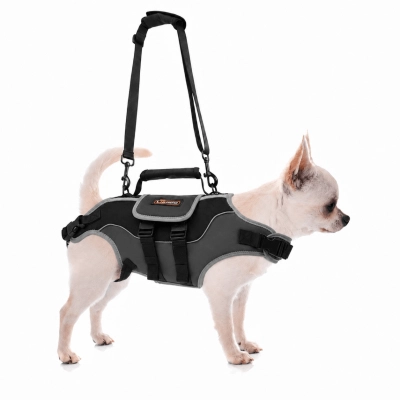
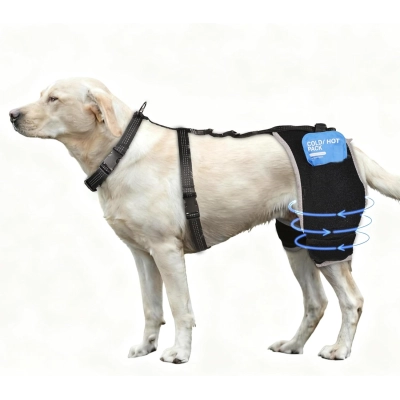
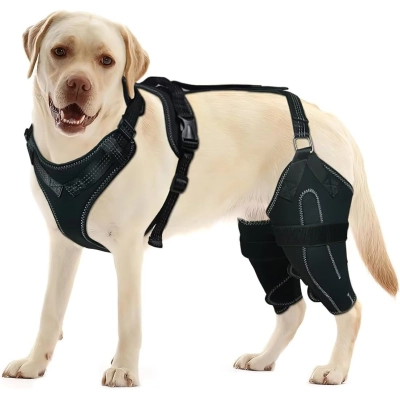
A body-anchored brace connects the leg sleeve to a chest harness, waist strap, or hip assembly. Those extra anchors stop the sleeve from slipping, which matters on a weak or recovering leg. But every added strap is a strap that can cross the groin, so the clearance has to be verified rather than assumed.
| Feature | Simple Leg Sleeve | Body-Anchored System |
|---|---|---|
| Anchor Point | Stifle joint only | Chest, waist, or hip structure |
| Groin Clearance | Open abdomen by default | Depends on strap route |
| Hygiene Risk | Low | Higher if straps drift toward the fold |
| Support | Local joint support | Holds position on weak legs |
| Main Limitation | Sleeve can slide down during movement | More straps near the groin to verify |
A dog recovering from an ACL injury often needs a dog brace for ACL injury with a body-anchored design precisely because the leg cannot hold the sleeve up on its own. The added anchors keep the brace in position; the clearance check is the cost of that stability. How a knee brace supports the joint through movement shapes how well a dog tolerates it all day, which matters most during recovery and mobility work.
What Changes When a Dog Squats or Lifts a Leg
Standing measurements do not show how straps move during a potty break. When a dog squats, the distance between the ribcage and the pelvis shortens. A belly strap sized while the dog stands goes slack the moment those two points move closer together. Where does that slack go? The groin fold — the softest and lowest point on the underside.
Strap width decides how badly that drift goes. A strap under an inch wide rolls into a thin cord under slack, concentrating pressure on a smaller patch of skin and pulling fabric over the pelvic ridge. Wide, non-roll webbing spreads the same force and stays flatter against the body, so it is less likely to twist into the waste path.
Low anchor placement causes its own problem. When the anchor sits too close to the rear legs, it restricts hip rotation and forces the dog to lean awkwardly instead of lifting a leg or folding into a natural squat. The dog compensates, the posture changes, and the strap ends up somewhere the design never intended.
After a 10-minute walk, check whether any strap has drifted more than half an inch from its starting position. Drift means the anchor is too low or the strap is too loose for how that dog moves.
When the Brace Should Be Adjusted or Removed
Adjust or remove the brace the moment a strap shifts into the urine or stool path. Dirty straps trap moisture against the skin and turn friction into sores. Harness fabric is never meant to contain waste; it is meant to stay clear of it. Check after every trip.
Weak and Paralyzed Rear Legs
A dog with weak or paralyzed rear legs cannot nudge a strap out of the way on its own. Every strap on a body-anchored brace carries load, so none of them should cross the tail base. Keeping the rear straps clear of the tail base lets waste fall cleanly away while the frame still holds the limb.
Dogs with a luxating patella brace can be especially sensitive to inner-thigh pressure, so the same drift that is cosmetic on one dog becomes a real problem on another. Check the dog after every outdoor trip rather than only when something looks wrong.
Disclaimer: these clearance checks assume a dog with typical rear-leg conformation. A dog with a very deep chest, a tucked flank, or angular limb differences may shift strap positions in ways a visual check misses — hand-check the groin fold for a strap edge pressing into skin rather than relying on sight alone.
FAQ
Should the knee brace come off for every potty break?
A well-fitted brace can stay on for short potty breaks. Leave it on only while the strap clearance holds. If fabric blocks the stream or gets wet, remove it and recheck the route before the next trip.
How do you reposition a waist strap that has drifted toward the groin?
Loosen it fully, slide the band up until it rests on the lower ribs, and re-tighten on the torso rather than the fold. Then let the dog take a few steps and confirm the strap stays put.
What if urine gets on the brace fabric?
Remove the brace, wash the soiled material, and let it dry completely before reuse. Damp fabric holds bacteria and grinds against the skin, which causes chafing faster than a dirty strap alone.
0 Comments