
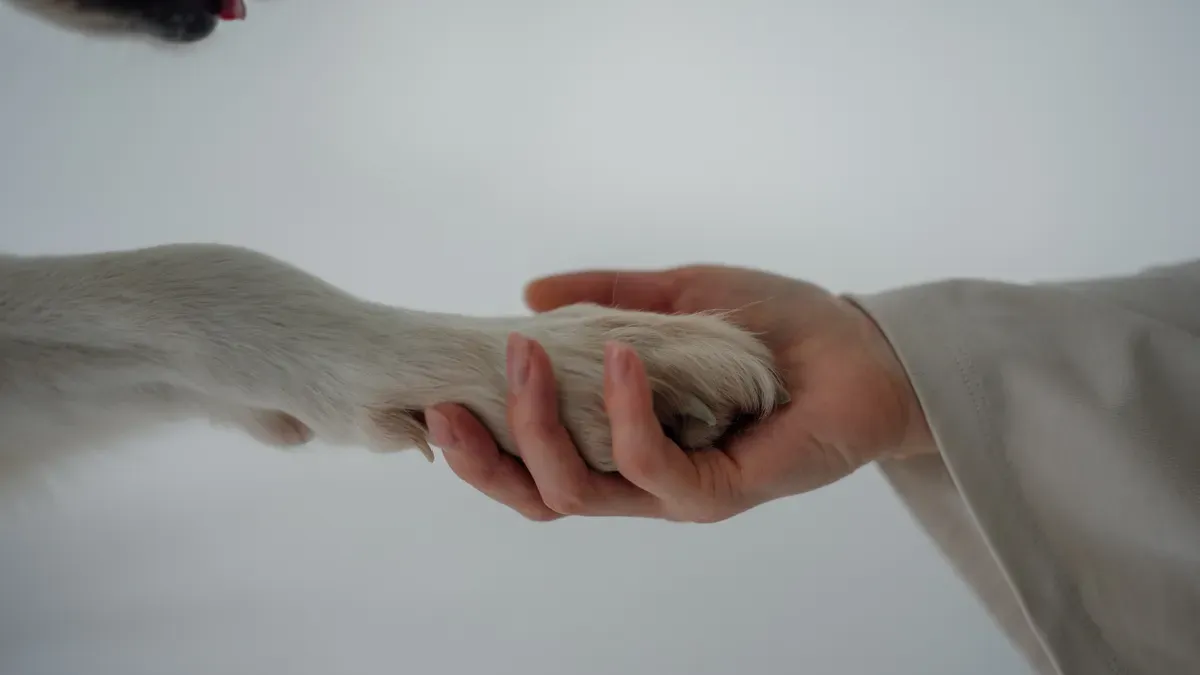
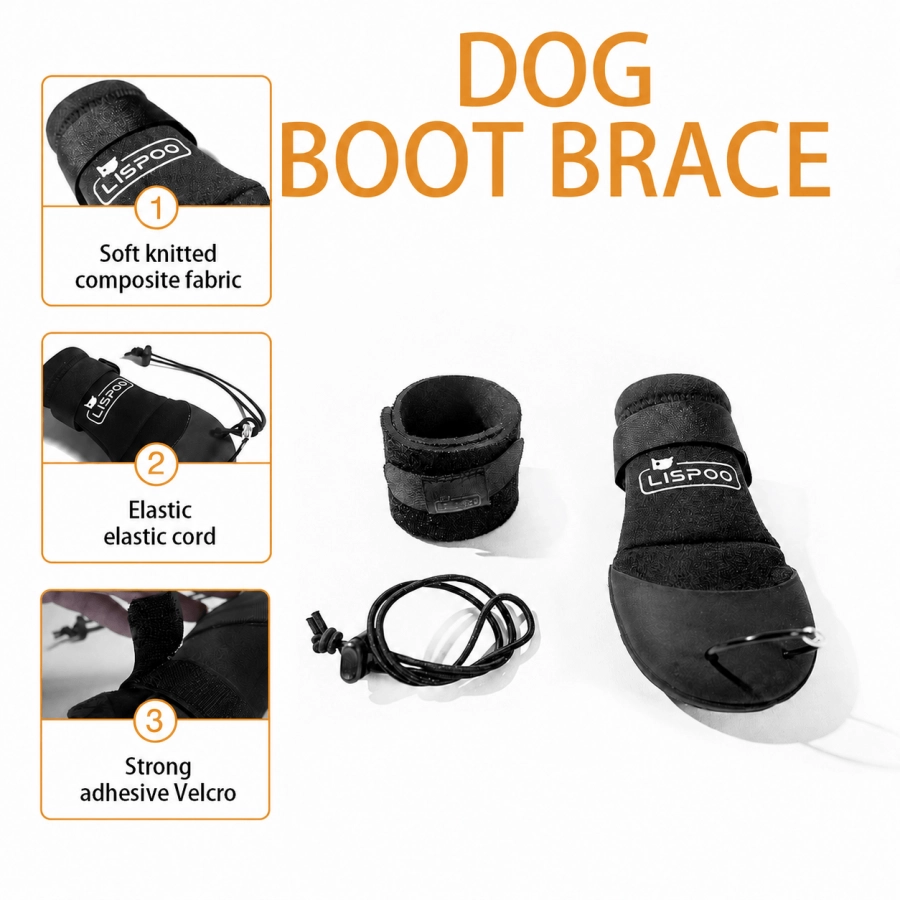
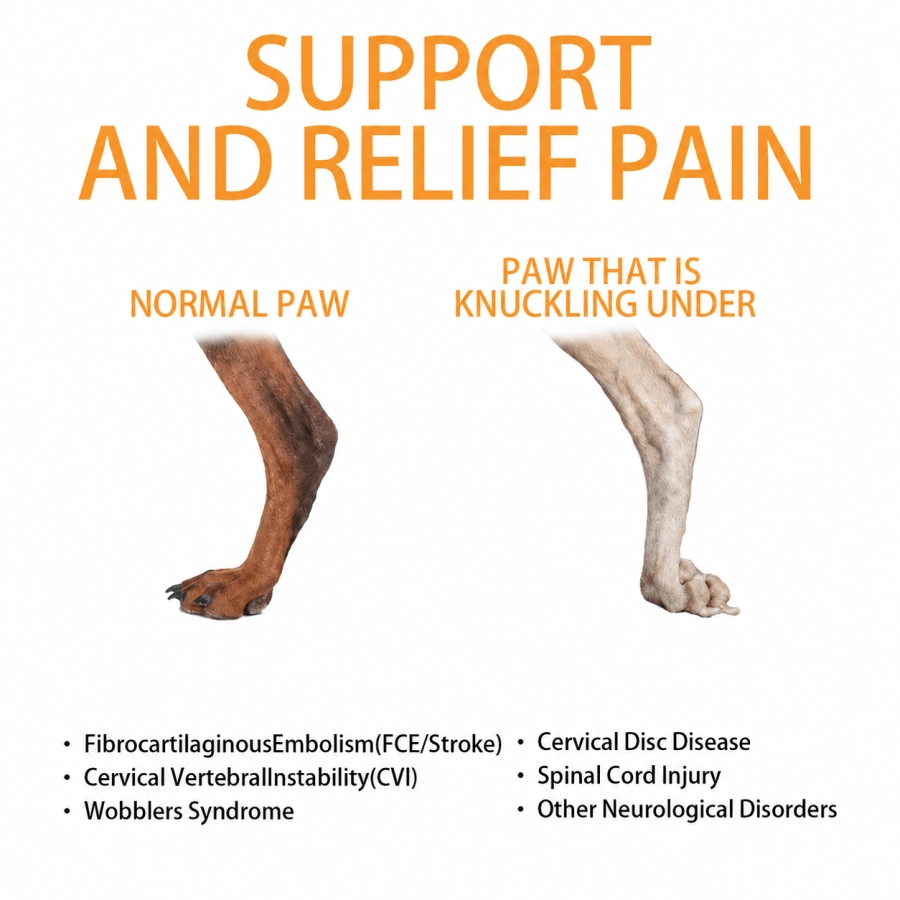
When a dog knuckles—dragging the top of the paw across the ground instead of planting the pad down—the brace that helps is not necessarily the one with the tightest straps. What separates a brace that works from one that causes more problems is how the straps are spaced and whether the paw sits in its natural floor-contact position. A dog foot brace for knuckling is not a compression device. It is a positioning tool. The design detail that most determines whether it succeeds is strap spacing—how far apart the anchor points sit along the leg—because spacing controls how force enters the limb, not just how firmly the brace grips.
In short:
- Strap spacing sets the pressure footprint. Two straps placed half an inch apart concentrate force into a narrow band on the skin. The same straps placed two inches apart spread that load across a wider contact area, lowering the pressure per square inch and reducing rub risk.
- Paw position matters more than strap tension. A brace cranked tight but aligned poorly still lets the paw drag. A moderately snug brace that holds the paw pad-down gives the dog the ground feedback needed for a more natural step.
- Daily checks catch problems before they become injuries. Redness that fades within 20–30 minutes of brace removal is normal. Redness that persists signals sustained pressure—the fit needs adjustment.
Strap Spacing Sets the Pressure Footprint
Most discussion around brace fit centers on how tight the straps feel. Tightness is the wrong variable. What actually controls skin safety is the distance between straps.
Why Spacing Changes Everything
Two straps cinched close together on the lower leg create a narrow pressure band. The entire anchoring force—the force that keeps the brace from sliding down as the dog walks—enters the leg through a small patch of skin. That small patch takes the full load. High pressure per unit area. More rubbing. More risk of hair loss, redness, and eventually open sores.
Move those same two straps farther apart. Same total anchoring force. Much larger contact area. The pressure per square inch drops. The brace grips the leg more like a distributed cuff than a pinched band. This is the physical mechanism: force divided by area equals pressure. Area goes up, pressure goes down. The skin tolerates it longer. The brace stays in place without needing to be overtightened.
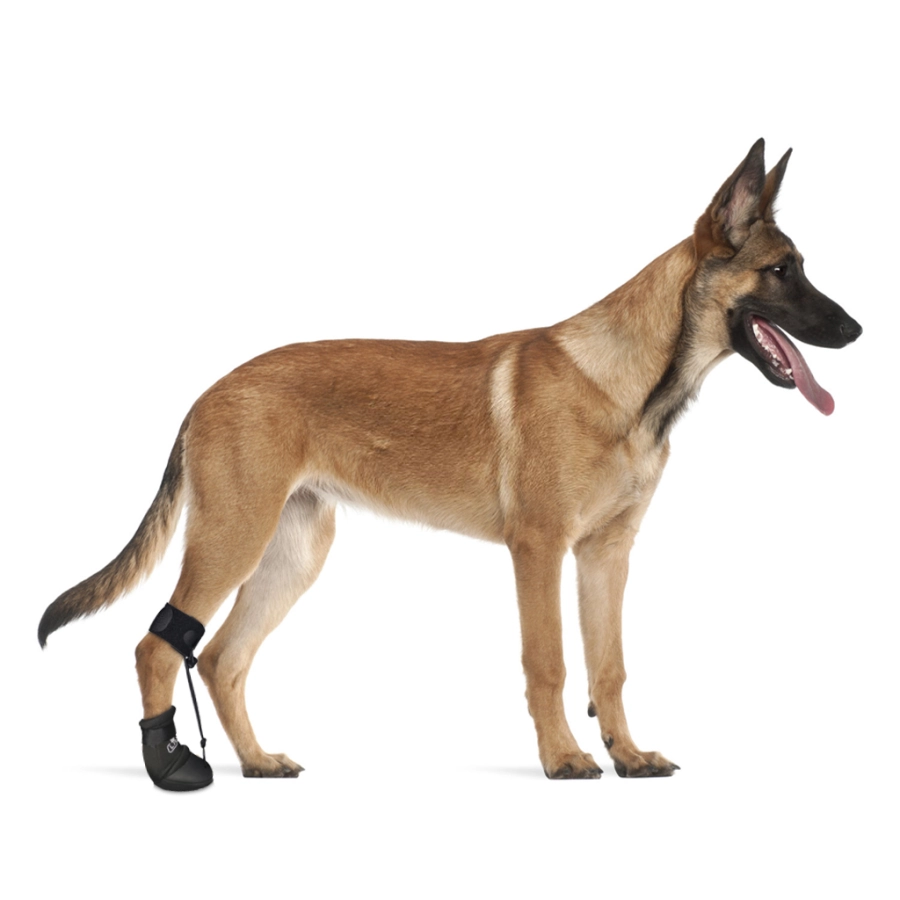
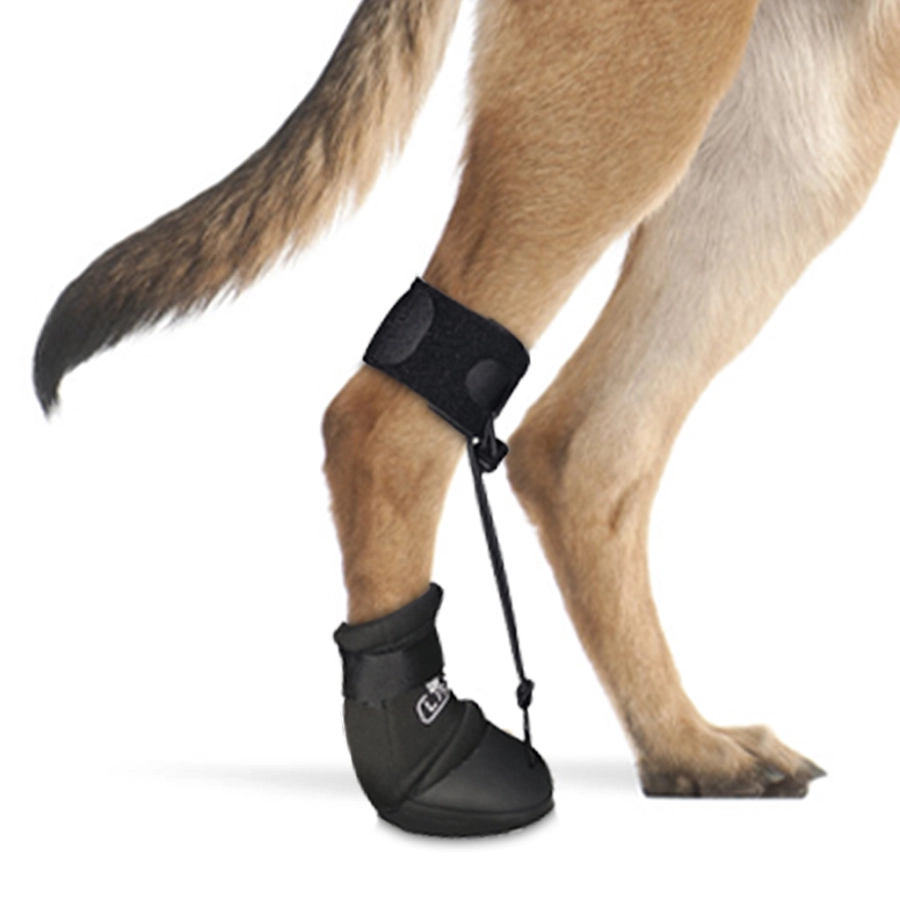
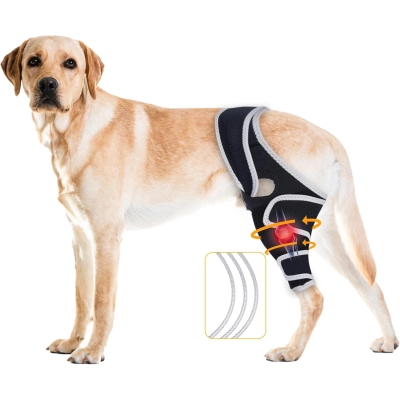
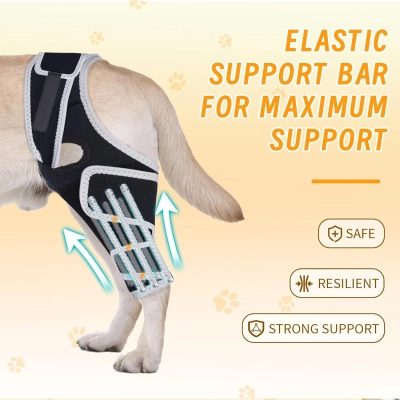
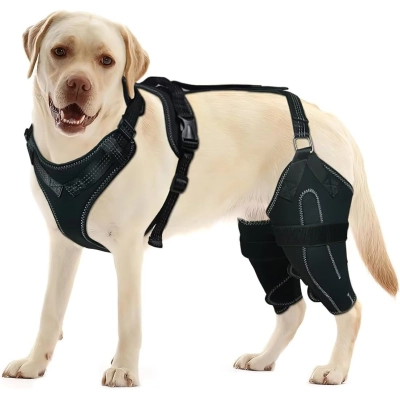
Hock-inclusive brace designs that anchor both below and above the hock tend to create fewer rub complaints than short braces that cluster all anchoring force below the joint. The hock itself becomes a natural spacing landmark—straps on either side of it force a wider distribution by design. A brace that spans paw to above-hock cannot physically bunch its straps into a tight cluster.
Tip: After a 20-minute walk, run a finger under each strap. The skin beneath should feel warm but not hot, and there should be no trench-like indentation that lasts more than a few seconds. A deep groove that persists means the strap is concentrating force into too small an area.
Rotation Resistance Is a Spacing Problem, Not a Tightness Problem
A brace that rotates around the leg during movement is not necessarily too loose. It is too narrow in its grip footprint. Think of holding a pencil between two fingers close together versus spread apart. Close together, the pencil pivots easily. Spread apart, it resists rotation. The same principle applies to a brace on a dog’s leg. Wider strap spacing creates a longer lever arm against twisting forces. The brace stays oriented correctly without needing extra tension.
| Strap Configuration | Pressure Pattern | Main Limitation |
|---|---|---|
| Narrow cluster (straps <1″ apart) | High PSI on small skin patch; rapid rub onset | Rotates easily; requires overtightening to resist slip |
| Wide spread (straps >2″ apart, spanning a joint) | Low PSI across larger area; longer skin tolerance | Requires enough leg length between joints; very short-legged dogs may not accommodate wide spacing |
Paw Position Trumps Strap Tension
A knuckling dog drags the top of the paw because the paw does not find the ground pad-down. The brace’s job is to position the paw so the pad contacts the floor. How firmly the brace grips the leg is secondary. A brace can be cinched painfully tight and still fail if the paw angles wrong inside it.
The Feedback Loop That Tight Straps Cannot Fix
Dogs rely on proprioceptive feedback—sensory signals from the paw pads and joints telling the brain where the foot is in space. When the pad hits the ground, that signal reinforces a normal step. When the top of the paw scrapes instead, the feedback is wrong. The dog compensates. The gait shifts. Other joints absorb the mismatch.
A brace that supports the wrist and paw in the correct pad-down position restores that feedback loop. The dog feels the ground at the right contact point. The step becomes more natural—not because the brace is tight, but because the paw is where it belongs. The strap tension only needs to be enough to keep the brace from sliding. Everything beyond that is waste. It adds pressure without adding support.
Check paw positioning after 10 minutes of walking: lift the dog’s opposite paw briefly so weight shifts to the braced leg. Look at the braced paw from the side. The pad should be parallel to the ground, not tilted forward onto the toes or back onto the heel. If the pad angles wrong, the brace position needs adjustment—not tighter straps.
Materials That Interfere With Positioning
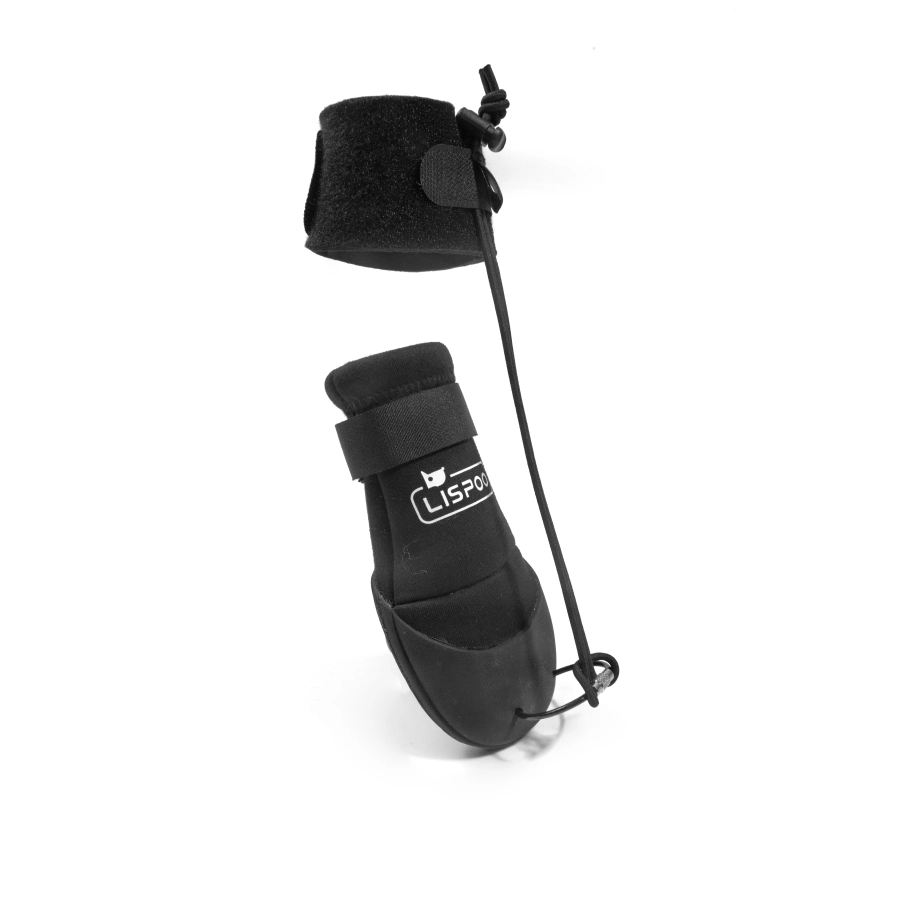
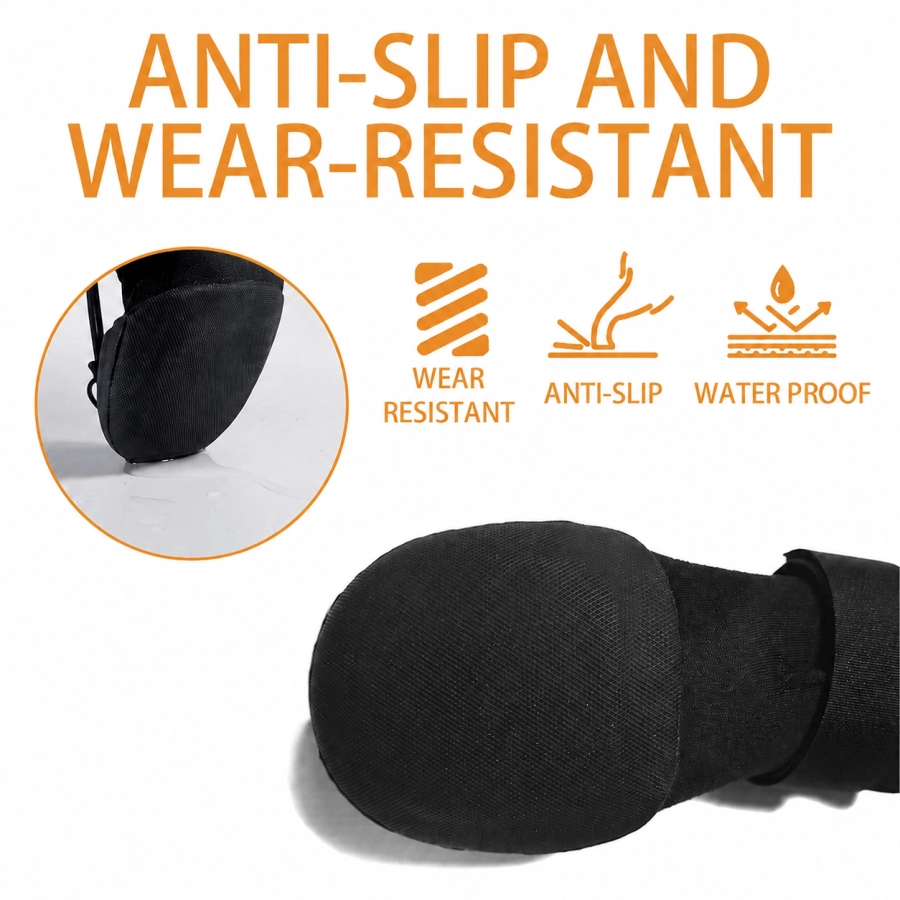
Thick, rigid soles that prevent the dog from feeling the ground under the paw pad can reduce proprioceptive input. The brace becomes a block under the foot rather than a positioning guide. Thin, flexible sole materials preserve ground feel while still protecting the top of the paw from abrasion. Perforated neoprene in the body of the brace allows heat and moisture to escape—without venting, sweat builds inside the boot, the skin softens, and friction injury risk rises even with correct positioning.
Note: A sole that is too thick changes the paw’s angle relative to the ground, which can shift load upward into the wrist and shoulder. If the dog’s gait looks different with the brace on than off—beyond the correction it is meant to provide—the sole thickness may be altering joint angles rather than just protecting the paw.
Fit Checks That Catch Problems Before Injury
Fit is not a one-time setup. It is a daily observation routine. Two checks—one during use and one after removal—cover most failure modes.
During the Walk: Strap Drift
After 10 minutes of continuous walking, note where each strap sits relative to a fixed landmark on the dog’s leg—a bony prominence, a skin crease, or a marked hair pattern. If a strap has drifted more than half an inch from its starting position, the brace is migrating. This means the anchoring force is not distributed evenly across the strap group, or the strap spacing is too narrow to resist rotation. Tightening will not fix it. Widening the spacing or adjusting the alignment of the brace body relative to the paw will.
After Removal: The 20-Minute Redness Rule
Remove the brace and inspect the skin immediately. Mild pinkness is normal—any contact device pressed against skin for 20 minutes will produce some transient redness. What matters is how fast it fades. Redness that disappears within 20–30 minutes after removal signals that blood flow was not compromised. Redness that persists beyond 30 minutes, or that develops into a defined strap-shaped mark, signals sustained pressure high enough to restrict capillary flow. That strap needs repositioning, more padding, or wider spacing.
Also check the top of the paw and the nails for scraping wear. If the nails show fresh abrasion or the hair on the top of the paw is thinning, the brace is not lifting the paw high enough during the swing phase of the stride. This is a positioning failure, not a tightness failure—the brace body angle relative to the leg needs adjustment.
| Check | Pass Signal | Fail Signal |
|---|---|---|
| Strap drift (10 min walk) | Strap moves <½″ from start | Strap migrates >½″; brace rotates |
| Redness fade (post-removal) | Pinkness gone within 30 min | Defined red band persisting past 30 min |
| Nail/paw-top wear | No fresh abrasion; hair intact | Scraped nails; thinning hair on paw top |
Where a Foot Brace Works—and Where It Reaches Its Limit
A foot brace for knuckling dogs addresses one specific mechanical problem: the paw does not maintain pad-down contact with the ground during walking. It works by positioning the paw correctly and protecting the dorsal surface from abrasion. That is its job. It does not treat nerve damage, spinal cord compression, or degenerative myelopathy. It does not restore sensation. It positions.
This means the brace performs best when knuckling is intermittent and position-dependent—the dog knuckles when fatigued, on certain surfaces, or at certain speeds, but can still place the paw correctly some of the time. In these conditions, the proprioceptive feedback from correct positioning reinforces the existing neural pathway. The brace is a cue, not a motor.
The brace performs worst when knuckling is constant and the dog cannot place the paw pad-down even with external positioning help. If the paw stays flexed under inside the boot regardless of how the brace is adjusted, the underlying condition has progressed past what positioning support can address. At that point, a different category of support—one that offloads the limb entirely rather than repositioning the paw—may be needed.
Disclaimer: The fit checks described here assume a short-coated dog where skin changes are visible on inspection. Double-coated breeds may show subtler rub marks hidden under fur that need hand-checking rather than visual inspection—run your fingertips slowly along the skin under each strap line after every session. Additionally, dogs with angular limb deformities or very deep chests may have leg proportions that fall outside the sizing patterns most braces are built around, which means the standard strap-spacing advantage may not hold; in those cases, the fit checks described here may not catch every pressure point.
FAQ
How long can a dog wear a foot brace for knuckling during one session?
Start with 30–60 minutes and check the skin immediately after removal. If the redness-fade test passes (pinkness gone within 30 minutes), the session length is safe. Increase gradually in 15-minute increments, rechecking each time. Remove the brace during sleep, crating, or unsupervised rest.
Why does the brace keep rotating even after tightening the straps?
Rotation is a spacing problem, not a tightness problem. Tightening a narrow-grip brace increases pressure without adding rotational resistance. Reposition the straps farther apart along the leg. If the brace design does not allow wider spacing, the grip footprint is too short for that dog’s leg length.
What is the difference between a foot brace and a hock brace for knuckling?
A foot brace covers the paw and lower leg below the hock. A hock brace spans the hock joint and often includes paw coverage. The key difference is strap spacing: a hock-inclusive design uses the joint as a natural spacing landmark, forcing straps to sit above and below the hock, which creates a wider grip footprint with less pressure per strap. A short foot brace clusters all anchoring force below the joint, which can concentrate pressure unless the brace body is long enough to distribute load.
Can a foot brace make knuckling worse?
It can, if the brace positions the paw incorrectly or if the sole is thick enough to alter joint angles up the leg. If knuckling worsens while the brace is on, remove it and reassess paw positioning inside the boot. The pad should sit flat and parallel to the ground, not tilted forward or back.
A foot brace for knuckling dogs is a positioning tool first, a protective shell second. The design detail that most determines whether it helps or hurts is strap spacing—because spacing controls how pressure enters the leg, not how tight the brace feels. Check strap drift during walks. Check redness after removal. If both checks pass, the brace is doing its job.
0 Comments