
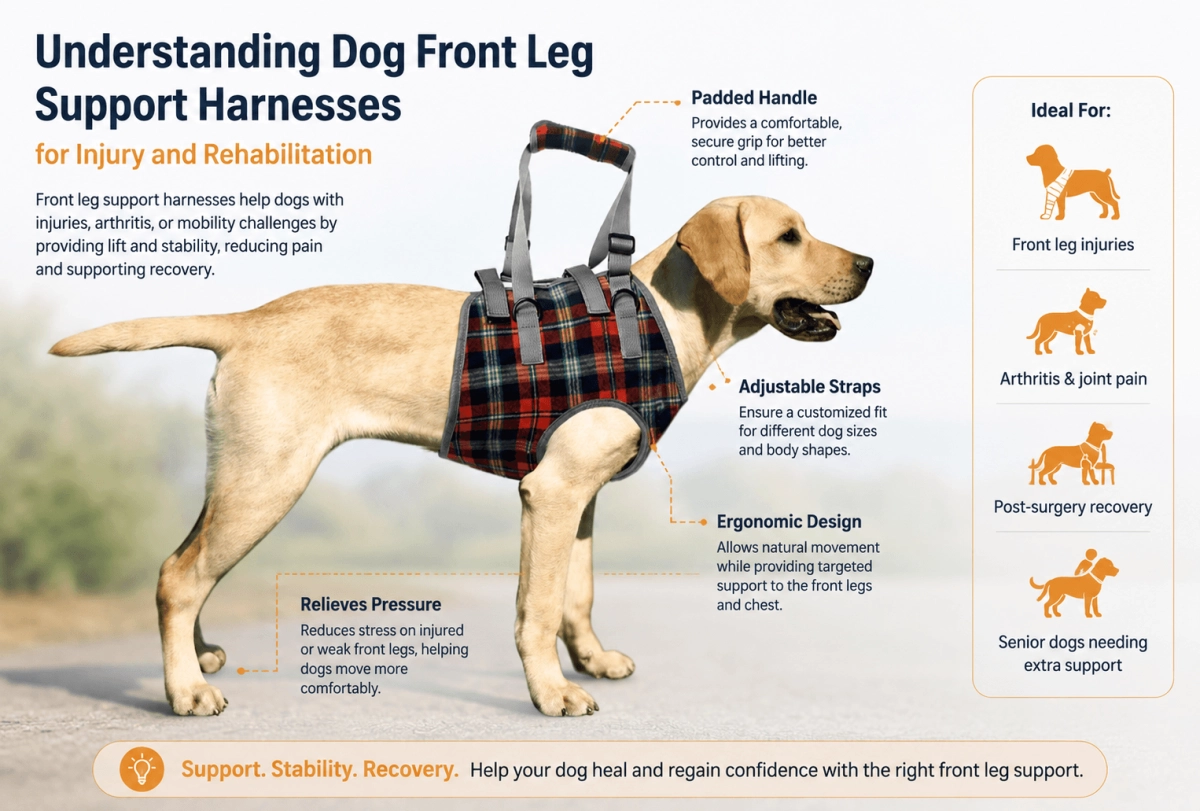
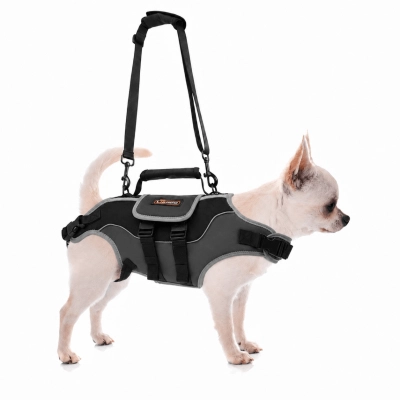
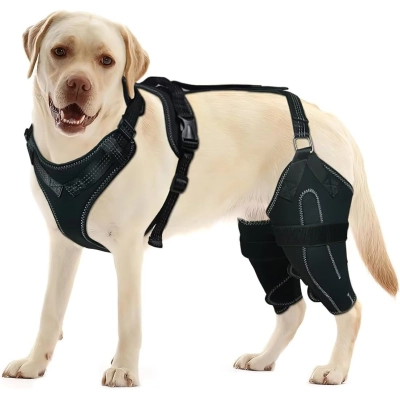
A dog front leg support lift harness helps your dog walk better. Sometimes your dog may limp or have trouble standing up. This harness supports weak or hurt front legs and keeps your dog comfy on walks. It is light and simple to bring with you anywhere. Your dog can wear it for a long time and still feel good.
|
Why Veterinarians Recommend These Harnesses |
|---|
|
Gives help for weak or hurt front legs |
|
Works as a normal harness for daily walks |
|
Light and simple to take anywhere |
|
Feels good for long use |
Key Takeaways
-
A dog front leg support harness helps dogs walk easier. It gives stability and comfort to weak or hurt front legs. The harness has adjustable straps, splints, and soft padding. These parts work together to help your dog move and feel less pain. Use the harness when your dog is healing from injuries. You can also use it for daily walks or on hard places like stairs and slippery floors. Make sure the harness fits right so your dog does not feel uncomfortable. Ask your veterinarian to find the best harness for your dog. Watch your dog’s progress and change the harness if needed. This will help give the right support and comfort.
What Is a Dog Front Leg Support Harness?
If your dog struggles with walking or has pain in the front legs, you might wonder what makes a dog front leg support harness different from a regular harness. You use a standard harness for daily walks, but a support harness gives extra help to weak or injured front limbs. This special harness does more than just guide your dog. It helps your dog move with less pain and more confidence.
Key Features and Components
A dog front leg support harness has several parts that work together to keep your dog comfortable and steady. You will notice that this harness looks a bit different from the ones you see at the park. Let’s break down the main features:
-
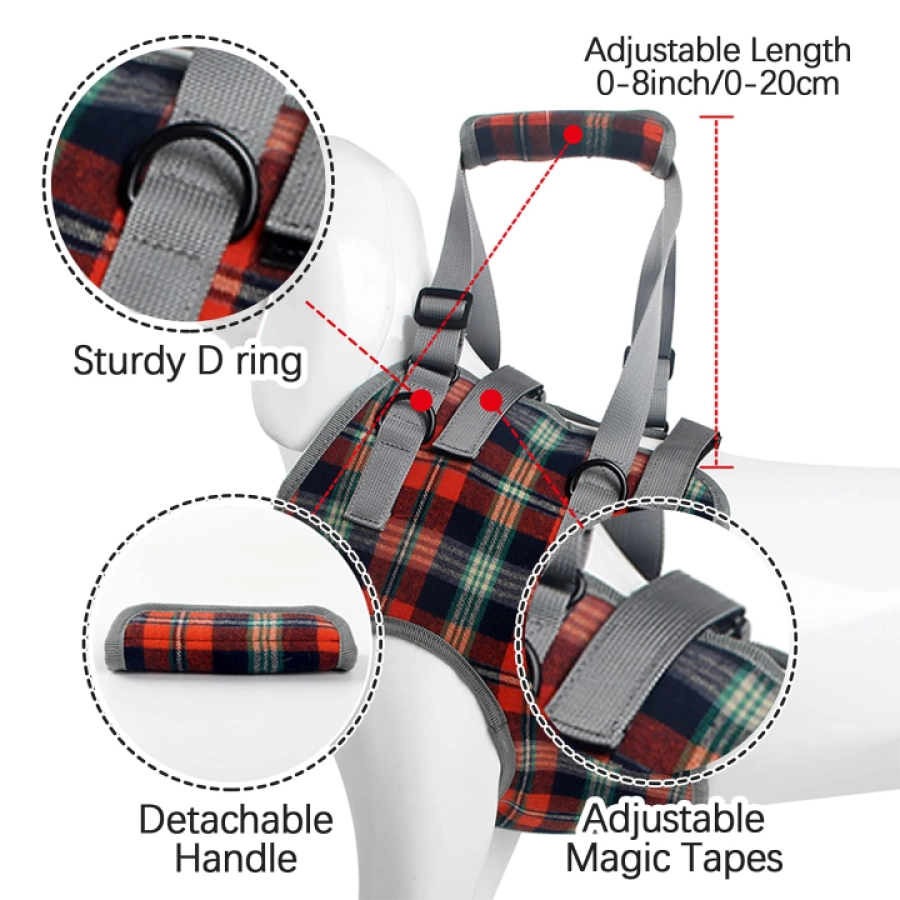
Chest Base: This wraps around your dog’s chest and shoulders. It forms the foundation of the harness and keeps everything in place.
-
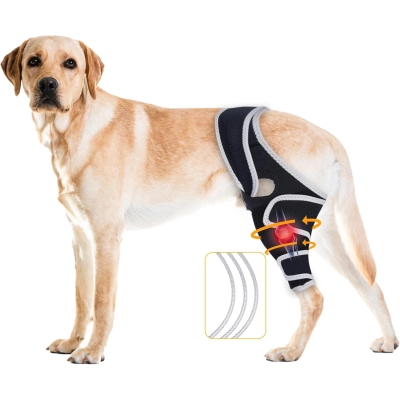
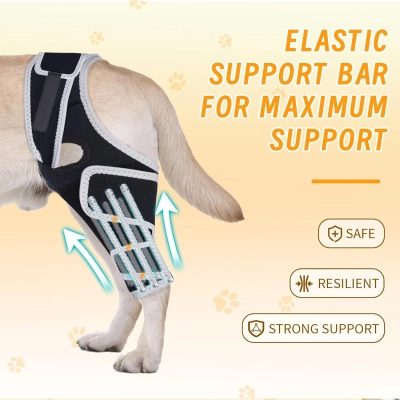
Splints: You can find two types of splints in a support harness. The front splint supports the carpal joint, wrist, and paw, giving stability to the whole lower leg. The carpal splint focuses on the carpal joint and lower leg, letting your dog’s paw move naturally.
-
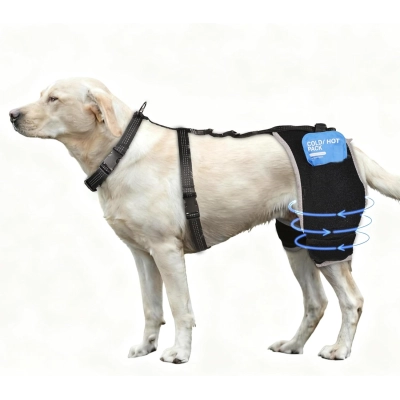
Pads: These padded panels wrap around the joints. They provide warmth and gentle compression, which can help reduce stiffness.
-
Straps: Adjustable straps connect the splints and pads to the chest base. They let you customize the fit and level of support for your dog.
Here’s a simple table to show you how each part works:
|
Component |
Function |
|---|---|
|
Chest Base |
Holds the harness steady and spreads pressure across the chest |
|
Front Splint |
Supports the carpal joint, wrist, and paw for full lower leg stability |
|
Carpal Splint |
Supports the carpal joint and lower leg, keeps paw free for movement |
|
Pads |
Give warmth and compression to sore joints |
|
Straps |
Adjust the fit and keep the harness secure |
You can see that every piece of the support harness has a job. When you put the harness on your dog, you help protect the joints and make walking easier.
How the Harness Works
You might ask, “How does a dog front leg support harness actually help my dog?” The answer is in the way the harness uses mechanical principles to support your dog’s movement.
-
Joint Stabilization: The harness holds the joint in place. It stops too much movement and helps your dog walk without extra pain.
-
Load Distribution: The harness spreads your dog’s weight across the leg and chest. This reduces pressure on sore spots and makes walking more comfortable.
-
Proprioceptive Feedback: The harness gives gentle feedback to your dog’s body. This helps your dog adjust steps and stay balanced.
Here’s a table to show these principles:
|
Mechanical Principle |
Description |
|---|---|
|
Joint Stabilization |
Braces hold the joint in place, preventing excessive movement and reducing pain during mobility. |
|
Load Distribution |
Weight is spread out across the leg, reducing pressure on sore spots and enhancing comfort. |
|
Proprioceptive Feedback |
The harness provides sensory feedback that helps the dog adjust its movements for better stability. |
When you use a dog front leg support harness, you help your dog walk with less pain and more stability. Studies show that these harnesses can change how dogs move. For example, Galla et al. found that one harness restricted sideways movement and affected how guide dogs walked. Knights and Williams tested three harness types and saw that a harness with a special handle changed stride length and joint movement. They suggested it might help dogs feel their legs better and improve balance.
Tip: If your dog has trouble walking, a support harness can make daily activities easier and safer. You can use it for walks, stairs, or just getting up from the floor.
You now know that a dog front leg support harness is more than a simple accessory. It is a tool that gives your dog the support needed to move with confidence and comfort.
When to Use a Front Leg Support Harness
Medical Conditions and Injuries
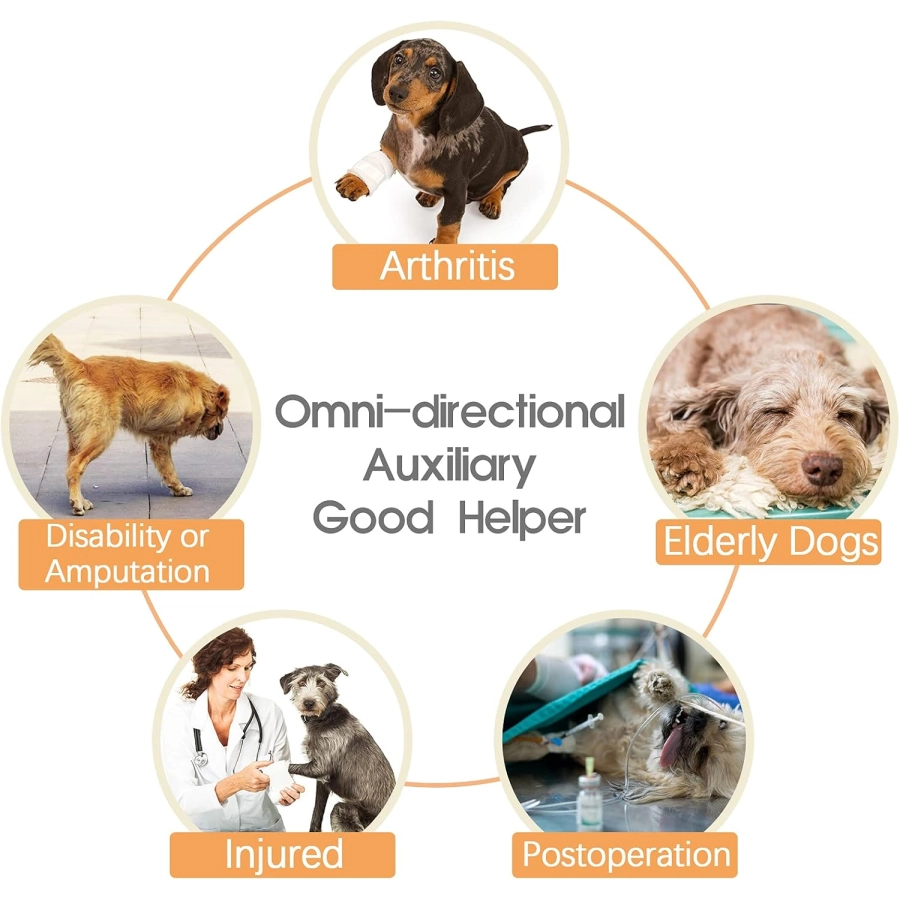
You might notice your dog slowing down or limping. Sometimes, your dog struggles with front limb lameness or feels pain in the joints. A front leg support harness can help in many situations. You want your dog to feel comfortable and safe, especially during recovery from injury or surgery.
Here’s a table showing some common medical conditions that make a harness useful:
|
Condition Type |
Description |
|---|---|
|
Hyperextension Injuries |
The joint stretches too far, often after a fall or accident. |
|
Sprains and Strains |
Ligaments or muscles get hurt, usually from slips or awkward landings. |
|
Arthritis |
Joints become stiff and painful, making movement hard. |
|
Growth Deformities |
Bones grow in a way that affects joint alignment, mostly in large breeds. |
Dogs with arthritis often need extra support. You see them struggle to get up or walk. If your dog has ivdd or spinal disc problems, you want to help the ivdd dog move safely. Some dogs face chronic joint instability. Others deal with hind limb lameness and put more weight on their front legs, which can lead to injury. Paralyzed pets need special care, and a harness gives them the stability they need.
After surgery, your dog needs help during recovery. You want to make sure your dog does not hurt itself again. The harness supports the front legs and helps your dog build strength. If your dog is paralyzed, you can use the harness to guide movement and prevent falls. Dogs with ivdd or spinal disc problems benefit from extra support, especially when they try to stand or walk.
Everyday Scenarios and Rehabilitation
You see your dog face challenges every day. Sometimes, your dog has trouble rising from the floor. Other times, stairs seem scary. Slippery floors make your dog nervous. You want to help your dog feel confident and safe.
Here are some situations where a front leg support harness makes life easier:
-
Your dog struggles to get up after resting. The harness gives leverage and helps your dog rise.
-
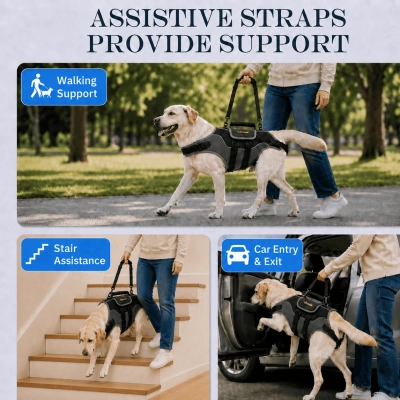
Stairs become a challenge. You use the harness to guide your dog and prevent falls.
-
Slippery floors cause your dog to slip. The harness keeps your dog steady and reduces the risk of injury.
-
Your dog limps after exercise. The harness supports the joints during recovery and lets your dog move comfortably.
-
Rehabilitation exercises are part of your dog’s routine. The harness allows controlled movement and protects the joints.
You want your dog to feel strong during recovery. The harness redistributes weight through the chest and ribcage. This reduces strain on painful shoulders, elbows, or wrists. You help your dog build confidence and strength after surgery. Paralyzed pets benefit from harness support, especially on challenging surfaces.
If your dog is suitable for recovery, you can use the harness for both short-term and long-term needs. Sometimes, you need pre-surgical support. You want to keep your dog comfortable while waiting for surgery. Other times, you use the harness for chronic management. Dogs with arthritis or ivdd need ongoing support to stay active.
Note: You should always check with your veterinarian before using a harness. Your vet can help you choose the right harness and make sure it fits your dog’s needs.
You see how a front leg support harness helps in many ways. Whether your dog faces recovery from injury, ivdd, arthritis, or is paralyzed, you can make daily life easier and safer. You give your dog the chance to move with confidence and comfort.
Choosing and Fitting the Right Harness
Fit and Breed Considerations
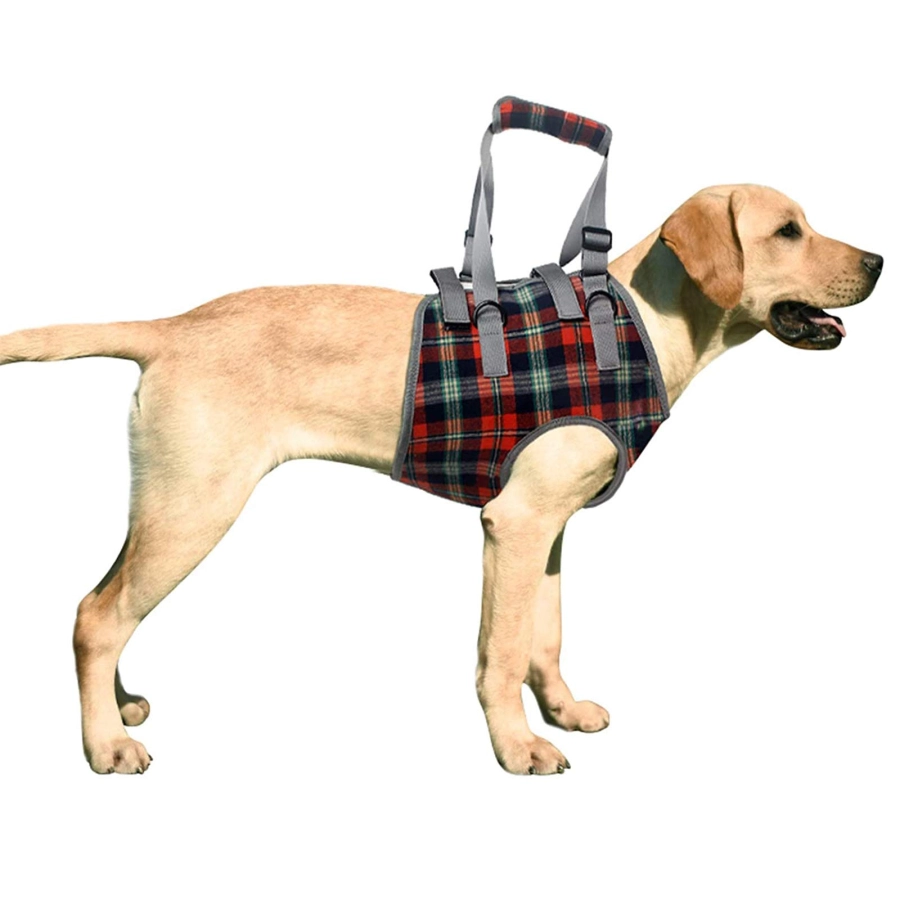
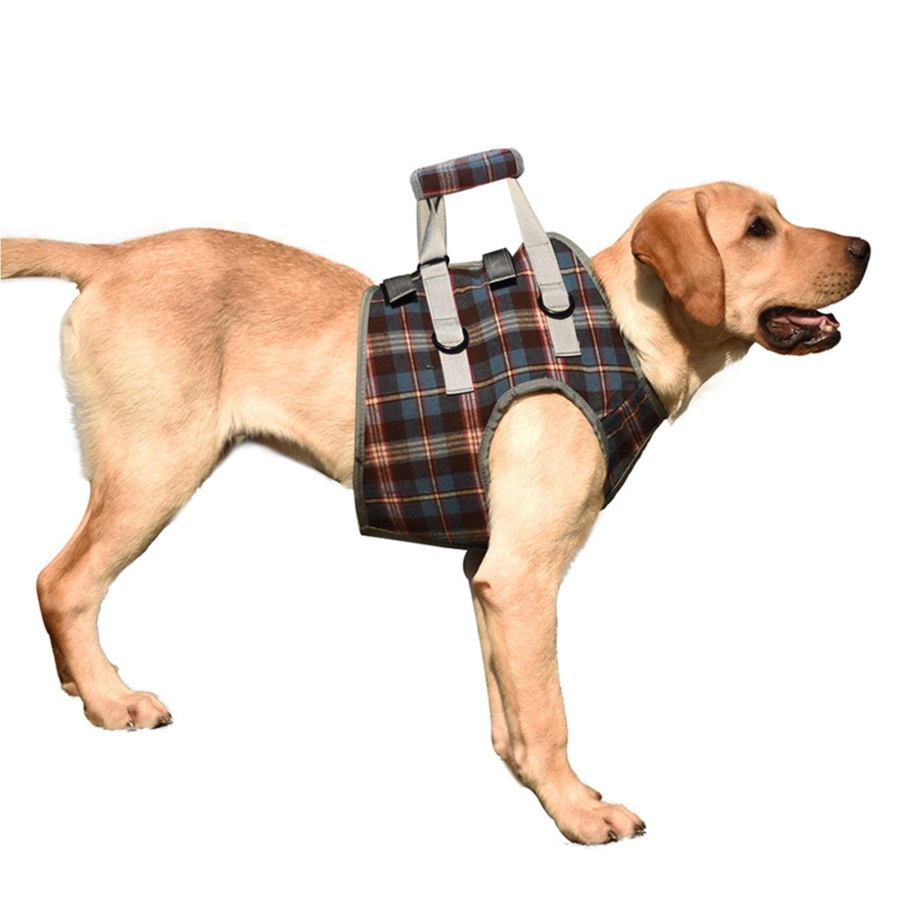
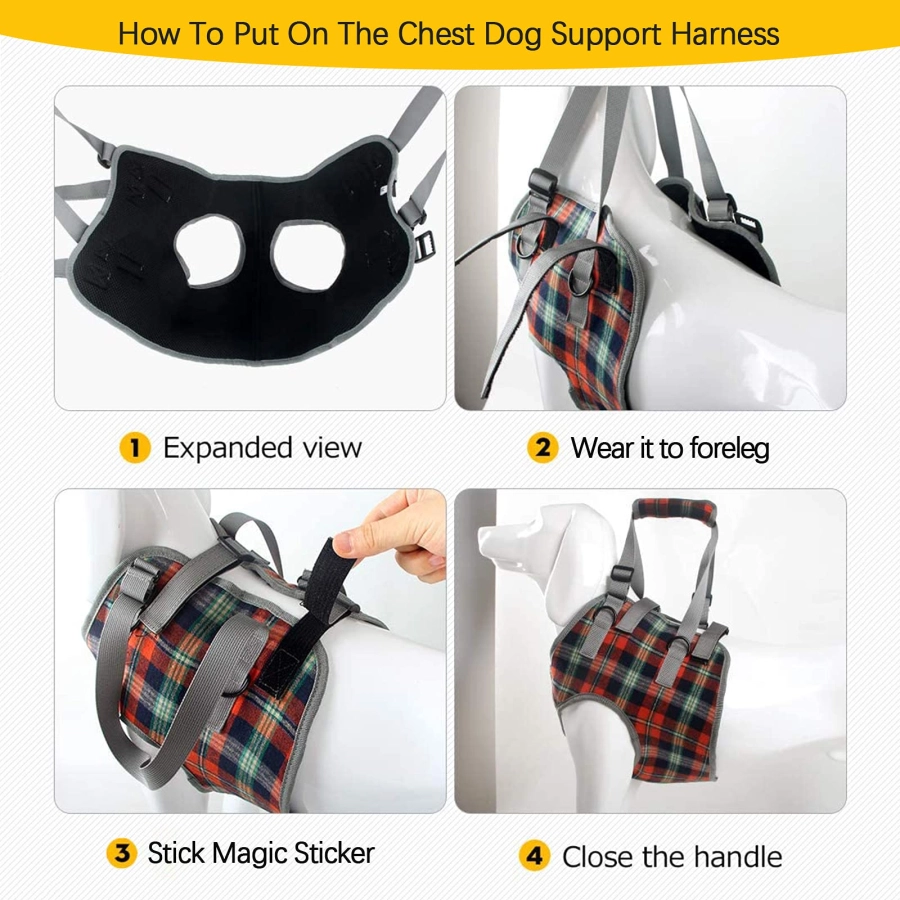
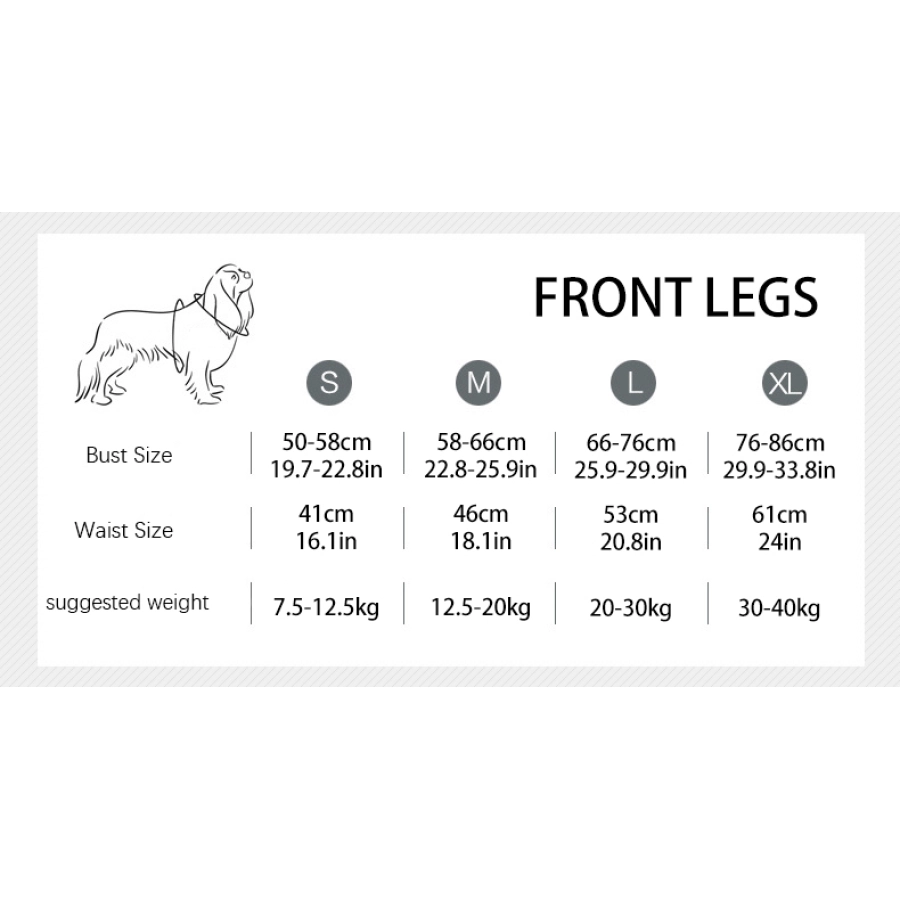
Choosing the right harness for your dog starts with a good fit. Every dog has a unique body shape. Some dogs have deep chests, while others have short legs or delicate frames. You want a harness that matches your dog’s size and shape. Measure your dog’s chest and neck before you buy. Many brands offer size charts to help you pick the best option. If your dog is a small breed, look for a harness with lighter materials and a snug fit. For large or deep-chested breeds, you may need longer straps and extra support. Adjustability matters. You should be able to tighten or loosen the harness for a secure fit. This keeps your dog comfortable and safe during walks or rehab.
Materials and Comfort
The right materials make a big difference in comfort and support. Most front leg harnesses use neoprene, nylon, or polyester. Neoprene gives warmth and gentle compression, which helps stiff joints feel better. Nylon adds strength and keeps the harness in place. Polyester helps with breathability, so your dog stays cool. Look for thick padding on the chest plate and shoulder straps. At least 10mm of neoprene or memory foam padding can prevent chafing and pressure sores. The chest plate should sit flat against your dog’s sternum. No gaps or pressure points means better support and less risk of discomfort. When your dog moves, the shoulder straps should allow full leg movement. This keeps your dog happy and active.
Safety and Contraindications
Safety comes first when you use a harness for support. Always check that the harness fits snugly but does not restrict breathing. Make sure all straps lie flat and do not twist. The support splints should line up with your dog’s joints. Watch for any signs of rubbing or redness. If your dog has open wounds or skin infections, wait before using a harness. Some dogs feel anxious with new gear. If your dog seems stressed, take it slow. Never use a harness without your vet’s advice if your dog has a new or unknown injury. Remember, a dog lift harness is not the same as a front leg support harness. Choose the right tool for your dog’s needs. With the right fit, materials, and safety checks, you give your dog the best support possible.
Tips for Safe and Effective Use
Acclimating Your Dog
You want your dog to feel comfortable with a new harness. Start slow. Let your dog sniff the harness before you put it on. Give treats and praise for calm behavior. When you first use the harness, keep sessions short. Watch your dog’s reaction. Some dogs need extra time to adjust. If your dog avoids the harness or freezes, it may feel anxious. If your dog pulls harder or lags behind, the harness might cause discomfort. Check the table below for signs your dog is adjusting well or poorly:
|
Behavioral Sign |
Implication |
|---|---|
|
Avoids having the harness put on |
Discomfort or fear of the harness |
|
Freezes, flinches, or tucks tail |
Anxiety or pain when wearing the harness |
|
Pulls harder or lags behind |
Discomfort, chafing, or restricted movement |
You can help your dog by making the harness part of a routine. Use gentle encouragement. If your dog seems stubborn or shuts down, take a break and try again later. The goal is to provide support and steady comfort without stress.
Monitoring Progress and Adjustments
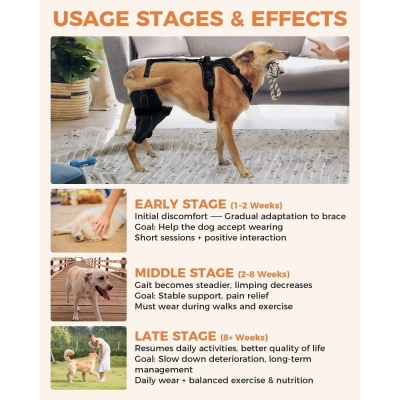
After you fit the harness, check it again after 10 minutes. Sometimes you need minor adjustments. Make sure the harness gives proper support. Look for signs of redness or hair loss. Limit harness wear-time to 6–8 hours each day. Remove the harness when your dog rests or sleeps. Always check your dog’s skin after each use. Adjust straps for comfort. Conduct weekly reassessments to spot changes in fit or support. Check for visible pressure points after walks. Rotate the harness position if needed.
You can track your dog’s progress by watching how it moves. If your dog walks with more confidence, the harness is helping your dog get around. If you notice limping or reluctance, adjust the harness or talk to your vet. Regular check-ins with your veterinarian keep your dog safe. Your vet can help you make changes for better support.
Tip: Keeping a simple log of your dog’s activity and comfort helps you spot improvements or problems early.
With these steps, you give your dog the best support possible. You make sure the harness works well and keeps your dog comfortable every day.
Dog Front Leg Support Harness vs. Other Mobility Aids
Front Leg vs. Full Body Harness
You might wonder if your dog needs a front leg support harness or a full body harness. These two harness types look different and help in different ways. Let’s break it down with a simple table:
|
Harness Type |
Intended Use Cases |
Key Features |
|---|---|---|
|
Full Body Support Harness |
Overall body weakness, multi-joint arthritis, paralysis, severe mobility issues |
Provides balanced, all-round support, helps with standing, walking, and stairs, distributes lifting pressure evenly. |
|
Front Leg Support Harness |
Mild mobility issues, front-leg weakness or injury, amputees, light daily support |
Dual-function: support + daily walking harness, stylish, discreet, comfortable for long wear, lightweight and easy to use. |
A front leg support harness gives targeted help to the front legs. It works well for dogs with arthritis, injury, or after surgery. You can use this harness for daily walks or when your dog needs extra support on stairs. A full body support harness covers more of your dog’s body. It helps dogs who have trouble standing or walking at all. This harness spreads the lifting force across the chest and hips, so you can help your dog move safely.
Tip: Always check how much support your dog needs before picking a harness. The right harness makes a big difference in your dog’s comfort and safety.
When to Choose Each Type
You want to pick the harness that matches your dog’s needs. Here’s how you can decide:
-
Choose a dog lift harness for front legs if your dog has:
-
Front leg weakness or mild injury
-
Arthritis in the elbows or wrists
-
Trouble getting up but can still walk
-
Needs support for daily walks or stairs
-
-
Choose a full body support harness if your dog has:
-
Weakness in both front and back legs
-
Paralysis or severe mobility loss
-
Needs help standing, walking, or using stairs
-
Multi-joint arthritis or recovering from major surgery
-
A front leg support harness gives comfort and helps your dog move safely. You can use it for activities like climbing stairs or short walks. A full body support harness is best for dogs who need help with almost every movement. Always check the fit of the harness. Make sure your dog feels comfortable and secure. If you are not sure which harness to use, ask your veterinarian for advice.
Note: The right support harness can help your dog feel more confident and active every day.
You help your dog walk better with a front leg support harness. This harness gives support for walks, stairs, and healing after injury. Dogs like Aala, Henry, and Falcor do well when they get the right help. Always make sure the harness fits your dog. Watch your dog to keep it safe from harm. You can talk to your vet, rehab experts, or use therapy tools and supplements for more help. Keep an eye on how your dog moves and ask your vet if you have questions. You make your dog feel safe, strong, and cared for every day.
Remember, you are not alone. Many people and experts want to help your dog feel better and recover.
FAQ
How long can my dog wear a front leg support harness each day?
You can let your dog wear the harness for 6–8 hours daily. Take it off during naps or bedtime. Always check your dog’s skin for redness or irritation after each use.
Can my dog go outside and walk with the harness?
Yes! You can use the harness for walks, bathroom breaks, or short outdoor trips. The harness helps your dog feel steady and safe on different surfaces.
How do I clean the harness?
Most harnesses are easy to clean. You can hand wash with mild soap and cool water. Let it air dry. Check the label for special care instructions.
What signs show the harness fits well?
Look for these signs:
-
The harness sits flat and snug.
-
Your dog moves easily.
-
No rubbing or red marks appear.
Tip: If you see discomfort, adjust the straps or ask your vet for help.

0 Comments