
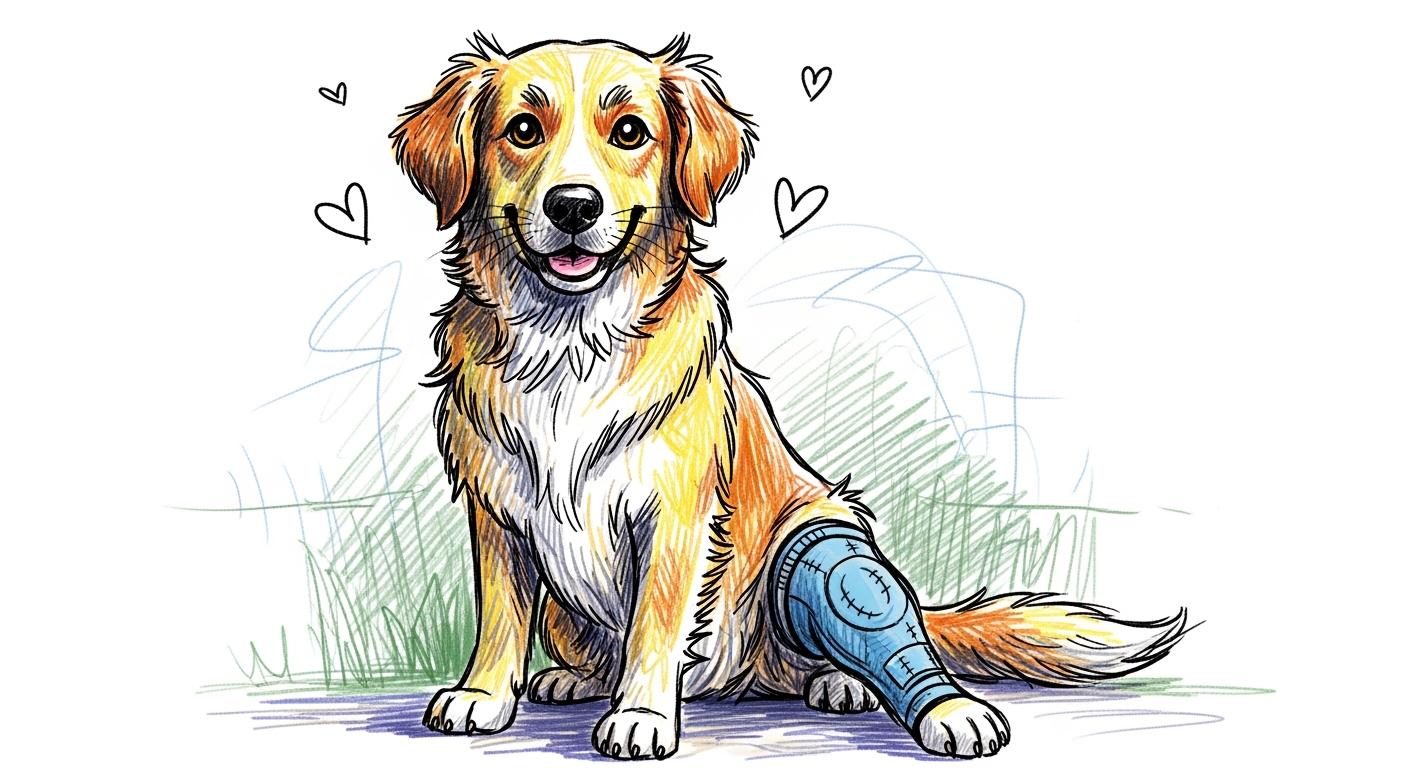
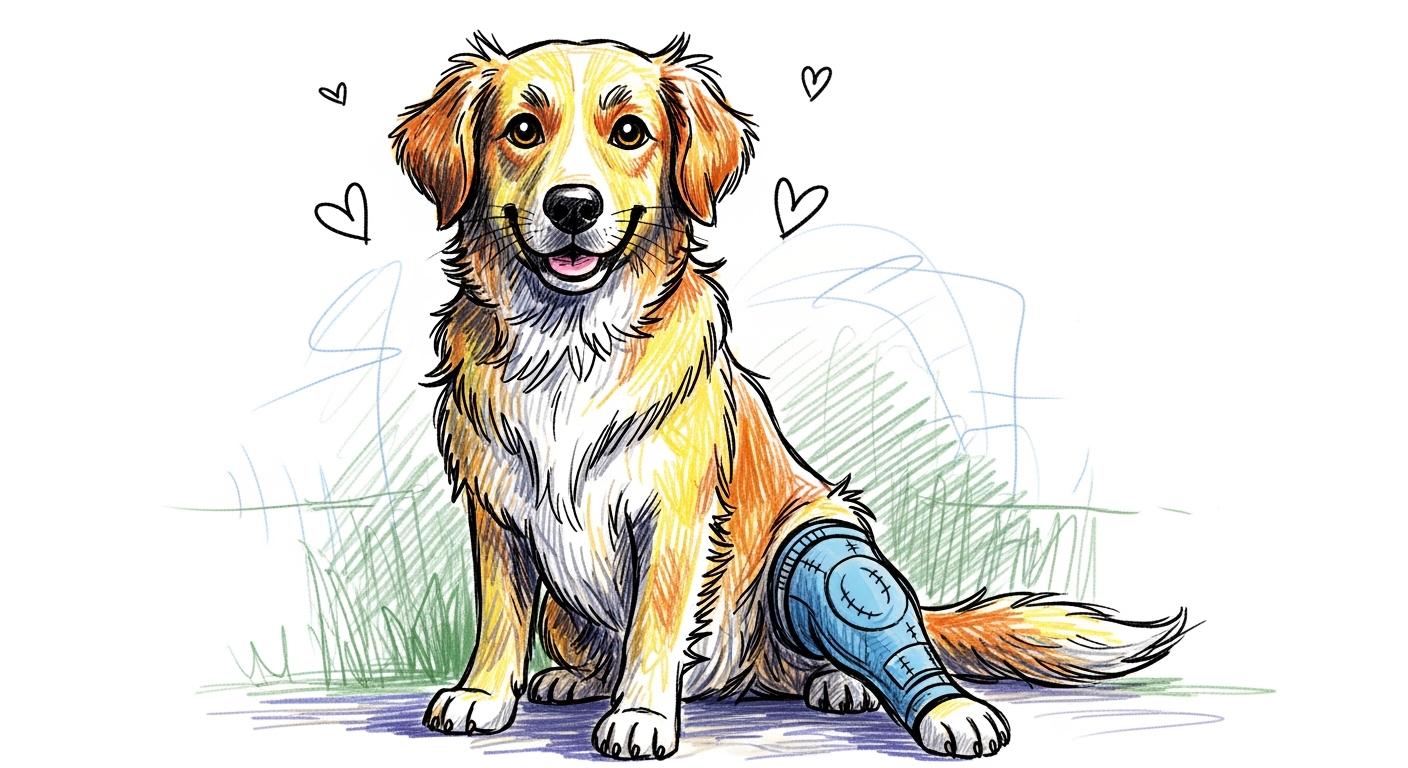
A dog that limps for three steps after standing, then walks normally. A dog that bunny-hops instead of climbing stairs one leg at a time. A dog that plants the good leg and skips the bad one during a trot.
None of these dogs is screaming in pain. But each one is showing that the knee joint has lost passive stability—the kind of stability that comes from ligaments and joint capsule, not from muscles actively firing. That distinction matters. A brace that simply wraps the leg tighter will not restore passive stability. A brace with a hinge that tracks the stifle joint axis can.
What Joint Mechanics Reveal That Limping Alone Cannot
Limping tells you the dog hurts. It does not tell you why the joint is unstable, or in what direction. Two dogs can limp identically—one from a partial CCL tear that lets the tibia slide forward during weight-bearing, another from a patella that pops out of the trochlear groove during flexion. The same limp. Entirely different mechanical failures.
This is where brace design separates from simple compression sleeves. A dog knee brace built around a hinge does more than squeeze. The hinge creates a single plane of motion. When that plane aligns with the stifle joint's natural flexion-extension axis, the brace guides the femur and tibia to track along a consistent path. Force travels in a straight line down the joint rather than shearing across it.
The causal chain works like this: hinge-to-joint-axis alignment produces linear force transmission along the joint line. That even load distribution across the articular surfaces reduces shear stress on damaged ligaments. The dog loads the leg more confidently. Gait symmetry improves. Miss the axis by half an inch and the chain breaks at step one—the hinge fights the dog's own movement. The brace becomes a resistance band the dog works against rather than a guide it moves with.
You can see this yourself. Watch the dog walk five strides with the brace on, then remove it and watch five more. If the brace hinge is aligned, the dog's weight-bearing pattern stays consistent—same footfall timing, same degree of knee bend. If the hinge is off-axis, the dog shortens the stride on the braced side, rotates the leg outward, or lifts the paw higher to clear the ground. That is the hinge torque fighting the joint.
Tighter is not the answer. Crank the straps down on a misaligned hinge and you multiply the torque, not the support.
When Brace Design Changes What the Dog Can Do
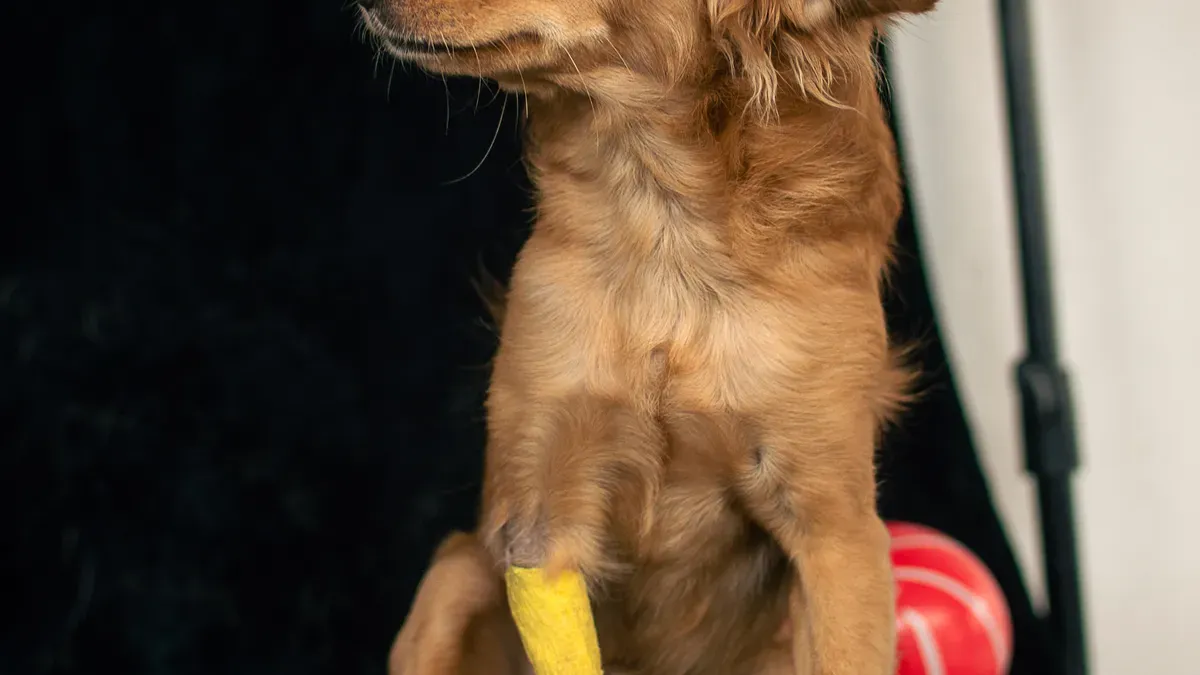
Not all movement demands are equal. A dog walking on flat indoor flooring places mild demands on knee stability. The same dog navigating three porch steps, pivoting to catch a ball, or getting up from a slick floor asks the knee joint to resist forces in multiple planes simultaneously.
Brace design matters most in the second set of scenarios. And within those scenarios, two design features separate braces that help from braces that become part of the problem.
The first is strap configuration. A single wide strap above and below the joint concentrates lateral force into two narrow bands. The brace stays put—but only by pressing hard enough that the dog notices the pressure as much as the support. How much of that sensation is support, and how much is just strap pressure? Multi-point strap systems spread the same total retention force across three or four contact zones. The brace stays in place with less pressure per square inch. After twenty minutes of walking, slide a finger under each strap contact point. If the skin feels cooler where the strap sat—a sign of restricted surface circulation—the strap is concentrating force rather than distributing it.
The second feature is the hinge's range-of-motion stop. A hinge without an extension stop lets the joint hyperextend during the push-off phase of a stride—the exact moment a partially torn CCL takes its hardest hit. A hinge with an adjustable stop limits terminal extension before the damaged ligament reaches its failure point. This is not about locking the joint. It is about shaving off the last few degrees of extension where the ligament sees peak load.
These design differences are most visible when the dog moves from one surface to another. Carpet to hardwood. Grass to concrete. Each transition demands a micro-adjustment in proprioception and joint loading. Watch how the dog handles two surface transitions with the brace on. If the dog hesitates or widens its stance before stepping onto the new surface, the brace is reducing proprioceptive feedback—the dog cannot feel the ground well enough to commit to the step. ACL and CCL braces that use thinner, higher-density materials under the paw preserve more ground feel than thick neoprene soles. The dog steps with more confidence because it still knows where the ground is.
Compression-only sleeves cannot address either of these problems. They squeeze uniformly—more pressure does not create alignment. They have no hinge—no plane-of-motion control. They work for mild soft-tissue strains where warmth and mild compression are enough. For ligament instability that shifts bone position under load, they are the wrong tool.
Where a Knee Brace Fits and Where It Does Not
A hinged knee brace is built for a specific problem: the joint has lost passive stability—ligaments or joint capsule structures that normally hold bone-to-bone position—but the dog still has enough muscle control to initiate movement voluntarily. Within that zone, brace design quality dictates how much support the dog actually gets.
The brace is most applicable when:
- A partial ligament tear still leaves some passive restraint, and the brace supplements what remains
- Patella luxation is intermittent (grade 1-2) and the hinge-guided tracking helps the patella stay in the trochlear groove during flexion
- Post-surgical protection requires limiting range of motion during early healing
- Arthritic joints benefit from offloading—reducing peak loads on worn cartilage during activity
The brace is not designed for:
- Complete ligament ruptures where the joint has no remaining passive stability—the hinge has nothing to work with
- Neurological conditions where the dog cannot control leg placement regardless of joint stability
- Grade 3-4 patella luxation where the patella is permanently displaced and cannot be guided back by external support
- Open wounds, active skin infections, or severe swelling that changes leg circumference throughout the day
Disclaimer: These fit checks assume a dog with typical leg conformation for its breed. Dogs with angular limb deformities, very deep chests that alter stance width, or heavily muscled thighs may show rub patterns or pressure points that visual inspection alone will not catch—hand-check under straps after the first 15-minute wear session, not just after the dog stands still.
Disclaimer: A brace does not reverse cartilage loss, reattach a fully torn ligament, or restore neurological control. If the dog's knee instability persists or worsens despite consistent brace use over two to three weeks, the underlying mechanical problem likely exceeds what external bracing can manage.
The brace supports the joint during the hours it is worn. When it comes off, the underlying condition is unchanged. What changes is the cumulative load the joint absorbs over those hours—and for many dogs, that reduction is enough to maintain daily mobility without progressive worsening. For others, it is a bridge to surgical repair. Neither path makes the brace a cure. Both paths depend on the hinge tracking the joint axis and the straps distributing force evenly.
FAQ
How can I tell if a brace hinge is actually tracking the joint axis?
Watch the dog take ten strides at a walk, then check whether the brace has shifted up or down the leg. A correctly aligned hinge stays within a finger-width of its starting position over the joint line. If it migrates toward the hock or toward the hip, the hinge is fighting the dog's natural motion rather than following it. The joint's rotational center sits slightly forward of where most people place it—centering the hinge over the widest point of the stifle tends to produce more consistent tracking than measuring from bony landmarks alone.
What is the difference between a support brace and a compression sleeve for knee issues?
A compression sleeve applies uniform circumferential pressure. It warms the joint and provides mild proprioceptive feedback—the dog feels the sleeve and may move more cautiously. It does not control the plane of motion. A hinged support brace restricts movement to one plane and can limit range of motion at end-range positions. For a partial ligament tear where bone position shifts during loading, only the hinge addresses the mechanical problem. Compression sleeves handle swelling and mild strains; they cannot stabilize a joint that moves abnormally under load. Patella support braces that include a patellar tracking guide add a third element—a shaped pad that discourages the kneecap from slipping medially during flexion—which a sleeve alone cannot provide.
Can a dog wear a hinged knee brace for a full day?
Most dogs tolerate a well-fitted brace for four to six active hours. Beyond that, check skin condition at each strap contact zone. Redness that fades within ten minutes of brace removal is normal. Redness that persists, or any broken skin, means the fit or the wear duration needs adjustment. Remove the brace at night—the joint benefits from unloaded rest, and the skin needs to breathe.
How long does it take for a dog to move naturally in a knee brace?
Most dogs adjust their gait within three to five short sessions. The first session often looks worse—the dog lifts the leg higher, shortens the stride, or tries to shake the brace off. By the third session, if the hinge is aligned and the straps are distributed, the dog typically loads the leg more evenly. If gait asymmetry persists past the fifth session, revisit hinge position and strap tension before assuming the dog will not tolerate the brace. More often, the brace is fighting the dog—not the other way around. Understanding how a knee brace supports recovery starts with confirming the brace works with the dog's movement, not against it.
0 Comments