
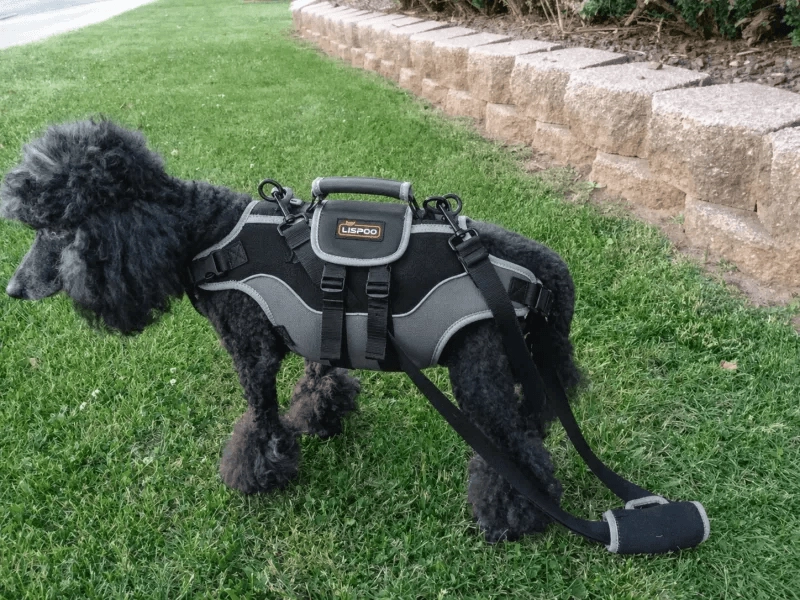
A dog that cannot bear its own weight puts every lifting decision under a microscope. Grab the wrong point and the load concentrates on a single strap edge—the dog flinches, you readjust, the moment gets harder than it needed to be. Full body lifting harnesses exist to solve exactly this: not by adding more straps, but by changing where and how lifting force enters the dog's body.
How Force Distribution Design Shapes What a Harness Actually Does
Most of what goes wrong during a lift starts with force concentration. A single belly band or a chest-only sling funnels the dog's entire weight through one narrow contact patch. That patch compresses soft tissue, triggers discomfort, and makes the dog tense up—which makes the lift harder. The handler compensates by gripping tighter. The cycle worsens.
A full body harness breaks this cycle by splitting the load across three contact zones: chest, belly, and hips. Each zone takes a fraction of the total weight. The pressure on any single square inch of the dog's body drops. Lower unit pressure means less soft-tissue compression, fewer pain signals, and a dog that stays relaxed during the lift.
This is not just "more padding." The causal chain runs: wider contact area → reduced pressure per unit of skin → less nerve compression → less muscle guarding → a dog that tolerates the lift without tensing. Remove any link in that chain and the harness degrades into a strap that happens to cover more skin.
The design trade-off is real. Broader contact panels add material weight and bulk. A harness optimized purely for force distribution can feel cumbersome on a small dog or during a quick bathroom trip. The best designs balance coverage with weight—using lightweight mesh across the chest panel while concentrating heavier reinforced fabric only at the load-bearing hip cradle. This keeps total harness weight under roughly a pound for most medium-dog sizes while still delivering the three-zone distribution that makes the lift safer.
In practice: After a lift, run your hand under each contact panel. The skin beneath the chest, belly, and hip panels should all feel similarly warm—none distinctly hotter than the others. One hot spot means one panel is carrying disproportionate load.
Handle Placement and Strap Configuration Across Different Lifting Scenarios
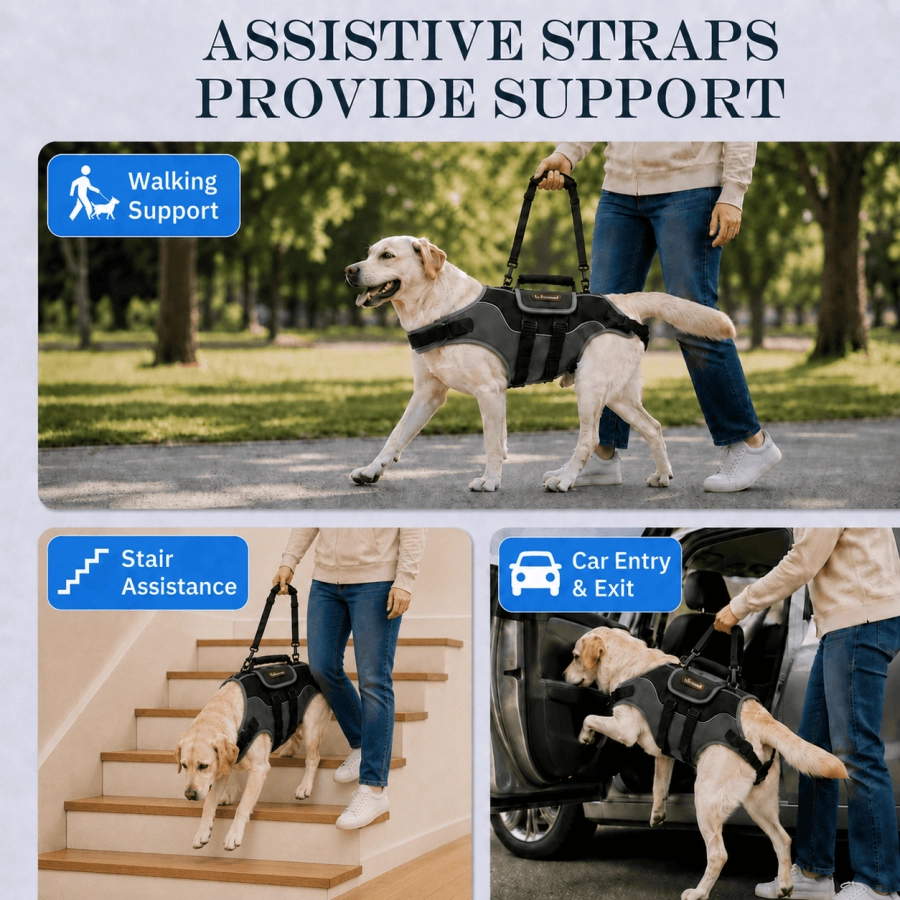
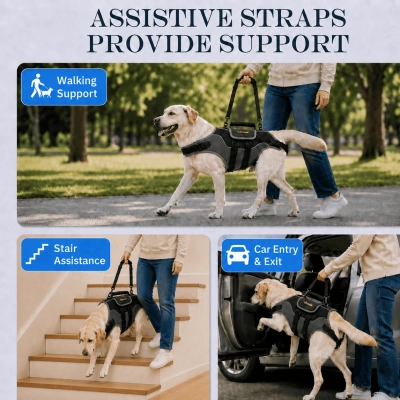
Not every lift is the same physical task. Helping a dog stand from a lying position demands different mechanics than transferring a dog from floor to car seat. A single handle position cannot serve both scenarios equally well.
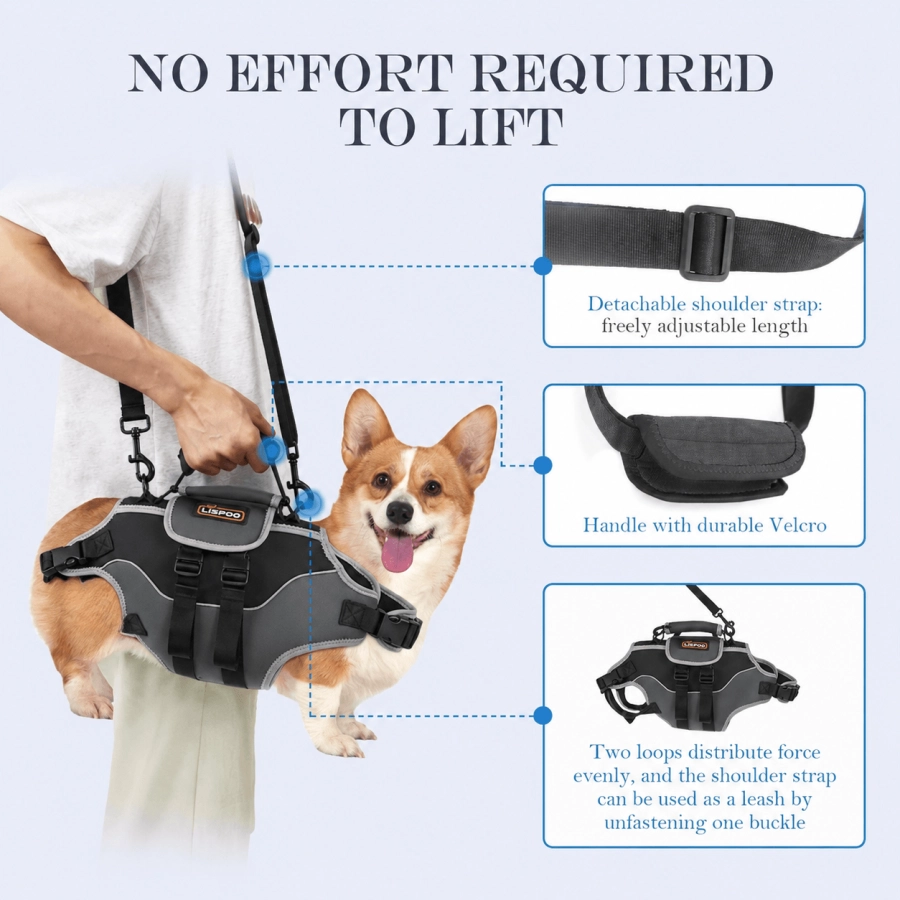
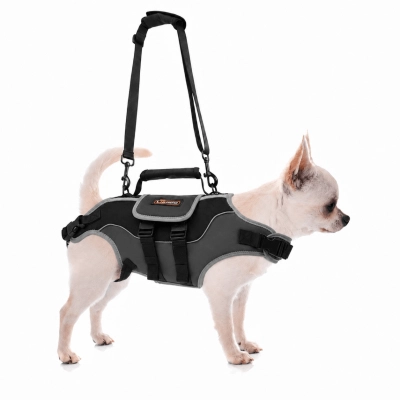
A rear-positioned handle—centered over the hips—works for true vertical lifts: floor to car, ground to standing. The handle sits directly above the dog's center of mass, so the lifting force travels straight up through the harness frame rather than pulling the dog forward or backward. The handler's wrist stays neutral. The dog rises evenly.
A front chest handle serves a different purpose. It is not for lifting. It stabilizes. When a dog wobbles on stairs or needs guidance through a narrow doorway, the front handle gives the handler a contact point to steady lateral movement without bearing full weight. Confuse the two—try to deadlift from the chest handle—and the dog's front legs get pulled upward while the rear stays planted. The dog panics. The lift fails.
Strap adjustment geometry determines whether this handle logic actually holds in use. If the chest panel straps stretch or slip under load, the front handle migrates backward, and suddenly the handler is pulling from an unintended angle. The observable check: after guiding the dog across a room using the front handle, the chest panel should not have ridden more than half an inch toward the neck. Any more and the strap tension path has shifted—the harness is no longer doing what its handle placement promised.
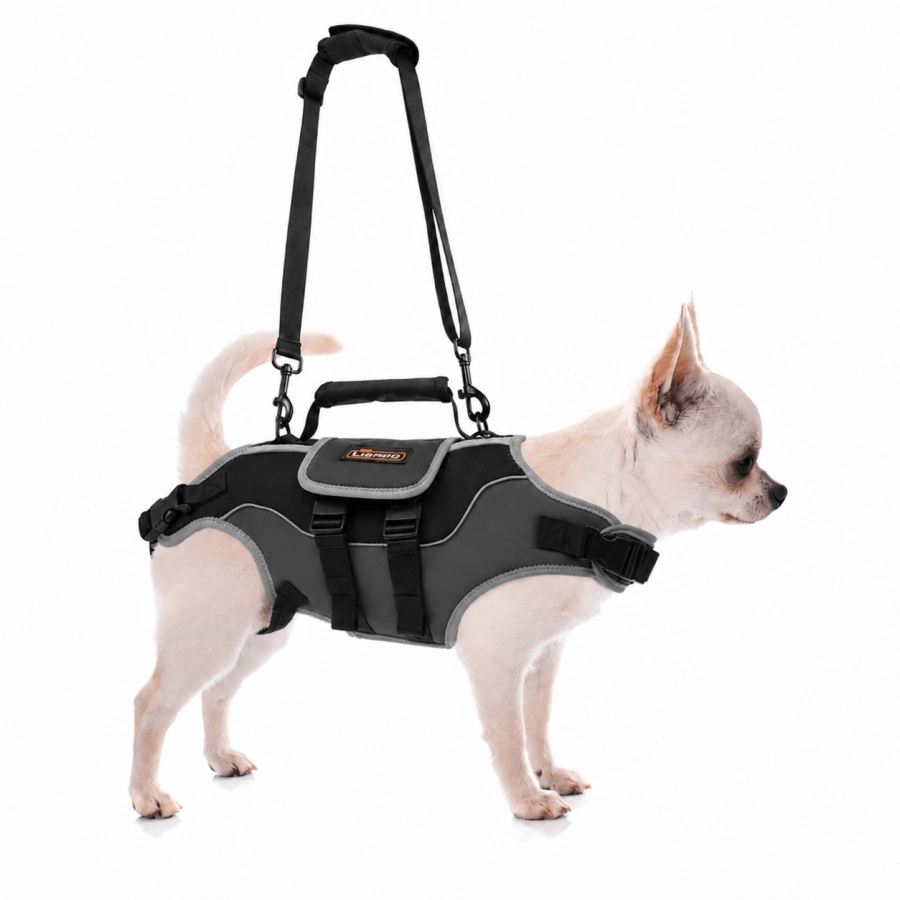
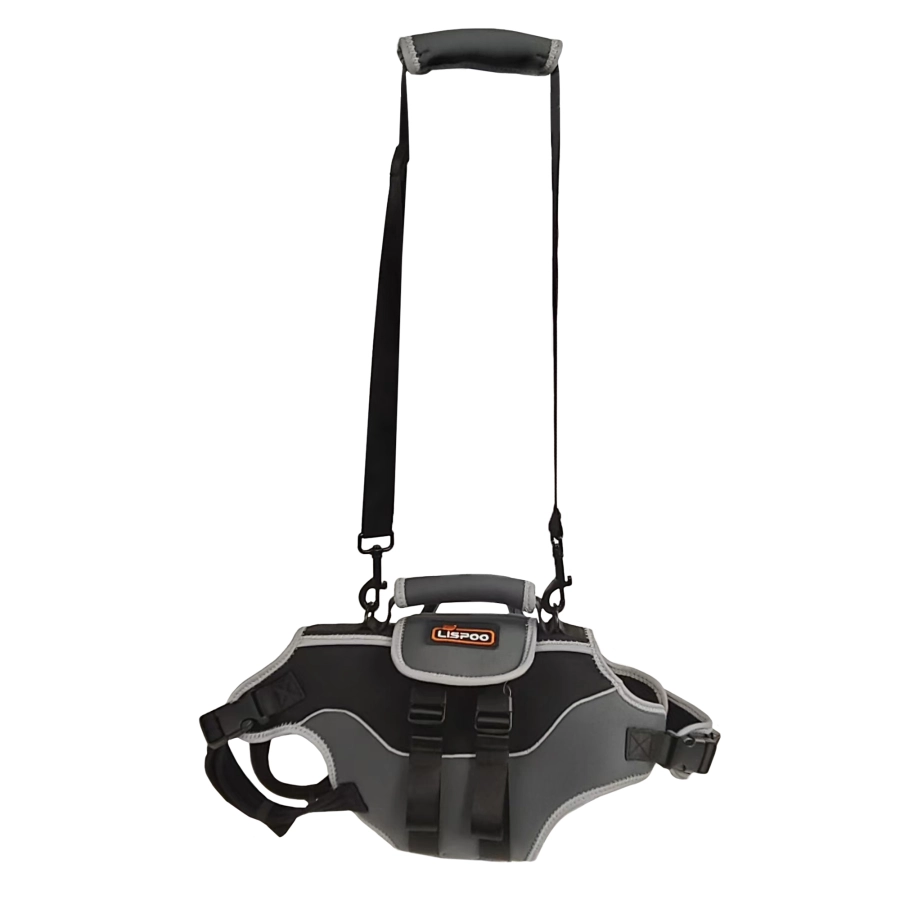
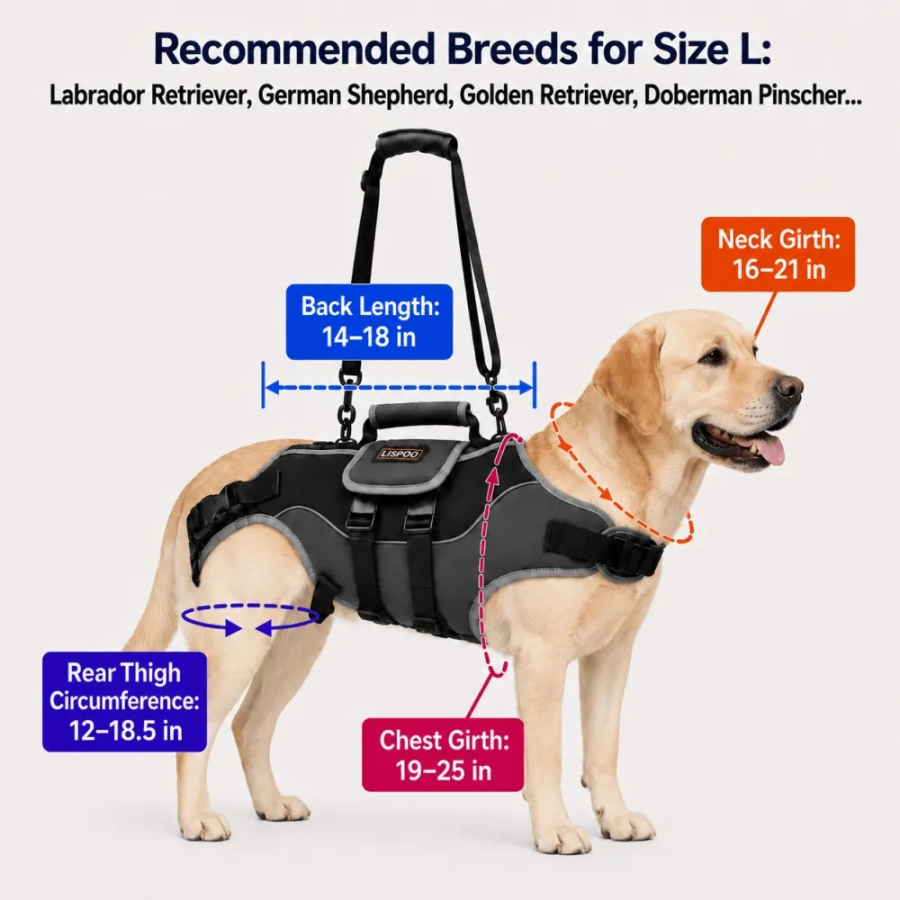
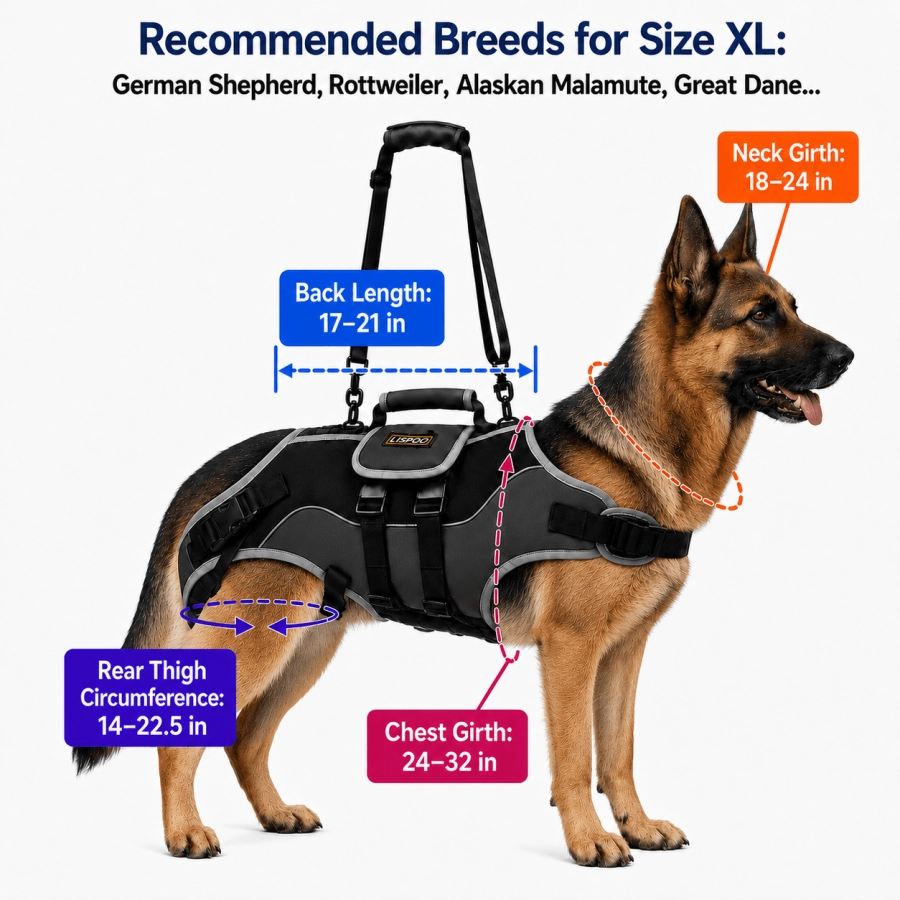
The difference between a lift dog harness designed for full-body load and one built only for rear support shows up in how the straps route. Rear-only designs anchor at the hind legs and leave the chest unsupported. That works for a dog that can still bear weight on its front legs. It fails for a dog with generalized weakness where the front end collapses the moment the rear is lifted. Full body routing connects the chest and hip panels through a central spine strap, so lifting force applied at any handle distributes across both axles. The dog rises as a unit, not in sections.
| Lift Scenario | Handle That Works | Why | Main Limitation |
|---|---|---|---|
| Floor to standing / floor to car | Rear hip handle | Aligned with center of mass; vertical force path | Requires handler to bend; not ideal for very low-clearance spaces |
| Stair guidance / doorway navigation | Front chest handle | Stabilizes lateral movement without bearing full weight | Not rated for deadlifting; using it as a lift handle stresses the front strap anchors |
| Partial support during slow walking | Dual side handles or rear handle with light tension | Lets the dog initiate movement while the handler catches weight shifts | Requires the dog to still generate some forward drive; fully paralyzed dogs need a different approach |
When a Full Body Harness Works Best—and When It Does Not
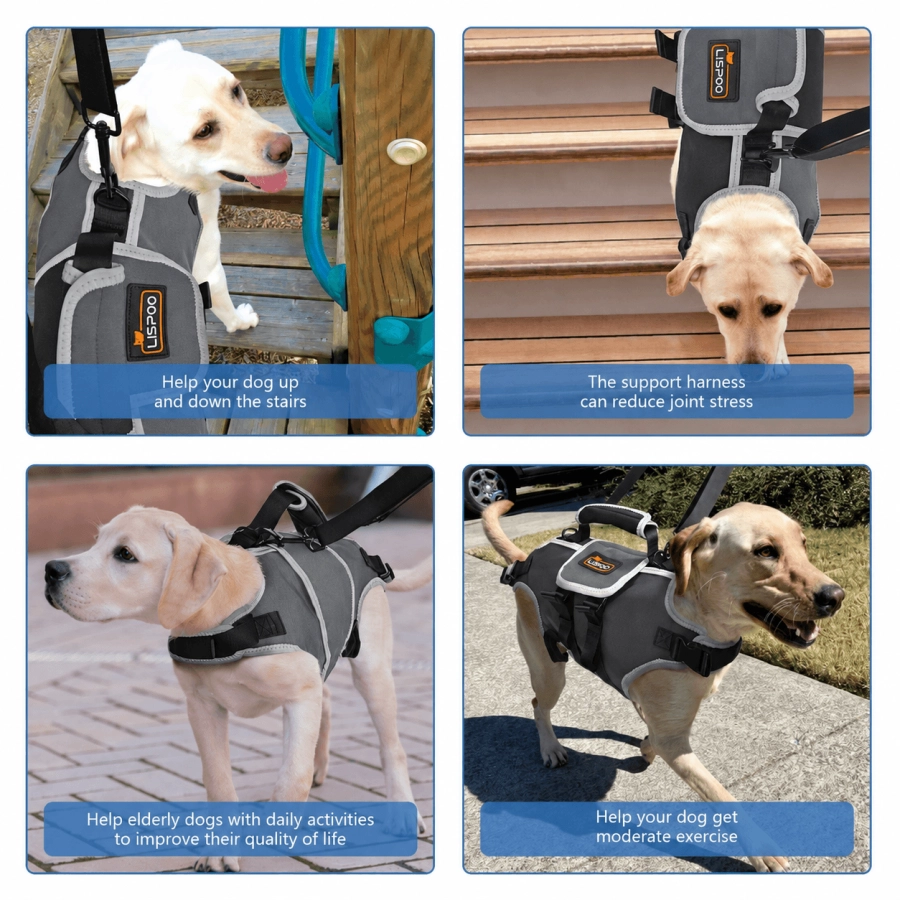
A full body lifting harness earns its place when the dog's weakness spans both front and rear. Senior dogs with generalized muscle loss. Dogs recovering from spinal surgery where neither axle can be relied on. Large breeds where lifting from a single point creates dangerous torque on the handler's back. In these conditions, the three-zone distribution and multi-handle configuration are not nice-to-have—they are what makes the lift possible at all.
The harness is the wrong tool in two clear situations. First, when the dog still has full strength in one axle. A rear lifting harness does less, weighs less, and goes on faster—if the front legs are strong enough to bear weight during the lift, the full body coverage adds bulk without adding function. Second, when the handler needs to lift the dog for more than roughly 30 seconds at a time—crossing a long parking lot, navigating an airport. At that duration, even the best-distributed harness load becomes fatiguing for the handler. A dog lift harness paired with a support sling or wheelchair may be the more practical combination.
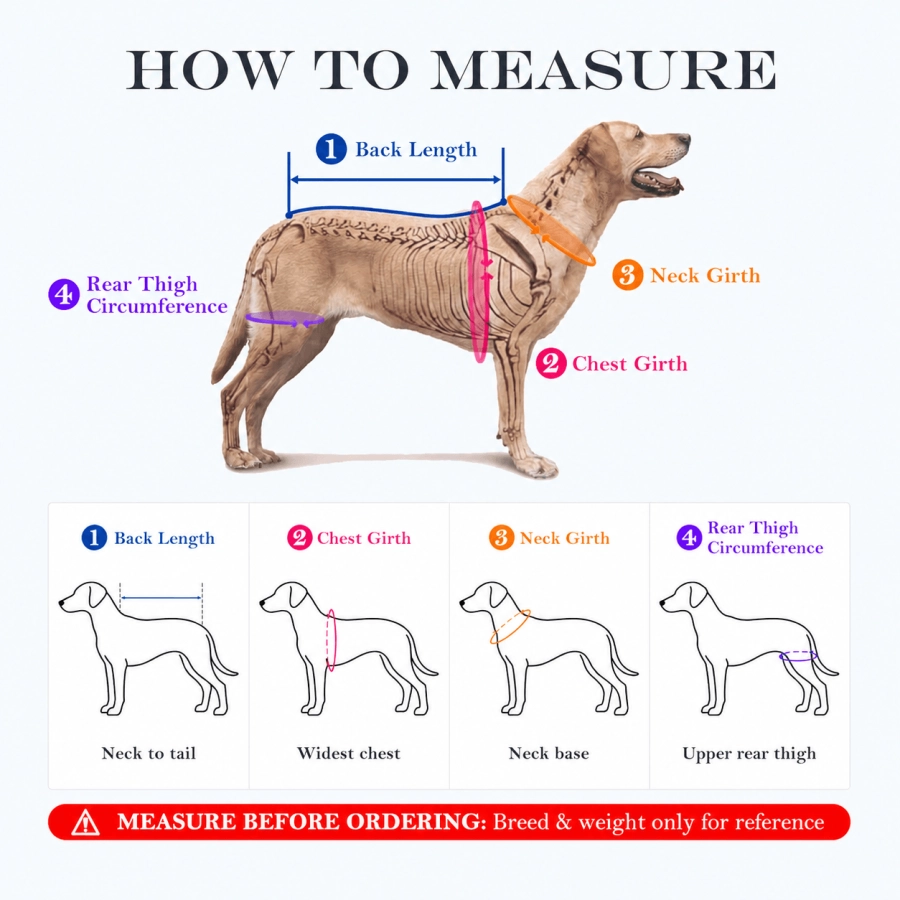
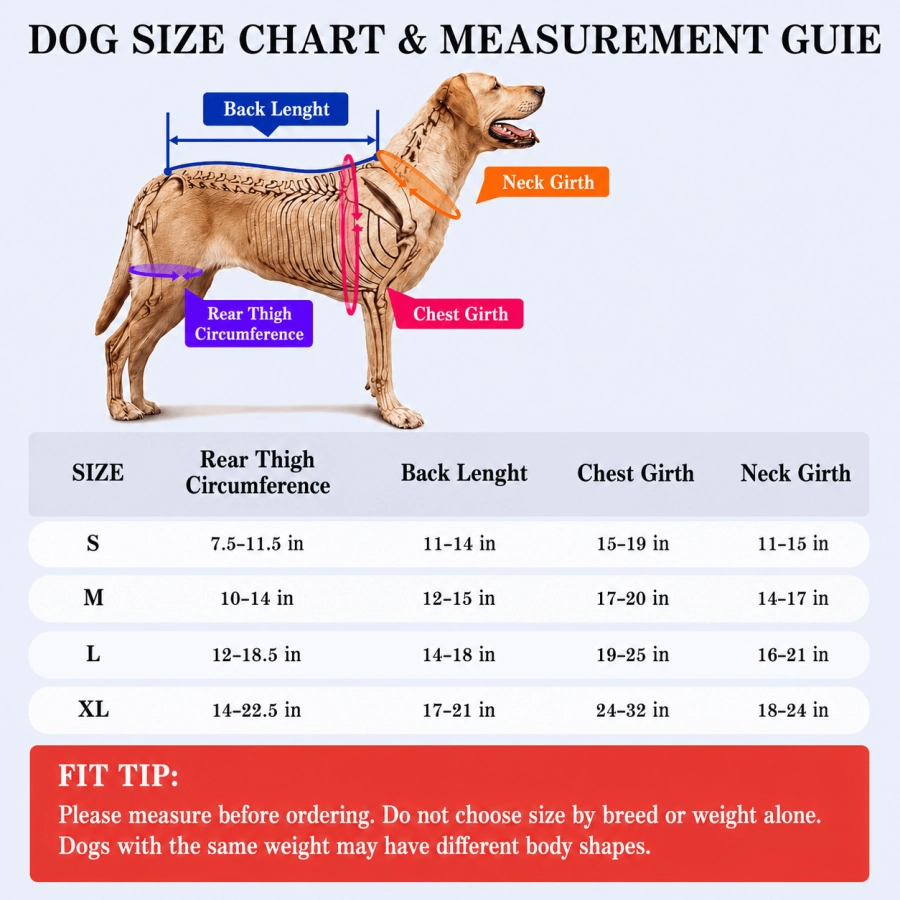
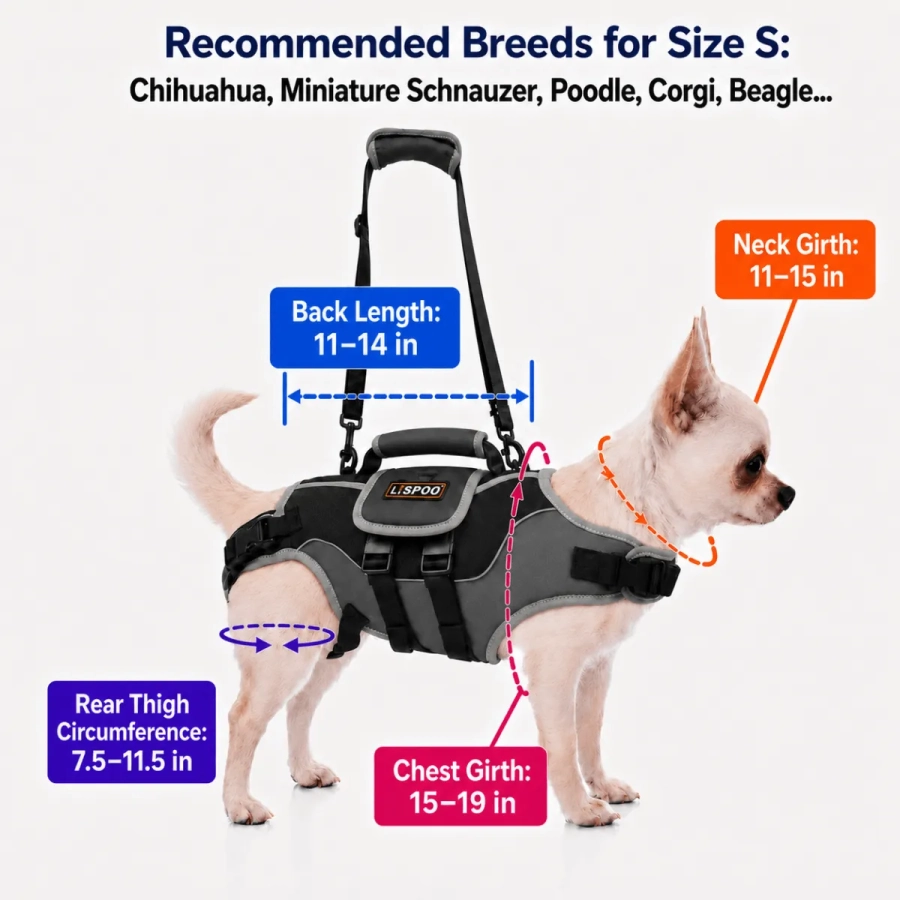
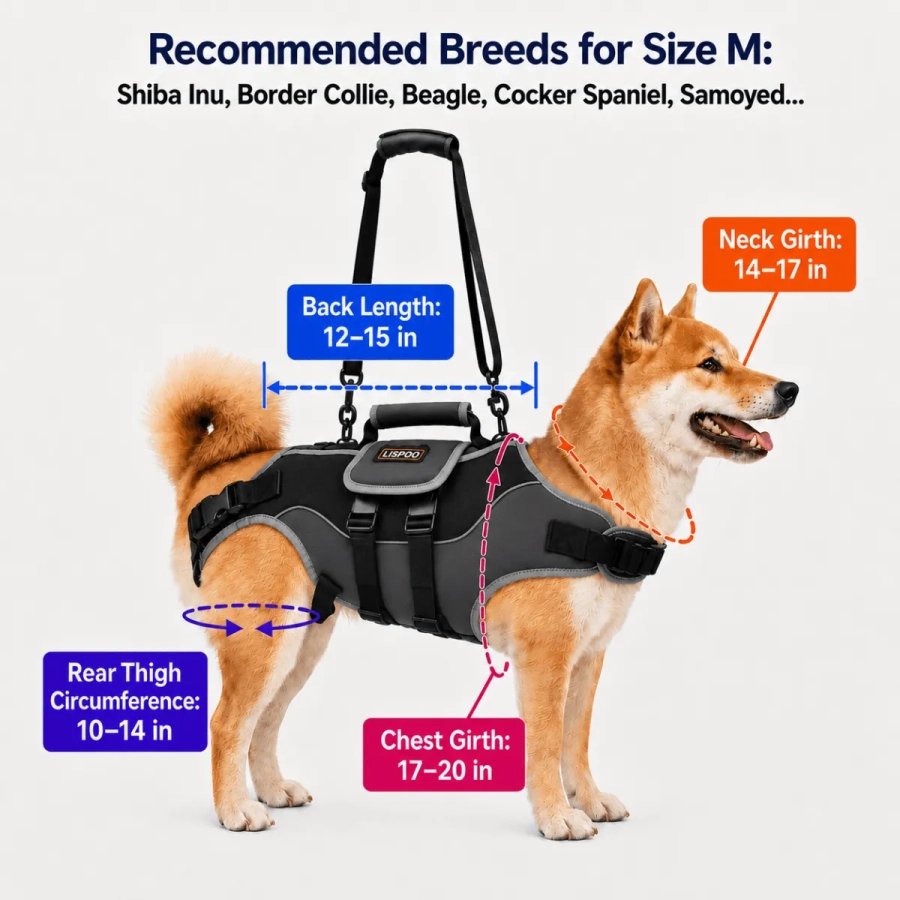
Disclaimer: The fit checks described here—checking for hot spots under panels and measuring strap migration—assume a short-coated dog where skin is visible and accessible. Double-coated breeds and dogs with thick undercoats may show subtler pressure signs. With these dogs, rely on hand-checking for warmth differences and watch for the dog shifting its weight away from one side after a lift, which can signal uneven loading that visual inspection would miss.
Design Details That Shape Daily Use
Force distribution and handle placement set the ceiling. Smaller design decisions determine whether the harness actually reaches that ceiling every day.
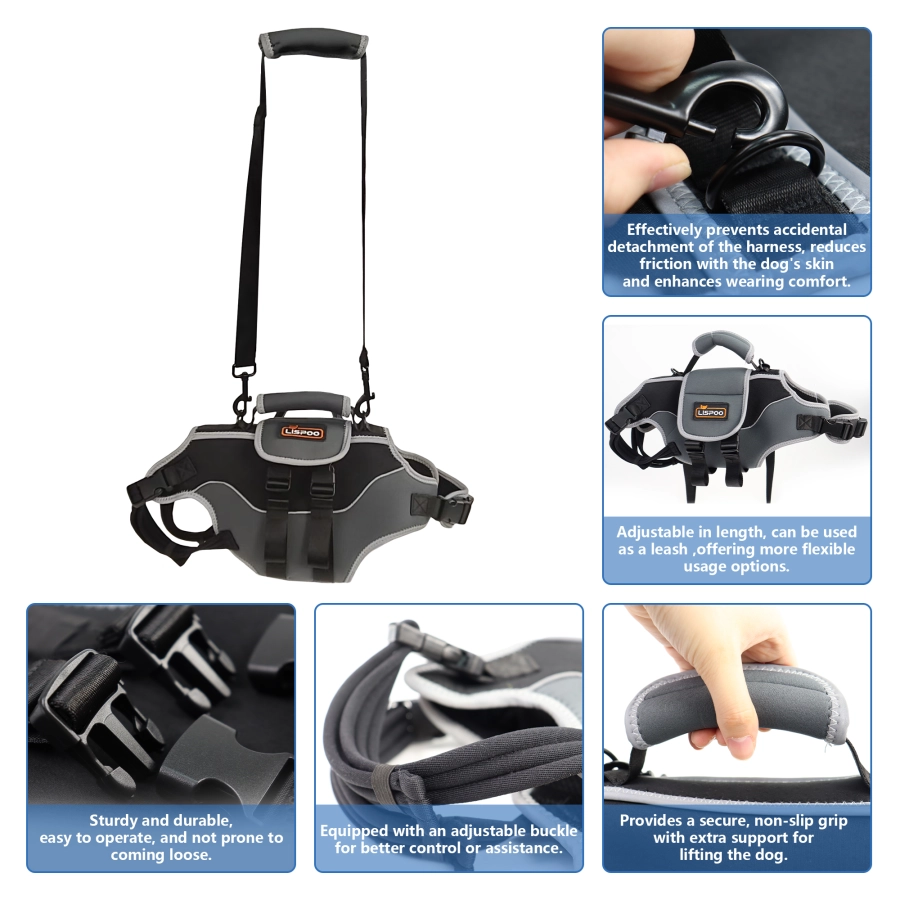
Strap material and edge finishing. Nylon webbing holds its length under load better than polypropylene—important because a strap that stretches during a lift changes the fit geometry mid-motion. But nylon edges cut sharper against skin. The fix is not a softer strap material; it is rolled-edge binding or a neoprene sleeve on every strap that contacts the dog's inner leg or armpit. These are the zones where strap edge pressure concentrates first.
Buckle placement and one-person operation. A harness that requires two people to buckle is not a daily-use harness—it is a clinical tool. Side-release buckles positioned at the chest and hip closures let one person secure the harness while keeping one hand on the dog. The observable test: can you close every buckle on a standing, mildly restless dog using only one hand while the other hand steadies the dog's shoulder? If any buckle requires two hands, the design has traded daily practicality for manufacturing simplicity.
Machine-washable versus wipe-clean. Harnesses accumulate urine, feces, and slobber within days of daily use on a mobility-impaired dog. A harness labeled "wipe-clean only" becomes a hygiene bottleneck. Removable, machine-washable liner panels—particularly on the belly strap where contamination concentrates—extend the usable life of the harness far more than reinforced stitching ever will. This is a design choice that affects whether the harness gets used consistently or sits in a closet after the first week.
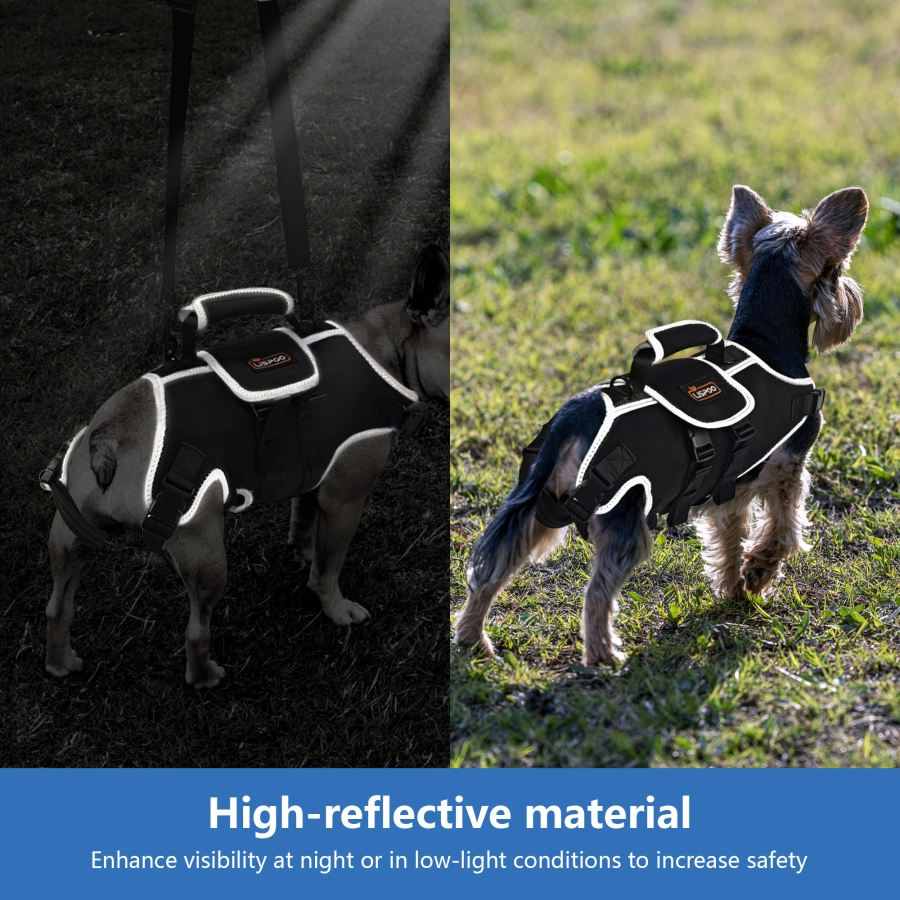
Reflective elements and visibility. Early-morning and late-evening bathroom trips happen in low light. A harness with reflective piping along the spine strap and chest panel edge makes the dog visible to cars without requiring a separate reflective vest. This is not a safety gimmick—it is a function of harness placement covering the largest visible surface of the dog's body.
The design differences between full body harness models rarely show up in spec sheets. They show up the first time you wash the belly panel, the first time you buckle a restless dog one-handed, the first time you look for strap migration after a walk. What looks like a minor material choice on a product page becomes the difference between a harness that gets used every day and one that does not.
FAQ
How do you know the harness is distributing force evenly and not just covering more skin?
After a 10-minute assisted walk, slide your hand under each contact panel—chest, belly, and hip zones. All three should feel similarly warm. One noticeably hotter panel means that zone is absorbing disproportionate load, and the strap tension on the cooler panels likely needs tightening to rebalance the force split.
Can the harness stay on between lifts, or should it come off when the dog rests?
Remove it when the dog is lying down or sleeping. The belly panel, in particular, presses against the floor when a dog lies flat, which concentrates pressure in a way the harness was not designed for. For dogs that need frequent short assists throughout the day, keep the harness nearby and practice putting it on in under 30 seconds—this is where side-release buckles at the chest and hip pay off.
What is the difference between a rear-only lift harness and a full body harness in actual use?
A rear harness lifts the hind end while the dog bears weight on its front legs. It assumes front-leg strength. A full body harness connects chest and hip panels, so lifting force applied at any handle reaches both axles. For a dog with generalized weakness—where the front collapses when the rear is lifted—the full body harness is what makes the lift possible without the dog folding forward.
How does strap material choice affect how the harness performs over weeks of daily use?
Nylon webbing resists stretch under repeated load better than polypropylene, so the fit you set on day one holds closer to the same tension on day thirty. But nylon's sharper edge means the inner-leg and armpit straps need rolled-edge binding or a neoprene sleeve—without it, the same material stability that preserves fit also creates friction points that show up as hair loss or skin redness within the first two weeks.

0 Comments