
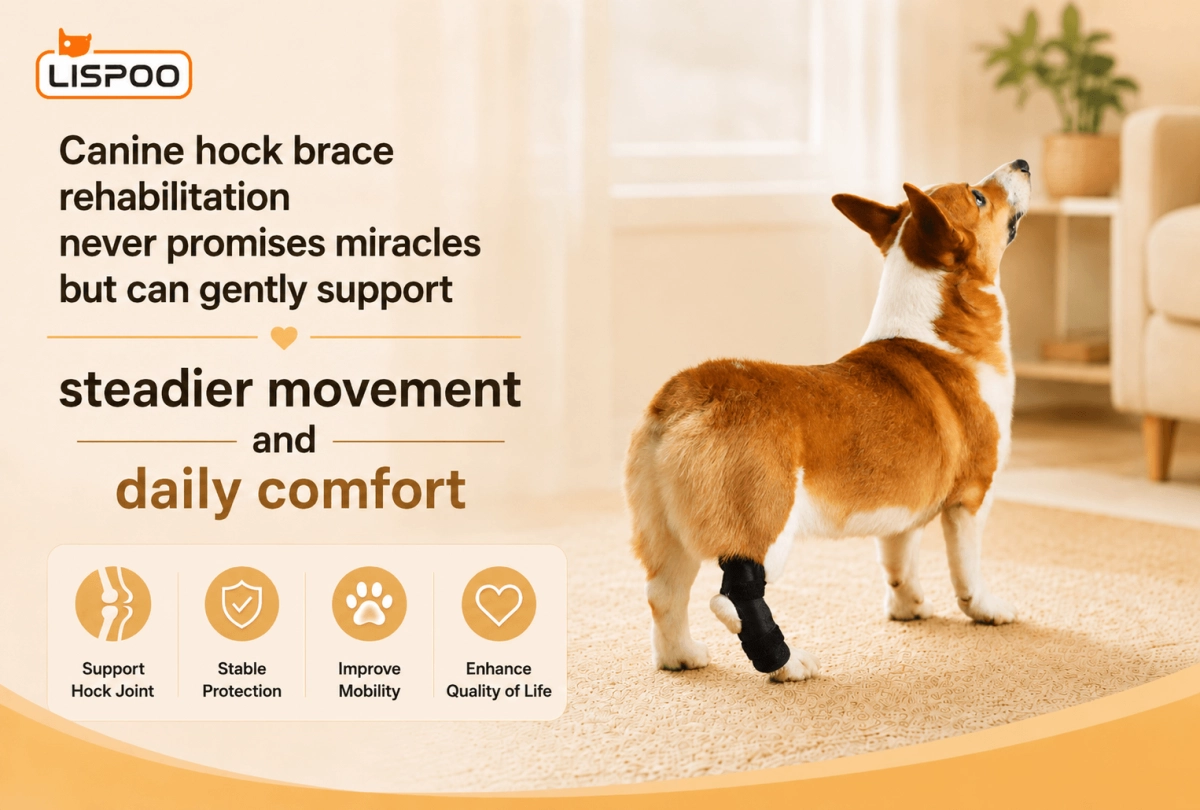
You want your dog to move with less discomfort and more confidence. A canine hock brace may help your dog gain steadier movement during recovery from injury or age-related issues. Veterinary-approved braces give support and protect weak or healing joints. Many dogs show improved walking and standing when you choose the right brace and follow professional advice. You can help your dog feel more secure and comfortable each day with gentle, consistent support.
Key Takeaways
-
Canine hock braces support dogs with joint issues, improving movement and comfort.
-
Veterinary-approved braces ensure safety and effectiveness for your dog's recovery.
-
Professional guidance helps choose the right brace and monitor your dog's progress.
-
Patience and consistency are key to successful rehabilitation with hock braces.
-
Proper fitting and maintenance of the brace prevent complications and enhance comfort.
What Is a Canine Hock Brace?
Purpose and How It Works
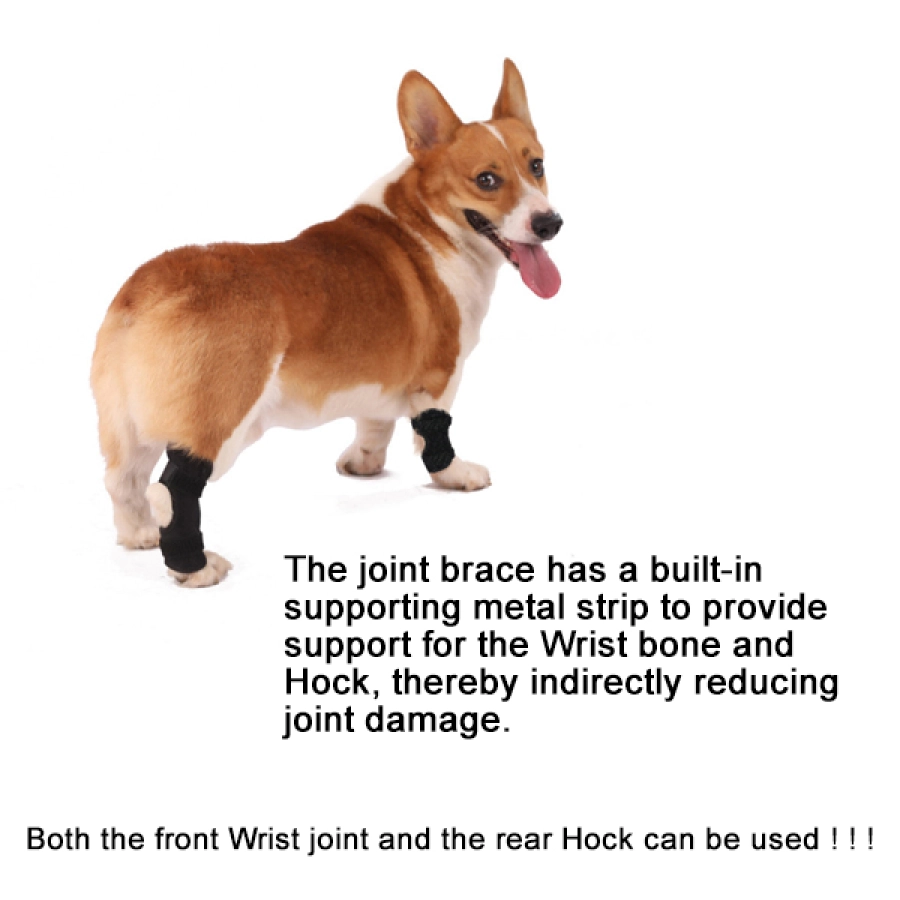
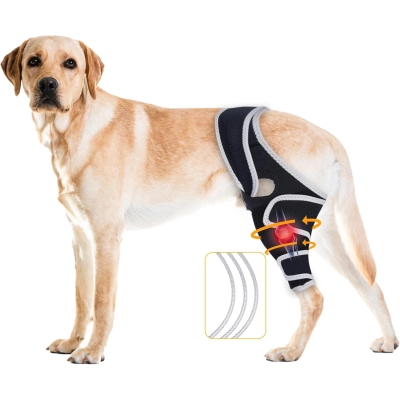
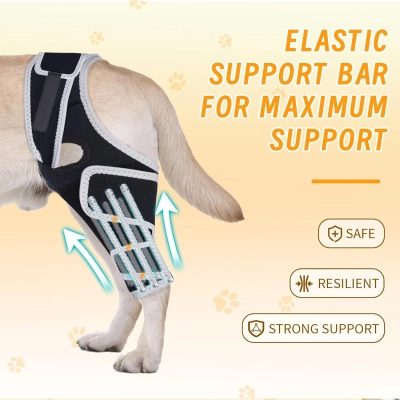
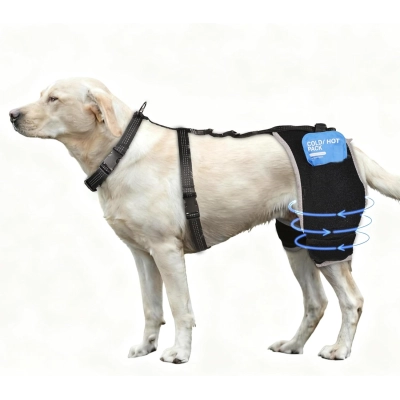
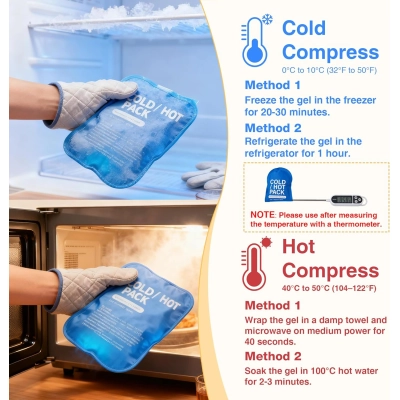
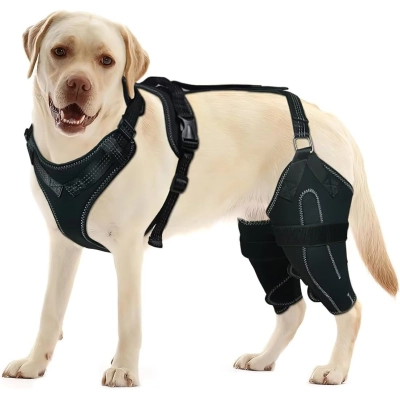
You may notice your dog struggling with rear-leg weakness or discomfort. A canine hock brace helps your dog by stabilizing the hock joint and limiting excessive motion. This support allows your dog to move more confidently during walks or daily activities. The brace gently compresses the joint, which can reduce swelling and provide warmth. You give your dog a chance to walk with less wobbling and more control.
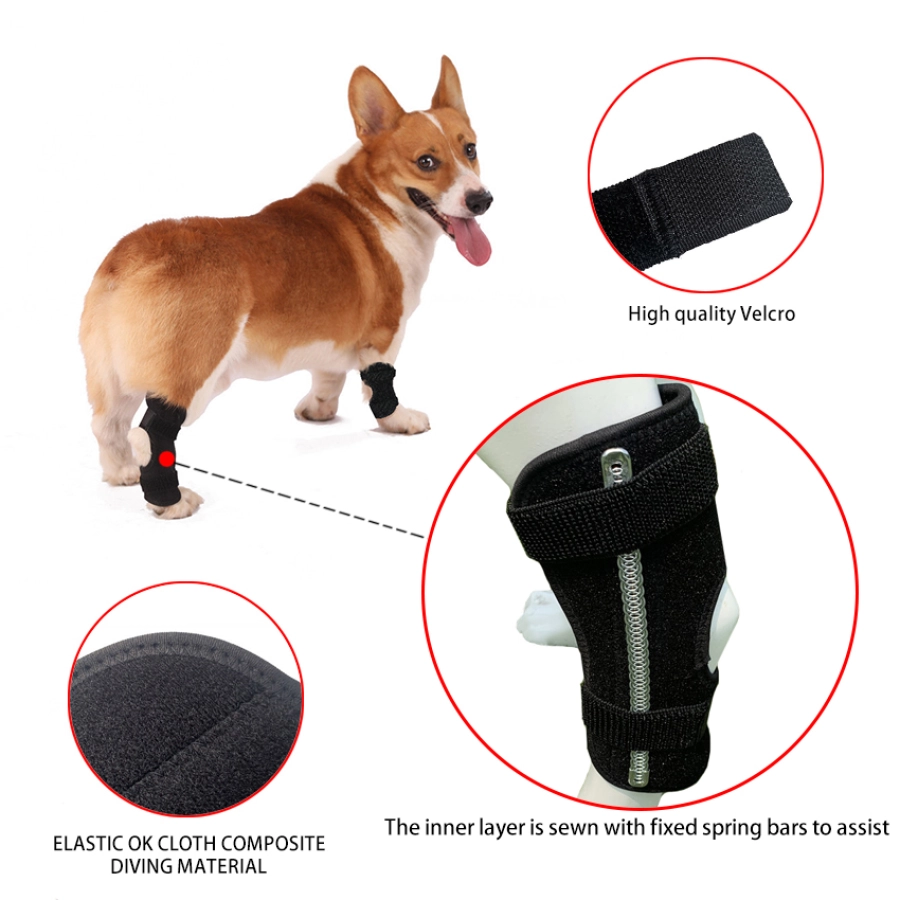
Veterinary-approved braces use special materials and components to ensure safety and comfort. Take a look at the common parts found in these braces:
|
Component/Material |
Description |
|---|---|
|
Neoprene |
Flexible material used in moderately-supportive braces for larger or heavier dogs. |
|
Additional Supports |
Used in braces for dogs with mild to moderate wrist injuries or chronic issues. |
|
Hard Plastic |
Used in leg splints, lined with foam padding for comfort. |
|
Velcro Straps |
Used to secure splints on the dog's leg. |
|
Self-adhesive Padding |
Enhances comfort and fit in off-the-shelf wraps and braces. |
|
Memory Foam/Sheepskin |
Used in custom-made braces for individual fit and support. |
|
Lubricating Powder |
Helps prevent chafing when braces are worn for extended periods. |
You support your dog’s joint in several ways when you use a canine hock brace:
-
Stabilize the affected joint to reduce unnecessary movement.
-
Support weak muscles and improve balance.
-
Distribute weight evenly to reduce strain on other legs.
-
Promote controlled movement for easier walking and playing.
Common Conditions Supported
Many dogs benefit from hock brace support for a variety of orthopedic issues. You may find a brace helpful if your dog faces any of these conditions:
-
Achilles tendon injuries
-
Mild sprains or strains
-
Arthritis in the rear leg
-
Hyperextension of the hock
-
Weakness after surgery or injury
You help your dog feel more secure and comfortable by choosing the right brace for their needs. Always consult your veterinarian to make sure you select the best option for your dog’s condition.
Why Choose a Veterinary-Approved Canine Hock Brace?
Importance of Professional Assessment
You want the best for your dog’s recovery. A veterinary-approved hock brace gives you peace of mind because a professional has checked your dog’s needs. Your veterinarian knows how to spot the exact cause of your dog’s rear-leg weakness or pain. They can recommend the right type of brace and make sure it fits well.
When you visit your veterinarian, you get:
-
A clear diagnosis of your dog’s joint or ligament issue.
-
Advice on whether a brace will help your dog’s condition.
-
Guidance on how to use the brace safely.
-
Tips for monitoring your dog’s progress.
Tip: Always ask your veterinarian to show you how to put on and adjust the brace. This helps you avoid mistakes and keeps your dog comfortable.
A professional assessment also helps you avoid using the wrong product. Some dogs need more support or a different kind of treatment. Your veterinarian can help you make the best choice for your dog’s health.
Risks of Non-Approved Braces
You may see many braces online or in pet stores. Not all of them meet veterinary standards. Using a non-approved brace can put your dog at risk.
Here are some problems you might face with non-approved braces:
|
Risk |
What Can Happen |
|---|---|
|
Poor Fit |
Causes rubbing, slipping, or sores |
|
Wrong Support Level |
May not stabilize the joint properly |
|
Low-Quality Materials |
Can irritate your dog’s skin |
|
Lack of Adjustability |
Makes it hard to get a secure fit |
|
No Professional Guidance |
Increases risk of injury or discomfort |
You want your dog to heal and move safely. Choosing a veterinary-approved brace helps you avoid these risks. You also get support from your veterinarian and the Lispoo team. This way, you give your dog the best chance for steady movement and daily comfort.
How a Canine Hock Brace Supports Rehabilitation
Enhancing Stability and Movement
You want your dog to walk with more confidence and less wobbling. A best canine hock brace helps by stabilizing the hock joint and guiding your dog’s movement. This support makes it easier for your dog to stand, walk, or even play during recovery. Veterinary studies show that braces, when used with structured rehabilitation, improve long-term joint stability and muscle balance. You can track your dog’s progress with tools like pressure-sensitive walkways and motion-capture systems. These tools help you and your veterinarian see how your dog’s gait improves over time.
Here is a table showing how modern technology supports your dog’s rehabilitation:
|
Evidence Type |
Description |
|---|---|
|
Gait Analysis Tools |
Pressure-sensitive walkways and motion-capture systems monitor progress. |
|
Structured Rehabilitation |
Braces combined with rehab programs improve joint stability and muscle balance. |
|
Digital Tracking |
Objective data helps refine treatment plans. |
|
Biomechanical Support |
Identifies the best brace design for your dog’s size and condition. |
You may notice your dog putting more weight on the affected leg after using a brace for several weeks. Studies with dogs recovering from ligament injuries found that braces helped them walk with a more even gait and better weight distribution. This means your dog can move more naturally and feel steadier each day.
Reducing Strain and Protecting Healing Tissues
You want to protect your dog’s healing joint from further injury. A canine hock brace limits excessive movement and reduces the strain on weak tissues. Research shows that dogs wearing hock braces have a higher total pressure index in the affected limb. This means your dog’s leg gets better support, which is important for healing. The brace acts like a gentle shield, keeping the joint safe while your dog rebuilds strength.
You can expect these benefits when you use a brace during recovery:
-
Less risk of overextending the joint
-
More even weight distribution
-
Protection for healing ligaments and tendons
You help your dog heal by giving the joint time to recover without extra stress. This support is especially important after surgery or a soft-tissue injury.
Improving Comfort During Recovery
You want your dog to feel comfortable and enjoy daily activities. A canine hock brace can make a big difference in your dog’s comfort level. The brace provides gentle compression and warmth, which helps reduce swelling and pain. Many dogs with arthritis or joint injuries move more easily and show less discomfort when wearing a brace.
Here are some ways a brace can improve your dog’s comfort:
-
Provides extra support after surgery, making it easier for your dog to rebuild strength
-
Helps manage pain from arthritis or degenerative joint disease without medication side effects
-
Prevents painful movements by limiting certain motions
-
Promotes healing by stabilizing the joint and reducing inflammation
-
Allows your dog to move more freely and enjoy walks or playtime
You may see your dog become more active and confident as comfort improves. Always check with your veterinarian to make sure the brace fits well and supports your dog’s recovery plan.
Realistic Expectations for Canine Hock Brace Rehabilitation
What Braces Can and Cannot Do
You want your dog to feel better and move with ease. A canine hock brace can help your dog walk more steadily and protect healing joints. You may notice your dog gains confidence during short walks or daily activities. The brace supports weak muscles and limits harmful movements. It also provides gentle compression and warmth, which can reduce swelling.
You should know that a brace does not cure injuries or reverse arthritis. It cannot heal torn ligaments or fix severe instability by itself. Your dog may still need surgery, medication, or physical therapy. The brace works best as part of a complete rehabilitation plan.
Veterinary case studies show that most dogs experience minor complications when first using a brace. You may see skin irritation, friction wounds, or brace slippage. These issues often happen during the early days of use. You can manage them with careful adjustments and rest periods.
Note: Always check your dog's skin after each use. If you see redness or sores, remove the brace and ask your veterinarian for advice.
Here are some common complications you might notice:
-
Skin irritation
-
Friction wounds
-
Brace slippage
You can help your dog by watching for these signs and making changes as needed. Most problems are minor and improve with proper fitting and gradual introduction.
The Role of Patience and Consistency
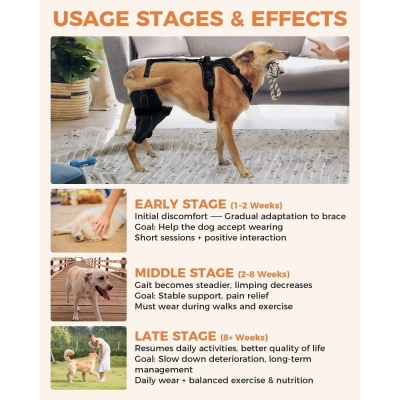
You play a key role in your dog's recovery. Improvement often appears within the first few weeks when you use the brace correctly and follow your veterinarian's guidance. Careful fitting and slow introduction make a big difference. Healing takes time, especially for ligament or arthritis-related injuries. You should combine brace use with physiotherapy and other supportive measures.
Consistency matters. You need to follow the rehabilitation plan every day. Owner compliance helps your dog get the most benefit from the brace. You should do prescribed exercises and monitor your dog's progress. Sometimes, your dog may get bored or distracted. As your dog's condition improves, you may face new challenges in keeping up with the routine.
Here is a table showing how your actions affect your dog's recovery:
|
Factor |
Impact on Recovery |
|---|---|
|
Daily brace use |
Supports steady improvement |
|
Exercise compliance |
Builds strength and mobility |
|
Monitoring comfort |
Prevents complications |
|
Gradual introduction |
Reduces risk of irritation |
Tip: Stay patient and keep a positive attitude. Your steady support helps your dog feel safe and comfortable.
You give your dog the best chance for success by staying consistent and patient. Recovery is a journey, not a race. You help your dog move forward, one step at a time.
Daily Comfort and Quality of Life with a Canine Hock Brace
Helping with Everyday Activities
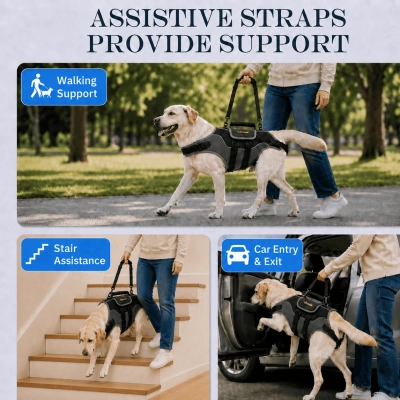
You want your dog to enjoy daily life with less pain and more freedom. A canine hock brace supports your dog during simple tasks like walking, climbing stairs, or playing. You notice your dog moves with steadier steps and shows more energy. The brace helps your dog balance better and prevents sudden collapses on stairs. Your dog feels safer and more willing to explore the yard or play with family members.
-
Walking becomes easier as the brace provides steady support.
-
Climbing stairs feels safer with improved stability.
-
Playing is more enjoyable because your dog regains strength and alignment.
You see your dog’s confidence grow as they try new activities. The brace helps restore function and reduces the risk of reinjury.
Signs of Good Fit and Comfort
You want your dog to feel comfortable every time they wear the brace. A good fit means your dog can move naturally without rubbing or slipping. You check for signs that the brace sits securely and does not cause irritation. Your dog should show no limping or reluctance to walk.
|
Quality of Life Improvement |
Description |
|---|---|
|
Mobility |
Your dog moves more easily and comfortably. |
|
Confidence |
Your dog shows more energy and willingness to play. |
|
Stability |
Your dog stands and walks with better balance. |
|
Gait Improvement |
Your dog walks with a more natural pattern. |
|
Overall Well-being |
Your dog appears happier and more relaxed. |
Tip: Check your dog’s skin after each use. Look for redness, swelling, or hair loss. If you see any problems, adjust the brace or ask your veterinarian for advice.
When to Seek Further Veterinary Advice
You need to watch your dog closely during rehabilitation. If you notice limping, swelling, or sores, contact your veterinarian. You should also seek advice if your dog refuses to walk or shows signs of pain. Your veterinarian can help you adjust the brace or recommend other treatments.
-
Persistent discomfort or pain
-
Visible skin irritation or wounds
-
Sudden changes in mobility or behavior
Your veterinarian guides you through each step. You help your dog stay comfortable and safe with the right support.
Choosing and Using the Right Canine Hock Brace
Factors to Consider for Selection
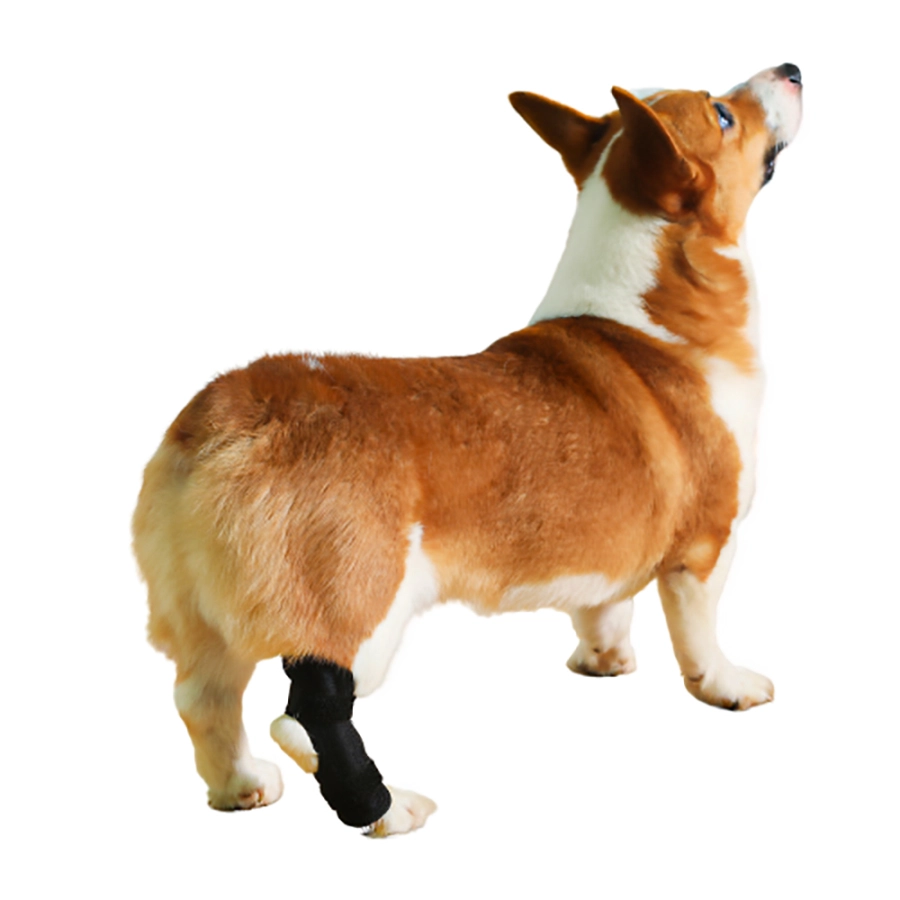
You want your dog to feel comfortable and safe. Choosing the right canine hock brace starts with understanding your dog’s needs. Look at the size, shape, and condition of your dog’s leg. You should also think about your dog’s activity level and daily routine. Some braces work better for mild injuries, while others support more serious conditions.
-
Check for possible skin issues like abrasions, hair loss, or sores.
-
Watch for mechanical device problems that may affect movement.
-
Consider if your dog will accept the brace or resist wearing it.
-
Make sure the brace matches your dog’s orthopedic condition.
You help your dog by picking a brace that fits well and supports their recovery. A good brace protects healing tissues and helps your dog move with confidence.
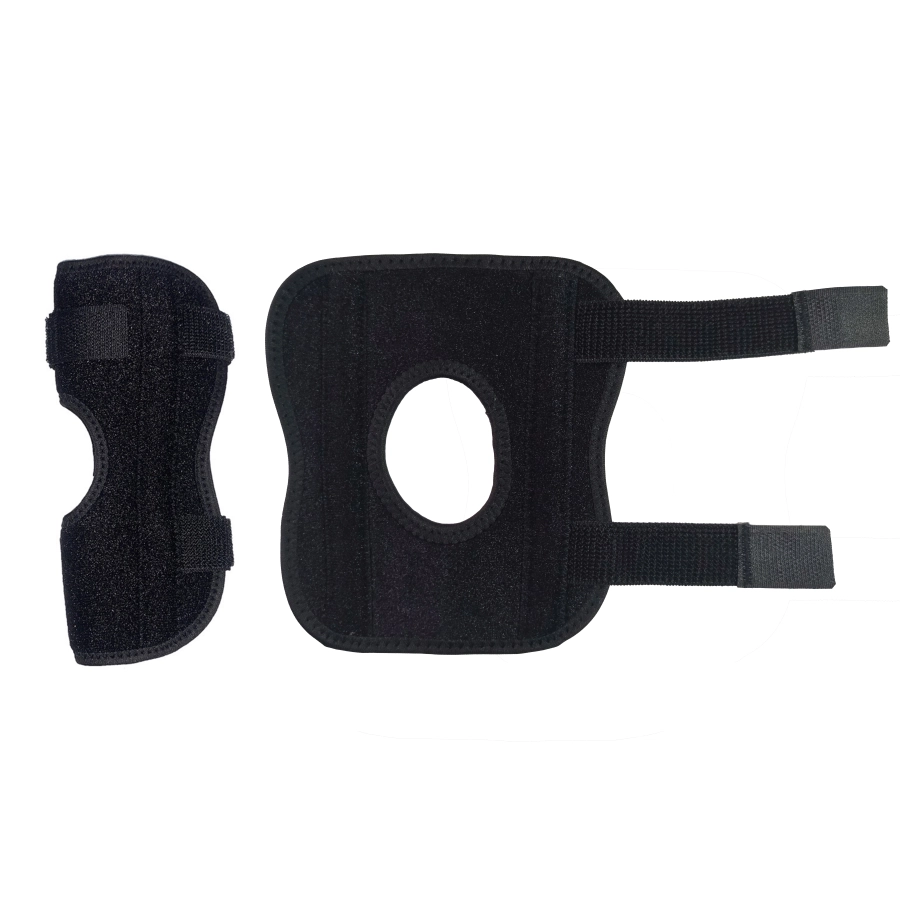
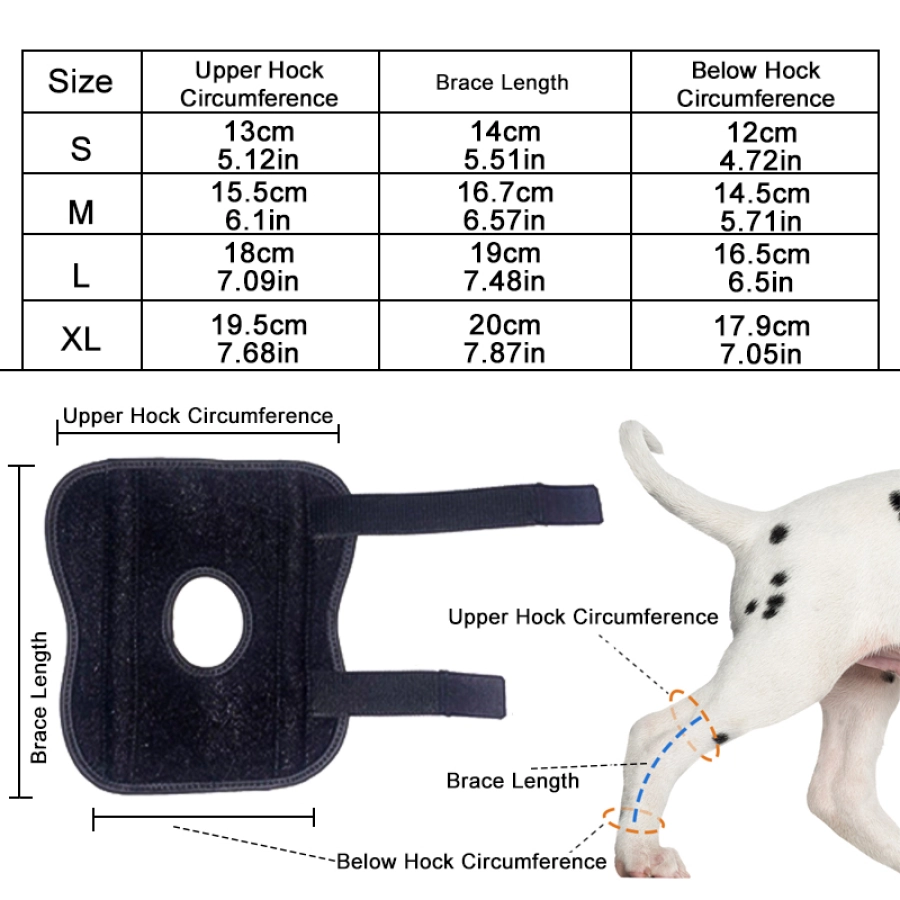
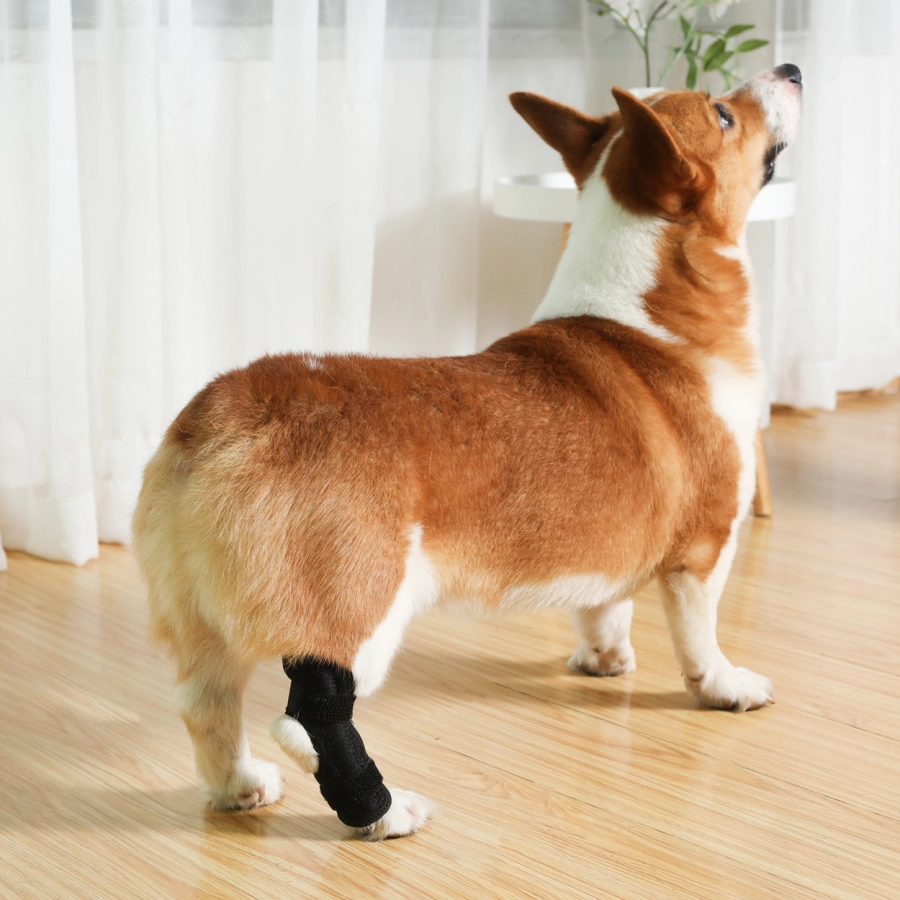
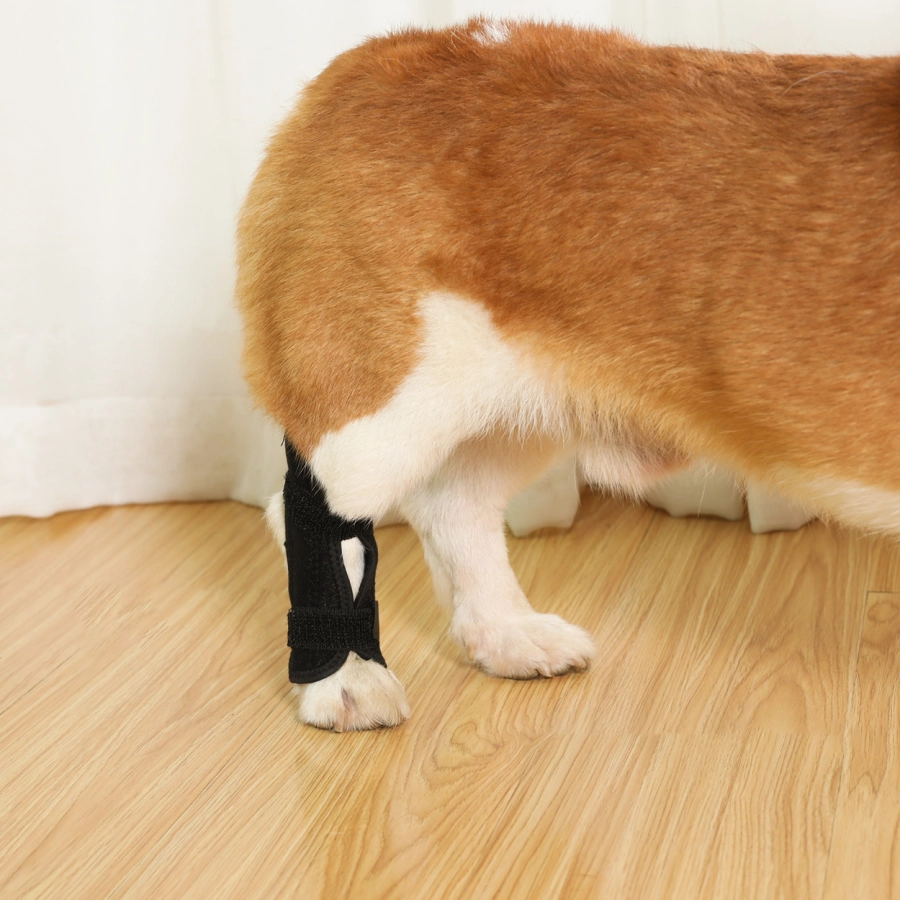
Tips for Proper Fit and Introduction
You need to fit the brace correctly to avoid discomfort. Follow these steps to make sure your dog gets the best support:
-
Watch a tutorial video to learn how to fit the brace.
-
Slide your dog’s leg into the brace.
-
Tighten the bottom strap first. It should be snug but not too tight.
-
Check for wrinkles or pinching in the skin.
-
Tighten the middle strap to remove any gaps.
-
Secure the top strap around the thigh. Keep it snug but comfortable.
-
Make sure there are 1–2 finger widths between the brace and the groin fold.
Tip: Proper fitting prevents skin irritation and keeps circulation normal. Ill-fitting braces can restrict movement or worsen injuries.
Maintenance and Care
You need to keep the brace clean and in good condition. Wash the brace regularly with mild soap and water. Dry it completely before putting it back on your dog. Check the straps and padding for wear or damage. Replace any worn parts to keep the brace working well.
|
Maintenance Task |
How Often |
Why It Matters |
|---|---|---|
|
Cleaning |
Weekly |
Prevents skin irritation |
|
Strap Check |
Daily |
Ensures secure fit |
|
Padding Inspection |
Weekly |
Maintains comfort |
|
Replacement |
As needed |
Keeps brace effective |
You support your dog’s recovery by caring for the brace. A well-maintained brace helps your dog stay active and comfortable every day.
You give your dog a better chance at steady movement and daily comfort with a canine hock brace. Veterinary professionals check progress using weight-bearing, limb loading, and gait symmetry.
|
Evidence Type |
Findings |
|---|---|
|
Prospective Trial |
All dogs improved weight-bearing |
|
Retrospective Study |
Limb loading improved after 90 days |
|
Case Report |
Gait symmetry improved in two dogs |
You support success by fitting the brace well, following daily routines, and attending regular check-ups. Patience and guidance from your veterinarian help your dog thrive.
FAQ
How long should my dog wear a canine hock brace each day?
Start with short sessions indoors. Gradually increase wear time as your dog adjusts. Most dogs benefit from wearing the brace during walks or active periods. Always follow your veterinarian’s advice for daily use.
Can my dog sleep with the hock brace on?
You should remove the brace at night unless your veterinarian says otherwise. This gives your dog’s skin time to breathe and helps prevent irritation or pressure sores.
How do I know if the brace fits correctly?
Check for a snug fit without pinching or slipping. Your dog should walk naturally and show no signs of discomfort. Look for redness, swelling, or hair loss after each use.
Will my dog need the brace forever?
Most dogs use the brace during recovery or for ongoing support with chronic conditions. Your veterinarian will guide you on when to reduce or stop use based on your dog’s progress.
0 Comments