
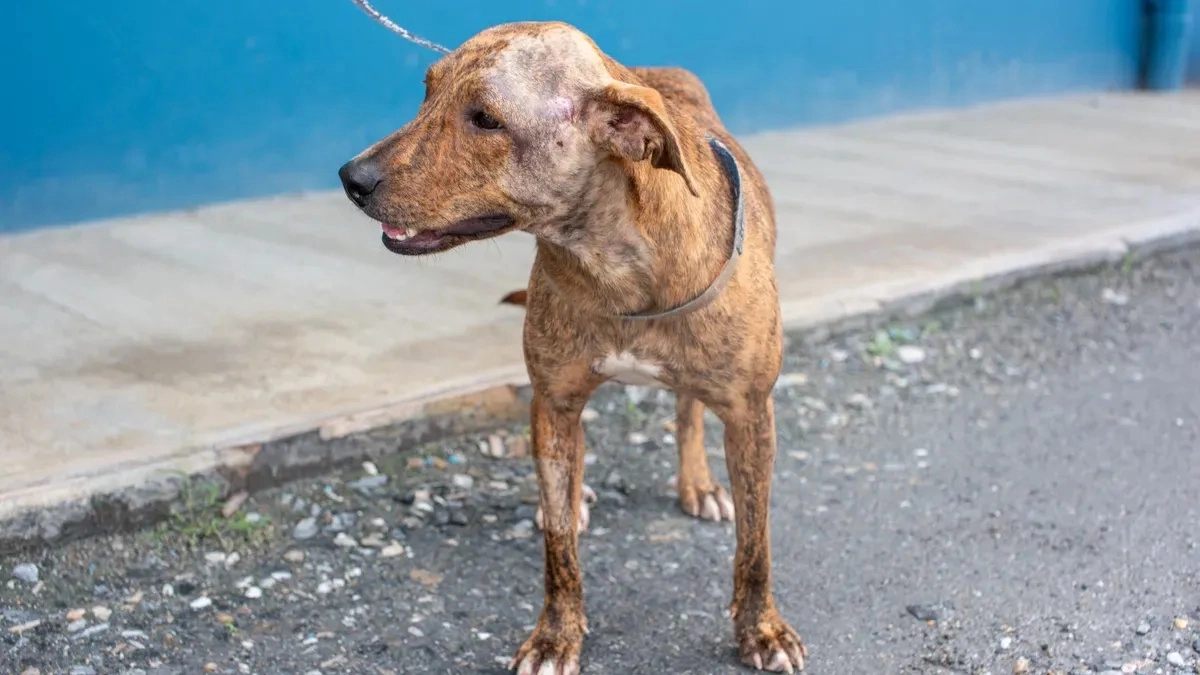
A dog hock injury changes how force travels through the hind leg. Ligaments that once held the joint surfaces in precise alignment stretch or tear. The articular surfaces slide off their track. Each step sends load through the joint at an angle it was not built to handle. Pain follows. So does compensation — the dog shifts weight, shortens stride, avoids loading the leg.
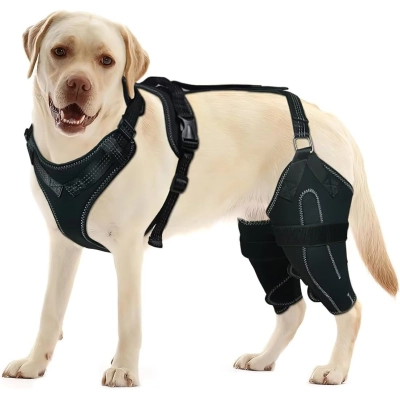
Understanding what failed mechanically inside the joint is what makes the difference between choosing a support product that addresses the actual problem and one that is simply present on the leg. A dog hock brace is a mechanical device with a specific job: restoring alignment so the joint can transmit force the way it was built to. Whether it succeeds depends on two design details most product pages do not explain well — hinge position and strap configuration.
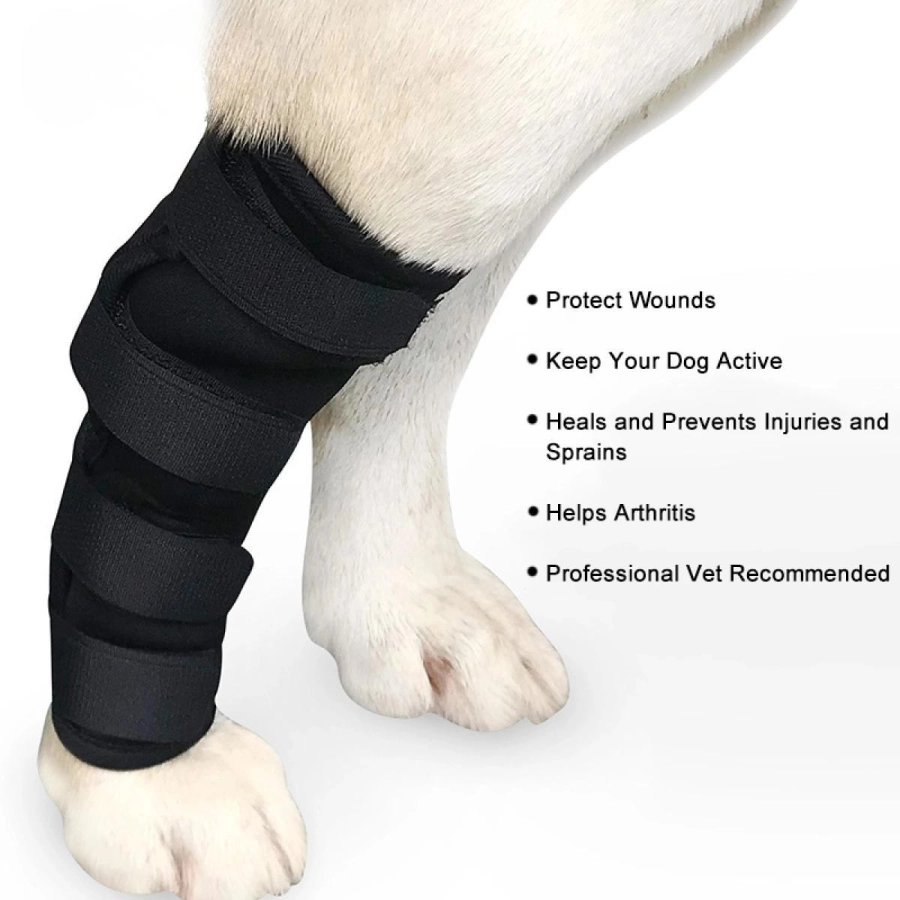
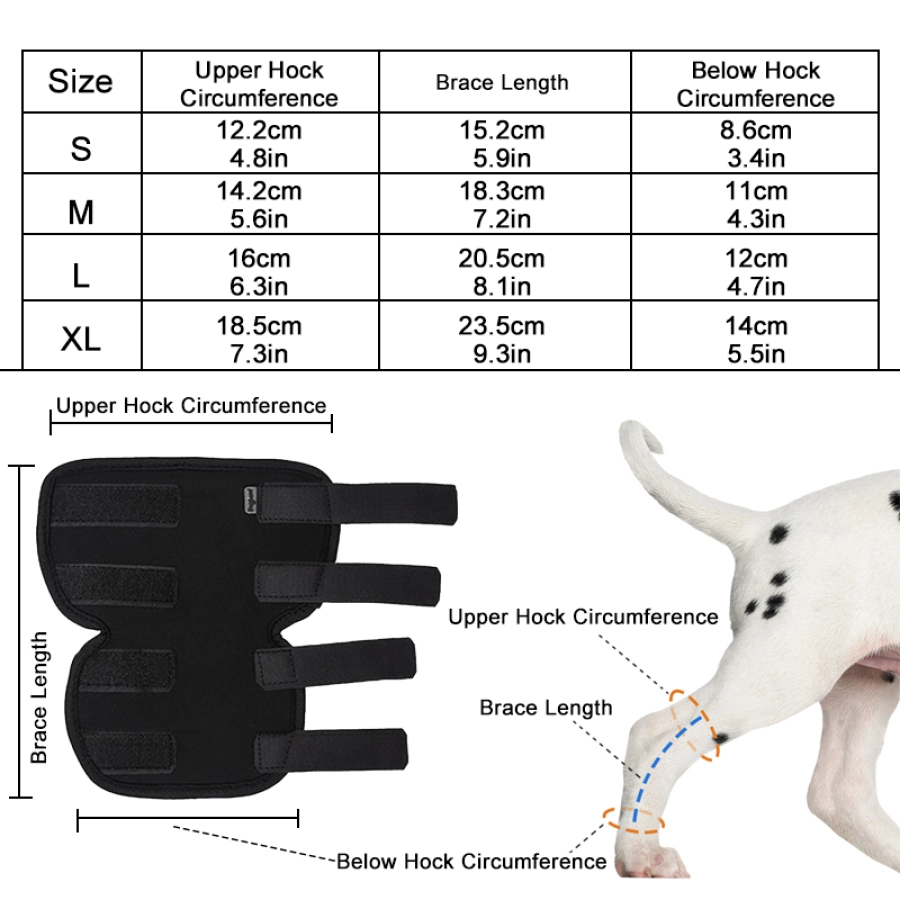
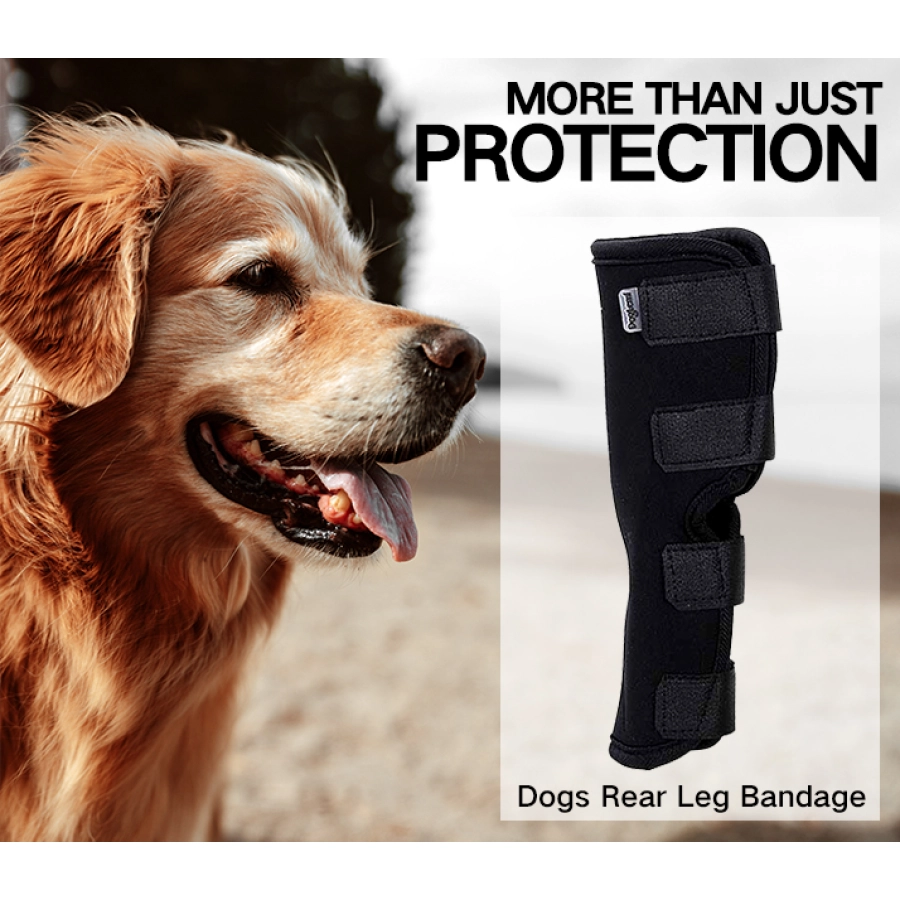
What Actually Fails When a Hock Joint Gets Injured
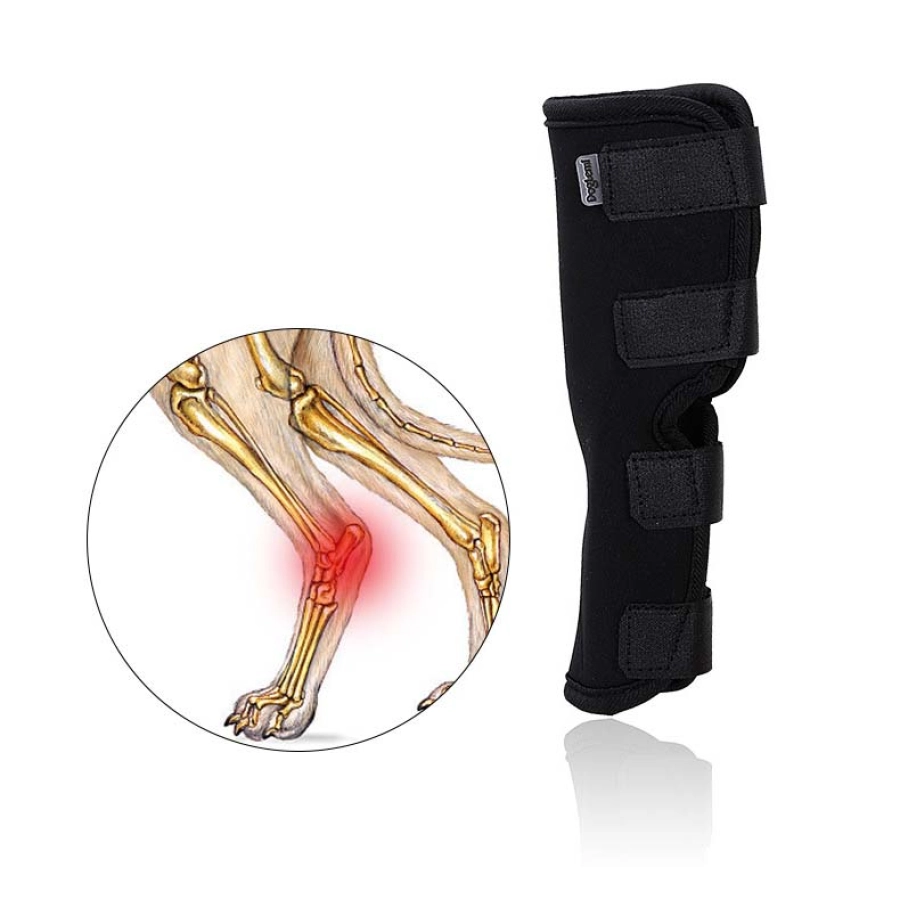
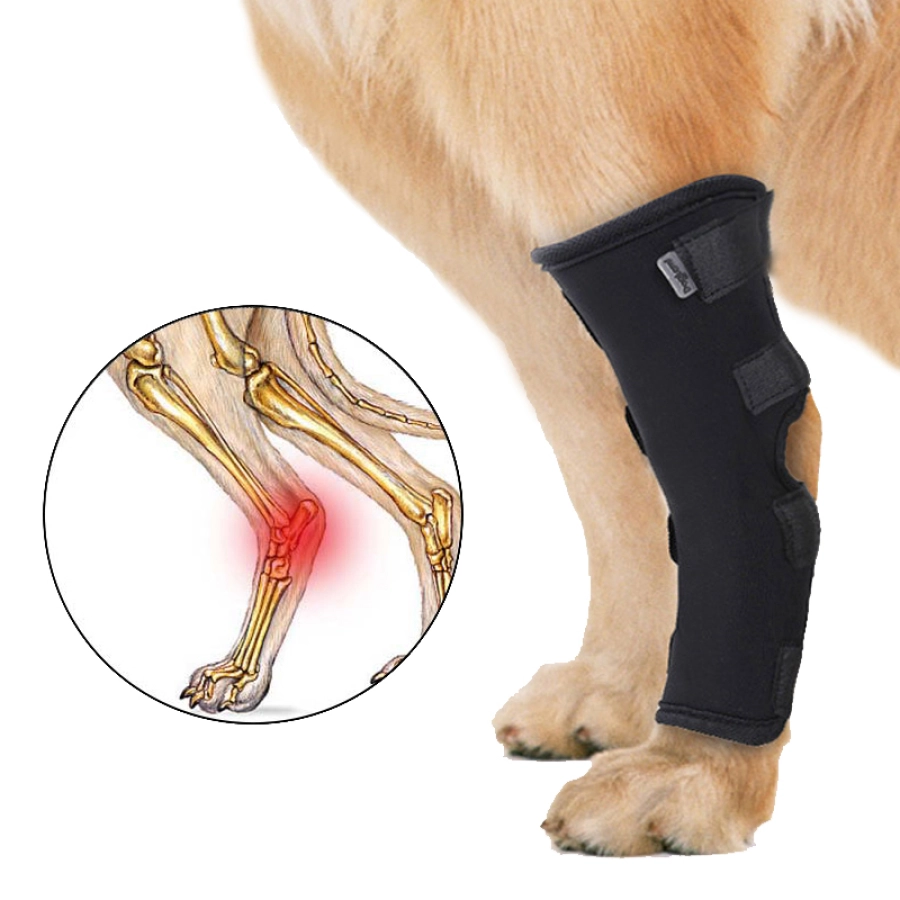
The hock sits just above the paw on the hind leg, connecting the tibia and fibula to the seven tarsal bones below. In a healthy joint, ligaments wrap the bone surfaces like tensioned cables. They hold the articular surfaces in alignment as the dog walks, runs, or turns.
An injury changes this equation. A stretched or torn ligament can no longer maintain that cable tension. The joint surfaces lose their tracking. Force that should travel cleanly along the leg's load-bearing axis now hits the cartilage at an angle, concentrating stress on edges rather than spreading it across the full surface. The dog feels this as instability — the joint gives way under load. The limp is not just a pain response. It is a mechanical adaptation to a joint that no longer holds its shape.
This is the problem a support product needs to solve. Not pain relief. Pain relief is downstream. The primary job is restoring enough alignment that the joint can transmit force along something close to its natural axis. If a support device cannot do that, it is an accessory, not an orthopedic tool. For a closer look at how these injuries are diagnosed and classified, the patterns described in hock injury assessments map directly to the mechanical failure modes that brace design aims to address.
The difference between stabilization and wrapping is visible. A dog that was toe-touching before wearing a brace but stands flat-footed ten minutes after is showing joint realignment. A dog that keeps toe-touching is showing that the device is present but not changing how force moves through the leg.
Why Hinge Position Decides Whether a Hock Brace Works
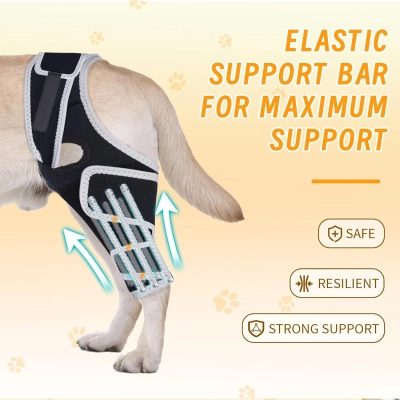
Most hock braces use hinges. The logic is sound: a hinge that mirrors the joint's natural pivot lets the dog flex and extend while blocking the side-to-side and rotational motions that injuries make unstable.
The logic works. The execution often does not.
A hock joint does not hinge on a single point. It is a compound joint — seven tarsal bones articulating across multiple small contact surfaces. The main flexion-extension axis runs roughly through the talocrural joint, but it shifts slightly through the range of motion. A brace with a single-axis hinge positioned even a quarter-inch off that primary axis creates a mismatch: the brace's pivot and the dog's pivot fight each other with every step.
Here is the causal chain. Hinge off-axis → the brace's lever arm applies a bending moment to the leg → the dog compensates by altering its gait to reduce that moment → the altered gait loads other joints differently → those joints absorb stress they were not built to handle. A well-placed hinge avoids this chain entirely. Force travels along the joint's natural axis. The brace tracks the dog's motion instead of fighting it. The dog does not need to compensate, so it does not.
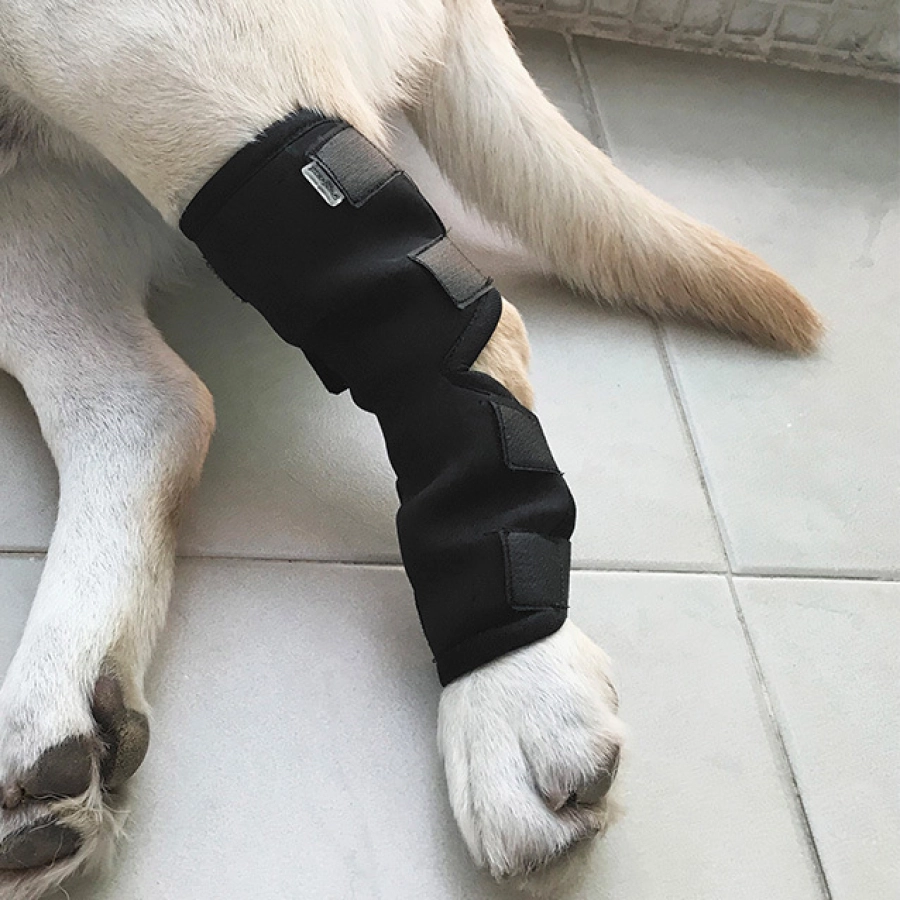
You can check alignment at home. Put the brace on. Walk the dog on a flat surface for ten minutes. Mark where the hinge sits relative to the bony prominence on the outside of the hock — a dot of masking tape works. Walk another ten minutes. Check the mark. If the hinge has drifted more than half an inch, the alignment was never right, or the strapping could not hold position. Either way, the support the brace is delivering is not the support the design intended.
Hinge position also controls the effective range of motion the brace permits. A hinge set too low restricts flexion more than the injury requires. One set too high allows more extension than the joint can safely handle during early healing. The best position permits the specific arc of motion the dog needs during its current phase of recovery — and that arc shifts over time. This is why the hinge design on a dog knee brace follows the same alignment principle: joint-axis tracking is what separates a brace that stabilizes from one that simply covers the leg.
Strap Configuration: The Difference Between Compression and Stabilization
Straps seem simple. Tighten them. The brace stays on.
That understates the problem. What a strap actually does depends on width, angle, and where on the leg it sits.
A narrow strap concentrates tension under a small contact patch. The body reads concentrated pressure as a threat — the dog licks, chews, or tries to remove the brace. Narrow straps also tend to migrate because they sit on top of the fur rather than anchoring into it. Wide straps spread the same tension across more square inches of leg. Pressure per square inch drops. The strap holds position better because more surface contact means more friction against the coat. The dog tolerates the brace longer — not because it is "more comfortable" in the abstract, but because the mechanical stimulus under the strap stays below the threshold that triggers a removal response.
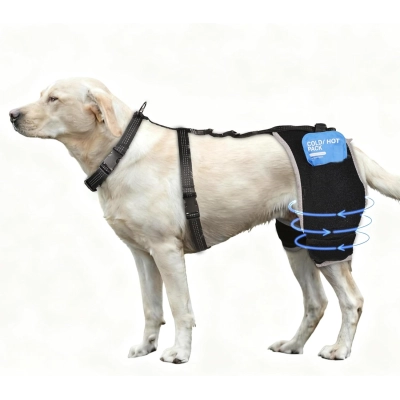
Strap angle matters for a different reason. The hock tends to collapse inward or rotate outward when ligaments are compromised. A strap that crosses the joint at a diagonal — running from the upper-outside of the leg to the lower-inside — directly opposes that rotational collapse. A purely horizontal strap cannot. It compresses the leg circumferentially but has no leverage against rotation. This is the distinction between compression and stabilization. Compression squeezes tissue. Stabilization resists unwanted motion vectors. A brace can do both, but only if the strap angles target the specific failure pattern of the injury.
Observable signal: after a fifteen-minute walk, slide two fingers under each strap. If one strap is significantly looser than the others, it has migrated and is no longer contributing to stabilization. If the skin under any strap shows a distinct red line that does not fade within five minutes of brace removal, the local pressure exceeds what that dog's skin can tolerate for that duration.
Material choice compounds these effects. Neoprene-backed straps grip better than plain nylon webbing because the foam layer conforms to leg contour. But neoprene traps heat. A design that uses neoprene on the contact side with a breathable outer layer keeps the grip benefit while reducing the heat buildup that makes dogs reject the brace after thirty minutes of wear. From a manufacturing standpoint, this is a lamination decision — bonding two materials with different thermal and mechanical properties — not a simple fabric choice. Getting the bond right in production determines whether the strap performs consistently across wet and dry conditions.
| Strap Design Factor | Performance Difference | Main Limitation |
|---|---|---|
| Width (narrow vs. wide) | Wide straps lower pressure per square inch and resist migration better | Wide straps on very short legs may overlap the joint line and restrict flexion |
| Angle (horizontal vs. diagonal) | Diagonal straps oppose rotational collapse; horizontal straps cannot | Too steep an angle pulls the brace distally and increases slippage |
| Contact material (neoprene vs. nylon) | Neoprene grips better; nylon breathes better | Laminated neoprene-nylon adds production complexity; bond failure separates the layers |
When a Hock Brace Is the Right Tool and When It Is Not
A hock brace has one core job: providing external mechanical support to a joint whose internal stabilizers are temporarily or permanently compromised. That job makes sense in specific conditions. Outside those conditions, the same brace becomes dead weight — present on the leg but not participating in stabilization.
Where a brace tends to deliver real support:
- Mild to moderate ligament sprains where the joint is loose but not fully dislocating under load
- Post-surgical protection, where the internal repair needs external backup during tissue healing
- Chronic arthritic instability, where the goal is reducing daily micro-trauma rather than achieving full stabilization
- Controlled rehabilitation exercise where the dog needs protected range of motion
Where a brace reaches its mechanical limit:
- Complete ligament rupture with gross instability — no external brace can match the tensile strength of an intact ligament
- Open fractures or wounds at the brace contact site
- Angular limb deformities where the bone geometry itself is off-axis — a brace cannot realign what the skeleton has set in a different shape
- Dogs with very short coats and minimal subcutaneous tissue over the hock, where bony prominences create high-pressure contact points even wide straps may not adequately distribute
Disclaimer: This fit guidance assumes a dog with typical hind-leg conformation. Breeds with very deep chests, disproportionately short legs, or angular limb deformities — Dachshunds, Basset Hounds, Bulldogs — may present leg geometries that differ from the profiles standard hock braces are patterned on. In those cases, the fit checks described above (hinge drift after walking, strap pressure fade time) become more important, not less, because off-the-shelf sizing charts are less likely to predict real-world fit accurately.
The same dog brace design may not serve two dogs with different needs — even if both have a hock problem. An active young dog recovering from a sprain needs a brace that handles higher forces during controlled exercise. A senior dog with thin skin and arthritis needs a brace whose contact surfaces do not create new problems through prolonged low-grade pressure. The mechanical job is the same. The constraints around executing that job are different.
FAQ
Does a hock brace work without surgery?
A hock brace provides external mechanical support. It does not repair torn tissue internally. Whether that external support is sufficient depends on how much internal stability the joint retains. For mild to moderate instability, a well-fitted brace can reduce the abnormal motion that causes pain and further joint surface wear. For complete ligament tears where the joint dislocates under load, external bracing alone is typically not enough to maintain functional alignment.
How is a hock brace different from a simple wrap?
A wrap compresses tissue circumferentially. A brace controls motion directionally. The difference comes from structure: a brace includes rigid or semi-rigid elements — hinges, stays, splinting panels — positioned at specific anatomical landmarks to resist movement in specific directions. A wrap applies circumferential pressure but exerts no directional control. If the dog can still rotate the hock outward while wearing it, the device is working as a wrap regardless of what the label calls it.
What is the most reliable sign the brace is actually helping?
A change in how the dog loads the leg — not whether the dog "seems happier." A dog that shifts from toe-touching to flat-footed weight-bearing within the first few days of brace use is showing a mechanical response. Record a short video of the dog walking without the brace, then with it. Compare paw placement and stride length on each side. A functional brace produces a visible difference in gait symmetry.
Can the same brace work for different types of hock injuries?
It depends on whether the injury pattern produces the same mechanical failure mode. A sprain that causes medial instability and arthritis that causes general joint laxity may both benefit from the same hinge-and-strap configuration because both share a common need: restricting side-to-side motion while permitting controlled flexion-extension. But a rotational instability pattern and a compression-fracture pattern demand different mechanical interventions. Matching the brace's directional control to the joint's specific failure direction is what determines whether one design serves multiple injury types.

0 Comments