
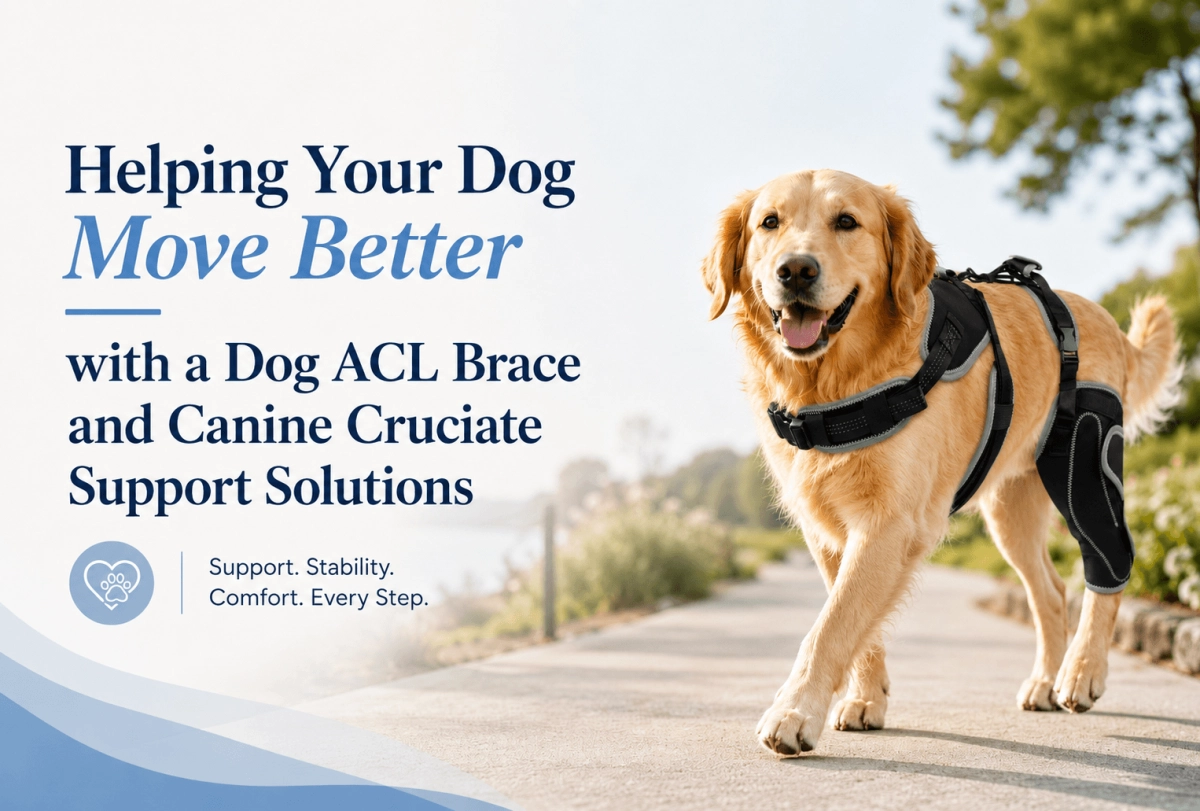
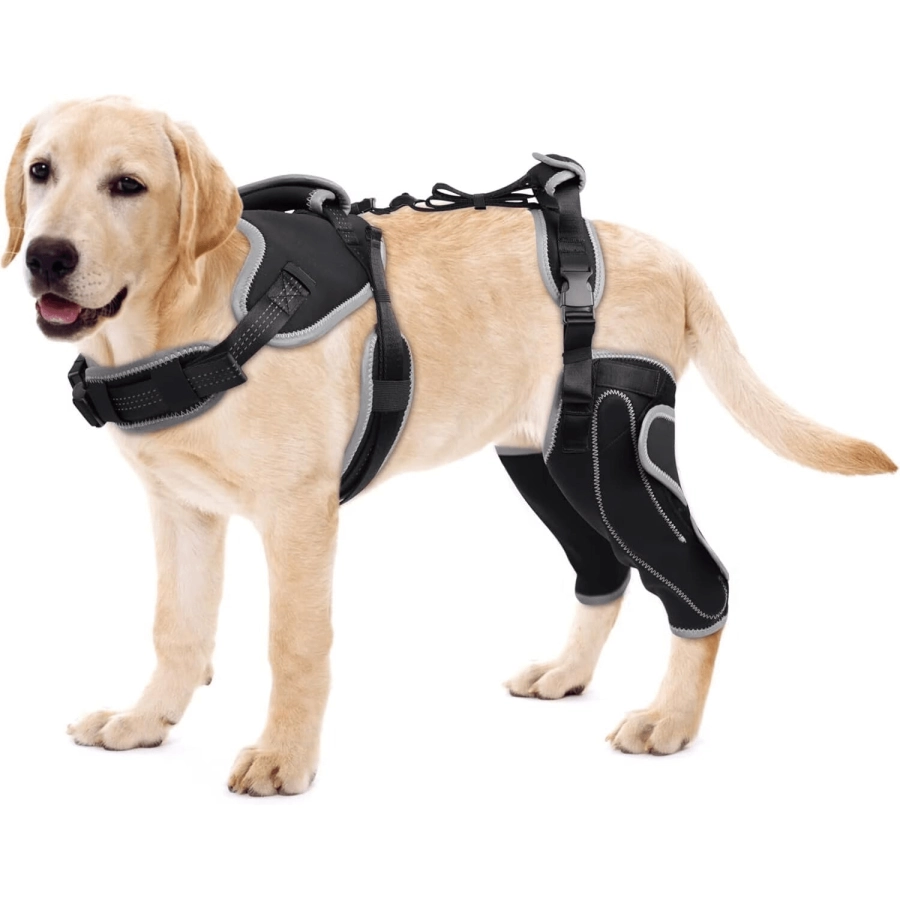
A stifle brace works when force travels where the joint expects it. It fails when force gets redirected. The difference turns on a detail most product descriptions skip: where the hinge sits relative to the stifle joint axis.
Align the hinge with the joint, and the brace transmits load along the femur-tibia axis — the same path a healthy cranial cruciate ligament follows. Offset the hinge by half an inch, and the brace pushes the joint into a trajectory it was never built to take. The dog compensates. Muscles guard. The brace becomes a resistance device rather than a support device.
That hinge-to-joint relationship is what separates a dog ACL brace that lets a dog load the leg naturally from one that sits in a drawer after three days. Three other design details amplify or undermine it: strap configuration, material breathability, and how the inner contour matches leg geometry.
Why Hinge Position Matters More Than Strap Tension
Most buyers focus on strap tightness. They should focus on hinge placement.
A stifle joint rotates around a fixed axis — the point where the femur meets the tibia. When a brace hinge sits directly on that axis, compressive force runs straight through the joint. The femur loads the tibia the way it was designed to. The brace does not fight the dog's natural stride; it rides it.
When the hinge sits even slightly above or below the joint line, the mechanics change. The brace hinge now creates a lever arm relative to the joint center. Every step the dog takes, the brace torques the tibia forward or backward relative to the femur. Instead of stabilizing the joint, it introduces a shear component the damaged ligament cannot resist. The dog feels this immediately — it shortens its stride, shifts weight to the other leg, or refuses to move.
A half-inch matters. In a 40-pound dog, a hinge offset of half an inch above the stifle axis redirects roughly enough force to turn a supportive device into an irritant within a single walk. The brace still looks like it is on correctly. It just is not transmitting force correctly.
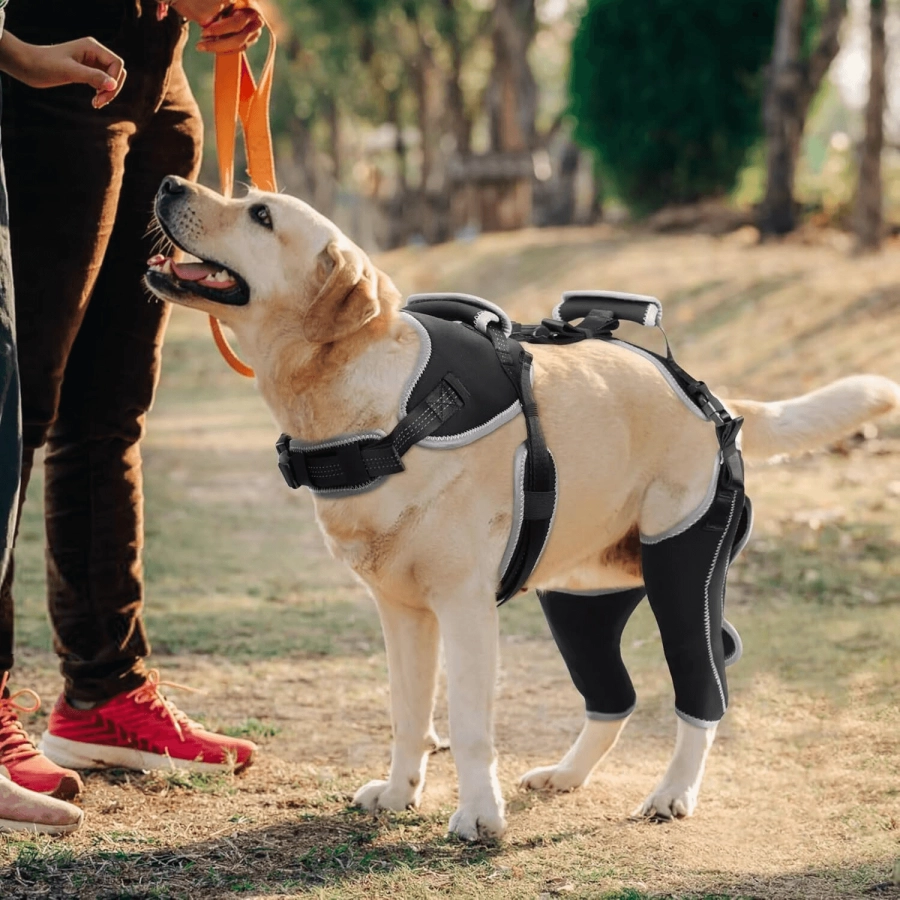
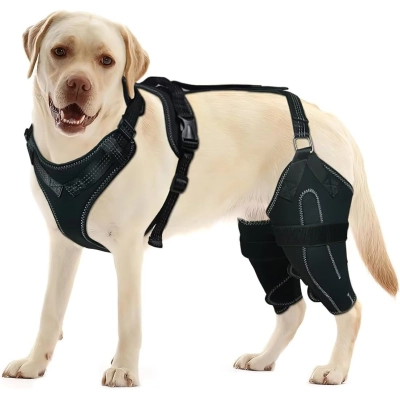
You can verify alignment without imaging. Watch the dog walk from the side. The hinge should stay centered over the stifle throughout the stride — not climbing up the thigh during extension, not dropping toward the tibial crest during flexion. Movement of the hinge relative to the joint means misalignment. A correctly positioned hinge stays locked on the joint regardless of leg angle.
This is not about how tightly the straps are cinched. A loose brace with perfect hinge alignment supports better than a tight brace with the hinge in the wrong place. Tightness cannot compensate for redirected force.
Strap Design: How Width and Placement Control Pressure, Not Just Grip
Straps do two jobs. They keep the brace from migrating. And they distribute stabilizing force across the leg. Most straps handle the first job passably. Most fail the second.
The physics is straightforward. Force divided by area equals pressure. A narrow strap concentrates the same stabilizing load onto a smaller patch of skin. A wide strap spreads it. That difference determines whether the dog develops red marks after an hour or tolerates the brace through a full day.
But width alone is not enough. Placement matters more. A wide strap that crosses over the tibial crest — a bony ridge with minimal soft tissue coverage — still creates a pressure point. The force cannot distribute into bone the way it distributes into muscle. The solution is not a wider strap; it is a strap that avoids bony prominences entirely. The best strap layouts route the proximal strap through the thigh muscle belly and the distal strap above the hock, leaving the tibial crest clear.
Strap configuration also determines whether the brace stays put during movement. A dog knee brace with two straps spaced far apart resists rotation better than one with three straps clustered near the joint center. The wider the distance between anchor points, the longer the lever arm resisting twist. Three tightly grouped straps can still let the brace spin around the leg. Two well-spaced straps rarely do.
Check strap performance directly. After 20 minutes of walking, remove the brace and run a finger along the skin where each strap sat. Red lines at the edges of the strap impression signal migration — the brace walked up or down the leg during use. Isolated red spots, especially over bone, signal concentrated pressure. Neither should appear on a brace with correctly sized and placed straps. Redness that fades within five minutes is normal skin response. Redness that persists past ten minutes means the strap is working against the leg instead of with it.
Where a Stifle Brace Works, and Where It Does Not
A stifle brace is not a universal knee solution. Its design assumes certain conditions. When those conditions hold, it performs. When they do not, no amount of strap adjustment fixes the mismatch.
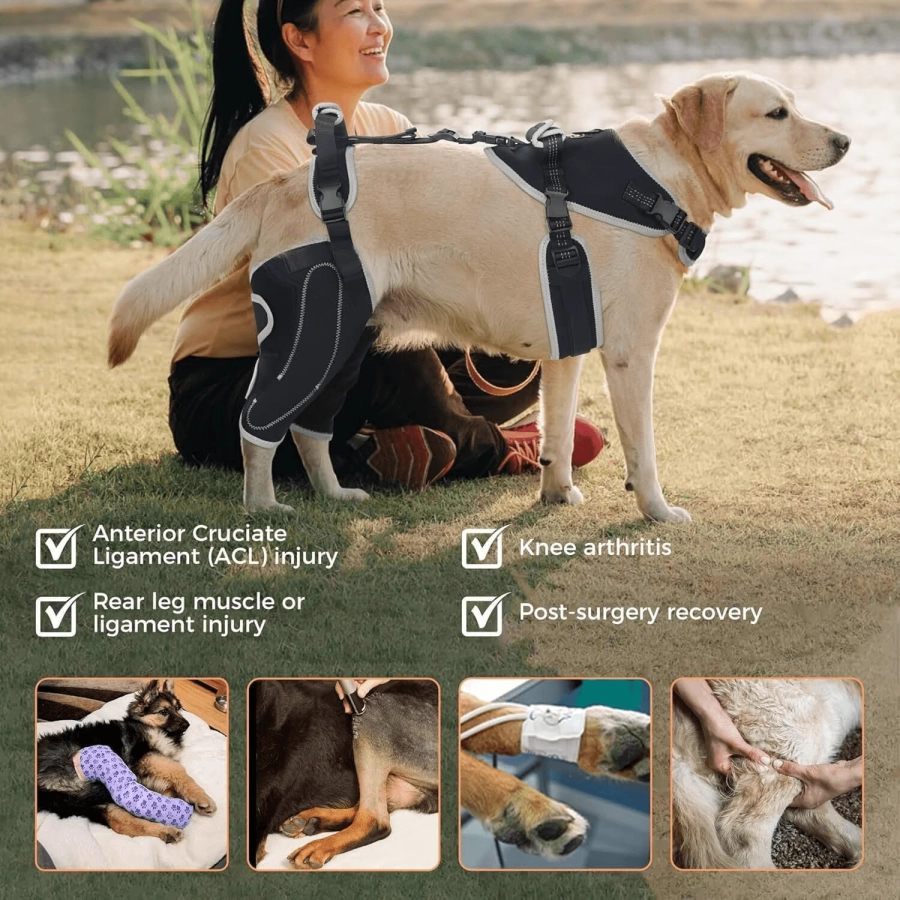
The brace works best when the stifle retains some native stability. In a partial CCL tear, the ligament still provides residual restraint — the brace adds external support to what the joint already has. The two systems work in parallel. In post-surgical recovery, the repaired joint has structural integrity but needs controlled loading; the brace limits the range and speed of tibial translation while the dog rebuilds muscle. For senior dogs where anesthesia risk outweighs surgical benefit, the brace provides enough external stability to make daily movement safer even if it cannot fully compensate for a complete tear.
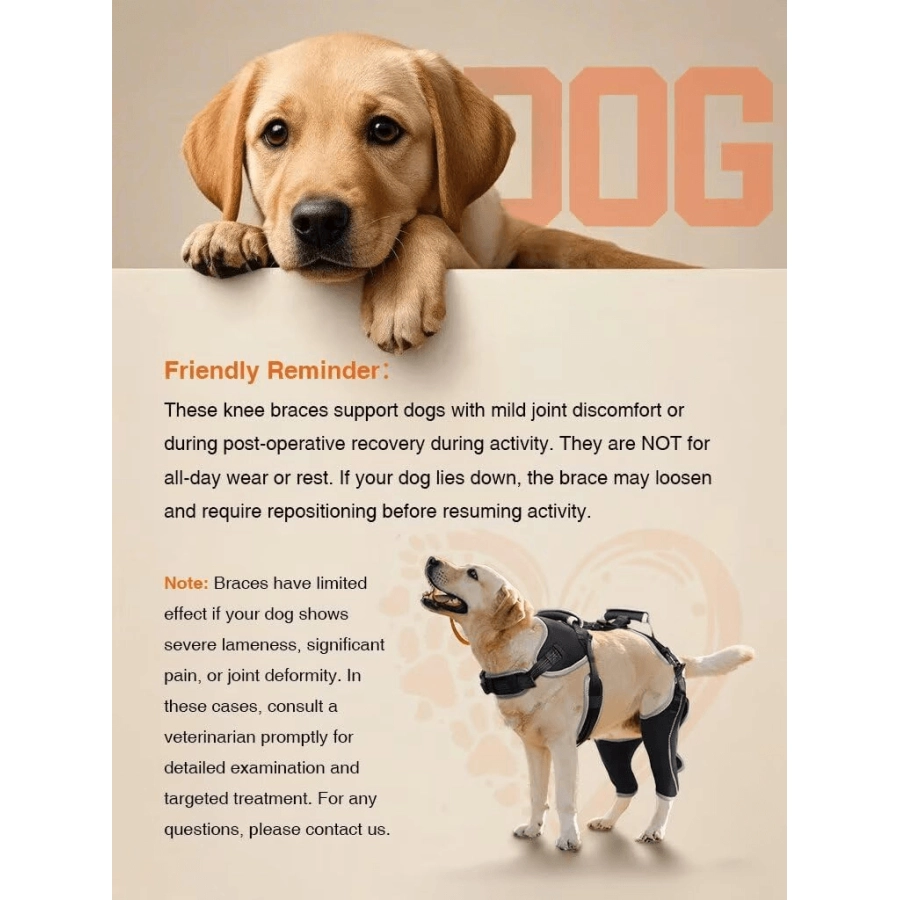
It works poorly under conditions that violate the brace's geometric assumptions. A complete CCL rupture with gross drawer motion — where the tibia slides freely forward under the femur — exceeds what external bracing can restrain. The brace can slow the translation, but it cannot stop it. Dogs with angular limb deformities present a different problem: the brace is patterned on standard stifle conformation, and a leg that curves inward or outward changes where the hinge sits relative to the joint. What measures as correct alignment on a straight leg becomes an offset on a bowed one.
Very small dogs introduce a different limitation. Below roughly ten pounds, the bulk of even a minimal hinged brace can interfere with gait mechanics more than the instability it is meant to correct. The brace's mass relative to the dog's leg mass changes the swing phase of each stride, and the dog works harder to move the brace than it saves from the added stability.
Disclaimer: This fit assessment assumes a dog with standard stifle conformation. Breeds with deep chests and narrow hips — particularly sighthounds — may show different pressure patterns because thigh muscle distribution changes where straps naturally settle. Dogs with angular limb deformities or prior femoral or tibial surgery that altered leg geometry may require a different set of fit checks entirely. If the dog's leg shape falls outside breed norms, the pressure-point checks described here may miss contact areas that form only during full weight-bearing at a trot.
Material, Lining, and the Details That Decide Daily Wear
A brace that supports well but irritates skin gets removed. The owner takes it off. The dog learns to resist it. The design advantage — however real — never reaches the joint.
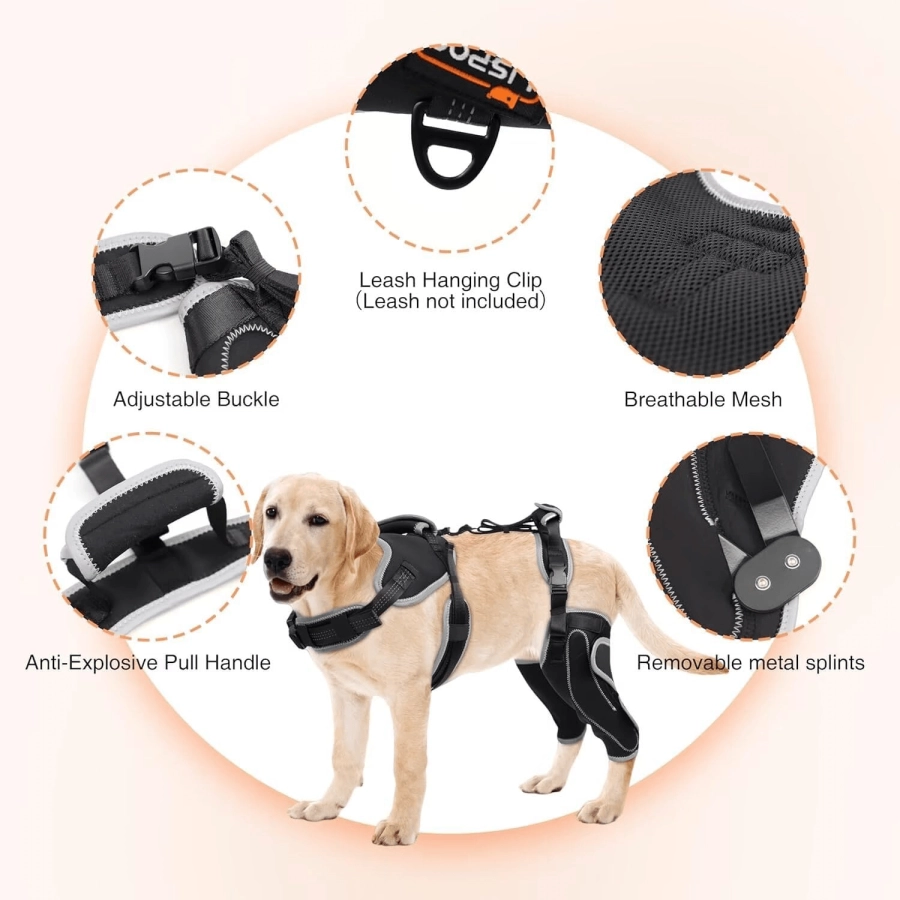
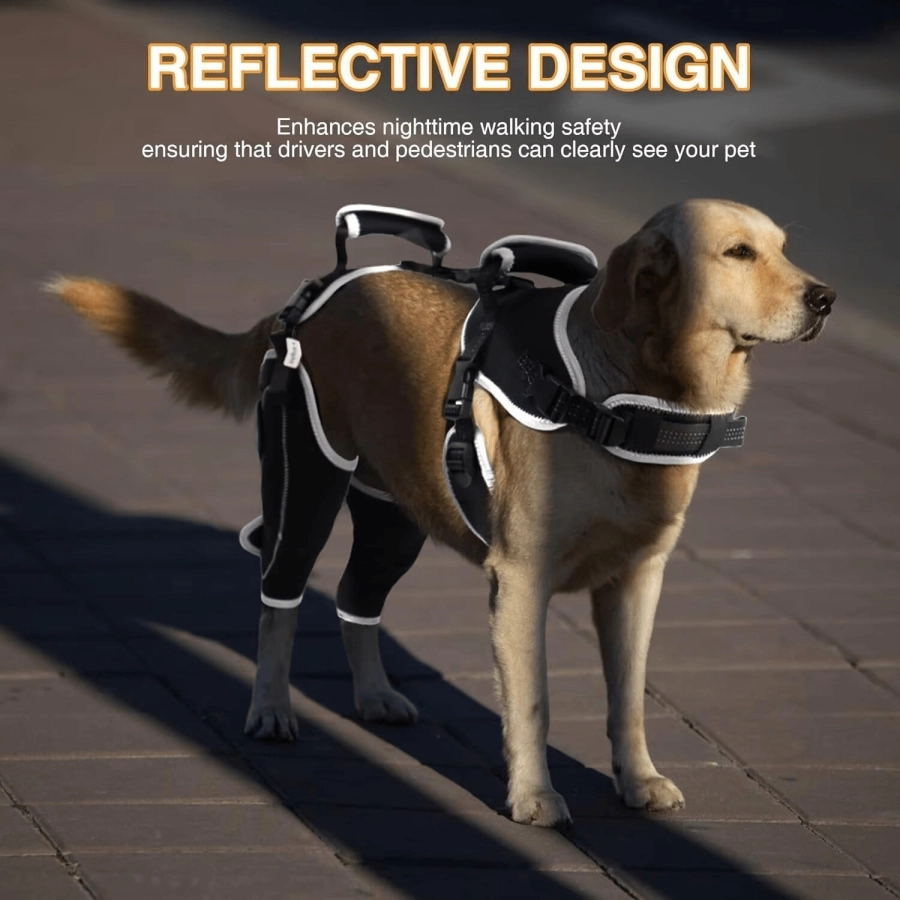
Material breathability sets the baseline for how long a brace can stay on. Neoprene provides even compression and holds shape through repeated loading, but it traps heat. After 45 minutes, skin temperature under unbacked neoprene rises enough to trigger panting in most dogs — not from exertion, from thermal discomfort. Mesh-backed neoprene or perforated panels drop that temperature rise by allowing evaporation. The tradeoff is structural: perforations reduce the brace shell's resistance to stretch over time. A brace that breathes well may need earlier strap retightening across its service life than one that seals completely but runs hotter.
The inner lining determines whether the brace stays put during movement. A flat liner slides against the dog's coat. A contoured liner — one shaped to the thigh's taper and the stifle's natural recess — resists migration because it has a mechanical key into the leg's geometry, not just friction. The difference is visible: a flat-lined brace drifts downward within the first ten minutes of a walk on most short-coated dogs. A contoured liner typically holds position through a full session.
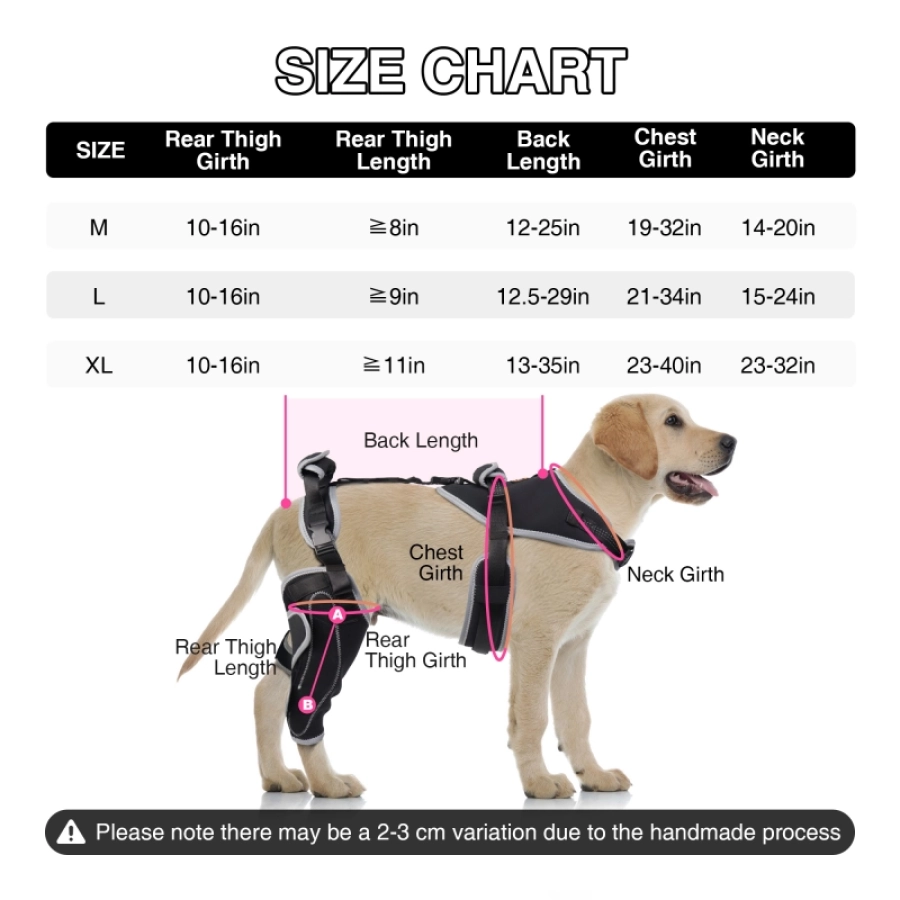
Size labels are a starting point, not a guarantee. Two dogs with identical stifle circumference can have different thigh taper, different hock-to-stifle length, different muscle distribution. A dog brace sized by circumference alone fits one and frustrates the other. The measurement that matters most for stifle brace fit is not circumference — it is the distance from the tibial crest to the hock. This length determines where the distal strap anchor sits, which in turn determines whether the hinge can stay on the joint axis through a full stride. If that distance is wrong, the brace will migrate no matter how precisely the circumference matches.
For dogs recovering from or managing a cruciate injury, understanding how braces support an ACL-injured stifle starts with these mechanical details — not with brand names or price points. The design variables that actually change outcomes are hinge alignment, strap placement, liner contour, and material breathability. Everything else is secondary.
FAQ
How long before a dog adjusts to wearing a stifle brace?
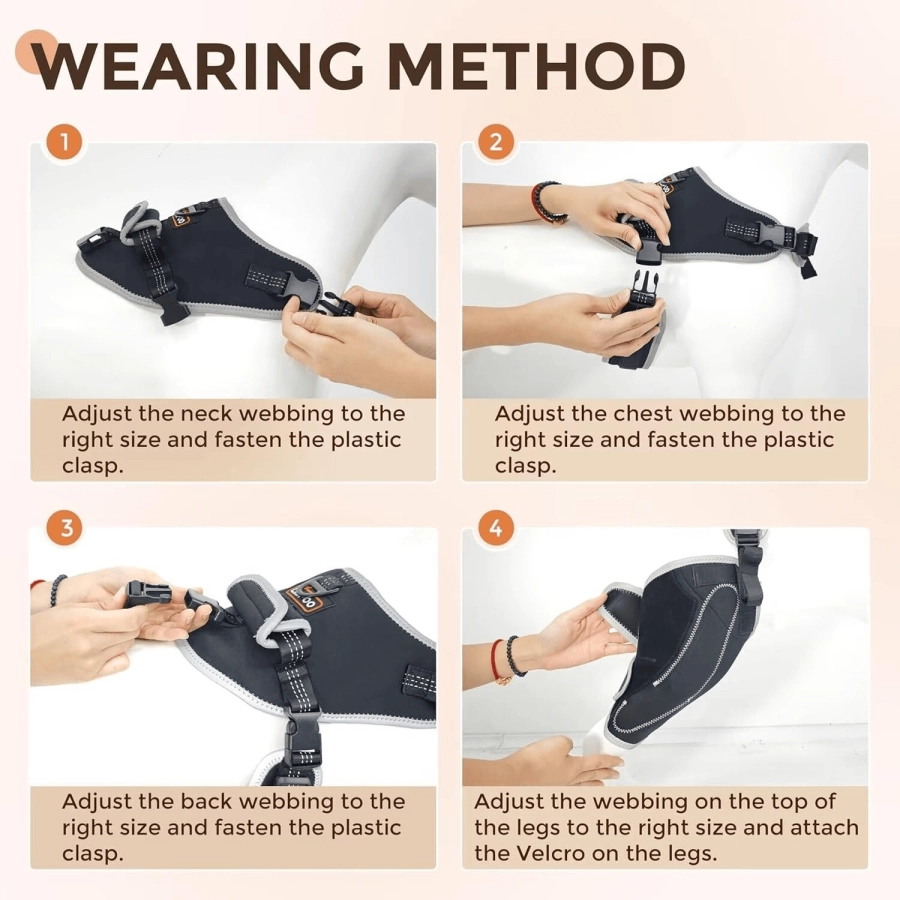
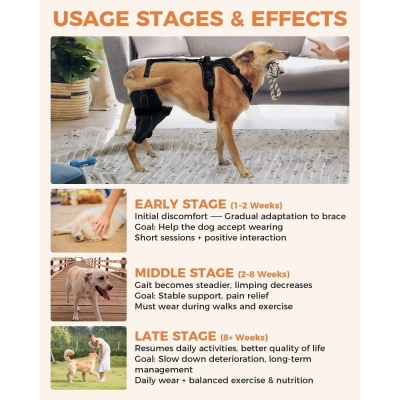
Most dogs accept a well-fitted brace within three to five short sessions. Start with ten minutes indoors, no leash, no stairs. Add ten minutes each session. A dog that resists beyond the fifth session is usually reacting to fit discomfort — check for hinge drift, strap pressure marks, or liner bunching behind the knee. Adjustment problems are rarely behavioral when the brace fits correctly.
Can a stifle brace be worn during unsupervised activity?
No. The brace limits tibial translation during controlled movement, but it cannot prevent the kind of explosive rotation that happens when a dog sprints after a squirrel or jumps off a couch. Unsupervised wear also removes the owner's ability to check skin condition and strap position mid-session. The brace is a managed-use device, not a set-and-forget solution.
What is the most common reason a stifle brace fails to help?
Hinge misalignment. When the hinge sits above or below the joint axis, the brace redirects force instead of transmitting it. The dog compensates by shortening its stride or refusing to load the leg. Owners often mistake this for the dog "not liking the brace." It is usually a geometry problem, not a preference problem.

0 Comments