
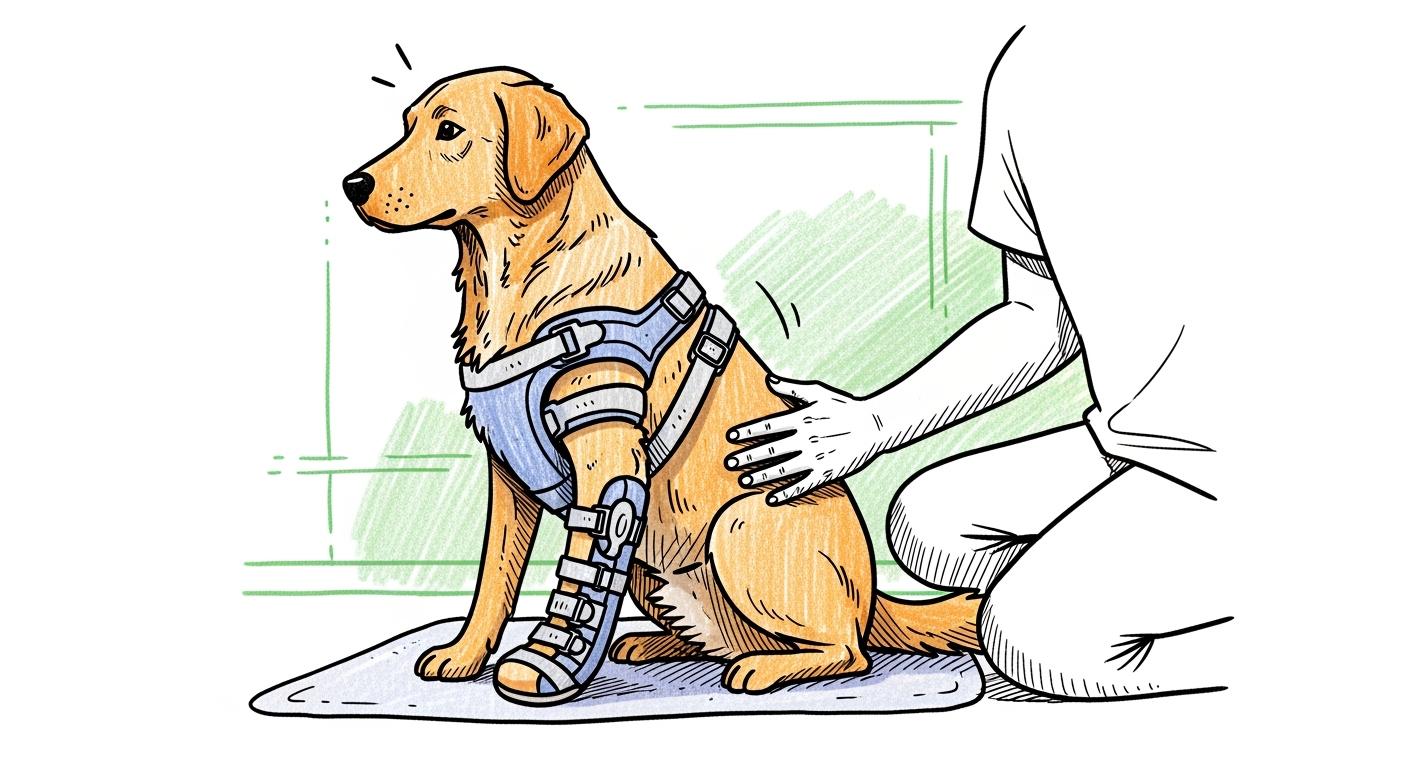
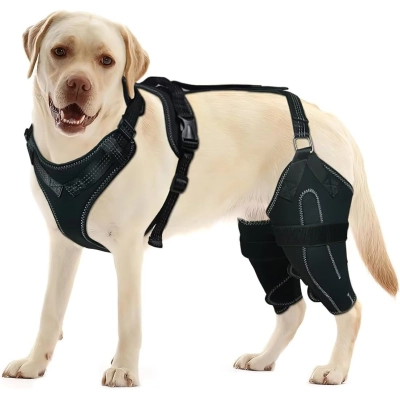
A stifle brace does not work by being tight. It works by being aligned. The hinge sitting at the joint axis level — not above it, not below it, not rotated a few degrees off — decides whether force runs straight through the joint or veers sideways into soft tissue. Most dogs with a CCL tear or patellar instability do not need more compression. They need a hinge that tracks the bending point their own joint would use if it could still stabilize itself.
Strap tightness is the variable owners reach for first. It is also the one that causes the most problems. Cinching straps harder does not correct a misaligned hinge. It just concentrates the same misdirected force over a smaller contact patch, which is how skin breaks down and how a dog learns to hate the brace within three days. The two design features that actually separate a brace that gets worn from one that gets abandoned are hinge-axis alignment and strap force distribution. The rest of this article traces both through the stifle joint.
Why Hinge Placement Matters More Than How Tight the Straps Are
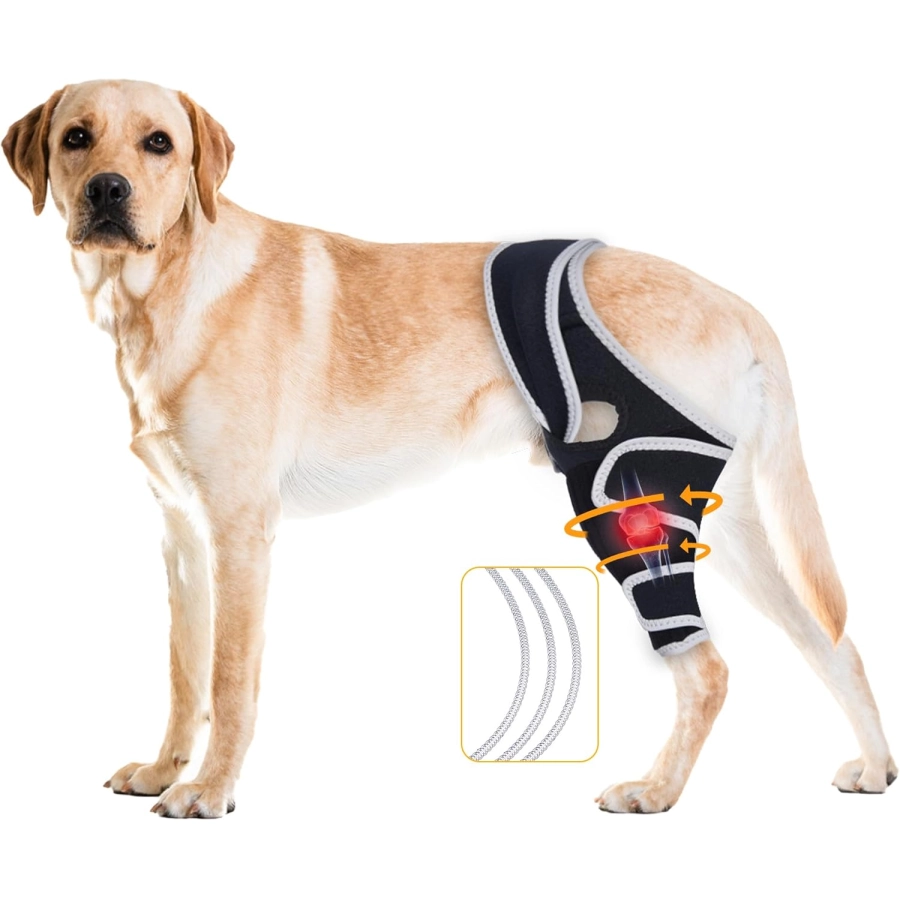
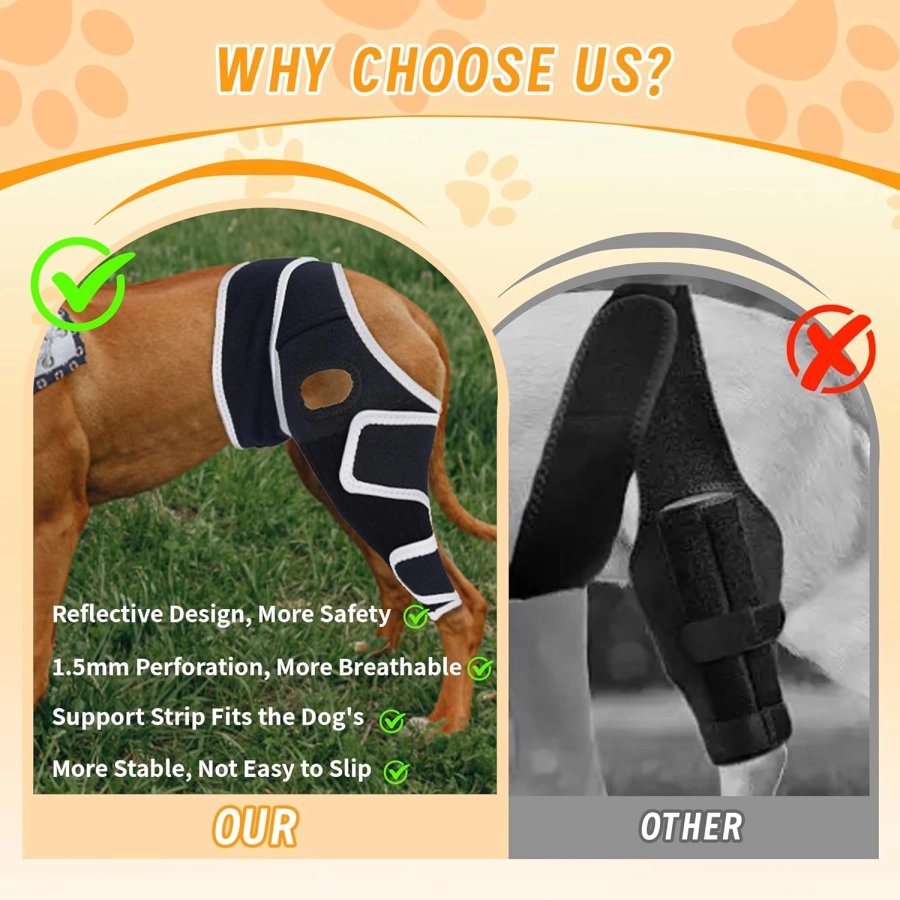
The stifle is not a simple hinge. It rolls and glides as it flexes — the femur condyles translate across the tibial plateau while rotating. A brace hinge attached to a flat side bar can only pivot in one plane. If that single-plane pivot sits at the wrong height relative to the joint line, every step the dog takes creates a mismatch angle: the knee wants to move along a path the hinge does not follow. The result is not just reduced support. The result is shear across the joint capsule and concentrated pressure where the hinge gap pinches skin.
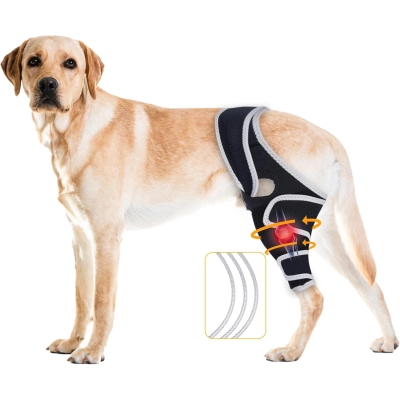
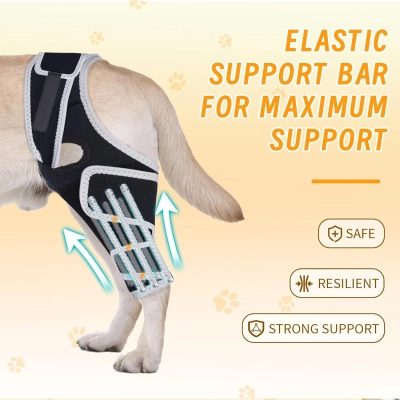
Here is the causal chain that explains why this matters. When the hinge center sits directly over the stifle joint axis, the brace side bars and the dog's femur and tibia form a single mechanical linkage. Load travels from the thigh cuff, down the lateral bar, through the hinge, and into the lower leg along a straight structural path. The joint itself absorbs minimal shear because the brace's pivot absorbs the rotation the joint would otherwise fight. When the hinge sits even half an inch above or below the joint line, that linkage breaks into two separate segments. The upper bar pushes the femur while the lower bar pulls the tibia — and the mismatch angle between them creates a lateral force vector that the CCL, already compromised, must resist. The brace in that configuration is not neutral. It is adding load to the injury it is supposed to offload.
This is observable without instruments. After a 10-minute walk on flat ground, slide two fingers under the thigh cuff and the calf cuff. If the hinge has been tracking correctly, the cuffs stay at the same height they started at — the brace has not migrated. If the hinge sits too high, the thigh cuff rides up toward the hip. If too low, the calf cuff slides toward the hock. Migration within a single walk signals a hinge-axis mismatch, and no amount of strap tightening fixes it.
This alignment requirement also explains why a knee brace for ACL recovery cannot be treated as a one-size wrapper. The hinge-to-joint distance varies by breed, by leg length, and by muscle mass. A brace designed with multiple hinge-positioning slots or an adjustable bar length lets the fitter move the pivot to where the dog's actual joint sits rather than forcing the dog's leg to conform to where the manufacturer assumed the joint would be.
Strap Width and the Difference Between Holding and Supporting
A narrow strap concentrates force. A wide strap distributes it. This is not a comfort preference — it is a mechanical difference that determines whether the brace stabilizes the joint or just squeezes the leg.
When a strap is half an inch wide and cinched tight enough to keep the brace from sliding, the pressure under that strap can exceed capillary perfusion pressure in the skin. Blood flow at the contact line drops. The skin underneath, deprived of oxygen and subjected to friction with every step, starts breaking down within hours. A dog that licks at a specific strap line is not being difficult. The strap is creating ischemia at that contact patch.
A strap that is one and a half to two inches wide distributes the same retention force over three to four times the surface area. Capillary pressure stays below the threshold that shuts down perfusion. The brace stays in place, but the skin underneath continues to breathe and circulate. This is the difference between a strap that holds the brace on the leg and a strap that just chokes the leg while the brace still migrates.
The observable check here is simple. Remove the brace after 20 minutes of wear. Run a finger over the skin where each strap sat. If the skin feels cooler than the surrounding area, perfusion was compromised — the strap was too narrow for the tension applied, or the tension was too high for the strap width. If the skin is warm and dry, circulation stayed intact. Do this check at the first fitting session and repeat it after any strap adjustment. The result tells you more about whether the strap configuration works than any sizing chart can.
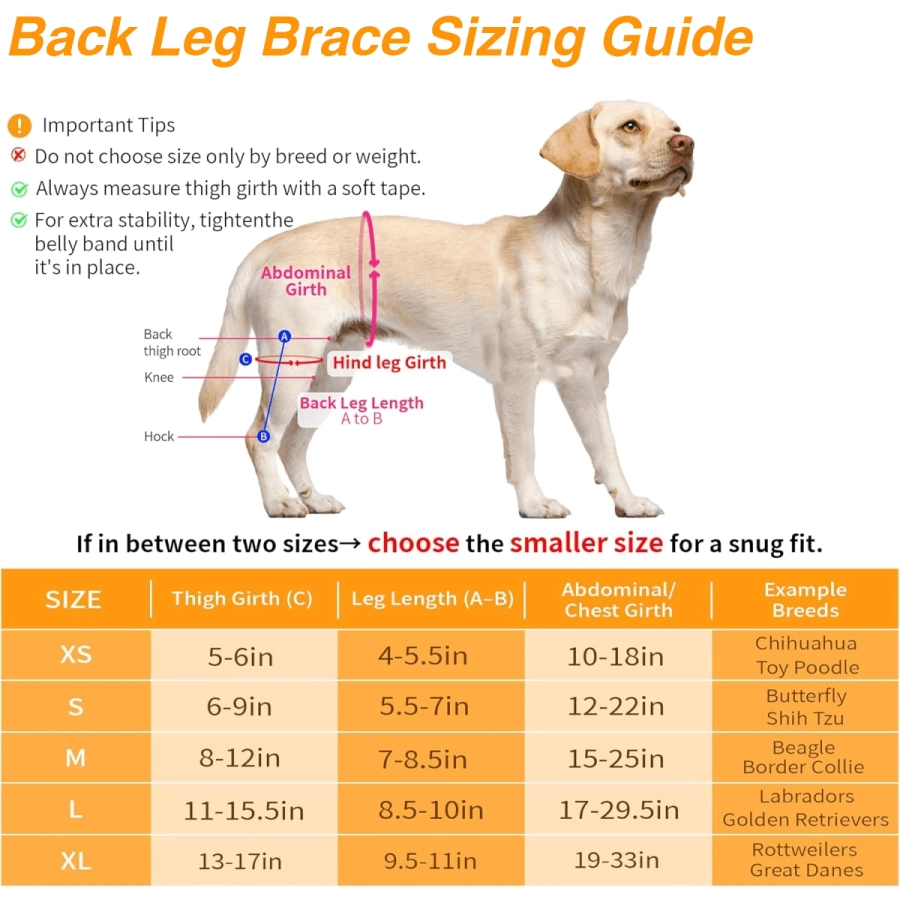
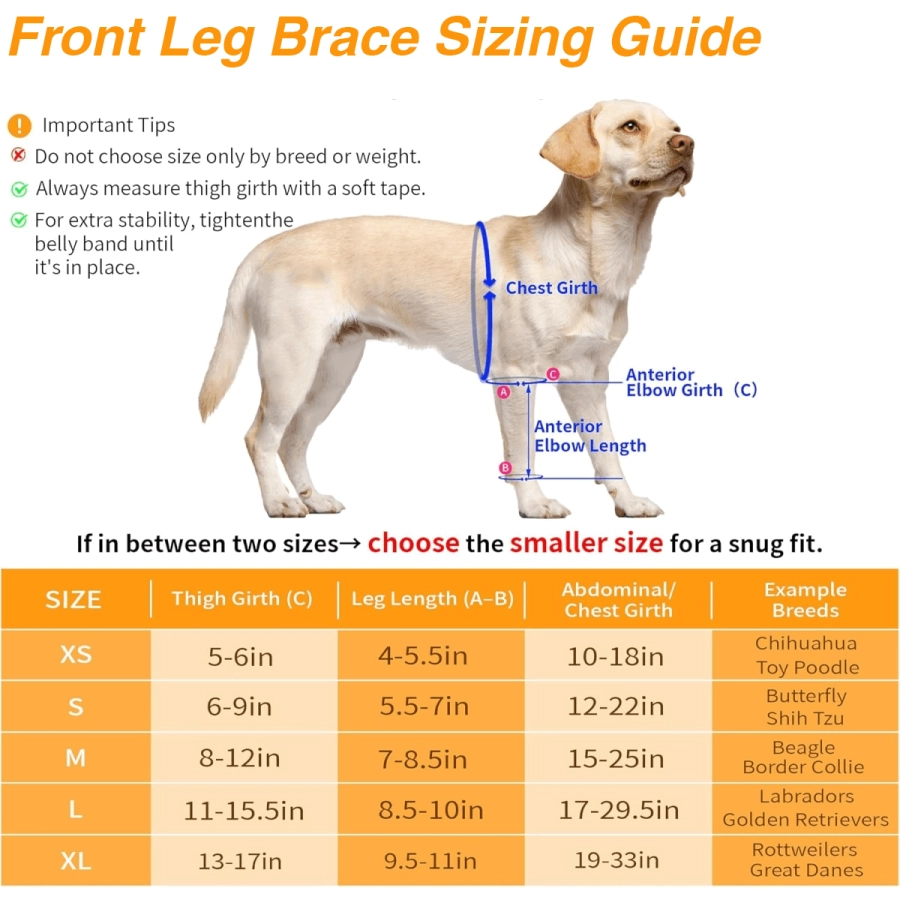
This is where sizing and adjusting a CCL brace intersects with strap design. A leg measured at three circumference points — thigh, stifle, and calf — can still get a poor strap match if the brace uses uniform half-inch webbing across all three anchor zones. The thigh, where muscle mass tapers, needs different strap mechanics than the calf, where the tendon profile is flatter and bonier. Braces that vary strap width by zone — wider at the thigh, slightly narrower at the calf — account for this, keeping retention force proportional to the surface each zone can tolerate.
Where a Stifle Brace Works — and Where It Does Not
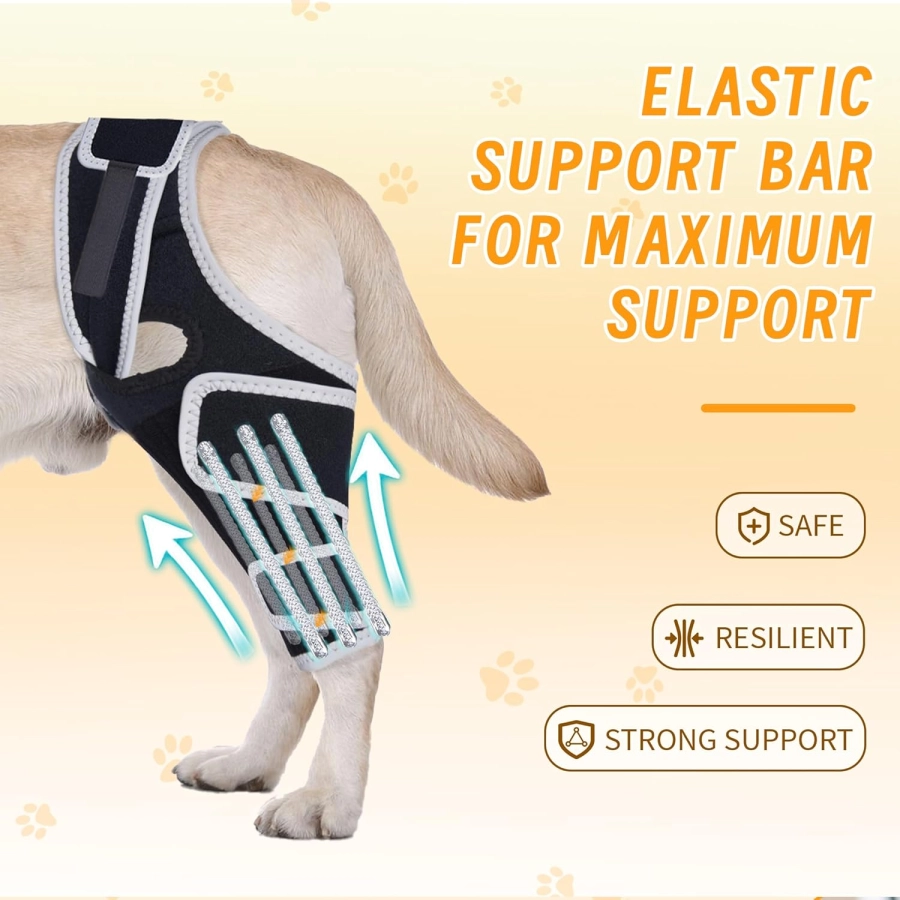
A stifle brace is built for a specific mechanical problem: instability in the sagittal plane. When the CCL is torn, the tibia slides forward relative to the femur during weight-bearing — a motion called cranial tibial thrust. The brace counters this by providing an external constraint that limits anterior translation of the tibia while still allowing flexion and extension. This works because the brace's hinge, side bars, and cuff system create a parallel load path that bypasses the damaged ligament.
This mechanism has clear boundaries. A stifle brace designed for cranial tibial thrust does not address medial-lateral instability from a ruptured collateral ligament. It does not correct rotational deformities from angular limb abnormalities. It does not realign a patella that luxates because the trochlear groove is too shallow — though patella support products can help stabilize the kneecap position when the underlying groove still provides some tracking. The brace can limit the mechanical consequences of the luxation, but it does not reshape bone.
The conditions where a stifle brace tends to perform best share a common profile: the dog has a partial or complete CCL tear without severe concurrent ligament damage, the leg conformation falls within breed-typical ranges, and the dog's activity level is moderate — walking, controlled leash exercise, and indoor mobility rather than sprinting or sharp cutting movements. ACL and CCL braces built around this profile concentrate their design on sagittal-plane constraint, which is where the largest destabilizing force lives.
Conditions where a stifle brace alone is unlikely to be sufficient include: complete multi-ligament stifle disruption, severe angular limb deformity where the mechanical axis already deviates significantly, deep chested breeds where the brace's proximal anchor point on the thigh sits at an angle that creates a torque the cuff cannot resist, and dogs whose activity requirements include high-impact directional changes. In these cases the brace can still offload some strain during controlled walks, but it cannot be the primary stabilization strategy.
Disclaimer: This assessment of suitable conditions assumes a short-coated dog where strap-related skin changes are visually detectable. Double-coated breeds — huskies, malamutes, chow chows, and similar — may develop rub marks underneath the undercoat that are not visible without parting the fur and checking by hand. The 20-minute temperature check described above still works regardless of coat type, but visual cuff-migration checks are less reliable on very thick coats. If the dog's leg conformation falls outside breed norms — particularly angular limb deformities or barrel-chested builds where the thigh angles outward — the fit checks described here may not catch every pressure point, and a fitting session with a rehabilitation specialist becomes more important.
Design Details That Shape How Many Hours a Dog Tolerates the Brace
Hinge alignment and strap width set the structural foundation. But three secondary design choices determine whether that foundation translates into a brace the dog wears for weeks rather than days.
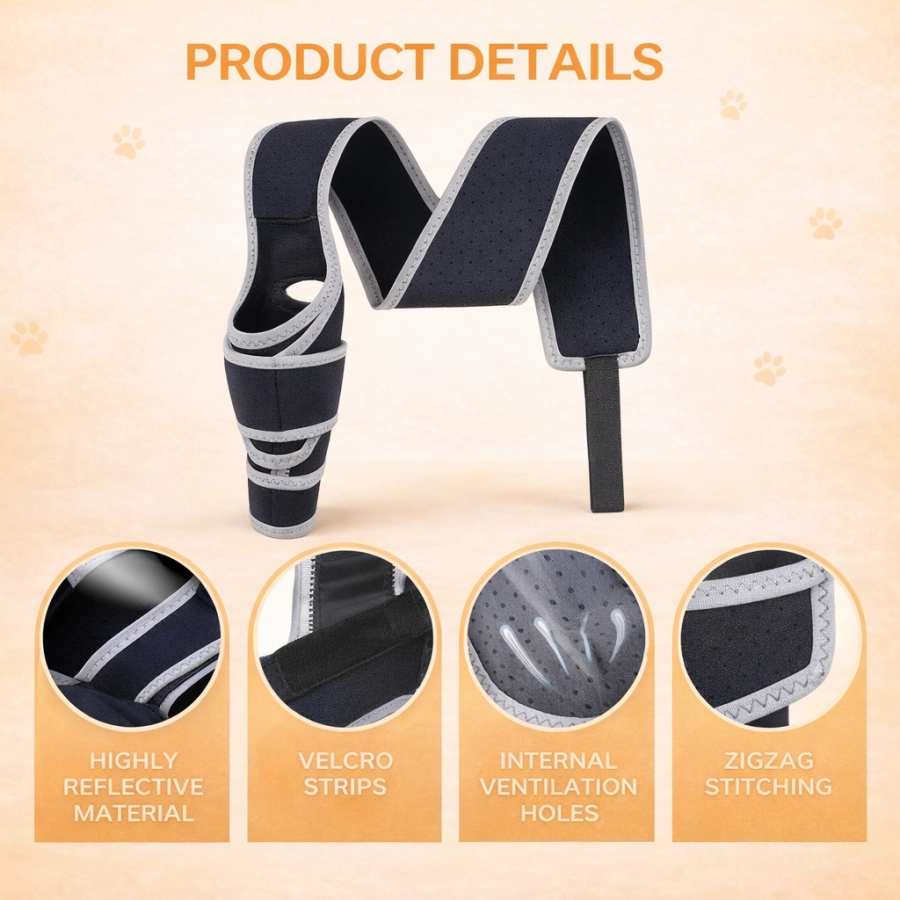
Liner material and moisture management. A neoprene liner that cannot wick moisture turns the brace interior into a wet, warm environment within 30 minutes of activity. Bacteria proliferate. Skin macerates. The dog starts licking at the brace edge not because the fit is wrong but because the skin underneath is breaking down from trapped moisture. A liner that uses a wicking inner face bonded to a thin closed-cell foam — pulling sweat away from the skin while maintaining cushion — keeps the interface dry enough for multi-hour wear. The distinction is invisible on a product page but obvious after one warm-weather walk: peel back the liner and check whether the skin is dry (wicking liner) or damp (non-wicking liner).
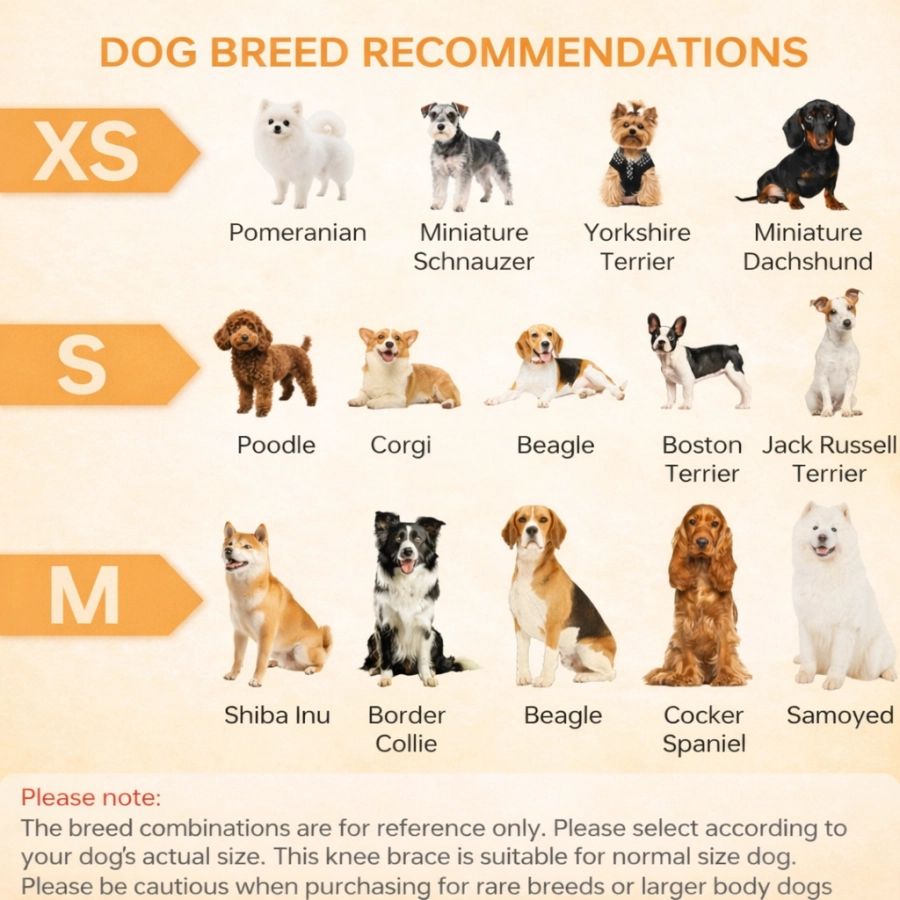
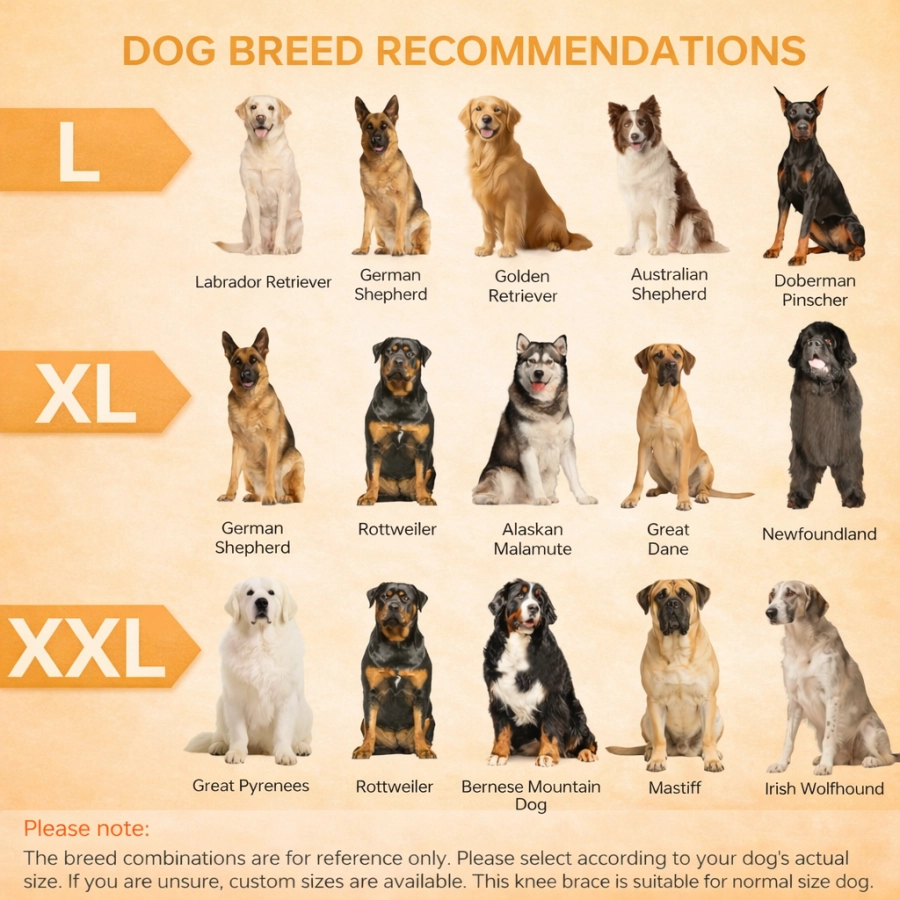
Sizing increments and the gap problem. A brace offered in three sizes — small, medium, large — covers a circumference range per size that can span four to six centimeters. A dog whose leg falls at the bottom of a size range gets a brace that is too loose even at maximum strap tension. A dog at the top of the range gets pressure hot spots. Dog knee braces with five or more sizing increments cut the per-size gap roughly in half, which means fewer dogs fall into the loose-too-tight limbo between sizes. This matters most for breeds with lean, tapered legs — greyhounds, whippets, and similar — where the thigh-to-calf taper is steep and a small mismatch in circumference creates a large fit gap at one end of the brace.
Strap anchor reinforcement. The point where a strap attaches to the brace shell is the highest-stress junction on the entire device. Every step cycles tension through that stitch line. A single row of straight stitching under repeated cyclic loading fails by stitch elongation — the thread stretches, the hole enlarges, the strap loosens incrementally over days until the brace no longer holds its position. Double-row box-stitched anchors spread the cyclic load across two parallel seam lines, halving the per-stitch tension and roughly doubling the cycle count before any measurable elongation occurs. This detail is not visible in a product photo, but it is the difference between a brace that holds its fit for weeks versus one that needs strap re-tensioning every few days.
Braces for dogs with ACL injuries that incorporate these three details — moisture-wicking liner, narrow sizing increments, and reinforced strap anchors — tend to stay on the dog's leg through the full prescribed wear period. Those that skip them tend to accumulate friction points, moisture breakdown, and fit drift, all of which show up as the same owner complaint: "the dog will not keep it on." The dog is not being stubborn. The design failed first.
The interaction between these details compounds over time. A well-aligned hinge with poor liner material eventually loses wear compliance because skin breakdown forces removal. Good liner material with oversized sizing increments creates pressure points that cause the same outcome along a different path. Rear leg braces that get all three right — alignment, distribution, and material — are the ones a dog stops noticing after the first week. That absence of reaction is the real performance metric. A brace the dog forgets is working. A brace the dog licks at, chews at, or limps in is broadcasting that one of these design chains broke.
The interplay among hinge alignment, strap width, liner material, and sizing precision means no single feature alone determines whether the brace succeeds. But the failure of any one of them is often enough to make the whole brace fail. That is what separates a knee brace that supports small breeds and seniors from one that ends up in a drawer: not whether it looks supportive, but whether the design details stack in a way that survives daily wear, dog movement, and the accumulated hours that recovery actually requires.
Leg braces built around these mechanical priorities — joint-axis alignment first, distributed retention second, interface materials third — tend to produce the outcome owners are actually looking for: a dog that moves with less compensation, tolerates the brace through the full wear schedule, and rebuilds activity tolerance without the brace itself becoming the new problem.
FAQ
How long does a dog typically wear a stifle brace each day?
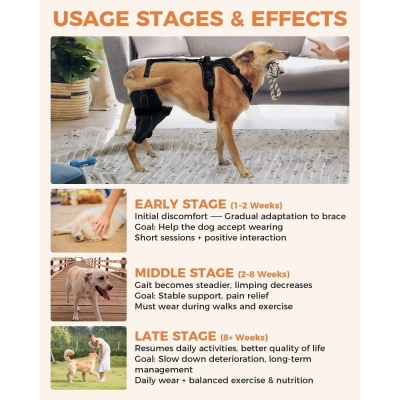
Most dogs start at 15 to 20 minutes per session and build toward several hours of cumulative daily wear over one to two weeks. The limiting factor is usually not joint tolerance but skin tolerance — the liner and strap interface need time to condition. If the 20-minute skin-check described above shows cool or damp skin, cut the session shorter rather than tightening anything.
What tells you the hinge is positioned correctly versus incorrectly?
A correctly positioned hinge stays level with the stifle joint through the full stride. After a 10-minute walk, the cuffs on both thigh and calf should sit at the same height they started at. If the thigh cuff migrated upward or the calf cuff slid downward, the hinge is not tracking the joint axis — it is above or below it, and the migration distance tells you roughly how far off it is.
Can a stifle brace be worn during outdoor activity or wet conditions?
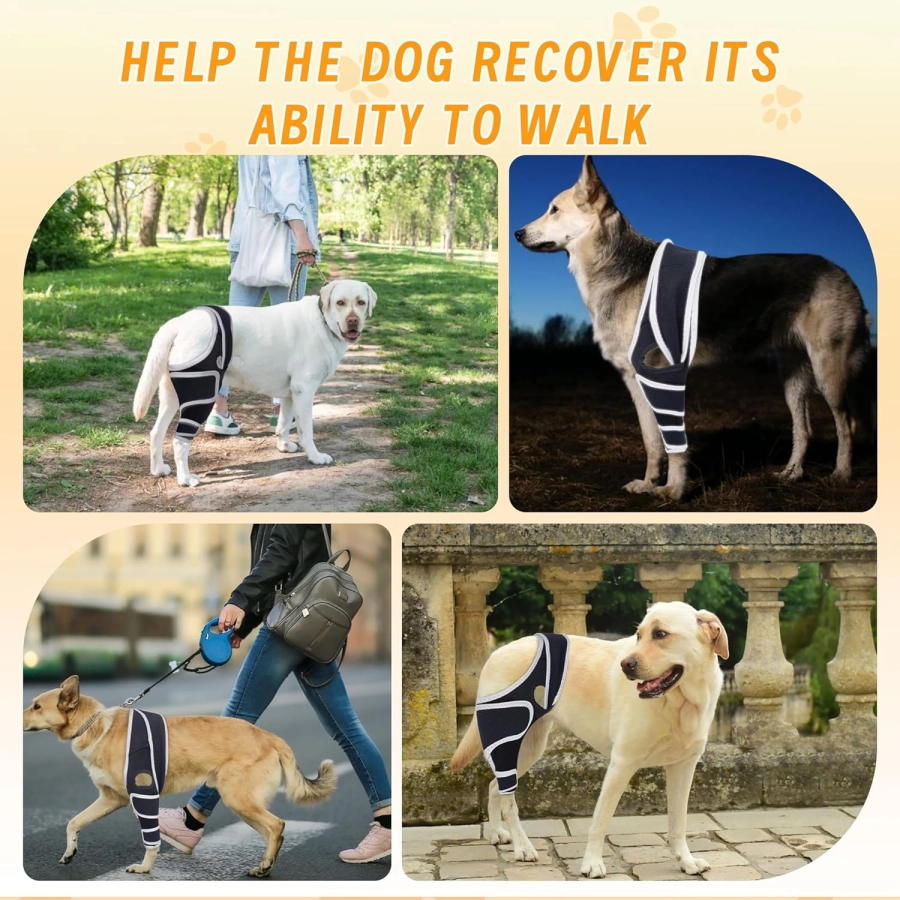
Yes, provided the liner is moisture-managing — a wicking inner face bonded to closed-cell foam rather than open-cell neoprene that absorbs water. After wet use, remove the brace, wipe the liner dry, and let it air out fully before the next wear session. A brace put back on before the liner is dry creates the same warm, wet interface that breaks skin down fastest.
Does a dog outgrow the need for a stifle brace?
For partial CCL tears managed without surgery, some dogs transition off the brace as scar tissue stabilizes the joint and muscle strength returns — a process that can take weeks to months. For chronic conditions or complete tears managed conservatively, the brace may remain part of the dog's daily support indefinitely. The decision turns on whether the joint can resist cranial tibial thrust without the external load path the brace provides.
0 Comments