
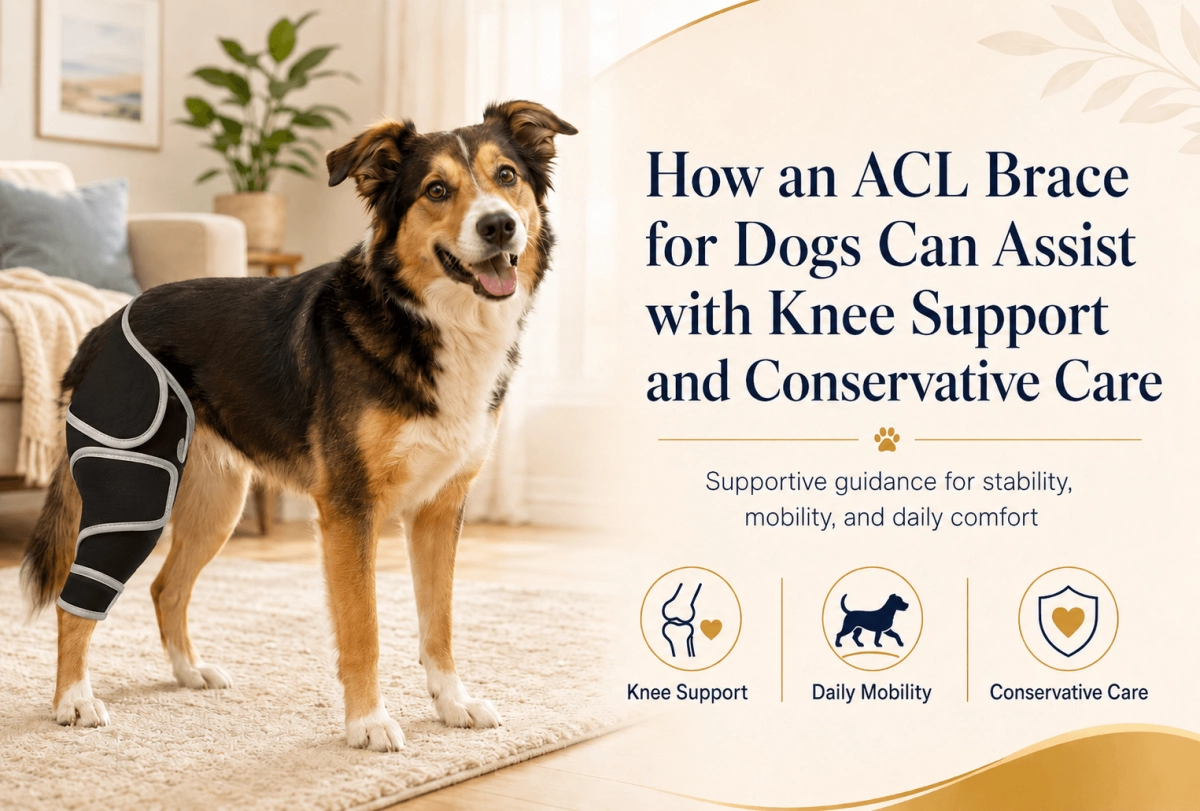
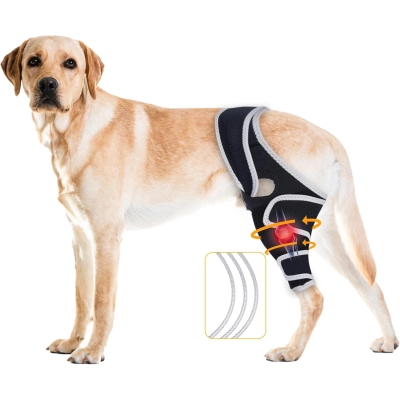
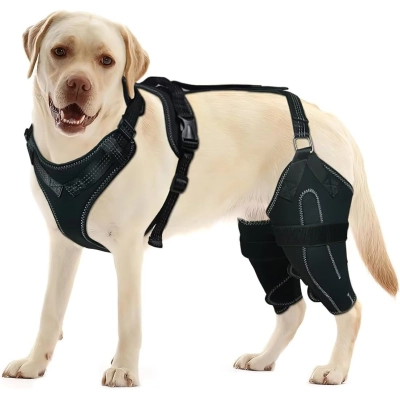
A dog favoring one leg. A hitch in the stride that was not there last week. The knee joint depends on a ligament the diameter of a pencil to keep the femur and tibia aligned during every step, jump, and turn. When that ligament stretches or tears, the joint loses its primary stabilizer. An acl brace for dogs steps into that role—but whether it actually stabilizes the knee or just wraps it in fabric comes down to two design details most product pages never mention.
Hinge placement. And strap width.
Hinge Alignment Is What Separates Stabilizing Force From Torque
The stifle joint is a hinge. It opens and closes in one plane. The femur and tibia meet at a contact point, and the cranial cruciate ligament runs through the joint to prevent the tibia from sliding forward during weight-bearing. When that ligament fails, the tibia translates forward with every step—a motion called cranial tibial thrust.
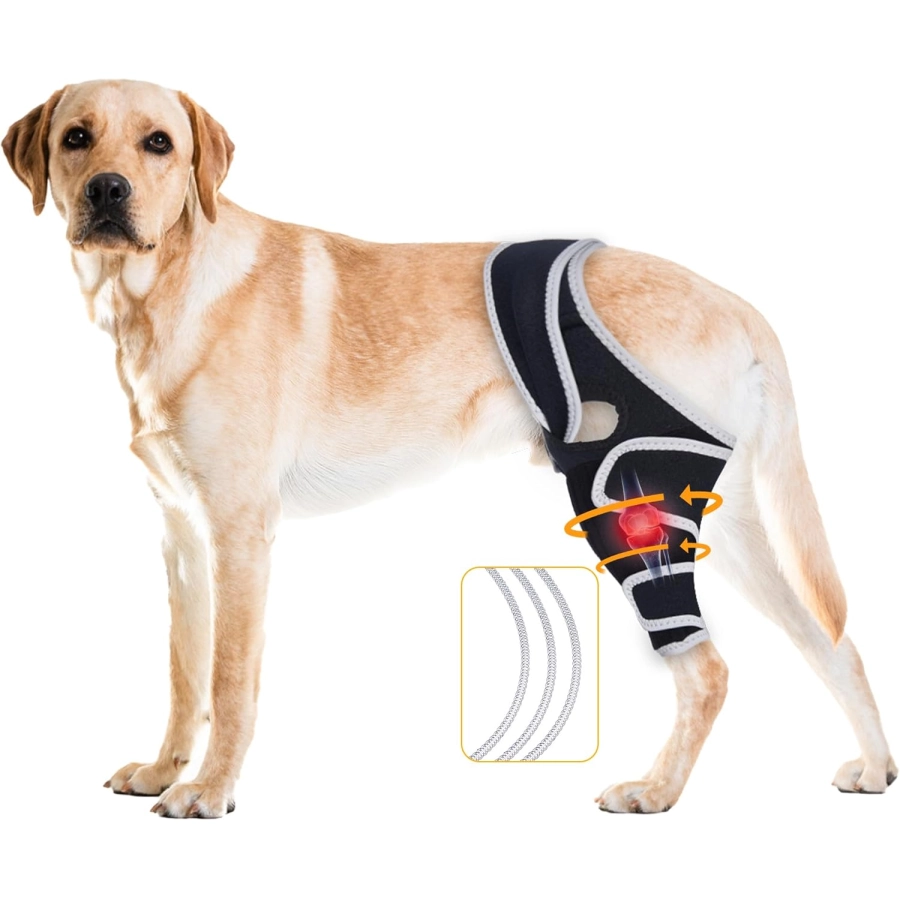
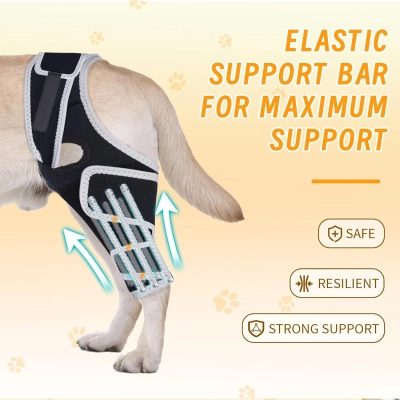
A brace can counteract that thrust, but only if its hinge tracks the same axis as the joint it is bracing. When the mechanical hinge sits directly over the anatomical joint axis, the resistive force travels in a straight line from the brace frame through the femur and tibia. The joint surfaces stay evenly loaded. The dog's gait stays close to natural because the brace is not fighting the leg's preferred motion path.
Miss that axis by half an inch and the physics flips. The brace hinge and the joint hinge now rotate around two different centers. Every step generates torque—a twisting force—at the interface between brace and leg. The dog compensates by altering its gait, which loads the contralateral leg unevenly and can irritate the soft tissues under the brace straps. The brace slides. The owner tightens the straps. The cycle accelerates.
You can see this without instruments. Watch the dog walk twenty steps on a flat surface. Keep your eyes on the brace hinge relative to the knee. If the hinge stays centered—visibly tracking the bony prominence of the femoral condyles through the full stride—the alignment is working. If it drifts forward during extension or slides back during flexion, the two axes are fighting each other. No amount of strap tension fixes that.
This is why hinge position matters more than how rigid the frame is. A simpler dog knee brace with a well-placed single-axis hinge will outperform a heavily reinforced one where the hinge sits too high or too low. The design win is not more material. It is better placement.
Strap Width Decides Whether the Brace Stays On or Gets Kicked Off
A brace works by transferring stabilizing force from its frame into the dog's leg. Straps are the interface. Their job is to keep the brace anchored without creating the kind of localized pressure that makes a dog chew at the brace or the owner stop using it.
Narrow straps concentrate force. A half-inch strap under ten pounds of tension delivers roughly twenty pounds per square inch to the skin beneath it. That pressure compresses capillaries, traps moisture against the epidermis, and within a week produces the red, hairless patches that owners recognize as "the brace is rubbing." It is not friction. It is ischemia from concentrated pressure.
Wide straps—an inch and a half or more, paired with a contoured inner pad that follows the leg's taper—spread the same ten pounds across three times the surface area. Unit pressure drops below the threshold that shuts down capillary flow. The skin breathes. The brace stays on for the full prescribed wear window because the dog is not signaling discomfort and the owner is not removing it early.
The check is straightforward. Remove the brace after thirty minutes of wear and look at the skin under each strap. Distinct red stripes that match the strap edges mean the pressure is concentrating—the force is finding the path of least resistance, which is the strap border digging in. Diffuse pinkness that fades within two minutes of brace removal means the force distributed. One is a design problem. The other is what a functional dog brace should produce.
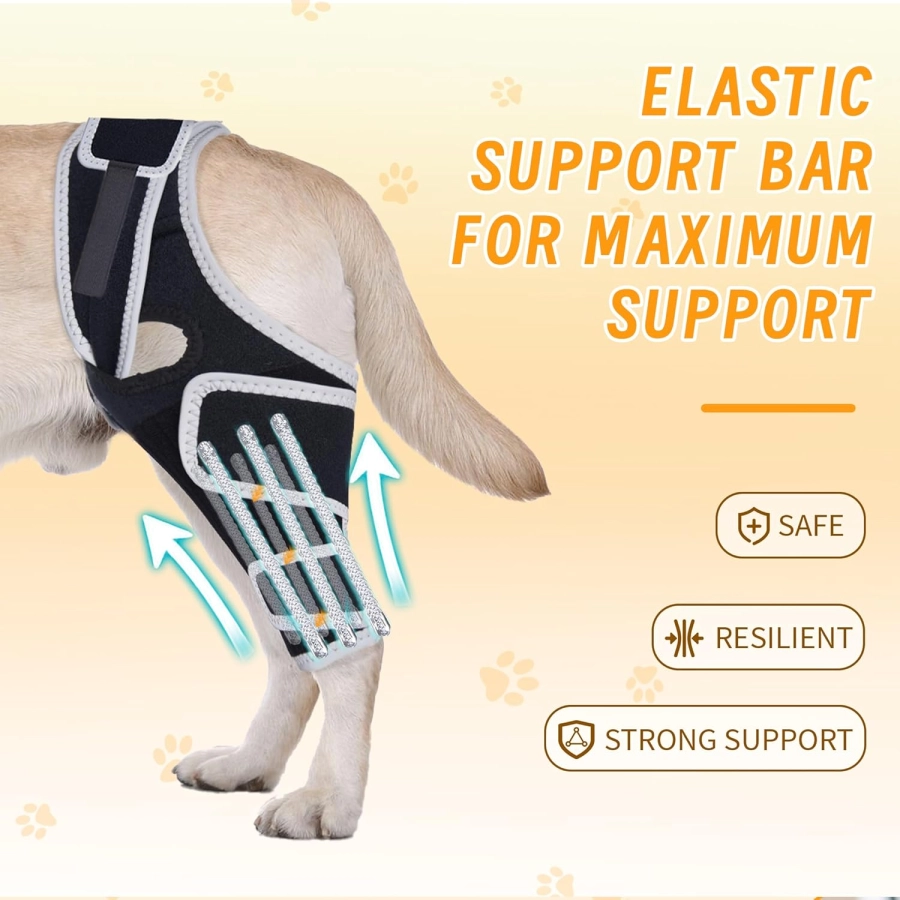
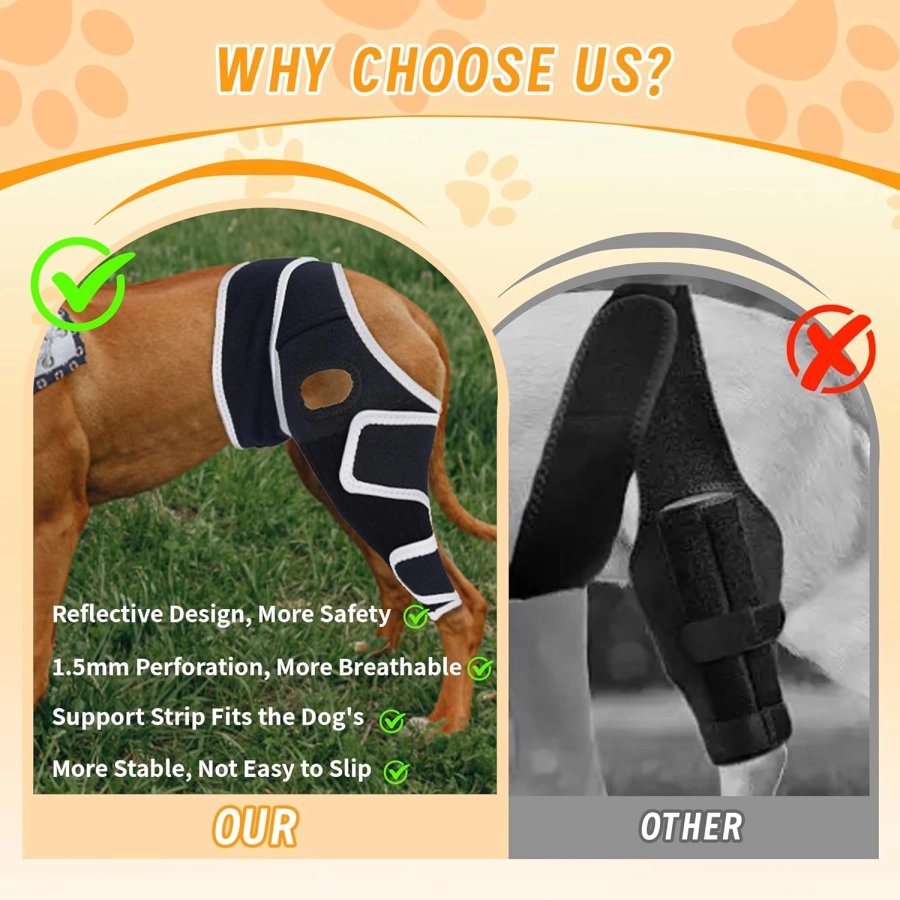
Strap configuration also determines whether the brace migrates. A two-strap design—one above the stifle, one below—can resist vertical sliding but does nothing against rotation around the leg's long axis. Add a third anchor point, such as a metatarsal strap or a thigh cuff that engages the gastrocnemius contour, and the brace gains rotational stability. The trade manufacturers navigate here is real: more anchor points improve stability but increase the skill required to put the brace on correctly. The best strap configuration for a given dog strikes the balance between hold and usability—and that balance shifts with the dog's coat type, leg length, and activity level.
When a Knee Brace Helps—and When It Cannot
A brace can do one thing mechanically: provide external constraint that substitutes for a damaged internal stabilizer. Within that scope, it works in specific conditions. Outside them, it adds weight to a leg without solving the underlying problem.
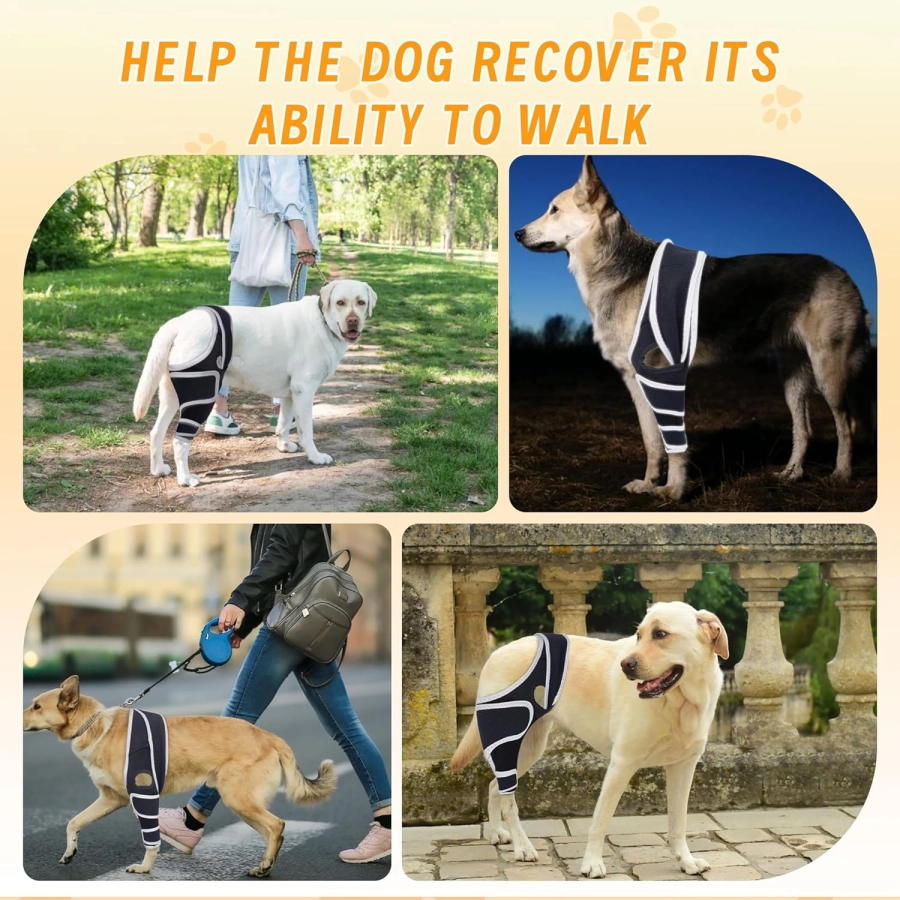
Partial CCL tears are the strongest use case. The ligament is compromised but not gone. The brace limits tibial translation during the portion of the gait cycle where load peaks, buying time for fibrosis to stiffen the joint capsule—a process the body runs on its own but that repeated micro-trauma interrupts. Senior dogs with gradual, degenerative CCL laxity also tend to respond well. Their instability develops slowly, their activity demands are lower, and the brace provides enough constraint to keep daily movement comfortable without the recovery burden of surgery.
Post-operative protected mobility is another scenario where a brace adds value. After a TPLO or TTA, the bone needs eight to twelve weeks to consolidate. The plate and screws carry the structural load, but the dog does not know that. A brace provides external feedback—a physical reminder that limits the dog's instinct to bolt after a squirrel during the period when the implant is load-bearing but not yet fully integrated.
A brace cannot help when the CCL is fully ruptured and the stifle is grossly unstable. The tibia will translate regardless of external constraint because there is no ligamentous checkrein left. It cannot help when the meniscus is torn and mechanically blocking joint motion—that requires surgical intervention. It cannot help when there is an open wound, active infection, or skin breakdown over the area the brace must contact.
Disclaimer: The fit checks described in this article assume a dog with typical leg conformation for its breed. Dogs with angular limb deformities, very deep or very narrow chests, or significant muscle atrophy may not achieve the same brace-to-joint alignment even with a correctly sized unit. In those cases, the observable hinge-position check described above may pass at a standstill but fail in motion—watch the dog walk, not just stand, before concluding the fit is correct.
Partial tears, degenerative laxity in seniors, post-surgical protected activity—these are the conditions where a brace changes the recovery trajectory. Complete ruptures, meniscal blocks, and open wounds are not. The decision point is not "brace or surgery" as a binary. It is whether the remaining passive stabilizers in the joint—primarily the caudal cruciate and collateral ligaments—are intact enough that external constraint tips the balance back toward functional stability. A veterinary exam establishes that. The brace executes on it.
Sizing, Materials, and the Design Details That Change Daily Wear
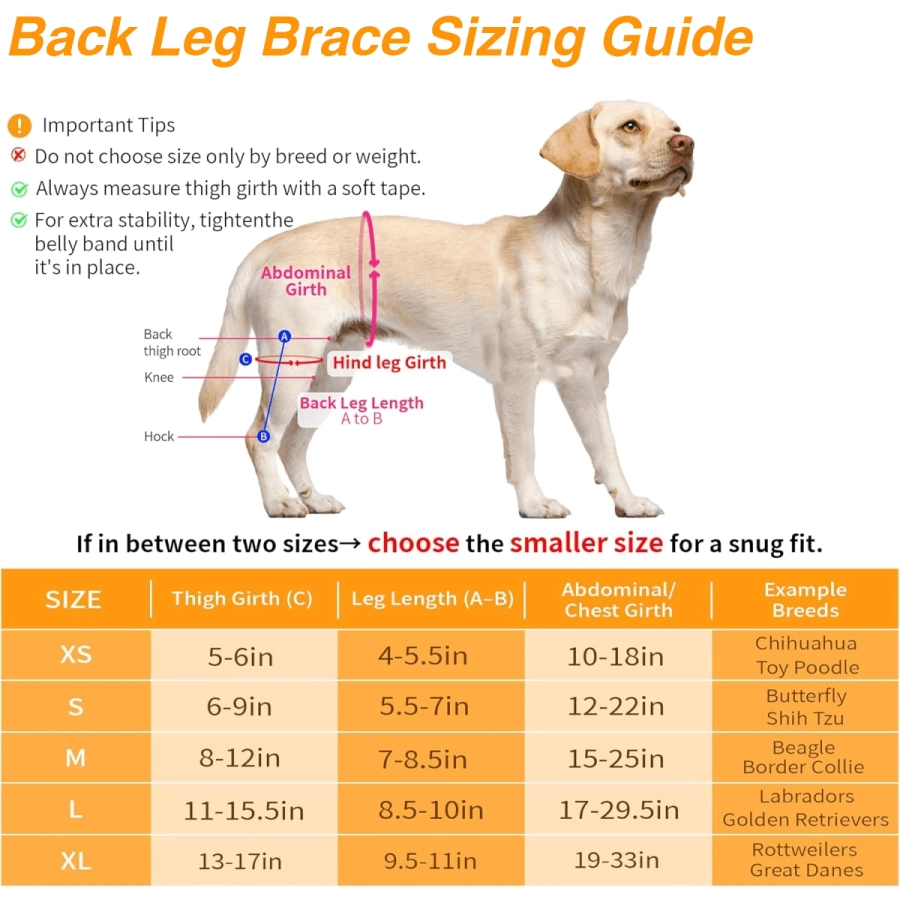
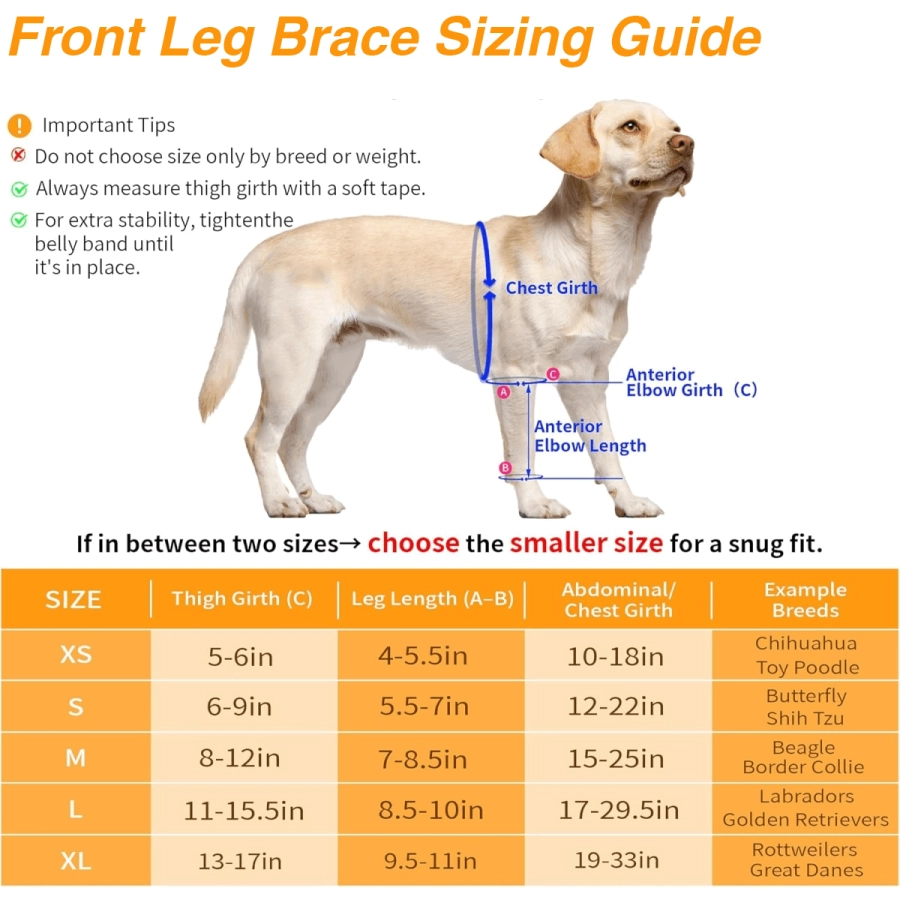
A brace that fits perfectly in the morning and slides down by noon has a design problem, not a sizing problem. Leg circumference changes through the day as the dog moves, as fluid shifts, as the thigh muscle contracts and relaxes. A rigid circumference-based sizing chart—measure here, pick a size—ignores that the leg is not a cylinder. It tapers. The thigh is wider than the hock. A brace that matches the stifle circumference but opens up below the joint has nothing to grip. It will migrate.
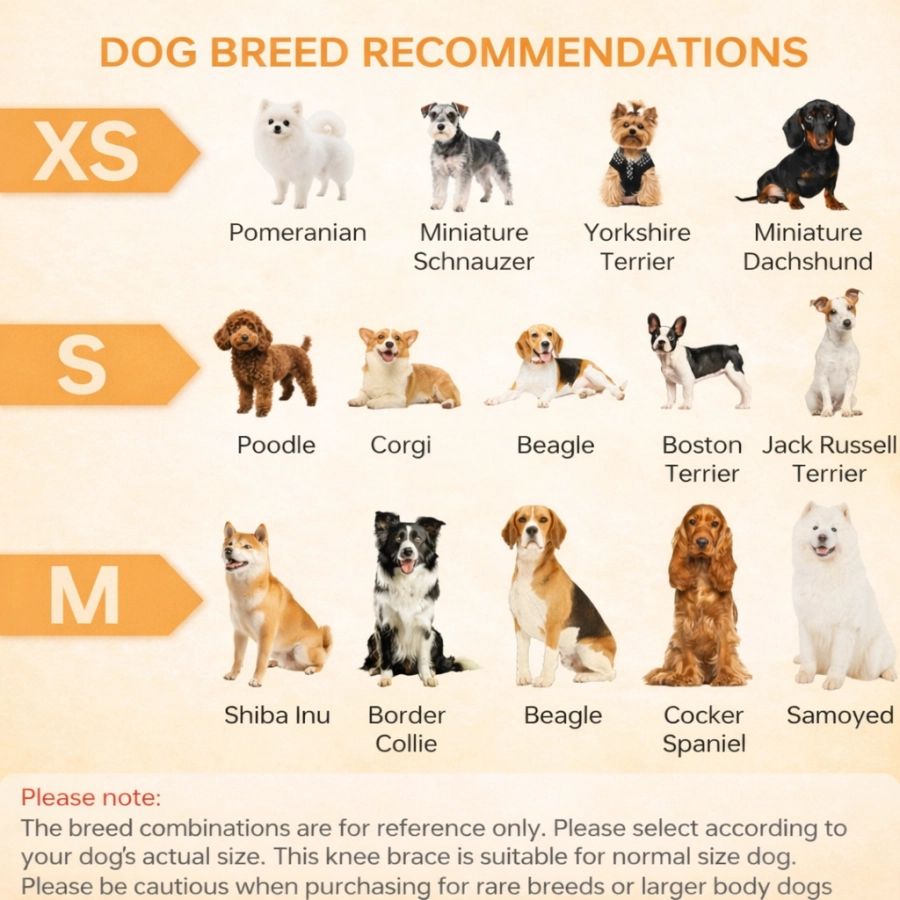
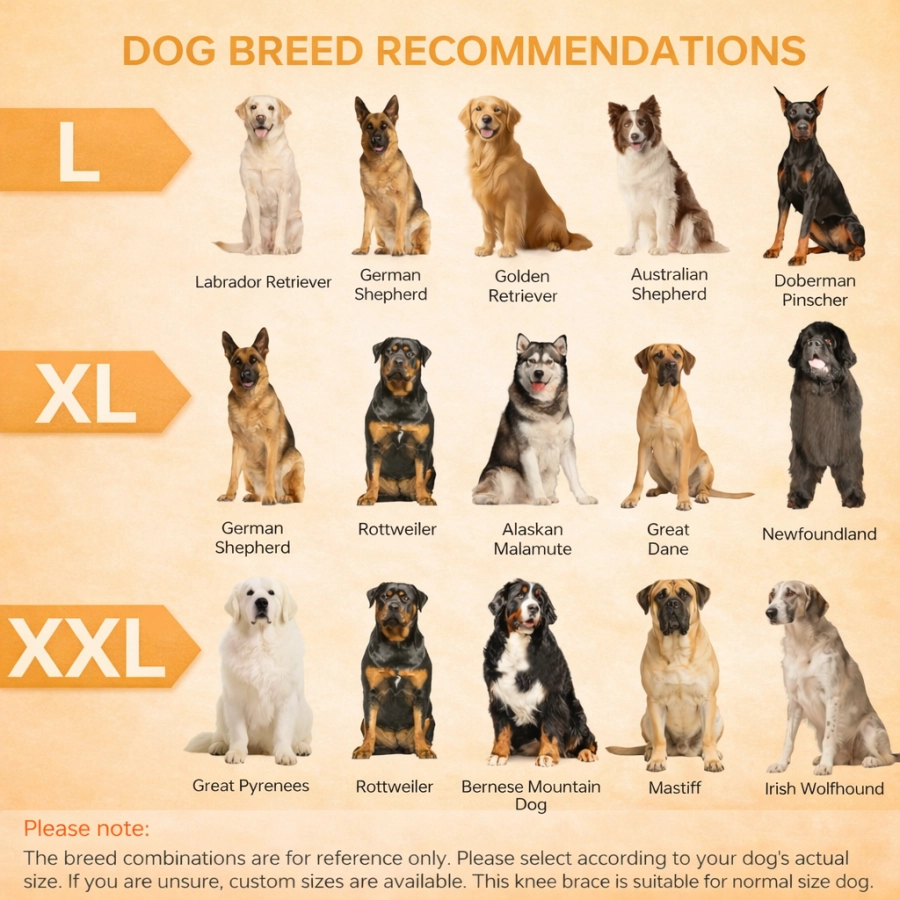
This is why single-size-fits-most designs rarely work for knee braces. The geometry of a Labrador stifle and a Greyhound stifle differ even when their circumference measurements match. A brace shaped to the dog's specific leg taper resists migration not by squeezing harder but by matching the surface it is gripping.
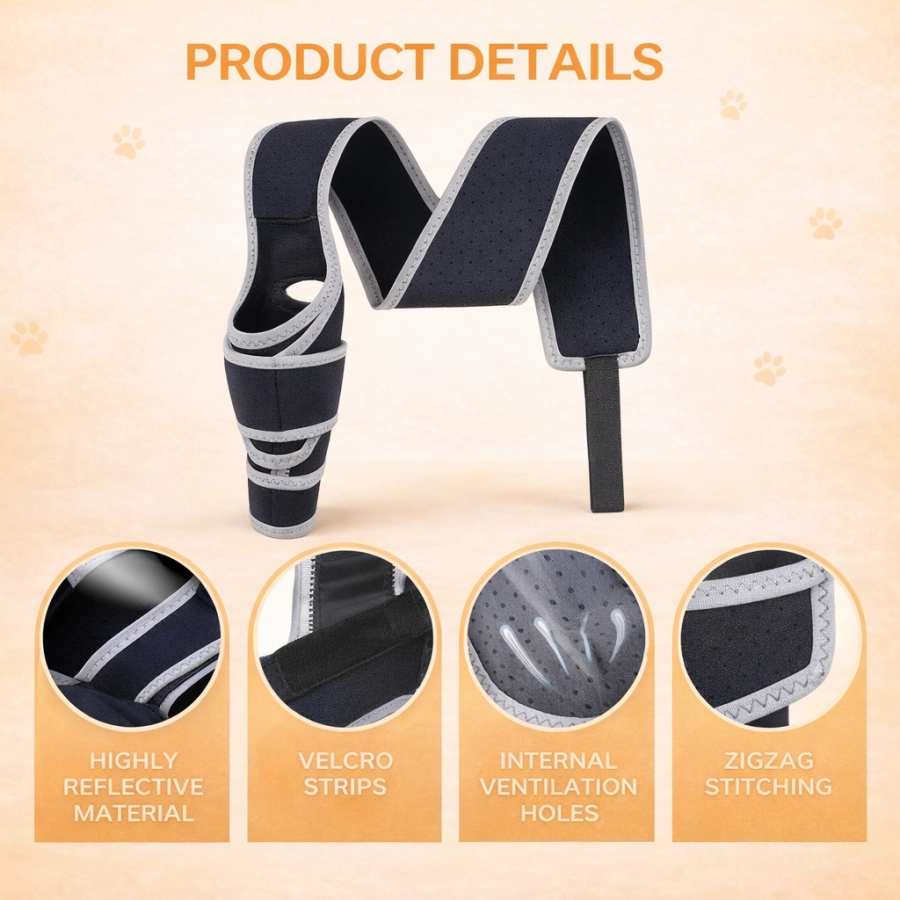
Material choice intersects with wear duration. Neoprene insulates and provides even compression, but it traps moisture. After four hours, the skin under a closed-cell neoprene liner is warm and damp—conditions that soften the stratum corneum and make it vulnerable to friction damage. Perforated fabrics or open-cell foam with a wicking liner let vapor escape. The tradeoff is that breathable materials typically provide less compressive recoil. For a dog wearing a brace during two twenty-minute walks per day, neoprene works. For a dog that needs to wear the brace for six to eight hours of supervised indoor time, breathable construction becomes the difference between a brace that gets used and one the owner abandons after the first week of skin problems.
Adjustability matters most during the first two weeks. As the dog's gait changes with the brace on, muscle activation patterns shift. The thigh may gain or lose a small amount of circumference. Multi-point adjustment—independent control over the proximal strap, the stifle strap, and any distal anchor—lets the owner fine-tune fit as the leg changes, rather than relying on a single tension point that cannot compensate for shifting geometry. The difference between a brace that supports recovery and one that complicates it often lives in these adjustment details, not in the headline feature list.
FAQ
How do I know if the hinge on my dog's brace is aligned correctly?
Film ten seconds of your dog walking toward the camera at a slow, even pace. Freeze the video at mid-stance—the point in the stride where the braced leg is directly under the body and bearing full weight. Draw an imaginary dot at the bony prominence on the outer side of the stifle. If the brace hinge center is more than a quarter-inch forward or behind that dot, the axes are mismatched and the brace will generate torque with every step.
Why does my dog's brace slide down even when the straps feel tight?
Tightness is not the same as grip. A brace migrates when the leg's taper gives it room to move. If the brace is snug at the stifle but loose below the joint, gravity and muscle contraction will walk it downward. The fix is not tighter straps—which can cause skin damage—but a brace whose internal contour matches the leg's profile from thigh to shank, or a distal anchor strap that gives the brace something to register against.
Can a knee brace prevent the other leg from getting injured?
It cannot prevent the contralateral CCL from tearing. Dogs that rupture one CCL face higher risk in the opposite leg because the underlying factors—conformation, body weight, activity pattern—are systemic. What a brace can do is reduce the compensatory overload on the sound leg during recovery by restoring more even weight distribution on the injured side. Less limping means less asymmetric loading on the good leg.
How long can a dog wear a knee brace in one session?
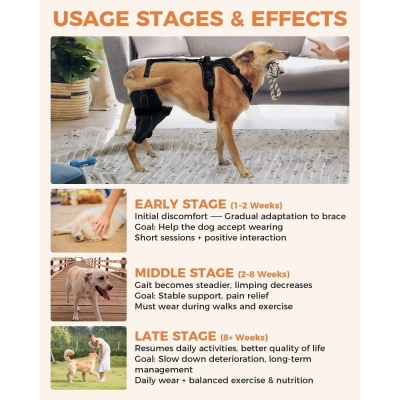
Start with fifteen-minute sessions and check skin after each one. If the skin looks normal—no distinct red lines, no moisture buildup—extend to thirty minutes. Most dogs with well-fitted braces tolerate two to four hours of supervised wear. Remove the brace whenever the dog is crated, sleeping, or unsupervised. No brace is designed for 24-hour continuous wear; the skin needs unloaded time to recover from any contact pressure.
0 Comments