
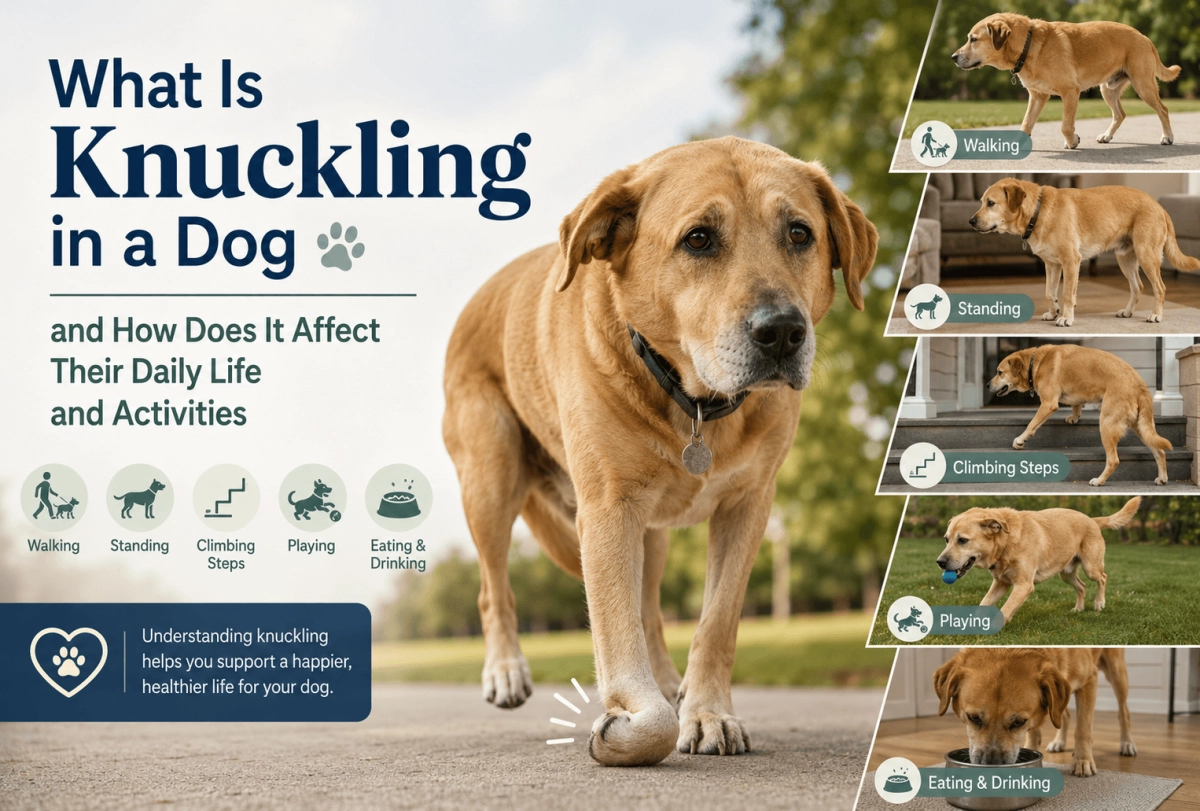
A dog that walks on the top of the paw instead of the pads has lost the ability to sense and correct paw position mid-stride. That loss is what knuckling is. But the question that matters for daily management is not just what knuckling is — it is which design details in a support device actually change whether the paw lifts or keeps dragging.
Two details dominate that outcome: the angle at which elastic tension pulls on the paw, and how wide the load-bearing strap spreads that force. Get the angle wrong and the device adds bulk without lifting. Get the strap too narrow and pressure concentrates into a single line across the top of the paw. These are not abstract engineering notes. They are the difference between a dog that clears the ground and one that still scuffs every step.
What Knuckling Is — and the Design Logic Behind Support Devices
Knuckling occurs when a dog cannot dorsiflex the paw — cannot pull the toes upward to plant the pads flat. The nervous system normally senses paw position and fires muscles to correct it before the next step lands. When that feedback loop breaks, the paw stays folded under. The dog walks on the dorsal surface. Toes drag. Nails grind down. The skin over the knuckles scrapes raw.
This means a support device has exactly one job: restore dorsiflexion timing. Not immobilize the joint. Not wrap the paw in padding. Restore the lift, at the right moment in the gait cycle, without creating new pressure problems.
That is a harder design problem than it looks. The device must apply force along a line that matches the natural axis of paw lift. It must hold that line through thousands of steps per walk. And it must do it without creeping down the leg or rotating around the paw — two failure modes that turn a support device into a tripping hazard.
Why Elastic Tension Angle Decides Whether the Paw Lifts
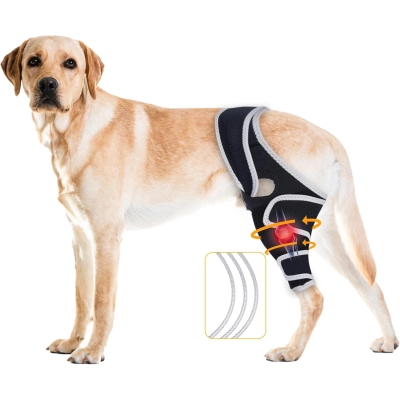
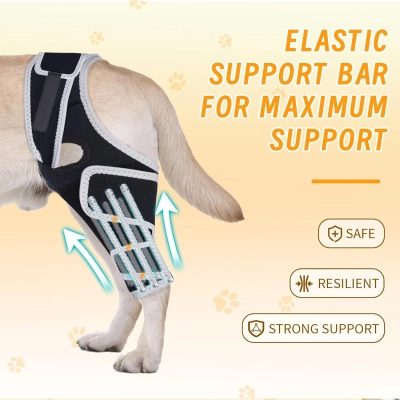
The elastic strap that runs from the top of the paw to a higher anchor point on the leg is the working element of any dorsi-flex assist device. Its job is to store energy when the paw hits the ground and release it to pull the toes upward during the swing phase. But that energy transfer works only when the elastic pulls along the correct vector.
Here is the causal chain: the paw needs to rotate around the carpal or tarsal joint to achieve dorsiflexion. That rotation has a natural axis — a line through the joint that the paw swings around. If the elastic strap runs parallel to that axis of rotation, the force it generates translates almost entirely into lift. The paw rises. The toes clear the ground.
If the strap runs at an angle to that axis — even 10 or 15 degrees off — part of the tension converts into rotation around the long axis of the leg. The paw twists instead of lifting. The dog compensates by swinging the leg wider, which shifts weight to the opposite limb and changes the entire gait pattern. Over a week of walks, that compensation creates asymmetrical loading on the sound leg.
Strap width matters here too, and for the same physical reason. A narrow strap concentrates the lifting force into a thin line across the top of the paw — an area with little soft tissue between skin and bone. Pressure per square inch rises fast. A wider strap distributes the same lifting force across more surface area, keeping pressure low enough for all-day wear without skin breakdown.
In practice: After 15 minutes of walking, check whether the strap has rotated around the paw or slipped toward the toes. Rotation means the tension vector is not aligned with the joint axis. Slippage forward means the anchor point is too low or the strap lacks enough surface grip to hold position under load.
Sole Material and Coverage: What Protects the Paw During Dragging
Even when a dorsi-flex assist device works, some dogs still drag the paw intermittently — on uneven ground, when tired, or during turns. That means the sole of any paw-worn support device faces a split requirement: slide smoothly on high-friction surfaces like carpet to prevent catching and stumbling, but grip adequately on slick surfaces like hardwood or tile so the dog does not splay.
A sole that is uniformly grippy solves one problem and creates another. On carpet, high-friction rubber catches and jerks the leg backward mid-stride. On tile, that same rubber grips well — but the dog does not spend the whole walk on tile. A sole with differentiated zones handles this better: a low-friction toe section that skims across carpet without catching, paired with a higher-friction pad section that anchors the paw on hard floors.
Coverage pattern matters for a different reason: the dorsal surface of the paw — the top, where knuckling dogs make contact — has thin skin over bony prominences. A support sock that covers only the knuckles leaves the nail beds and interdigital skin exposed to abrasion from repeated dragging. Full dorsal coverage extending past the nail beds shifts the wear surface from skin to fabric. That trade-off adds material bulk, which some dogs initially resist. But the alternative is open wounds that make any further device use impossible until they heal.
Tip: After a walk, remove the sock and run your fingers over the top of the paw. Heat or tenderness over the knuckles means the coverage pattern is not distributing contact pressure wide enough. Red marks that fade within minutes are normal. Marks that persist past 10 minutes signal that the sock is too thin or too tight across the dorsal surface.
Where Paw Support Devices Help — and Where They Do Not
Dorsi-flex assist socks and protective paw socks address a specific mechanical problem: the paw folds under because the nervous system is not triggering dorsiflexion at the right time. When that is the primary issue — common with proprioceptive deficits from spinal conditions, nerve damage, or post-surgical weakness — an assist device can restore foot clearance enough to prevent skin breakdown and make walking safer.
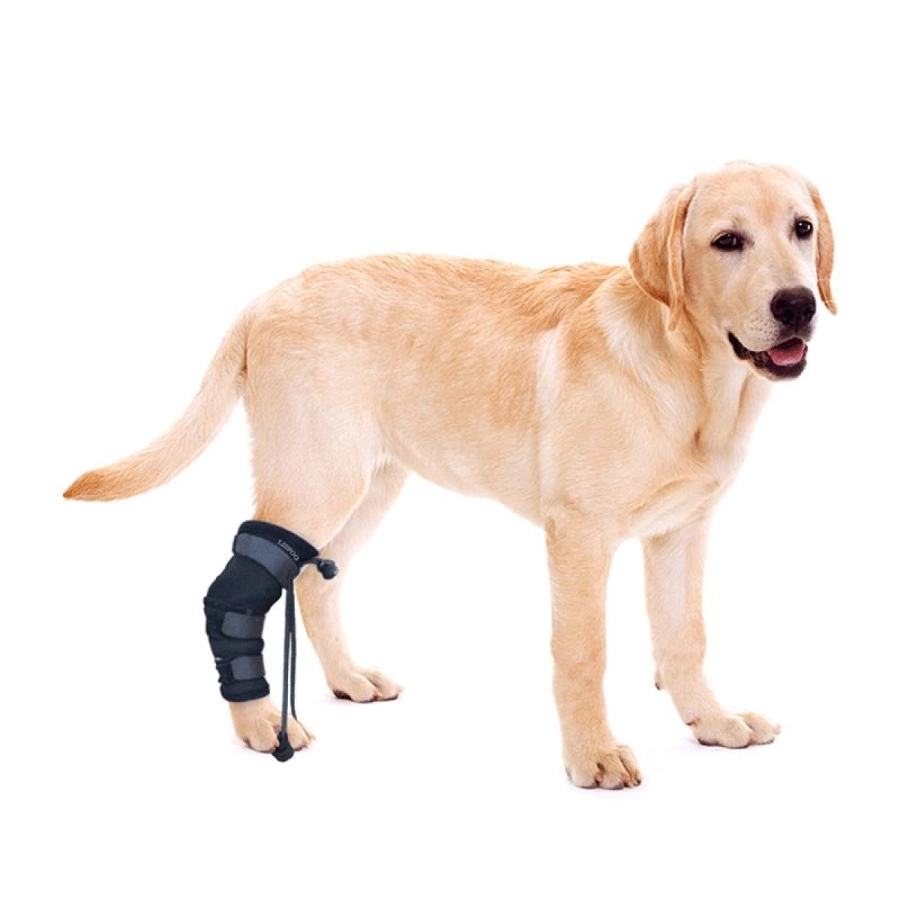
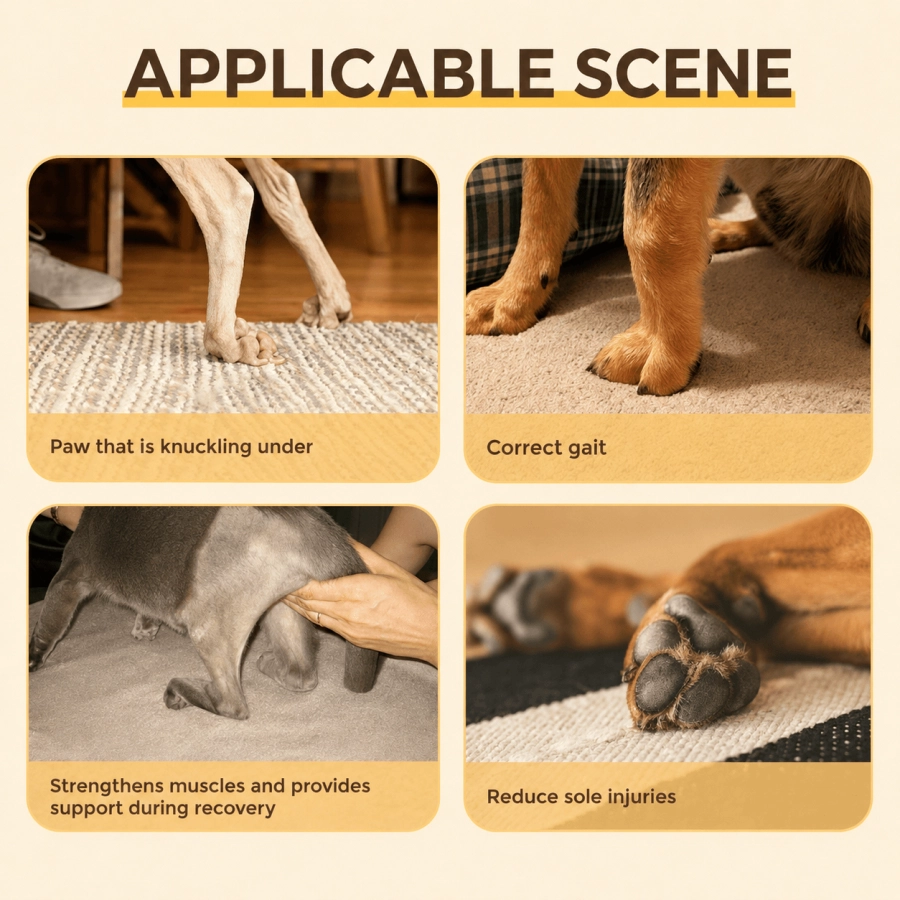
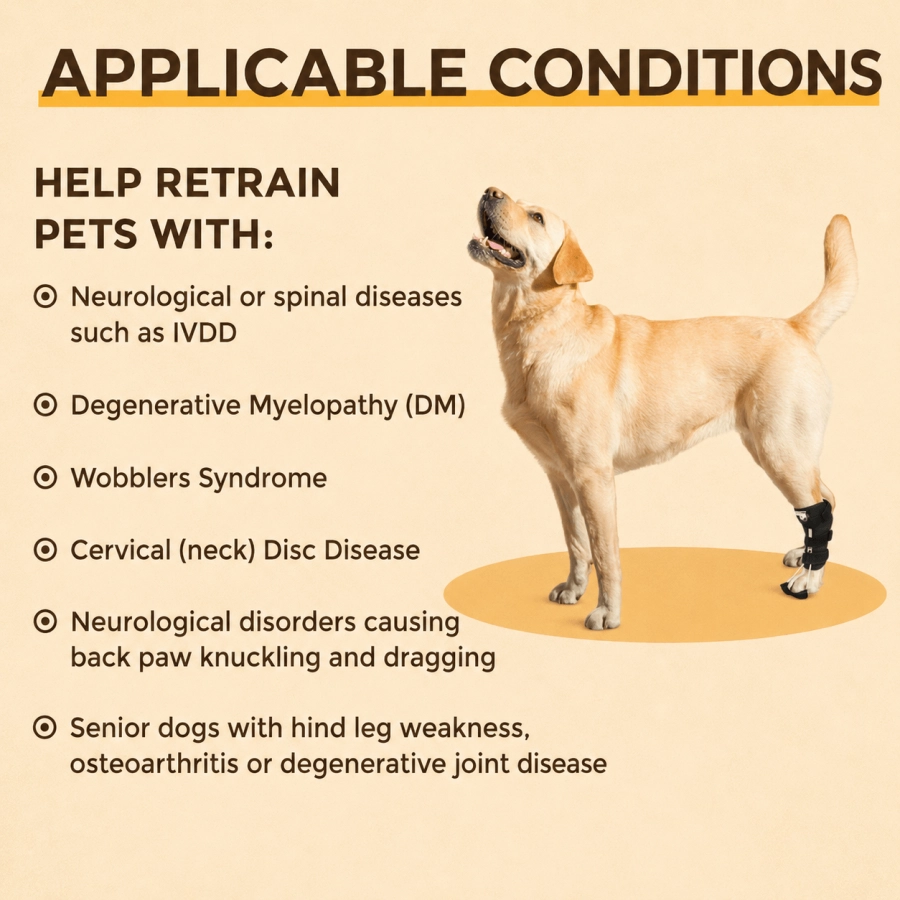
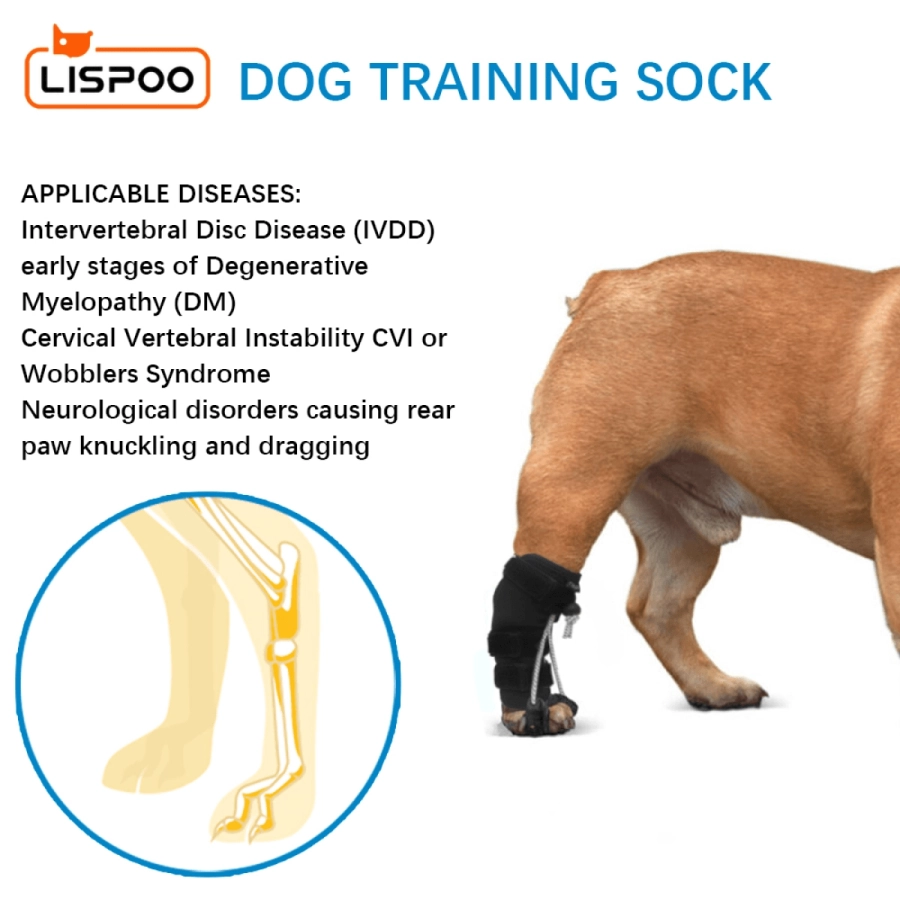
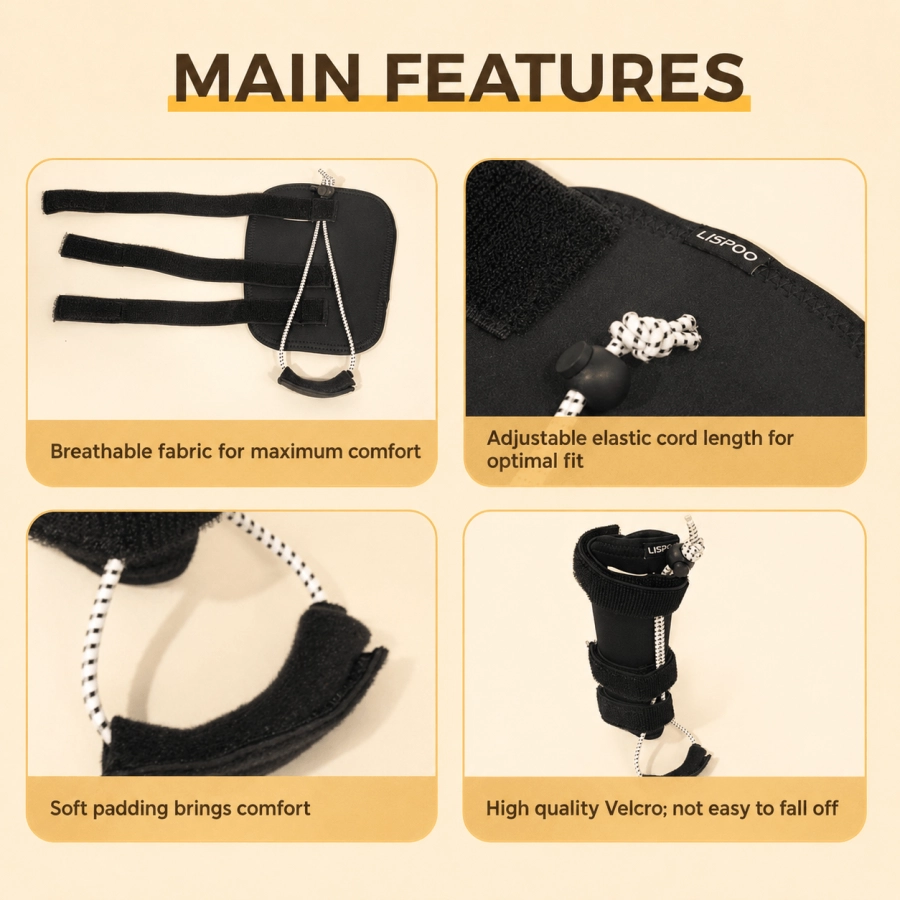
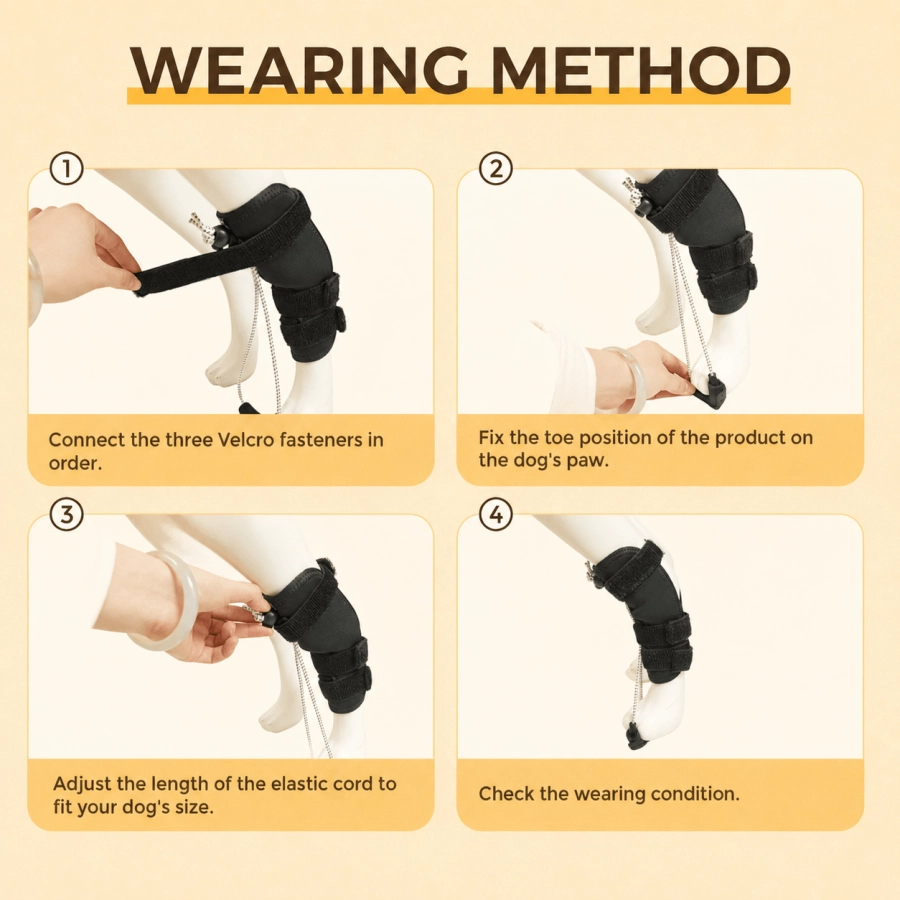
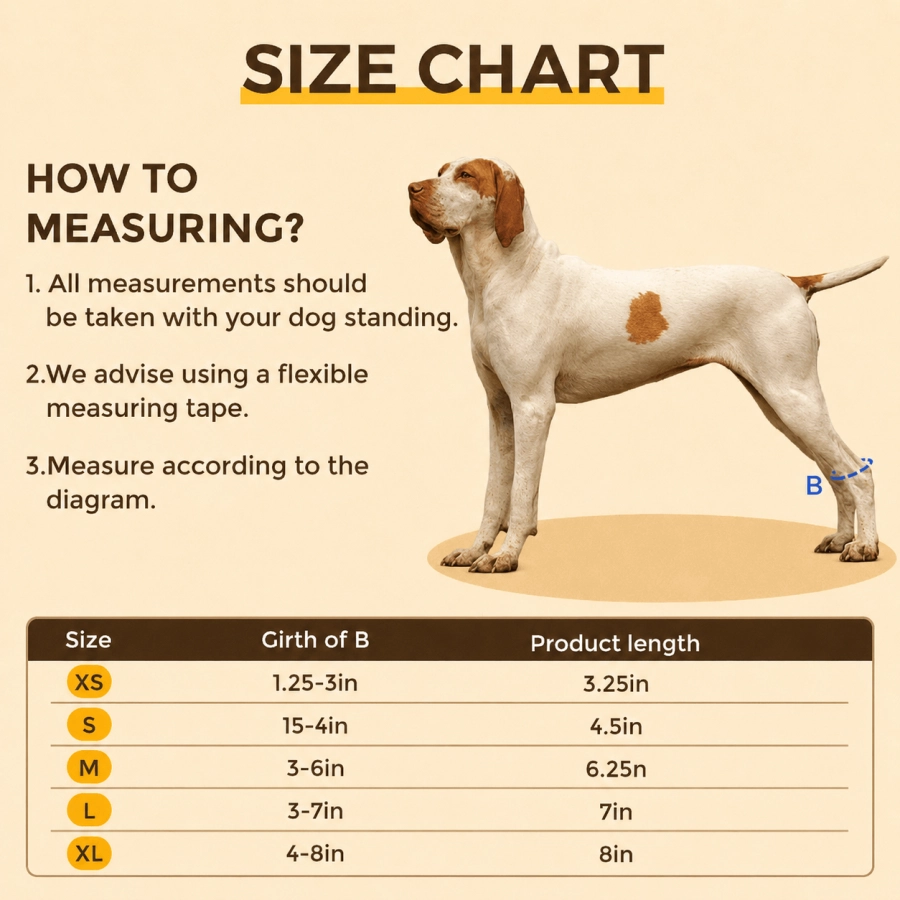
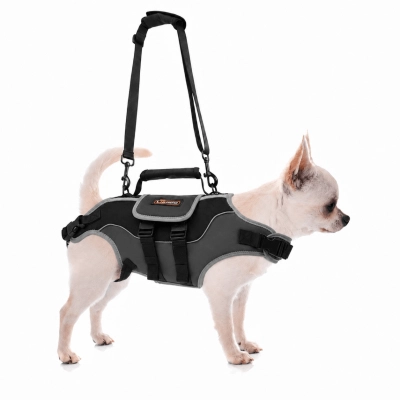
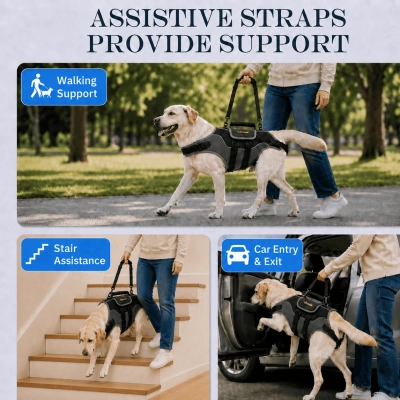
These devices do not address the underlying neurological or orthopedic condition. If muscle atrophy has progressed to the point where the dog cannot bear weight on the leg at all, no elastic strap will restore load-bearing capacity. In those cases, dog lifting harnesses that transfer weight to the handler provide the support that a paw-worn device cannot. The difference is not about one product being better — it is about which mechanical problem the dog actually has.
Dorsi-flex assist devices also assume the joint itself can still move through a normal range. If carpal or tarsal hyperextension has stiffened the joint into a fixed position, pulling on it with elastic creates pain, not lift. Mobility rehabilitation programs that combine range-of-motion work with assistive devices tend to produce better outcomes than devices alone, because they address the stiffness that limits what a support device can do.
Dogs with double coats face a different practical challenge: thick fur reduces friction between the sock and the leg, which makes strap slippage more likely. A sock that stays in place on a short-coated dog may migrate within minutes on a Husky or Chow. The design solution is not a tighter strap — that creates a tourniquet effect — but a wider contact patch and a higher-friction inner lining material at the anchor point.
Disclaimer: This check assumes a short-coated dog. Double-coated breeds may show subtler rub marks that need hand-checking rather than visual inspection — lift the fur and feel the skin directly over the knuckles and along the strap path. If the dog has angular limb deformities or a very deep chest that falls outside the breed norms these devices were patterned for, the fit checks described here may not catch every pressure point.
FAQ
How fast should a dog correct paw position when wearing a dorsi-flex assist sock?
On a flat surface at a walking pace, the paw should flip back to a pads-down position within roughly one stride after the elastic engages. If the dog takes two or more strides with the paw still knuckled over, the tension angle or anchor height likely needs adjustment. A correctly angled strap produces visible paw lift on the first swing phase after ground contact.
Can a dog wear a paw support sock all day?
Most dogs tolerate a well-fitted sock for walks and supervised indoor time, but continuous all-day wear creates two risks: moisture buildup inside the sock softens skin and makes it more vulnerable to friction damage, and the elastic component loses tension when it never gets a rest cycle. Removing the sock for at least several hours between wear periods extends both skin tolerance and strap lifespan.
What is the first sign that a support sock does not fit?
The dog licks or chews at the sock. That behavior is not stubbornness — it is a reliable signal that something is uncomfortable. Check strap tension first, then check for heat buildup or red marks after removal. A dog that suddenly resists a previously tolerated sock is almost always reacting to a fit problem, not a behavioral change.
Does knuckling in the front paw need a different device than knuckling in the rear?
Yes. The carpus (front wrist) and tarsus (rear hock) flex in opposite directions relative to the ground during a stride. A dorsi-flex assist device designed for a front paw positions the elastic anchor above the carpus to pull the toes upward. The same anchor position on a rear leg would pull against the natural flexion direction of the hock. Rear-leg knuckling often responds better to devices that lift from above the tarsus with the elastic routed along the front of the leg. For more on recognizing knuckling patterns early, see the early warning signs that distinguish front-paw from rear-paw knuckling.
0 Comments