
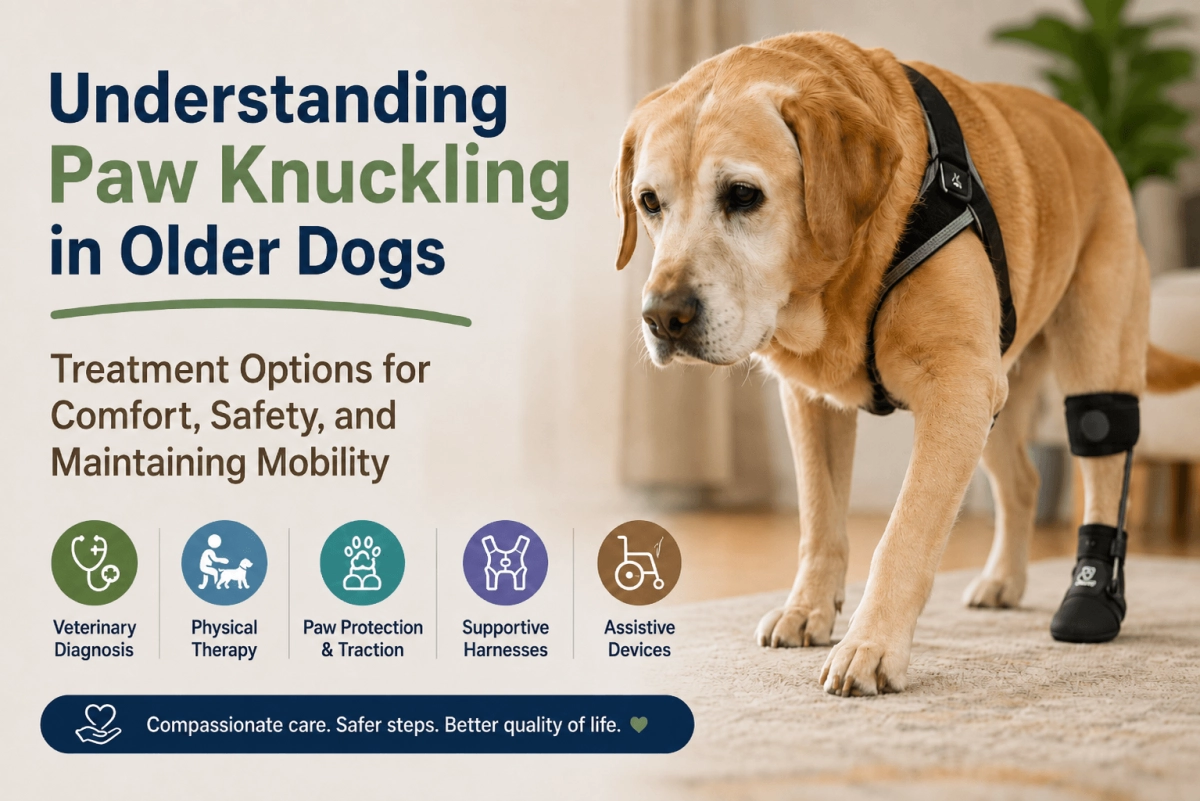
Paw knuckling changes how a dog's paw meets the ground: the top of the paw drags instead of the pads bearing weight. The right supportive device does not just cover the paw. It redirects force so the paw lands closer to its natural position. That difference lives in the design, not the category label.
How Anti-Knuckling Device Mechanics Reposition the Paw
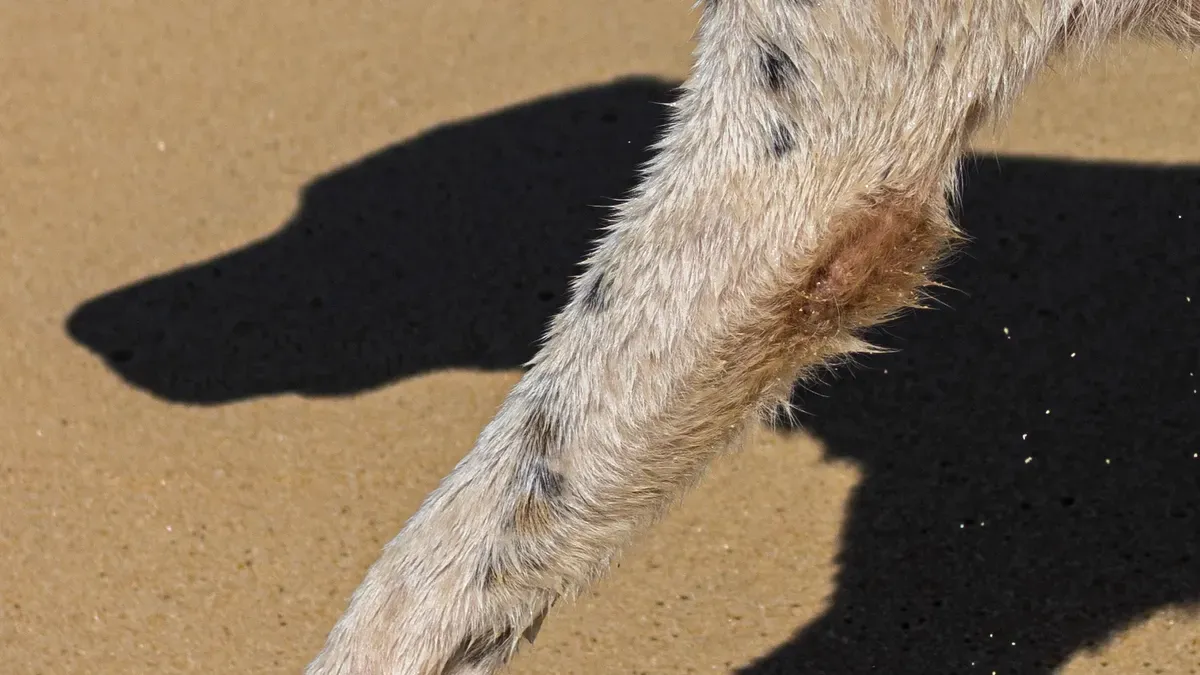
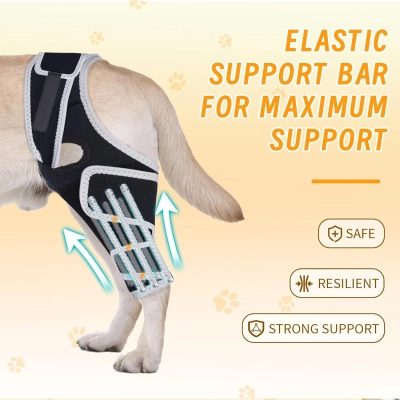
An anti-knuckling device works through a specific mechanical chain. A dorsiflexion assist strap attaches near the toes and anchors higher on the leg. During swing phase, elastic tension pulls the toes upward. The paw clears the ground. The dog lands on the pads instead of the dorsal surface.
Simple concept. But the design details determine whether it actually happens.
Strap angle matters more than strap tightness. A strap pulling at roughly 30 degrees relative to the leg axis generates nearly twice the vertical lift component of one pulling at 60 degrees for the same elastic tension. That translates directly into how reliably the paw clears the ground on each step. Pull too far laterally and the paw rotates outward rather than lifting — trading one gait deviation for another.
The anchor point creates a second constraint. Anchored too low on the metacarpal region, the lever arm shortens. The elastic must stretch farther before generating enough torque to lift the toes, which means the paw drags through the first portion of each swing phase. Anchor higher — near the carpus or hock — and the lift engages earlier in the gait cycle. But anchor too high and the device restricts natural joint flexion. Good design balances lift timing against range of motion. Poor design picks one variable and ignores the other.
For dogs caught early, before the paw-scraping habit sets in, the proprioceptive feedback loop stays more intact. The dog still senses where the paw is. A device that works with that remaining feedback — cueing correct placement rather than forcing it — tends to produce better compliance and gait improvement than one that rigidly locks the ankle. Anti-knuckling braces designed for gradual gait correction use progressive elastic tension that increases as the paw drops, which means the corrective force scales with how far the paw deviates — stronger correction when the dog knuckles severely, gentler when placement is nearly correct. That scaling relationship is a design choice, not an accident.
In practice: After 15 minutes of walking with the device on, lift the paw and check the dorsal surface. Dry and unmarked? Lift timing works. Redness or fresh scrape marks? The paw still contacts the ground during swing phase — the device is not generating enough lift, or the anchor has shifted.
Boot and Sock Traction Design: When Surface Pattern Outperforms Cushioning
Boots get marketed on padding. For a knuckling dog, padding comes second. The sole's friction coefficient against the floor surface is what prevents the paw from sliding into a knuckled position.
A smooth rubber sole on hardwood generates a low static friction coefficient. The paw slides. The dog responds by stiffening the leg, which paradoxically worsens knuckling — reduced joint mobility means less proprioceptive feedback, which means less ability to self-correct paw placement mid-stride. A sole with a directional tread pattern — ridges perpendicular to the slide direction — increases the friction coefficient significantly on smooth floors. The paw grips. The dog relaxes the leg and regains some corrective control.
But that same aggressive tread on carpet creates excessive grip. The paw catches mid-stride. The dog trips. Boot sole design is a surface-matching problem, not a "more grip equals better" proposition. The effective choice matches tread pattern to the primary walking surface.
Material breathability introduces a second tradeoff. Waterproof materials keep moisture out during wet walks but trap heat and humidity inside. For a dog wearing boots hours daily, trapped moisture softens paw pad skin. Softened skin abrades faster when dragging does occur. A breathable mesh upper lets moisture escape but sacrifices water resistance. Non-slip dog socks with silicone grip dots occupy a middle ground — less protective than a full boot but more breathable, and the grip pattern reduces sliding on smooth floors without the carpet trip hazard. For indoor use with mild knuckling, socks often outperform boots on the compliance dimension: dogs tolerate them longer, which means more hours of actual protection.
In practice: After 20 minutes of wear, remove the boot or sock and feel the skin between the toes. Damp or warm to the touch signals trapped moisture — the material is not breathing enough for your dog's activity level and wear duration. Dry and cool means the ventilation design matches the use case.
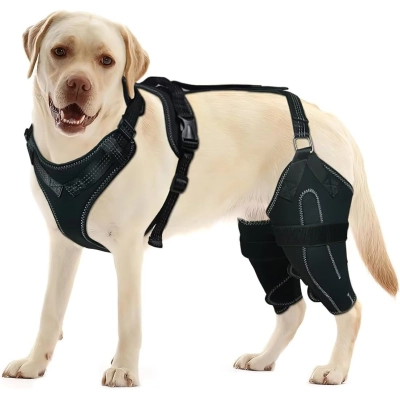
The broader category of leg braces for dogs sometimes incorporates paw-stabilizing elements, but the priorities differ. A leg brace primarily restricts joint range to protect a specific articulation. A boot or sock primarily manages surface interaction. Which device addresses the root issue — joint instability versus surface friction — depends on what is actually causing the knuckling.
Harness and Sling Lift Design: Force Distribution During Assisted Walking
When a dog knuckles the hind paw, the leg's weight-bearing mechanics shift. The dog loads the dorsal paw surface instead of the pads. The angle of force transmission through the carpus or hock changes. Over weeks, this abnormal loading reinforces itself — muscles atrophy asymmetrically, and the gait deviation becomes progressively harder to reverse.
A well-designed lift harness changes this equation. Not all harness designs distribute lift force the same way.
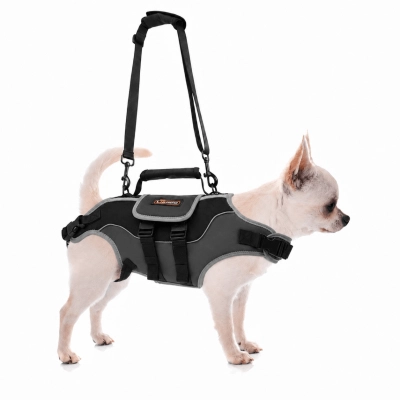
A single rear handle positioned over the hips concentrates upward force at one point. The rear lifts, but body weight shifts forward onto the front legs. For hind-leg knuckling, this forward shift reduces rear paw ground contact pressure — which sounds helpful but actually deprives the paw of the sensory feedback needed to relearn placement.
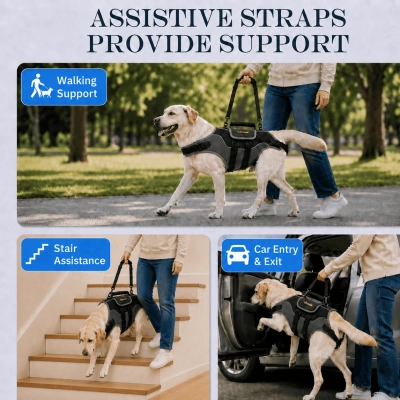
A dual-point design — one lift point under the abdomen, one behind the ribcage — distributes force across a larger surface area. Less pressure per square inch at any single contact zone. More importantly, the handler can modulate the lift: more abdominal lift for dogs needing hind-end clearance, more chest lift for dogs that collapse forward. Knuckling dogs rarely have symmetrical weakness. One side typically drags more. A fixed lift point cannot compensate for asymmetry. A dual-point configuration can. Dog lift harnesses with adjustable strap configurations let you shift the lift bias toward the weaker side — something no single-point harness does.
For dogs whose knuckling traces to hock joint instability, the lift strategy must account for the hock's role in propulsion. Lifting the hind end reduces hock load during stance. But if the dog still pushes off with the affected leg, the hock can collapse at toe-off and the paw knuckles at the end of each stride. A harness that keeps the rear elevated through the full gait cycle — stance and propulsion — provides more complete protection than one that only assists during the weight-bearing phase.
Where Supportive Design Helps — and Where It Does Not
Anti-knuckling devices, boots, harnesses, and wheelchairs each solve a specific mechanical problem. None addresses the underlying neurological or orthopedic condition. That distinction determines when each tool is appropriate.
Where these devices help most:
- Dogs with proprioceptive deficits who retain voluntary motor control. The device provides mechanical feedback — the paw gets repositioned, the nervous system registers that position, and the feedback loop strengthens over repeated gait cycles.
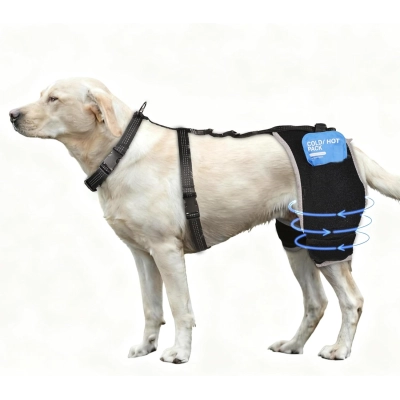
- Post-injury rehabilitation where temporary support prevents the dog from developing compensatory patterns that outlast the original problem. Braces designed for ACL injuries work on a parallel principle: the degree of stabilization matches whether the dog still loads the leg voluntarily. A dog that avoids bearing weight needs a different support strategy than one that walks on the leg but with abnormal mechanics.
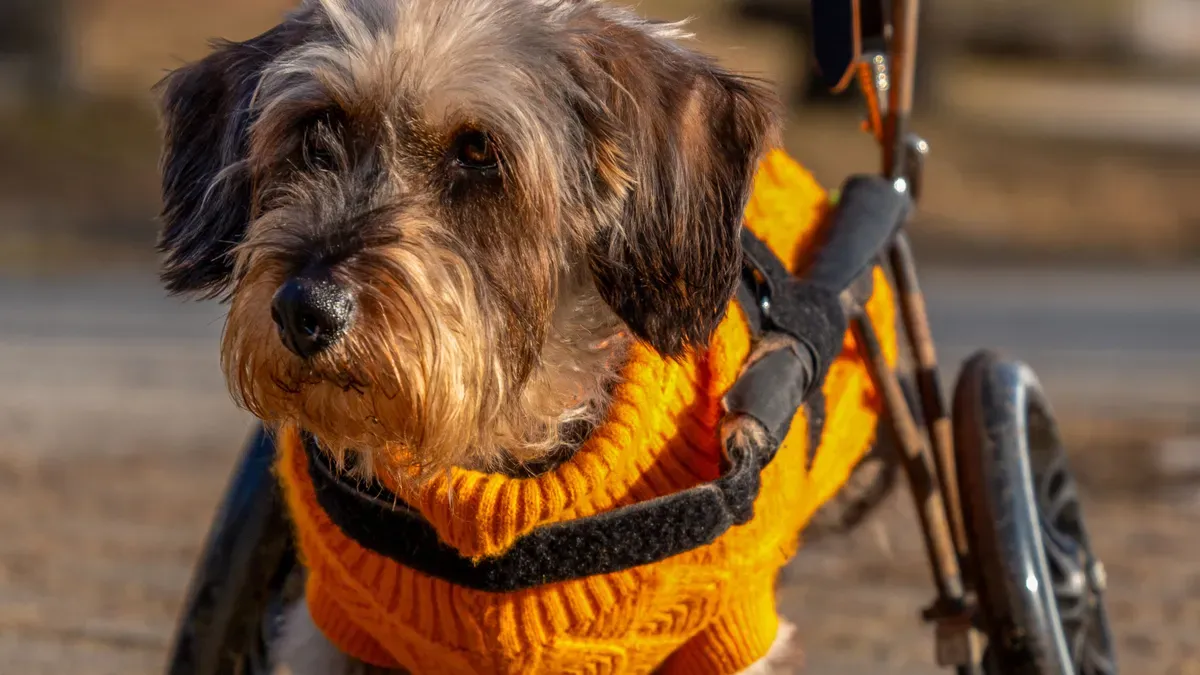
- Senior dogs with gradual-onset knuckling from degenerative conditions. Here the goal shifts from correction to comfort and injury prevention. Rear-leg wheelchairs keep the dog mobile without the paw-dragging damage that leads to skin breakdown and secondary infection.
Where devices are not the answer:
- Acute spinal cord compression needing surgical decompression. No brace or boot relieves pressure on the cord. Delaying veterinary care to try a device first risks permanent damage.
- Complete proprioceptive loss with zero voluntary placement correction. The device holds the paw passively, but the dog cannot learn from the feedback because the sensory pathway is non-functional. A wheelchair may be the better long-term tool for mobility.
- Dogs that panic, chew through straps, or refuse to move while wearing any device. The best mechanical design fails if compliance is zero. In these cases, environmental modifications — textured flooring, ramps, supervised movement on grass — may be the only viable path.
For mild cases where knuckling is intermittent and the dog self-corrects most of the time, lighter support may be all that is needed. Elbow sleeves that provide mild compression for joint comfort illustrate the principle: less structure, more flexibility, worn during activity rather than continuously. A lightweight sock with grip dots fills a similar role for knuckling — enough cueing to improve paw placement without the bulk of a full brace or boot.
Disclaimer: The fit checks described here — checking for dorsal paw redness, moisture between toes, strap position shift — assume a short-coated dog where skin contact points are directly visible. Double-coated breeds and dogs with heavy leg feathering may show subtler rub marks and moisture buildup that require hand-checking under the coat rather than visual inspection. If the dog's leg conformation falls outside the typical proportions these devices are patterned for — particularly dogs with angular limb deformities or very deep chests that shift harness positioning — the standard sizing guides may not catch every pressure point.
FAQ
Can a boot or anti-knuckling device cure paw knuckling?
No. These devices reposition the paw mechanically during use. They do not repair nerve damage, reverse degenerative conditions, or restore lost motor function. What they do is prevent the secondary damage — skin abrasion, nail wear, joint stress from abnormal loading — that makes knuckling progressively worse. Rehabilitation strategies that pair device use with targeted exercises tend to produce better outcomes than either approach alone: the device protects the paw while the exercise rebuilds whatever neuromuscular capacity remains.
How do I know the device is fitted correctly?
Three rapid checks. Run your finger under each strap after 10 minutes of walking — one finger should fit comfortably, not two. Watch the dog take 10 steps on a hard surface and listen for scraping. Silence means the paw clears the ground. Remove the device and check for red marks persisting more than 5 minutes. Marks that fade quickly are normal compression. Marks that linger signal a pressure point needing adjustment. Early warning signs of poor fit — sudden refusal to walk, obsessive licking at the device area — warrant catching before skin breakdown occurs.
When does a wheelchair make more sense than a boot or brace?
When the dog can no longer support weight on the affected leg even with assistance, or when paw dragging persists despite a properly fitted anti-knuckling device. A wheelchair shifts the strategy from correcting paw placement to bypassing the limb's weight-bearing role. Understanding how knuckling affects daily function over time helps you recognize the transition point — when paw protection alone no longer preserves mobility, and mobility support systems that take over limb function become the more appropriate tool.
Do different breeds respond differently to these devices?
Leg length, coat type, and body mass distribution all change how a given device performs. Long-backed breeds like Dachshunds often need devices with shorter anchor distances between paw and upper attachment — the leg geometry shifts the effective strap angle. Heavy-bodied breeds put more shear force on boot soles during turns, which can unseat a boot that held fine during straight-line walking. Knee braces designed for larger breeds face an identical scaling challenge: the forces scale with body mass, and a design that works at 20 pounds needs reinforced stress points to work at 80 pounds. The same logic applies to anti-knuckling straps and boot closures — the closure mechanism that holds on a Corgi may fail on a Rottweiler doing the same turn at the same speed.
0 Comments